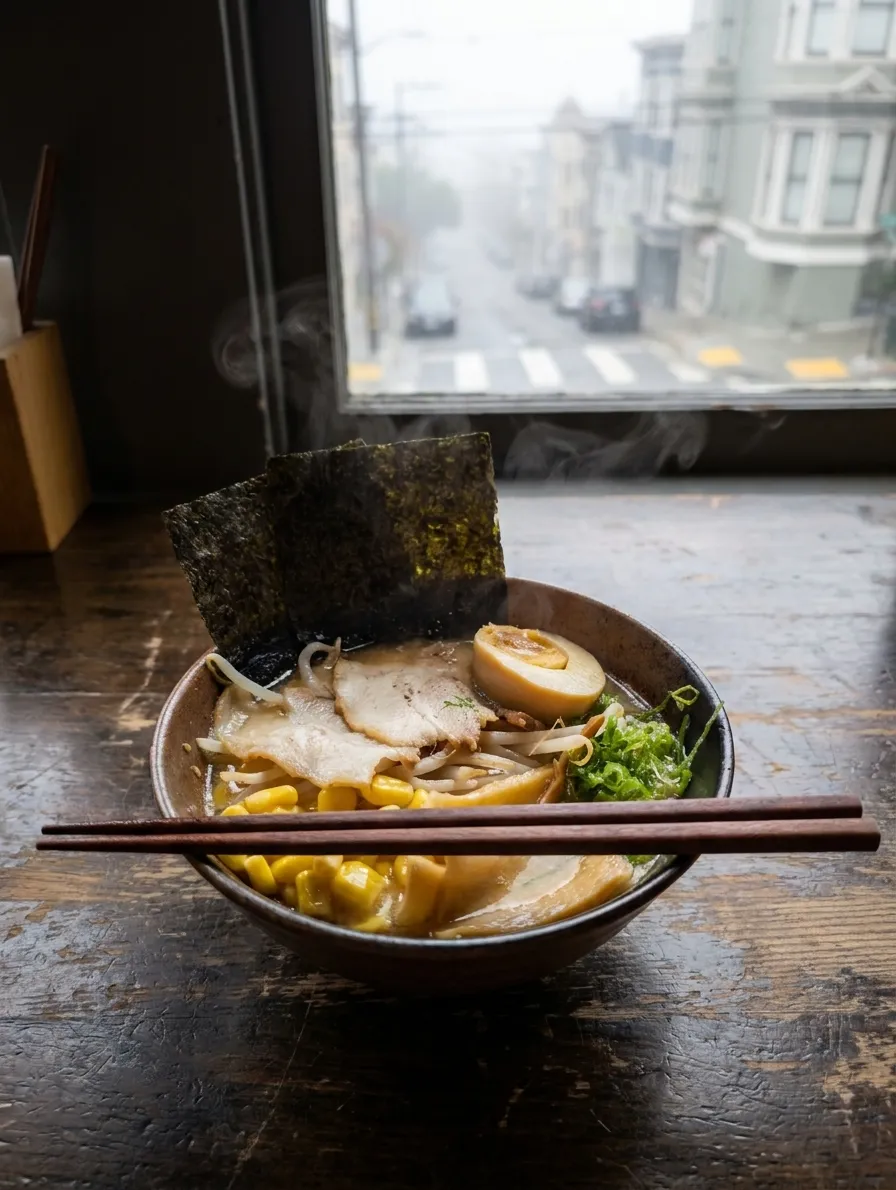
The price of a bowl has moved a long way. A decade ago the best ramen in San Francisco cost twelve dollars and the expensive places charged fifteen; now the standard bowl at a good shop lands around eighteen to twenty-one and the fully loaded version clears twenty-five. Sixteen dollars is the line where a bowl stops being routine and starts requiring a choice, and there are still a meaningful number of shops on the right side of it.
Bowl prices and happy-hour windows differ by shop and by day. Ask Karpo what a full bowl costs near you right now.
Why bowls got expensive
Three reasons, none of them greed. Broth is labour: a proper tonkotsu runs twelve hours or more and a shop is paying someone to watch it. Pork belly prices moved sharply and have not come back down. And San Francisco's minimum wage and commercial rents are both near the top of the national range, which lands hardest on a low-margin, high-labour format like a ramen shop.
The shops holding under sixteen dollars are almost always doing one of two things: running a shorter broth on a lighter style, or operating in a cheaper location with a smaller room. Neither is a compromise on quality. A four-hour shio or shoyu broth is a different dish to a twelve-hour tonkotsu, not a worse one.
Where the sixteen-dollar bowls are
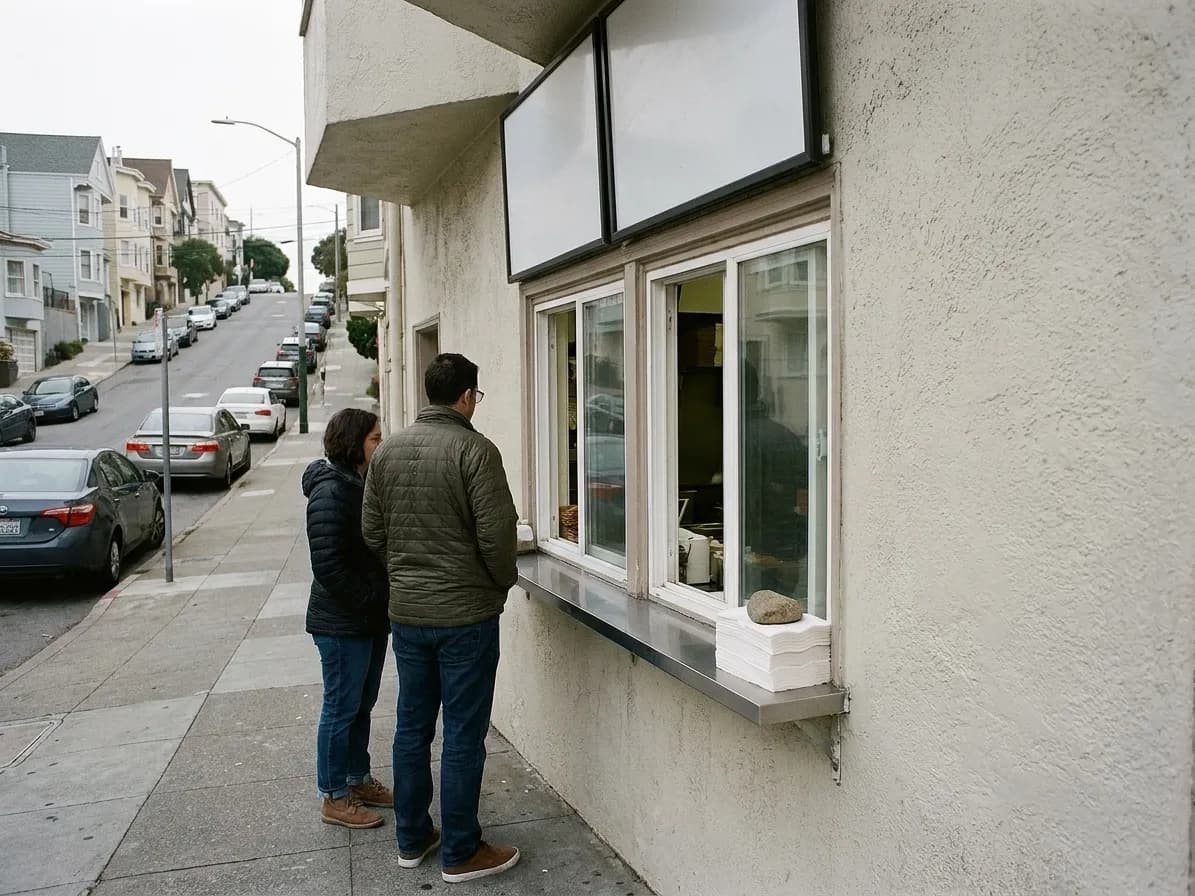
Polk Gulch and the Tenderloin carry several of the cheapest serious bowls in the city, including at least one shop where a miso or shoyu bowl with proper chashu sits right at the sixteen-dollar mark, and another that offers a combination of a half bowl plus a rice ball at the same price. Those are the shops doing the light-broth, small-room version of the format, and they are consistently good.
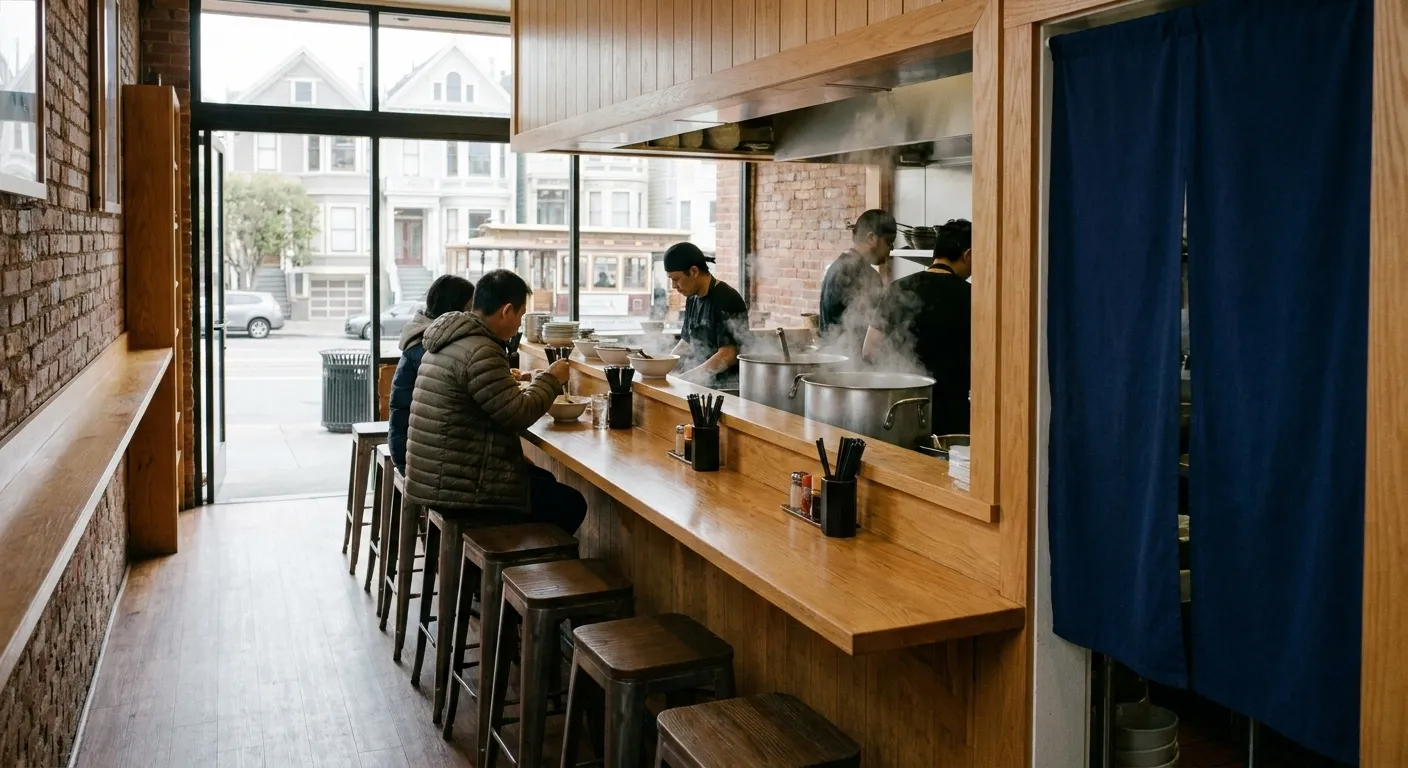
Japantown has the highest concentration of shops and the widest price range — the well-known ones are above the line and a couple of the smaller counters are below it. The Richmond and the Sunset have the neighbourhood shops, which is where the value is best and the queue is shortest. The Mission has the tsukemen specialists, where the dipping format tends to run slightly cheaper than a full soup bowl.
The happy-hour lever
This is the most underused pricing mechanism in the category. Several izakaya-style places in the Tenderloin and Japantown discount ramen by four or five dollars during an early-evening window, which drops a nineteen-dollar bowl comfortably under the line. The window is usually five to six-thirty on weekdays, which is exactly when nobody thinks about ramen and exactly when the shops need customers.
Lunch sets are the other one. Several shops sell a smaller bowl plus a side of rice or gyoza at lunch for less than the dinner bowl alone, and at lunchtime the queue is a fraction of the evening one.
Where the bill actually inflates
The base bowl is rarely the problem. Additions are: an extra egg, extra chashu, corn, butter, a side of gyoza and a drink can add twelve dollars to a sixteen-dollar bowl without anyone deciding to spend twenty-eight. The single highest-value addition is the egg; almost everything else is optional in a way that becomes obvious once you eat a bowl without it.
The drink is the largest silent cost. A beer at a ramen shop in this city is nine to eleven dollars, which is more than a third of the meal. Water and the free tea most shops put on the counter are, in the specific context of a very salty bowl of soup, actually the better pairing.
How to judge a shop quickly
Look at the noodles rather than the broth. A shop that specifies its noodle supplier or makes its own is signalling where its attention goes, and noodle texture is the thing most likely to be wrong at a cheap bowl. Look at whether the chashu is being torched or seared to order rather than arriving cold from a tray. And look at how many bowls are being carried out per minute — ramen is a turnover business and a busy shop is serving fresher noodles by definition.
The single strongest signal is a short menu. A shop with four ramen and three sides is confident. A shop with eleven ramen, a full izakaya menu and a sushi section is running a different business, and the bowl will reflect that.
Vegetarian and vegan options
The under-sixteen vegan bowl is now genuinely common in San Francisco, which was not true five years ago. Most of the good ones are built on a mushroom and kombu base with soy milk or sesame for body, and the better shops treat it as a designed dish rather than a substitution. It is also frequently the cheapest thing on the menu, because the expensive input in a conventional bowl is the pork.
Tsukemen, and the value argument for it
Dipping ramen is the format most likely to come in under the line, and it is underordered in this city. The noodles are served cold and separate, the broth is concentrated in a small bowl, and because there is less liquid and less garnish the shop can price it lower while serving a larger portion of noodles. The thick, chewy noodles used for it are also the most texturally interesting thing most ramen shops make.
The learning curve is about thirty seconds: dip a few noodles at a time rather than dunking the lot, and ask for the broth to be thinned with dashi at the end so you can drink it. Shops expect the request and most will do it without being asked if you look like you know.
Worth asking specifically whether the noodles contain egg, which many do, and whether the broth base includes bonito, which is the most common hidden non-vegetarian ingredient in a bowl that otherwise looks plant-based.
Tags: #SanFrancisco #Ramen #BestRamenSF #CheapEatsSF #Japantown #Tenderloin #PolkGulch #SFEats #NoodleSoup #Under16 #BayArea #RamenShop #HappyHour
All trademarks are the property of their respective owners.
Ask Karpo first
Ask Karpo which ramen shops near you in San Francisco are under sixteen dollars a bowl, whether they run a happy hour, and how long the wait is.