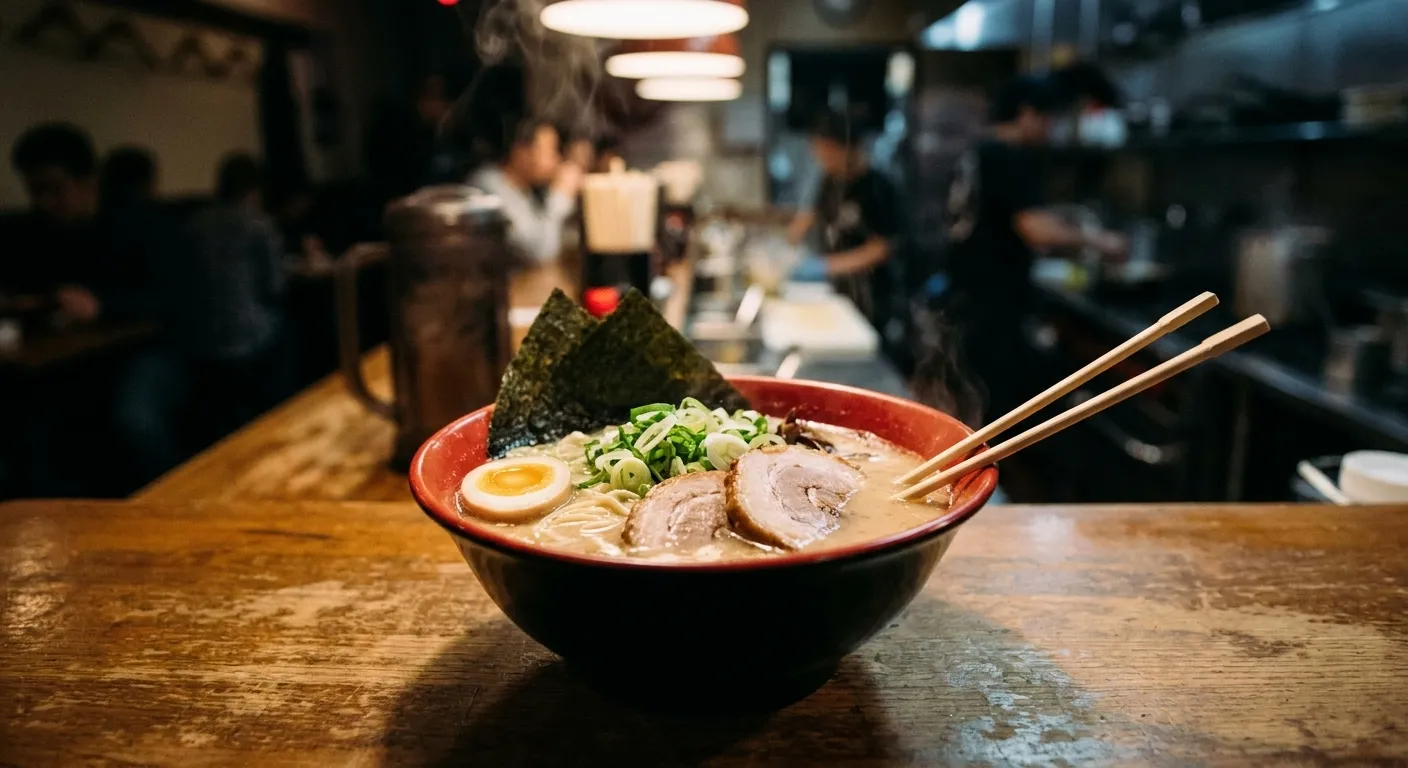
Something happened to ramen pricing in Los Angeles over the last few years that nobody announced. A bowl that was twelve dollars is now seventeen, and at the more celebrated rooms a bowl with the toppings you actually want can clear twenty-five. That is a significant shift for a dish whose entire cultural position is as cheap, fast, everyday food. The good news is that the best ramen in Los Angeles under sixteen dollars is still a large category — it just is not where the queues are.
Base prices and topping charges vary wildly between shops a few blocks apart. Ask Karpo what a full bowl actually costs near you.
The add-ons are where the money goes
Start with the ordering rather than the location, because this is the biggest single lever. A base bowl at most LA ramen shops sits somewhere between thirteen and sixteen dollars. The extra chashu is four or five, the extra egg is two or three, the corn and butter is another two or three. Order a base bowl with everything added and you have built a twenty-six dollar lunch out of a fifteen dollar one without noticing.
The thing worth knowing is that the standard bowl at a good shop is already balanced — the chef chose that ratio of noodles to broth to topping deliberately. Doubling the pork usually makes the bowl worse as well as more expensive. If you are genuinely hungry, extra noodles at two or three dollars is far better value than extra meat, and at most shops you can ask for a kaedama refill of noodles for a couple of dollars once the first lot is gone.
Little Tokyo, which remains the value centre
Little Tokyo is the most reliable neighbourhood for this, and Daikokuya is the reference point — a small, permanently busy room doing a rich, old-school tonkotsu at a price that has stayed sane while the rest of the city drifted. The wider neighbourhood has enough competition packed into a few blocks that nobody can price too far above the pack. It is also central, reachable on rail, and dense enough that a queue at one shop just means walking two minutes to another.
Sawtelle, which is better than its prices suggest
Sawtelle Japantown on the Westside is the other dense cluster, and it is unusual in that the quality is very high while the pricing has stayed competitive, because there are simply so many shops within a few blocks. Tsujita and its annex anchor the corridor with the heavy, long-simmered tonkotsu and tsukemen that made the street's reputation. The cheaper move here is the lunch service, which at several Sawtelle shops runs a reduced set price that dinner does not.
The styles that stay cheap
Not all ramen costs the same to make, and it shows in the menu. Shio and shoyu bowls — clear chicken or seafood-based broths — are consistently cheaper than tonkotsu, because a sixty-hour pork bone broth is genuinely expensive to produce. Miso sits in between. If you are optimising for price, the shoyu at a good shop is the value order and is frequently the more interesting bowl anyway, since there is nowhere for a thin broth to hide.
Two adjacent categories are worth knowing about. Tsukemen, the dipping style, gives you more food for the money because you are getting a large pile of cold noodles rather than a bowl of broth. And udon, particularly at the self-serve chains, is genuinely cheap — a large bowl with tempura for under twelve dollars — and while it is a different dish, it scratches the same itch on a Tuesday.
The neighbourhoods beyond the two clusters
Little Tokyo and Sawtelle get the attention, but the best price-to-quality ratio in the city is frequently in the strip-mall ramen shops of the San Gabriel Valley and the east San Fernando Valley. These are rooms serving a local Japanese and wider Asian population rather than a destination crowd, and their pricing reflects that — a full bowl with a side of gyoza can still land under twenty dollars in Torrance, Gardena or the east Valley.
Torrance in particular is worth the drive if you are serious about this. The South Bay has one of the largest Japanese communities in the country and a corresponding density of ramen, udon and izakaya that operates entirely outside the city's food-media conversation. Nothing there is trying to be a destination, which is exactly why the prices have not moved.
Where not to look
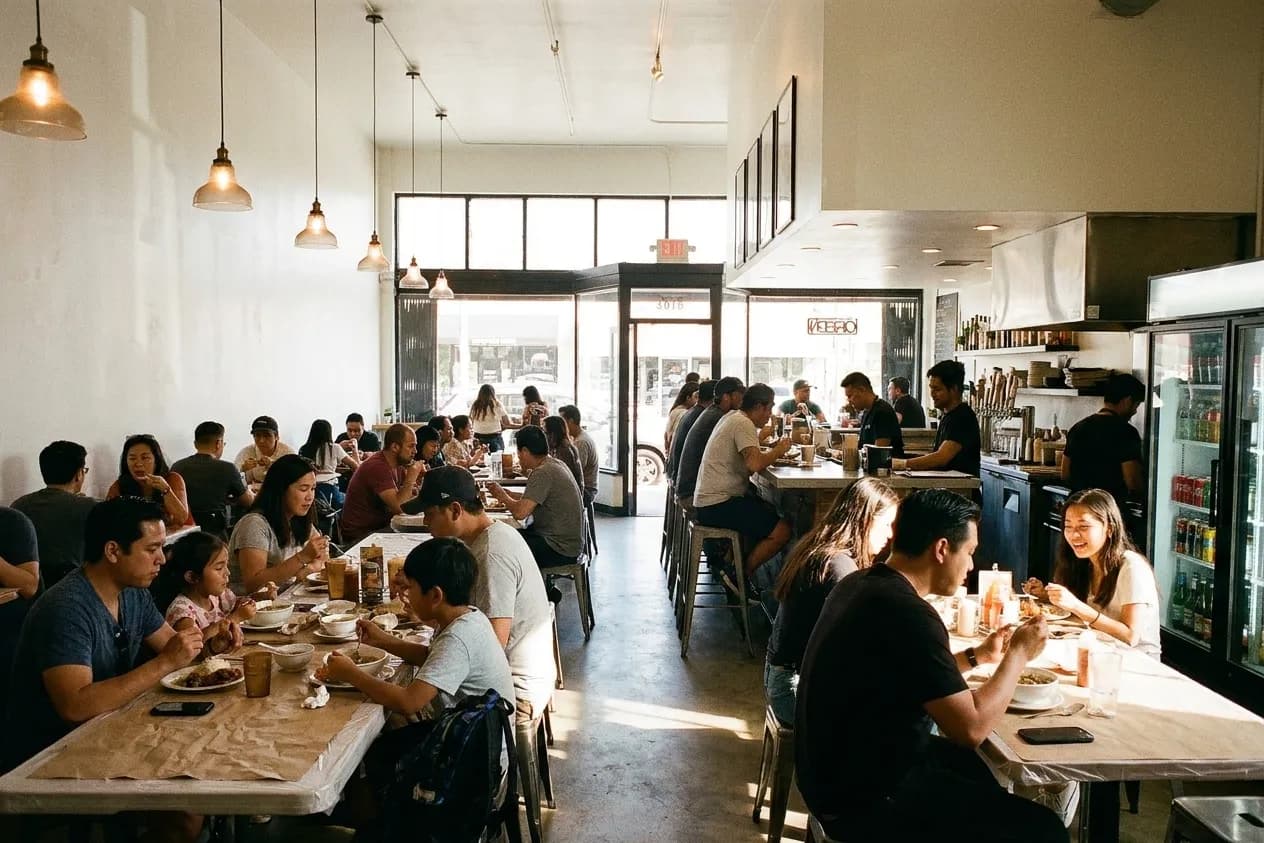
The expensive end of LA ramen is concentrated in exactly the places you would expect: the Arts District, the trendier stretches of the Westside, and anywhere a ramen shop is the second or third location of a brand with a design consultant. The food is often very good. It is simply not competing on price and there is no reason to expect it to. The same is true of the shops with two-hour queues and social media reputations — you are paying a premium for the scarcity, and there is usually a bowl of comparable quality eight minutes away with four people in it.
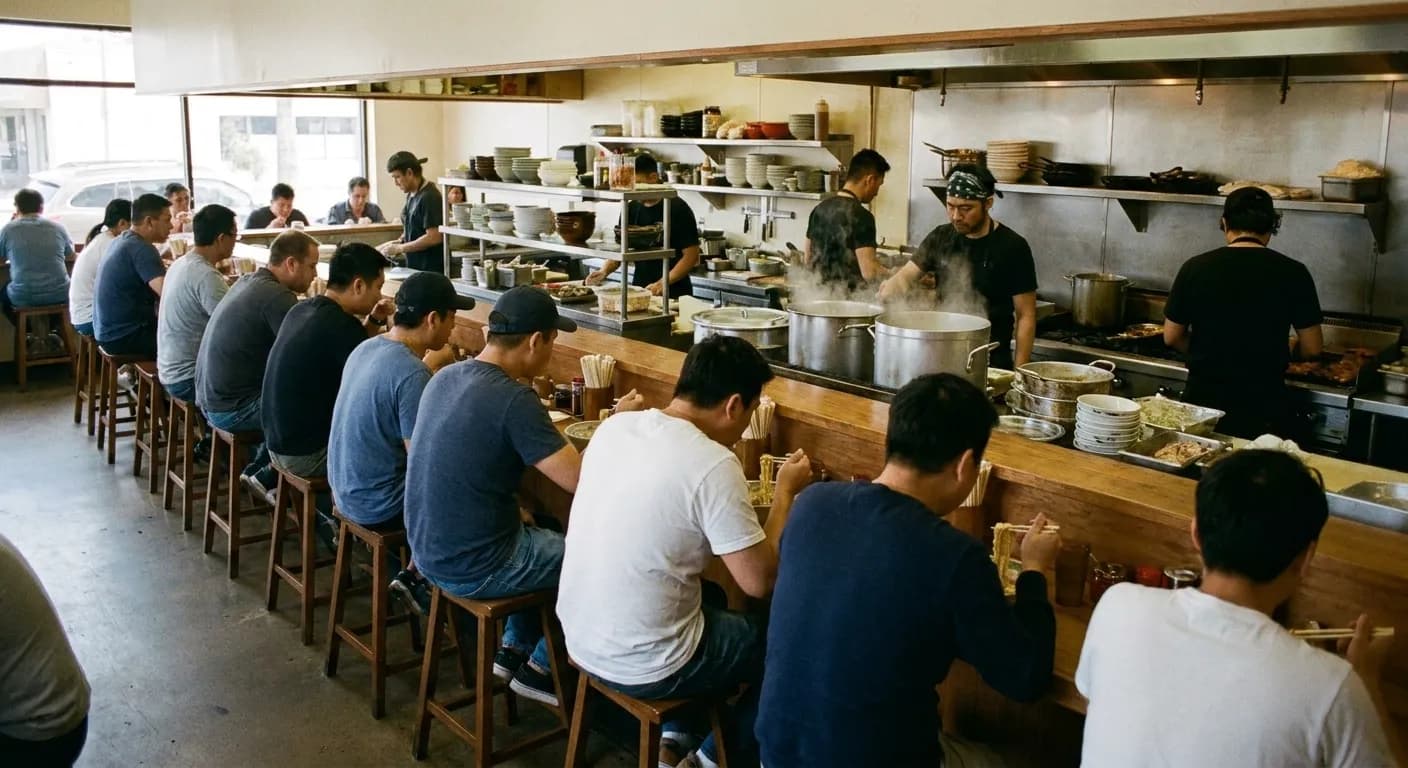
The rule that holds across the city: go to a room with a counter, a short menu and no interior design, in a neighbourhood where Japanese food is normal rather than a night out. Order the standard bowl of whatever the shop is known for, add noodles rather than meat if you are hungry, and drink the water rather than the twelve-dollar highball. That will get you a genuinely excellent bowl of ramen in Los Angeles for under sixteen dollars almost anywhere in the city.
Tags: #LosAngeles #LAEats #BestRamenLA #CheapEatsLA #LittleTokyo #Sawtelle #Tonkotsu #Tsukemen #NoodleShop #BudgetLA #LAFood #JapaneseFood #RamenGuide #Under16 #EatLikeALocal
All trademarks are the property of their respective owners.
Ask Karpo first
Ask Karpo which ramen shops near you in Los Angeles are open now, what a standard bowl costs there, and whether they run a cheaper lunch service.