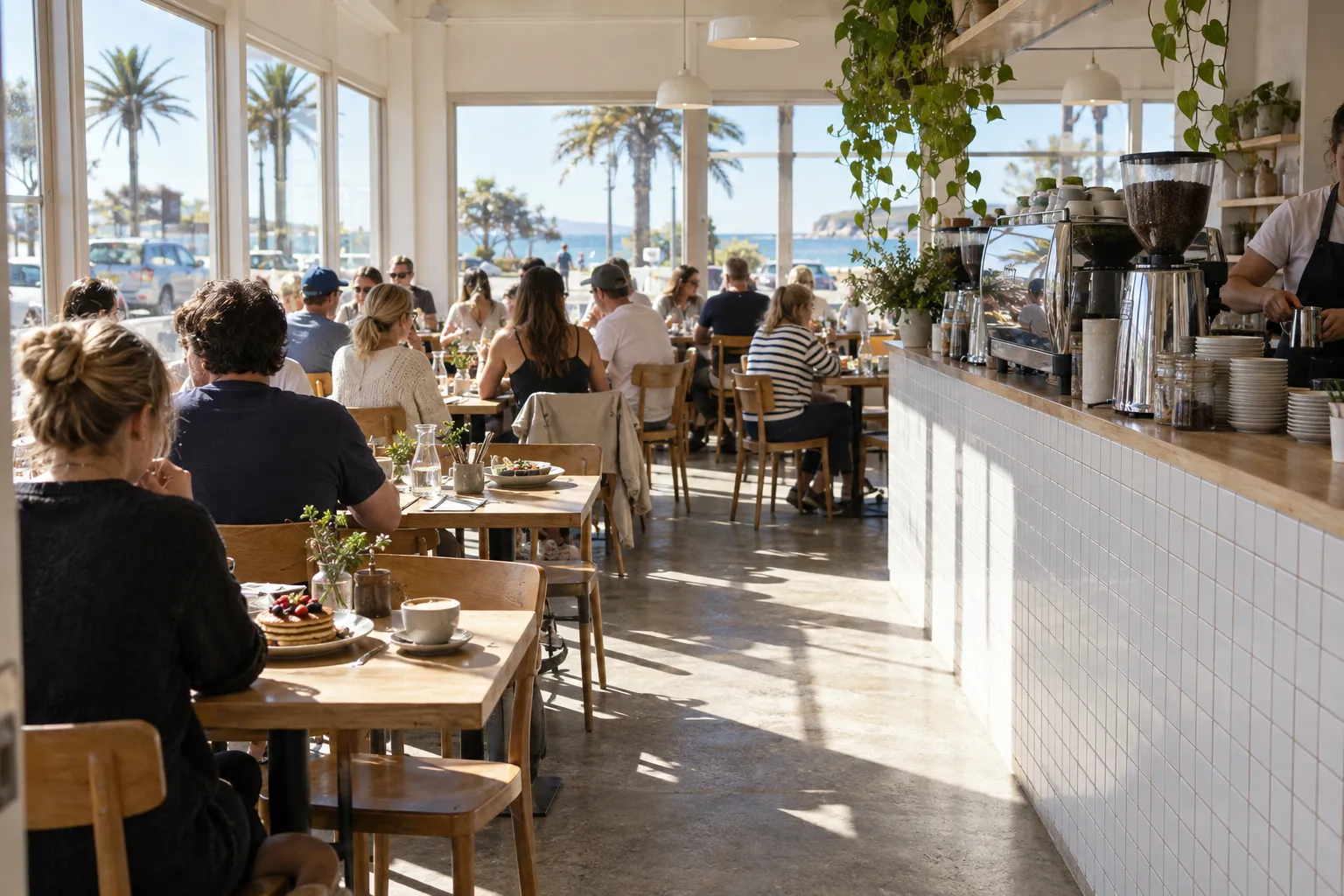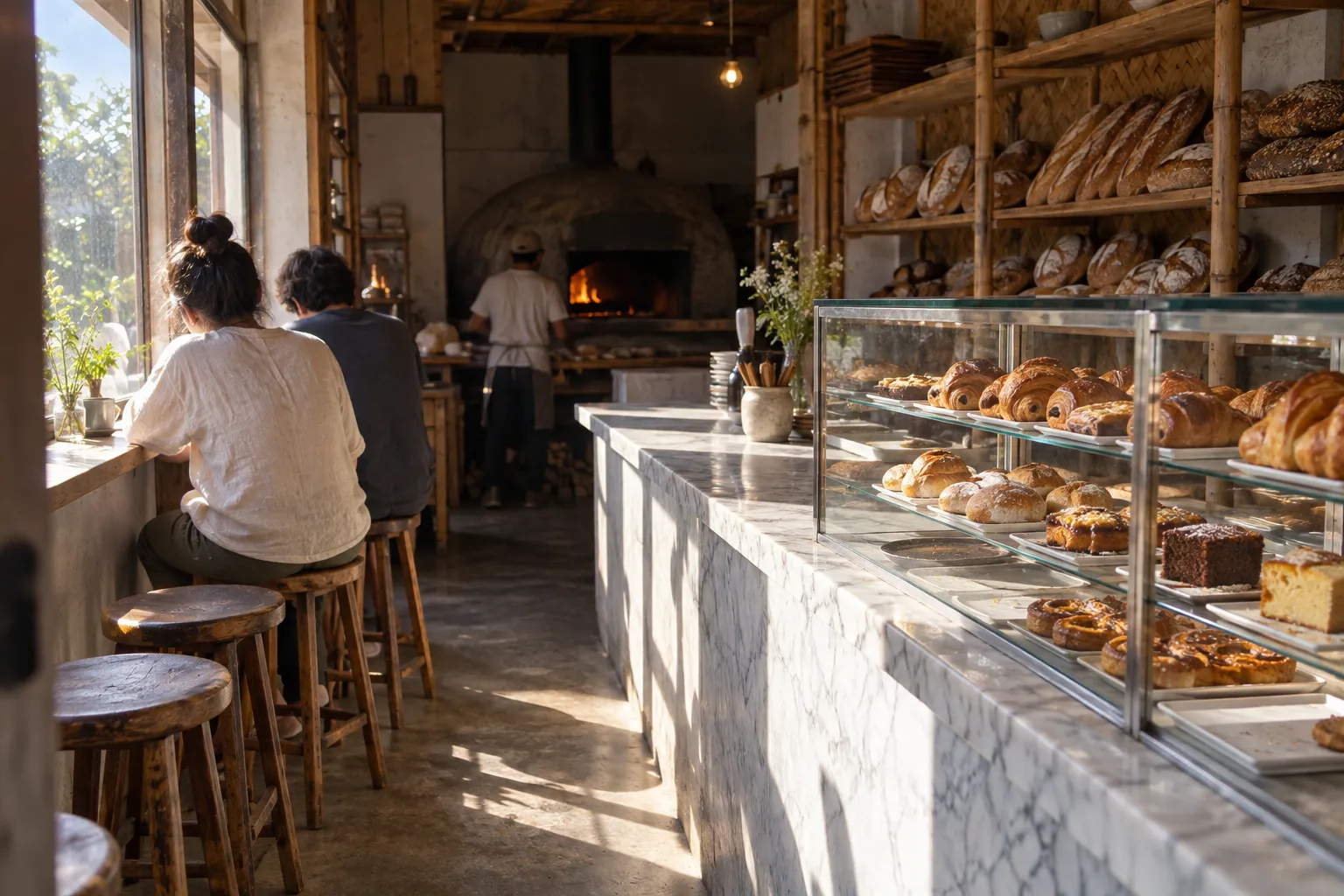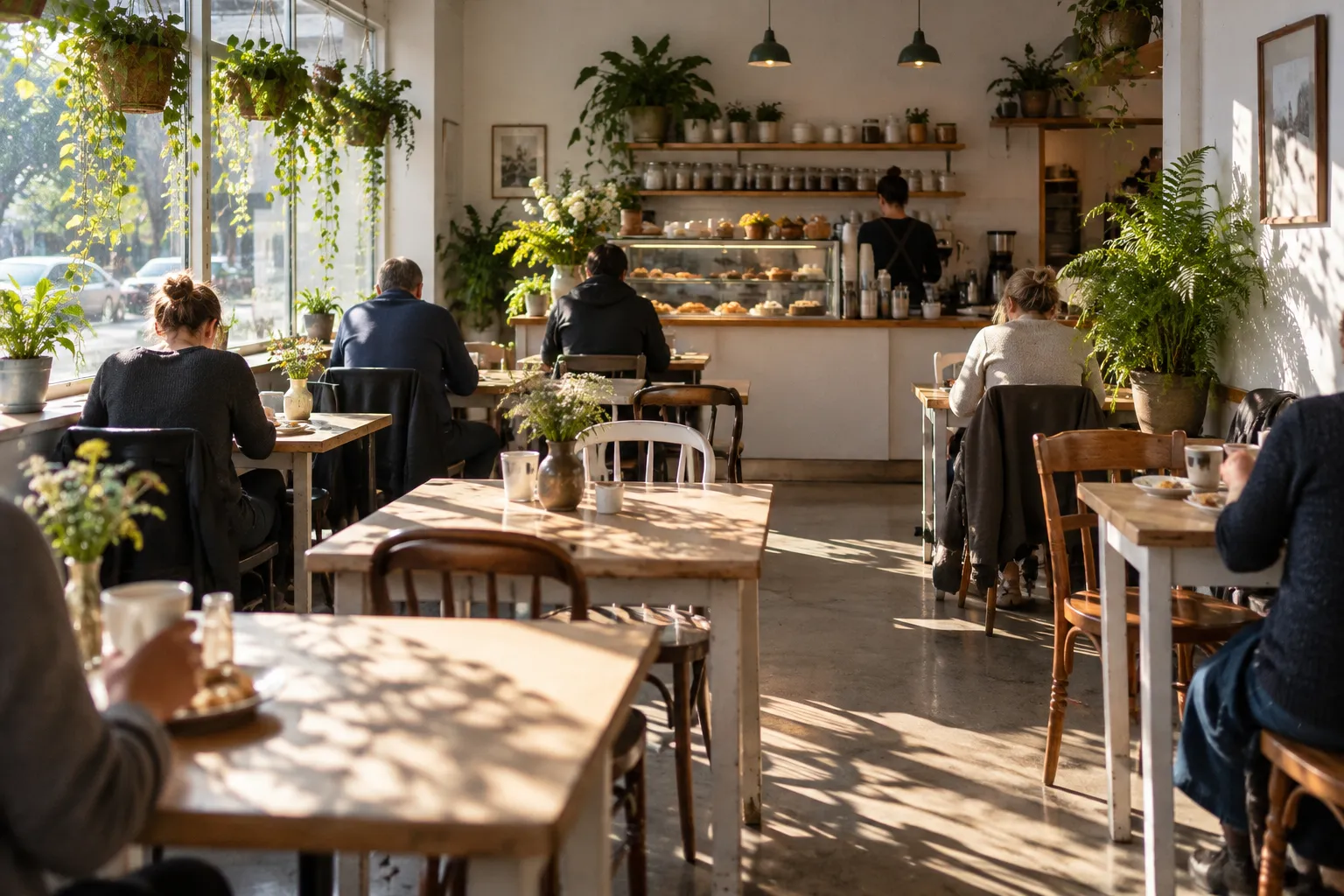
There are two coffee cultures in Los Angeles and only one of them will keep filling your cup. The third-wave café sells a single carefully made drink at four or five dollars and has no mechanism for a refill, because the drink is the product. The diner sells a bottomless mug of ordinary drip coffee for two or three dollars and keeps coming back with the pot, because the coffee is a service that supports the food. Both are legitimate. But if you are looking for a long, unhurried breakfast where nobody is counting your cups, only one of them is the answer, and it is the one people have stopped noticing.
Karpo can find Los Angeles counters near you that still refill, tell you when they open, and how busy they are right now.
Where the refill survives
The free refill lives at diners, coffee shops in the old American sense, and the older family restaurants scattered across the Valley, the Eastside and the beach cities. It is the default at that kind of room rather than an advertised feature, which is why it does not appear in searches.
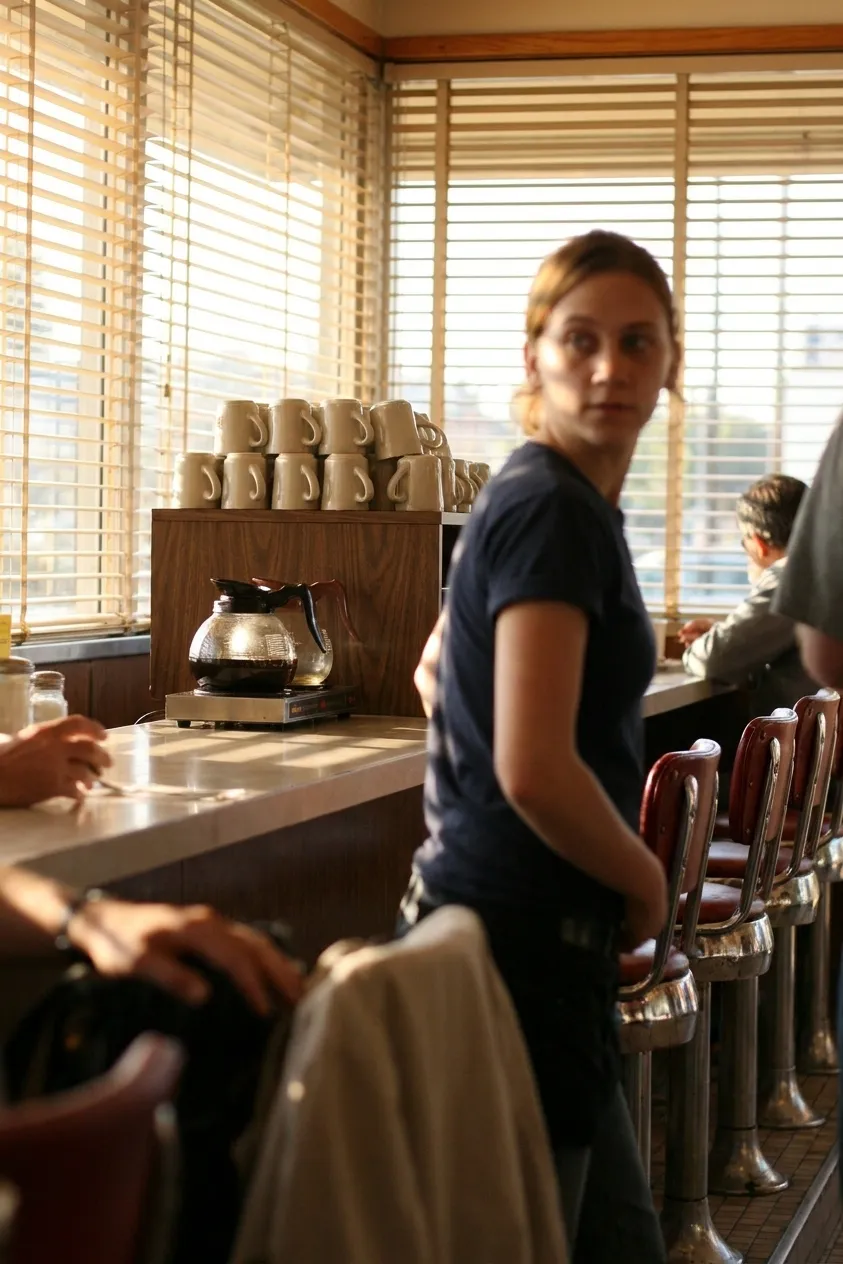
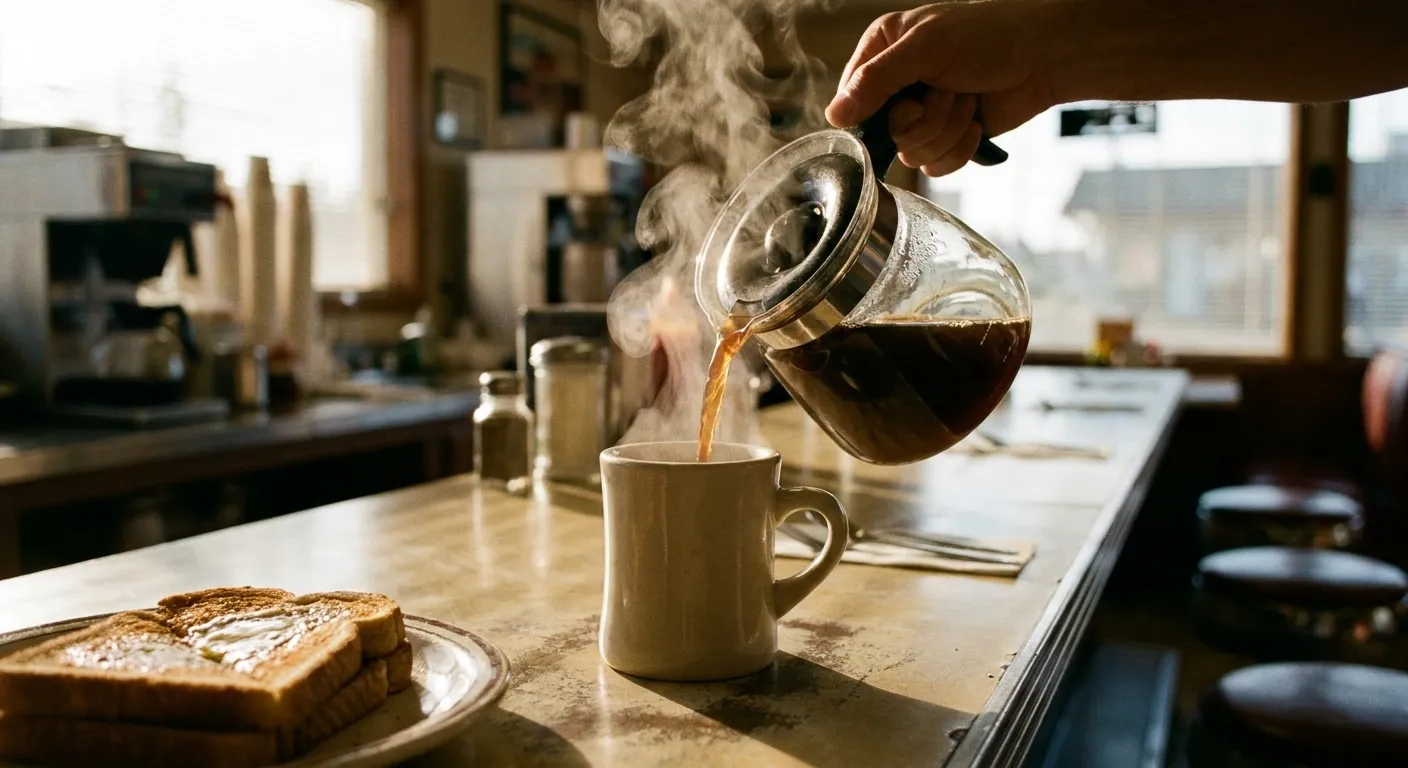
The visual tells are reliable. A glass pot on a warming plate behind the counter, heavy ceramic mugs rather than paper, a counter with stools, and a server carrying a pot rather than taking individual orders. Where you see that combination, refills are almost certainly included and nobody will mention it either way.
The etiquette, which is simpler than people think
You do not ask. Leave the mug where the server can reach it, at the edge of the table or on the counter, and it will be filled. If you do not want more, put your hand flat over the top briefly or say you are fine — both are understood everywhere.
The only real convention is that refills are for coffee, generally drip, and generally while you are eating or shortly after. Nobody polices this and no diner in Los Angeles has ever thrown anyone out for a third cup. But a table occupying a booth for two hours during a Sunday rush on one plate of eggs is a different matter, and that is about the seat rather than the coffee.
Tipping, and why it matters more here
A bottomless coffee model works because the server is being tipped on a bill that includes food. Tipping on the low food total rather than on the service received is how these rooms become unviable, and it is worth being deliberate about.
The straightforward approach is to tip on what the meal would have cost elsewhere rather than on the diner price, or simply to round up generously. On a fourteen-dollar breakfast with four cups of coffee and forty minutes of table time, a four-or-five-dollar tip is the right order of magnitude and it costs very little relative to any other breakfast in this city.
Decaf is worth asking about specifically, because at a bottomless-refill room it is frequently made in much smaller quantities and can be sitting for a long time. If you are drinking several cups of decaf, ask when the pot was made — the answer at a busy diner is usually honest and occasionally the reason to switch to tea.
What you actually give up
Honesty about the trade: diner coffee is ordinary. It is medium-roast drip that has been sitting on a plate for a while, it is not single-origin, and it tastes like coffee rather than like anything more specific. Anyone who has developed a real preference will find it unremarkable.
What you get in return is quantity, warmth, a seat you can occupy, and a total bill that is a fraction of the alternative. For a long breakfast with someone, a morning of reading, or a hangover, that trade is straightforwardly worth making. For a quick excellent coffee on the way somewhere, it is not, and the third-wave café is the right answer instead.
Opening hours are the practical constraint. The classic Los Angeles coffee shops mostly open very early — six or seven — and a number close by two or three in the afternoon, which surprises anyone expecting an all-day café. A few of the survivors still run long or overnight hours, and those are worth knowing individually rather than assuming from the category.
The middle ground that has appeared
A number of Los Angeles cafés now offer a middle position: a batch-brew filter coffee at a low price, sometimes with a cheap refill, made from good beans. It is not bottomless in the diner sense but it is considerably better coffee than diner drip at not much more money.
If a café has a batch brew on tap rather than only espresso drinks, ask about the refill price — a surprising number will do a second cup for a dollar or two. That is often the best available compromise between the two cultures and it is almost never advertised.
Where to look across the city
The Valley has the highest surviving density of classic coffee shops and diners, followed by the beach cities and the older Eastside commercial strips. Downtown retains a handful of institutions. The Westside has the fewest, because the real estate economics pushed them out first.
The wider point is that this is a category defined by age rather than by neighbourhood. A restaurant that has been in the same room for forty years almost certainly refills your coffee; one that opened last year almost certainly does not. If the sign looks like it was made in 1968 and the menu is laminated, you are in the right place.
One last point in favour of these rooms beyond the coffee. The classic Los Angeles coffee shop is one of the few remaining places in this city where you can sit for an hour without a reservation, without an app, and without anyone needing the table, at a price almost anyone can manage. That is worth defending, and the way to defend it is to use it and to tip well.
Tags: #LABreakfast #BestBreakfastNearMe #Diner #BottomlessCoffee #LosAngeles #SanFernandoValley #CoffeeShop #LAEats #MorningRoutine #Refills #FoodGuide #Eastside #CityLiving #Brunch
Please drink responsibly. Must be of legal drinking age.
All trademarks are the property of their respective owners.
Ask Karpo first
Want to know which Los Angeles counters near you still refill the cup, when they open, and how busy they are? Ask Karpo before you drive over.