Los Angeles is expensive in almost every category except this one. Breakfast here, done the way most of the city actually does it, costs between three and seven dollars and is genuinely excellent — not a compromise, not a student option, simply the way an enormous number of people in this city have eaten in the morning for decades. It runs on three formats that share almost nothing except low prices and early hours, and none of them appear in the coverage of Los Angeles breakfast, which is overwhelmingly about brunch. Learning all three takes a week and permanently changes what mornings cost.
Karpo can find cheap breakfast counters near you that are open right now, and tell you which take cards and which do not.
The morning taco stand
Before about nine in the morning, taco stands across the Eastside, South LA and the Valley run a breakfast menu that is different from the evening one: eggs with chorizo or with nopales, potato and bean, guisados spooned onto a tortilla, and the breakfast burrito in its original form. Prices sit in the two-to-five-dollar range per item, and two items is a substantial breakfast.
These stands serve people going to work, which means they are fast, they are on the pavement rather than in a building, and they finish when the morning rush does. Cash is standard. A stand with a queue at seven-thirty is the one to join, and the queue moves faster than it looks.
Panaderias, priced by the piece
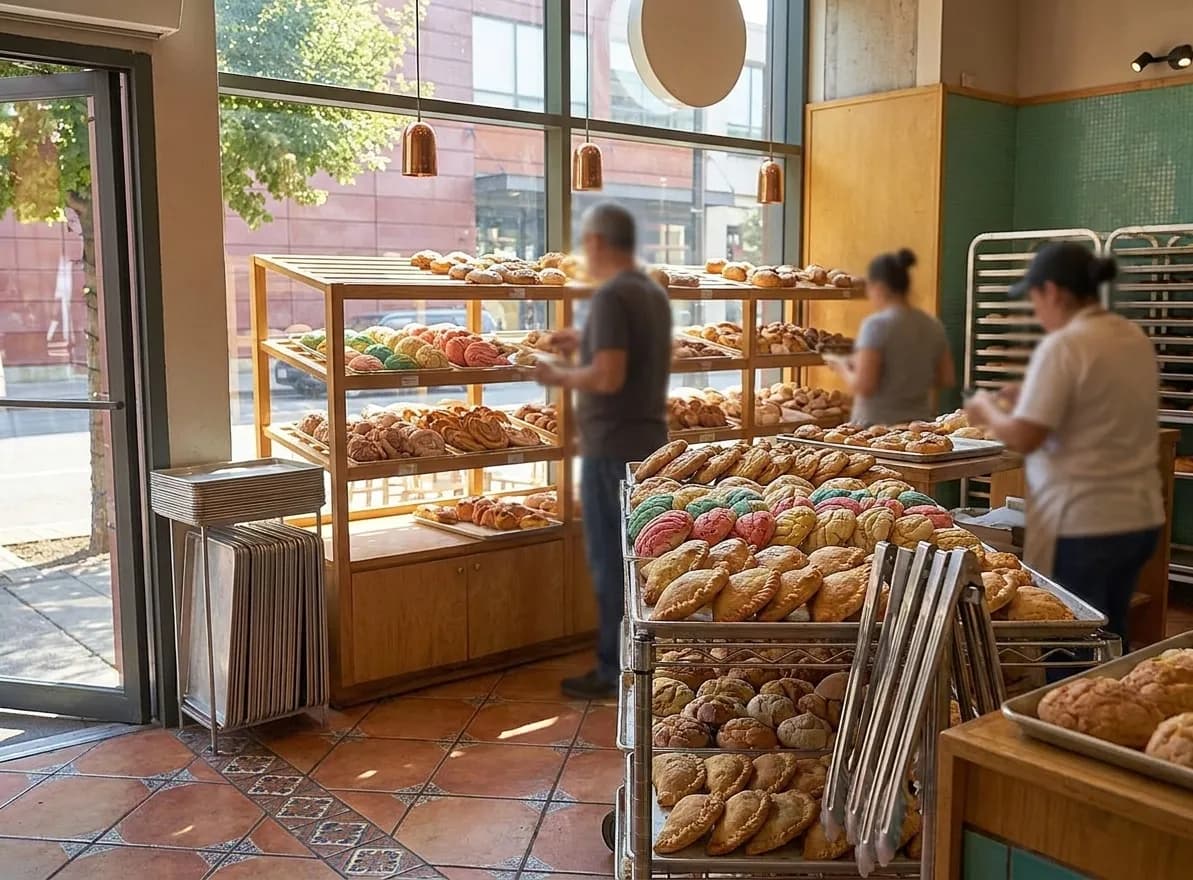
The Mexican bakery is the most efficient breakfast in Los Angeles. You take a metal tray and a pair of tongs at the door, walk the racks, choose what you want, and pay by the piece at the till — conchas, orejas, cuernos, empanadas, bolillos. Individual items are usually well under two dollars.
The tray-and-tongs system is the part that intimidates newcomers and it is entirely self-explanatory once you have done it once. Nobody will help you and nobody needs to. Go early: the best trays come out between five and eight, and by mid-morning you are choosing from what is left. Most panaderias also sell coffee, which is straightforward and costs a dollar or two.
The donut shop, which is a Los Angeles institution
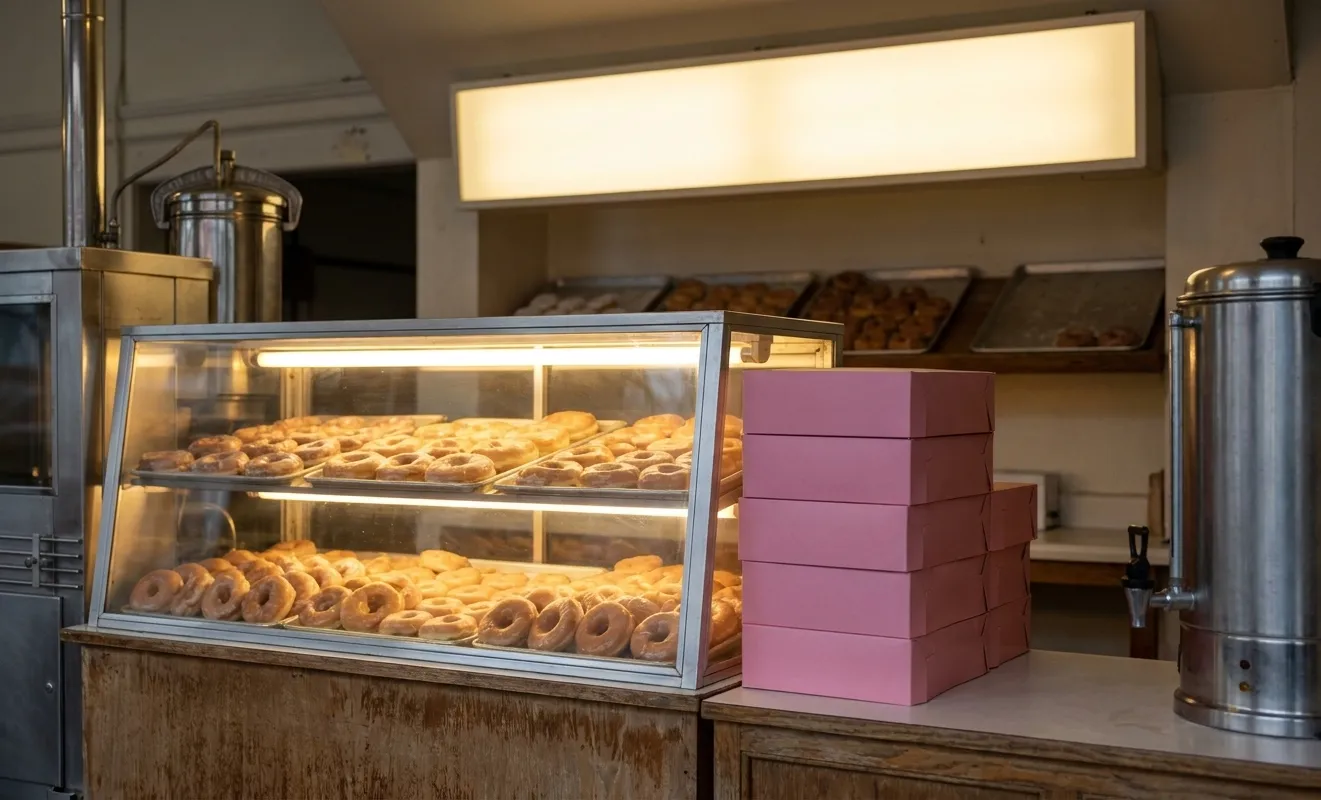
Los Angeles has an unusually dense population of independent donut shops, most of them family-run and a large share of them Cambodian-American, a history that traces back to a single influential figure in the trade. They open very early, they make everything on site overnight, and a donut and a coffee is one of the cheapest hot breakfasts in the county.
The good ones are obvious: the case is full at six and emptying by nine, the coffee is fresh rather than sitting, and there is a queue of people who clearly come every day. Buy the plain and the glazed to judge a shop rather than anything elaborate, which is where the skill actually shows.
The breakfast burrito, and where it comes from
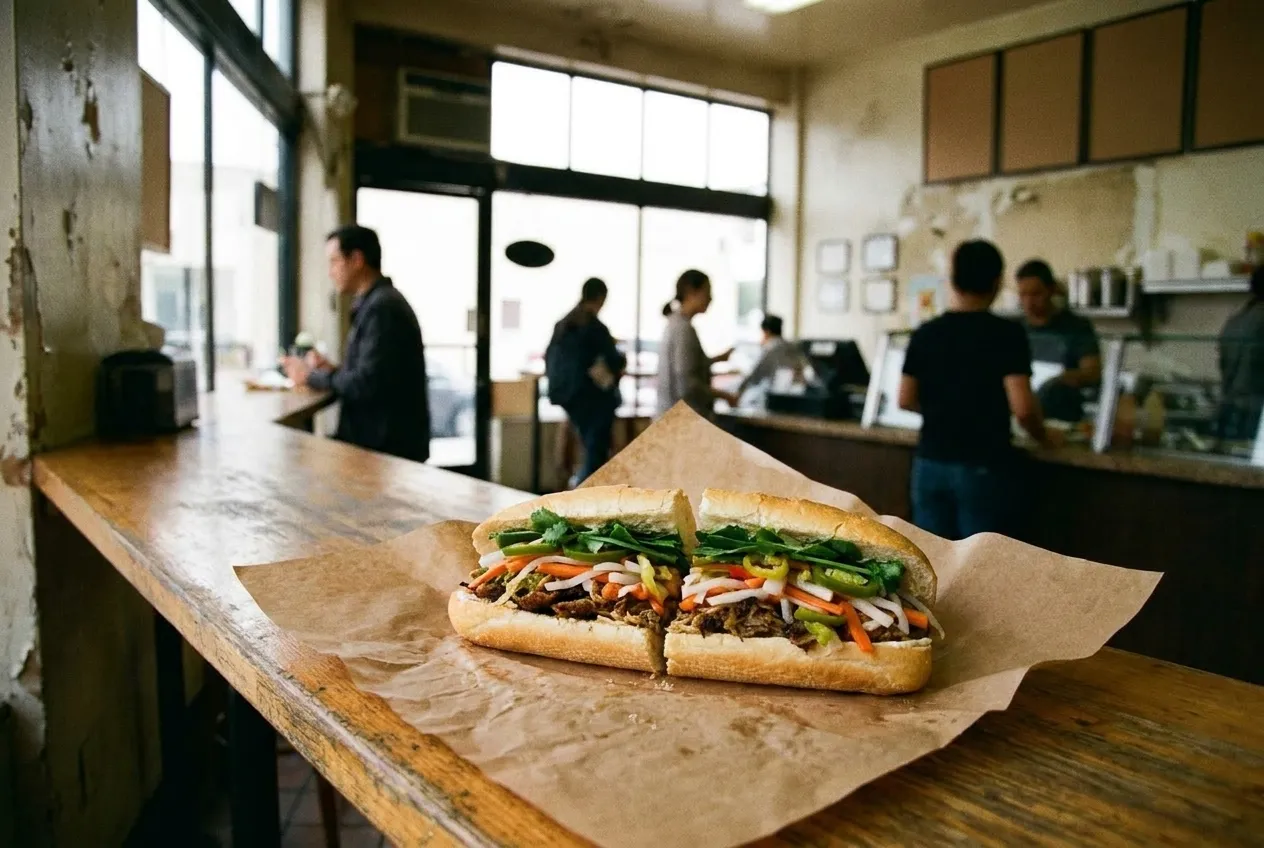
The Los Angeles breakfast burrito is its own thing and worth distinguishing from the brunch-menu version. The original is a flour tortilla with eggs, potato, cheese and a meat, wrapped tight in foil, made at a stand or a small counter, and priced between five and eight dollars. It is dense, portable and designed to be eaten with one hand.
The restaurant version costs two or three times as much and is generally worse, because the thing that makes the original good is that it was made ninety seconds ago on a griddle that has been running since five. If a menu describes a breakfast burrito in more than one line, it is probably the other kind.
Coffee at this price point
None of these formats sells specialist coffee and all of them sell coffee. Panaderia coffee, donut shop coffee and stand coffee are all straightforward drip or café de olla, cost a dollar or two, and are the correct accompaniment to what you are eating.
If good coffee matters, the workable pattern is to buy the food at one of these places and the coffee separately from a roaster later, accepting that the food will be slightly cooler. What does not work is trying to get both at once at either kind of establishment, which produces a mediocre version of whichever one you were less interested in.
Where the clusters are
Boyle Heights, East LA and the corridor along Whittier and Cesar Chavez for the taco stands and panaderias. The San Fernando Valley for donut shops, cheap diners and the Armenian and Middle Eastern bakeries that belong in the same category. South LA and the Westlake and Pico-Union districts for a dense concentration of all three. And the older commercial strips almost anywhere in the county, which is where the independents survived.
The general rule is that this economy exists where working people live rather than where visitors go. If a neighbourhood has a lot of people leaving for work at six-thirty, it has a good cheap breakfast. If it does not, it has brunch.
Making it a habit rather than an experiment
The saving is real but only compounds if it becomes the default. Three or four dollars a morning instead of twelve or fifteen is several thousand dollars a year, and the food is better on most measures. The barrier is almost never the price; it is that these places are slightly unfamiliar and require cash and an early alarm.
Pick the one nearest to you, go five times, and it stops being unfamiliar. You will be recognised by the third visit, which in a panaderia or a donut shop means a slightly better tray and a conversation, and that is the actual reason people keep going rather than the four dollars.
Tags: #LABreakfast #CheapEatsLA #BestBreakfastNearMe #Panaderia #DonutShop #BreakfastBurrito #BoyleHeights #SanFernandoValley #LAEats #MorningRoutine #BudgetLA #StreetFood #FoodGuide #BackToSchool
Please drink responsibly. Must be of legal drinking age.
All trademarks are the property of their respective owners.
Ask Karpo first
Want to know which cheap breakfast counters near you are open right now, and which take cards? Ask Karpo before you set the alarm.