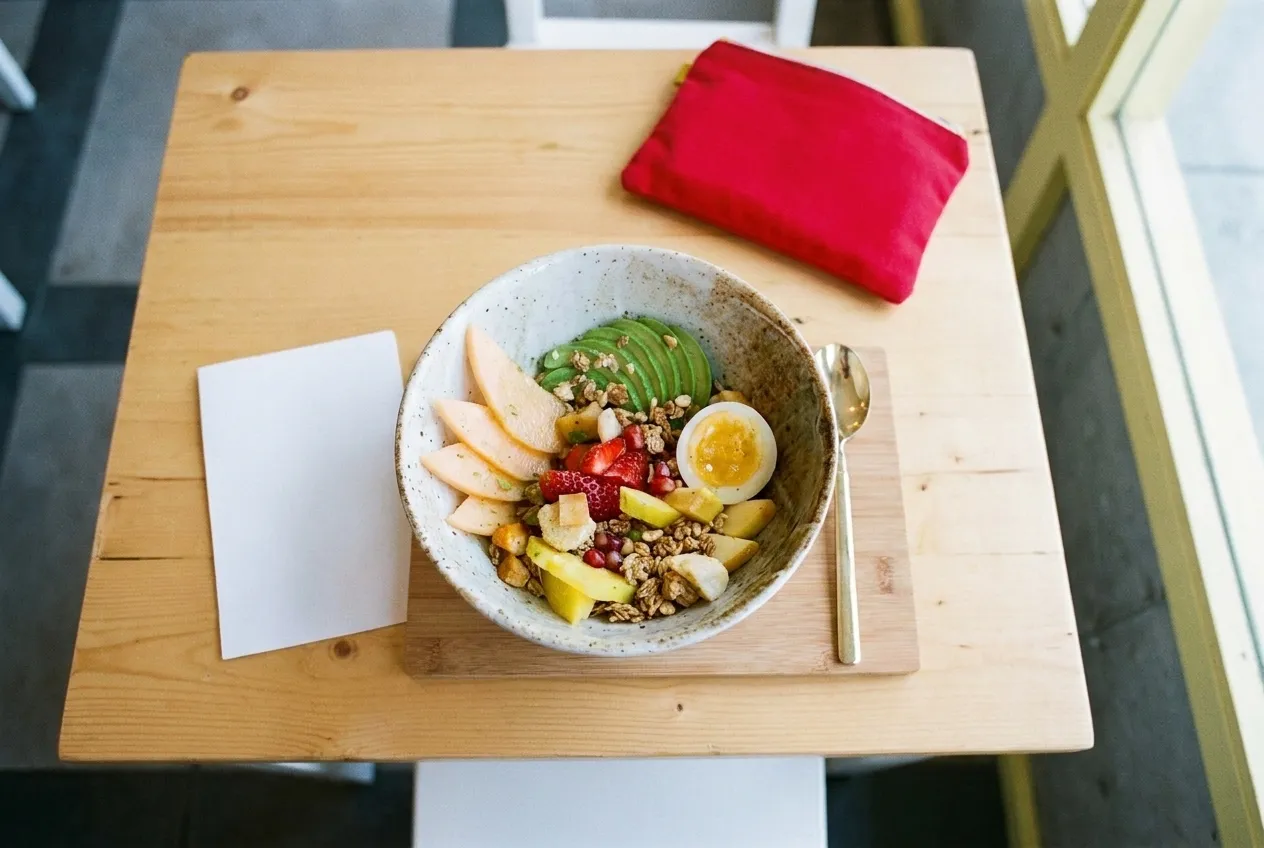
The smoothie bowl is a Los Angeles export in the way the burrito is a San Diego one, and like most exports it has been diluted in transit and at home. A meaningful proportion of what is sold in this city as a healthy breakfast bowl contains more sugar than a pastry, arrives with a granola that is essentially a biscuit, and is finished with a drizzle that is a confectionery product. None of that makes it bad. It makes it dessert, and it is worth knowing which one you are buying at nine in the morning.
Half of these bowls are dessert with fruit on top and the menu will not say so. Ask Karpo which places near you make a real one.
The base is the whole question
A smoothie bowl is frozen fruit blended thick enough to eat with a spoon. That is the entire concept. What varies is what else is in the base: apple juice or fruit juice as a blending liquid, a sweetened frozen fruit pack, honey or agave, and sometimes a sorbet-style base that is closer to ice cream than to fruit.
The question to ask is simple and rarely asked: what is in the base besides fruit. A place using unsweetened frozen fruit and either water, a plain milk or a plant milk to blend is making the real thing. A place blending with juice and adding a sweetener is making a smoothie the consistency of soft serve, which is a fine product and not a light breakfast.
The toppings compound it. Granola in most bowls is sweetened and oil-bound, the drizzle is usually a sweetened nut butter or a chocolate product, and honey is added on top of a base that already contains sweetener. A bowl can easily arrive at the sugar content of a slice of cake without any single component seeming unreasonable.
How to build one that is actually breakfast
Ask for the base unsweetened if that option exists. Add a protein — nut butter without added sugar, seeds, or a plain yoghurt — because a bowl of fruit alone will leave you hungry within ninety minutes, which is the most common complaint about the whole category and is a formulation problem rather than a fruit problem.
Take the granola on the side rather than mixed in, which halves the amount you actually eat. Skip the drizzle. Add fresh fruit rather than more frozen fruit, since fresh fruit brings fibre and water and frozen purée does not in the same way. That version is a genuinely good breakfast, and it costs the same as the dessert version.
The Los Angeles advantage: actual fruit
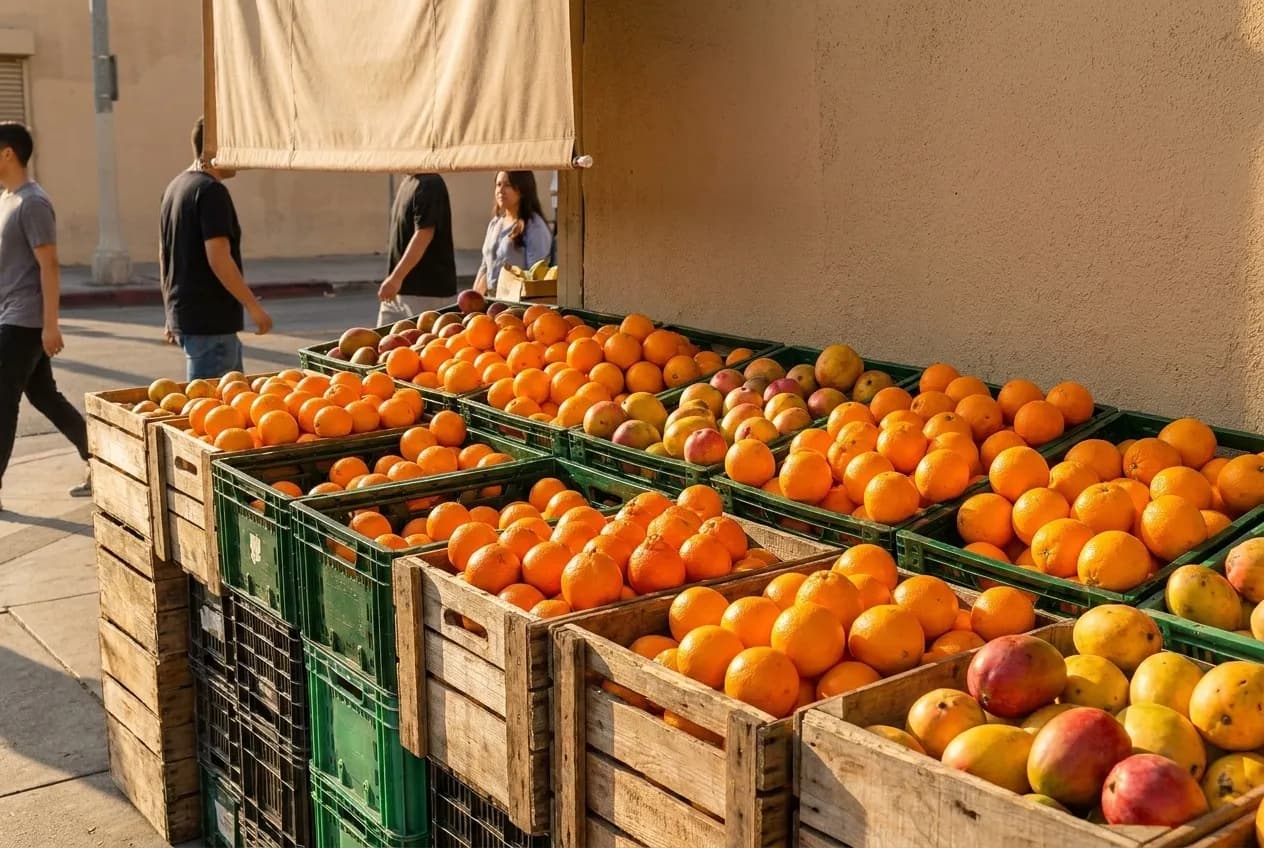
The thing this city has that almost nowhere else in the country does is year-round local fruit, and the smoothie bowl category has slightly obscured it. The farmers markets — the Santa Monica Wednesday market on Arizona Avenue is the trade one, with a large weekend network across the county — carry stone fruit, citrus, avocados, berries and melons in a growing calendar that barely has a gap.
And the street fruit vendors, particularly across the eastern and southern parts of the county, sell cut fruit in bags with lime and chilli for a few dollars — mango, jicama, cucumber, watermelon, coconut. That is the cheapest and freshest breakfast fruit in Los Angeles by a wide margin, and it is a genuinely local food culture rather than an imported wellness one.
Juice counters and the honest comparison
Cold-pressed juice is the other half of this category and it has the same structure. A juice is fruit with the fibre removed, which makes it sugar in liquid form regardless of how it is marketed; a juice with a substantial vegetable component is a different and better proposition. The useful habit is to read the ingredient order, since it is listed by volume, and if the first two ingredients are apple and pineapple you are drinking a fruit sugar drink with a green colour.
None of which is an argument against any of it. It is an argument for knowing which product you have bought, so that a bowl at nine in the morning is a decision rather than a surprise at eleven when you are hungry again.
Where these cluster
The bowl and juice geography is the Westside and the beach cities — Venice, Santa Monica, Manhattan Beach and the corridors between them — plus Silver Lake, Los Feliz and Highland Park on the Eastside, and the Sawtelle and Culver City blocks. The fruit stand geography is almost the inverse, concentrated across East LA, Boyle Heights, South LA and the southeast cities, which is where the cheapest and best fruit in the county is sold. Knowing both maps is worth more than knowing either.
Practical notes
A smoothie bowl is frozen fruit blended thick; the variable is what else is in the base. Ask what the base contains besides fruit — juice, sweetened frozen packs, honey or agave push it toward dessert. Toppings compound it: sweetened oil-bound granola, sweetened nut butter or chocolate drizzles, and honey on an already-sweetened base. To make it breakfast: request an unsweetened base, add a protein such as unsweetened nut butter, seeds or plain yoghurt, take granola on the side, skip the drizzle and add fresh rather than frozen fruit. Farmers markets, including the Santa Monica Wednesday market on Arizona Ave and the county-wide weekend network, carry local fruit year-round. Street fruit vendors across East LA, Boyle Heights, South LA and the southeast cities sell cut fruit with lime and chilli for a few dollars. For juices, read the ingredient order — it is listed by volume.
Tags: #BestBreakfastNearMe #LosAngeles #SmoothieBowl #AcaiBowl #ColdPressedJuice #FarmersMarket #StreetFruit #Venice #SantaMonica #SilverLake #BoyleHeights #EastLA #HealthyBreakfast #LAEats
All trademarks are the property of their respective owners.
Ask Karpo first
Whether a bowl is breakfast or dessert depends on things the menu does not print. Ask Karpo which places near you make an unsweetened base, which fruit stands are set up today, and what is actually in season this week.