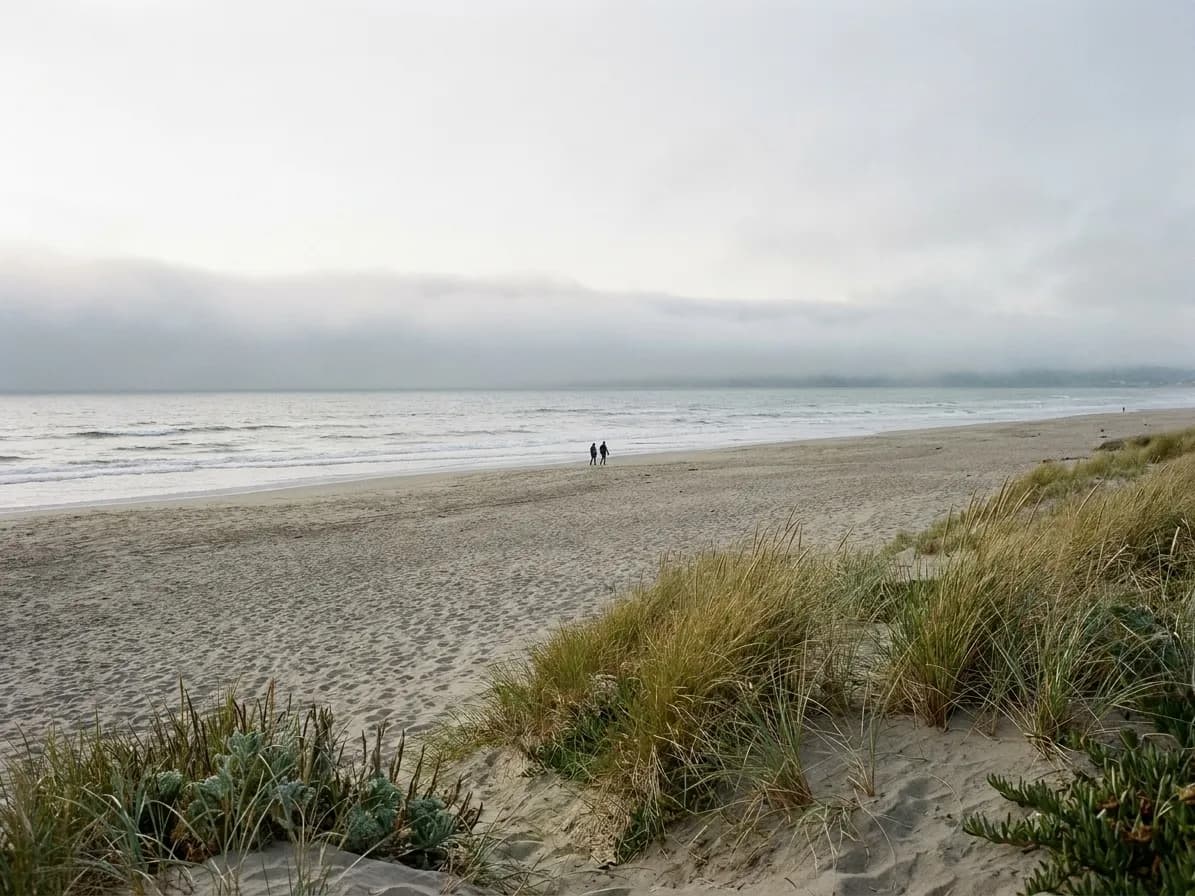
A beach day is one of the best free things you can do here and one of the easiest to get wrong. The best beaches near San Francisco are cold, windy and frequently fogged in when the rest of the city is sunny, and every one of those variables is predictable if you check the right thing. Treating this as a planning problem rather than a spontaneous one is the difference between a great day and two hours of sitting in a wind tunnel eating sandy crisps.
Conditions on this coast vary block by block and hour by hour. Ask Karpo what the coast looks like today before you commit to the ride out.
Timing is the whole game
The fog pattern in this city is seasonal and daily. Summer is the foggiest stretch, which surprises visitors constantly; September and October are the clearest and warmest months of the year on this coast. Within a day, the pattern is usually a grey morning, a burn-off somewhere between eleven and two, and the fog returning in the late afternoon. That gives you a usable window of roughly noon to five, and arriving at ten is how people conclude that the beach here is miserable.
Wind is the second variable and it matters more than temperature. A still, sixteen-degree afternoon on the sand is pleasant. A breezy twenty-degree one is not, because the wind here carries sand at ankle height and does not let up. The forecast number to look at is wind speed, not the high.
Which beaches, and how to reach them
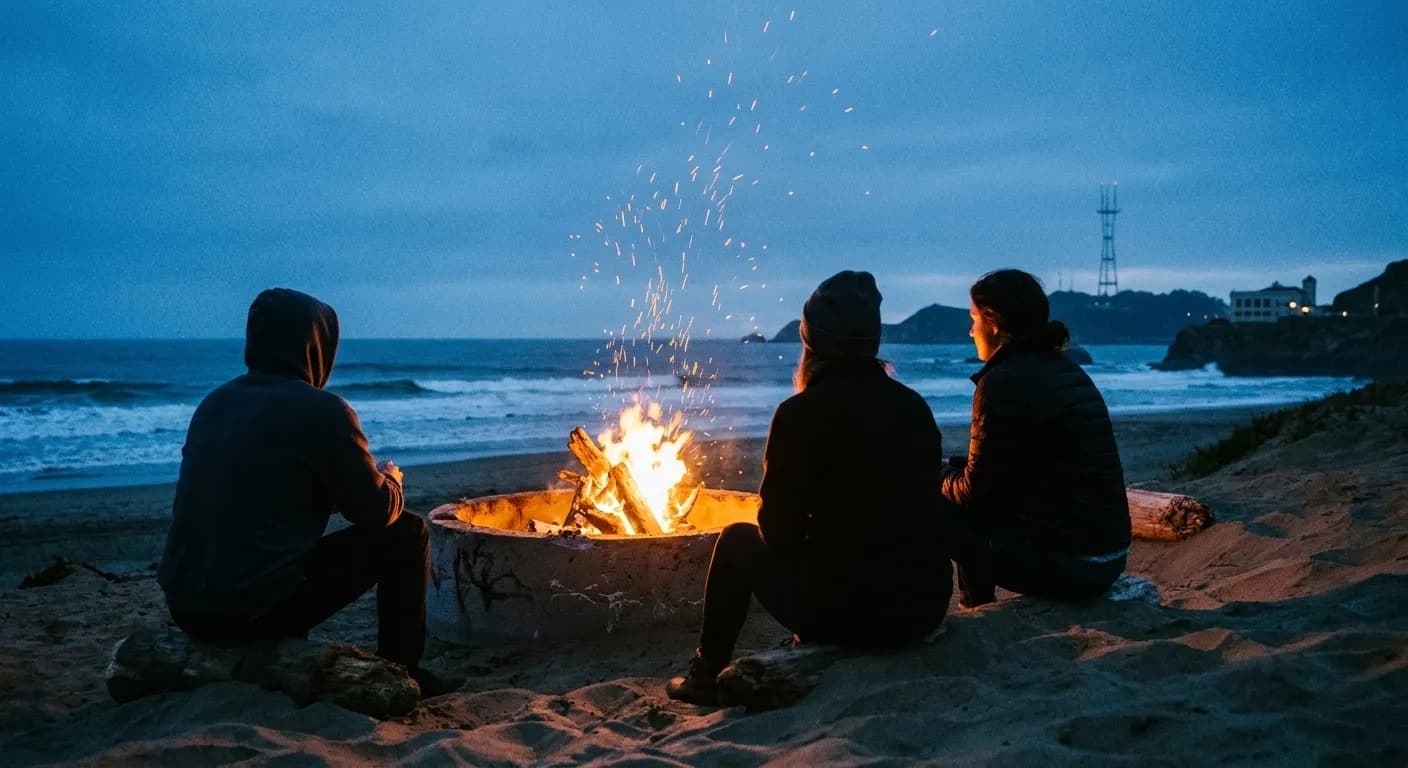
Ocean Beach is the big one — three miles of sand along the city's western edge, reachable on multiple Muni lines, and the only city beach with permitted fire rings during the season. It is exposed, the water is genuinely dangerous for swimming because of rip currents, and it is the best place in San Francisco to watch the sun go down over the Pacific.
Baker Beach sits below the Presidio with a direct view of the bridge, and it is partially sheltered by the headland, which means it gets meaningfully more sun than Ocean Beach on the same day. China Beach is the small, quiet cove just west of it — a fraction of the size, considerably more protected, and the best option if the wind is up. Both are reachable by bus plus a walk, and both have limited parking that fills by mid-morning at weekends.
The car-free version
All three city beaches are genuinely reachable without a car, which is unusual for a Californian coastline. Ocean Beach is the easiest: a single tram line from downtown puts you a block from the sand. Baker and China Beach involve a bus and a fifteen-minute walk through the Presidio, which is pleasant in itself. Budget forty-five minutes each way from the eastern half of the city and treat that as the real cost of the trip.
Further afield — the Marin headlands beaches, the coast down toward Pacifica — a car becomes close to necessary, and on a clear weekend the parking situation makes the journey much longer than the mileage suggests. For a first beach day, staying inside the city is the better call.
What to actually bring
Layers, and more than you think: a windproof outer layer is more useful than a warm one. A blanket rather than a towel, because the sand is damp and cold. Something to weigh the corners down. Water, since there is very little to buy near any of these beaches. And if you are planning a fire, your own wood — driftwood on this coast is usually too damp to burn and gathering it is discouraged.
The fire rings at Ocean Beach are first-come, seasonal, and subject to rules about hours and what you can burn, all of which are enforced. Turning up at four on a Saturday in September expecting a free ring is optimistic; turning up at two on a Wednesday is not.
The realistic shape of the day
Leave after lunch rather than in the morning. Bring food with you. Plan for the wind to come up around four and for the fog to arrive shortly after, and have somewhere warm identified for afterwards — the Sunset and the Richmond both have good, cheap food within a few blocks of the sand, which is the correct end to a beach day here. Sunset over the Pacific is the payoff and it happens after the crowds have started leaving, which is the best argument for staying.
If you want warm water, go inland
The counterintuitive move on a hot day is to leave the coast entirely. The bay-side beaches — the small strips on the north waterfront and the shorelines across the water in Marin and the East Bay — are sheltered, calmer, ten degrees warmer and swimmable in a way the Pacific side is not. They look less dramatic in a photograph and they are considerably more pleasant to spend an afternoon on.
The same logic applies to the reservoirs and lakes an hour out. If the objective is swimming and sun rather than surf and fog, the ocean beaches near San Francisco are the wrong tool, and locals who want to swim outdoors almost never go west.
The one safety rule that matters
Swimming is not part of the plan on the Pacific side. The water is cold enough year-round to be a medical consideration rather than a comfort one, and the currents at Ocean Beach in particular are genuinely hazardous. Wading is fine. Going out past your knees is not, and the signs saying so are not being cautious for the sake of it.
Tags: #SanFrancisco #OceanBeach #BakerBeach #ChinaBeach #BeachDay #FreeThingsToDo #SFOutdoors #PacificCoast #SunsetDistrict #Presidio #BayArea #SFWeekend #CarFree
All trademarks are the property of their respective owners.
Ask Karpo first
Ask Karpo which beaches near you in San Francisco are clear right now, how long the transit ride takes, and where to eat afterwards.