</--->
Why This Section of Hudson River Park
Hudson River Park runs four miles total, from Battery Park to West 59th Street. The Battery-to-Tribeca section is the most concentrated for what it shows: the historic core of New Amsterdam at the southern end, the new World Trade Center mid-route, the pre-9/11 Tribeca waterfront at the north end. Most other sections are residential and recreational; this section is dense with stories.
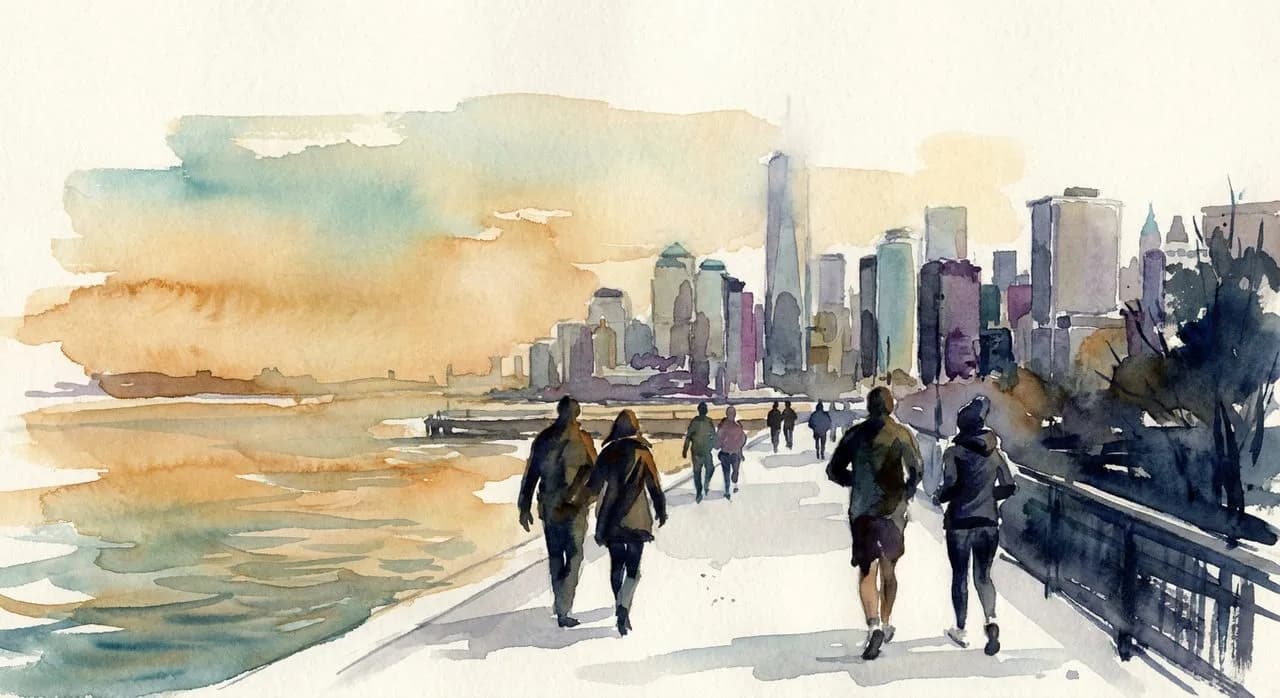
The walking surface is paved esplanade for the entire route, with a separate bike lane to the east. Total elevation change: less than 10 feet. Total walking time at conversational pace: about 45 minutes. The route can be done either direction, but starting at Battery Park and walking north has the advantage that the most historic content opens first, when you have most attention.
Mile 0 — The Battery and the Dutch Boundary
Start at Battery Park's southern tip, where the Statue of Liberty ferry departs from Castle Clinton. The 1811 fortress stands on what was originally a small island just off Manhattan's southern shore — the harbor was filled in by the late 1800s to create today's Battery Park. The fort's stone walls are the most authentically pre-1820 structure in Lower Manhattan.
Walk west along Battery Place toward the river. The route is marked with a bronze plaque set in the sidewalk indicating the 1640s Dutch colonial boundary line that ran roughly along today's State Street. New Amsterdam — the entire original Dutch colony — was south of this line. The plaque is at sidewalk level and easily missed; look for it just before reaching the riverfront.
Mile 0.3 — The Skyscraper Museum and the Holocaust Memorial
The first section of the actual riverfront walk passes the Museum of Jewish Heritage on the right (free admission Wednesdays from 4 to 8 p.m.) and then the Skyscraper Museum at 39 Battery Place. Both are free during specific hours and worth a 30-minute pause if you have time.
Continue north into the Battery Park City portion of the route. The 1980s residential planning here was unusually careful — the Esplanade was built before the apartment towers and includes 25 acres of public open space, sculpture, and gardens. The walk gets a quiet aesthetic break from the older-style Lower Manhattan streets.
Mile 0.6 — The 9/11 Memorial Pool's Western Edge
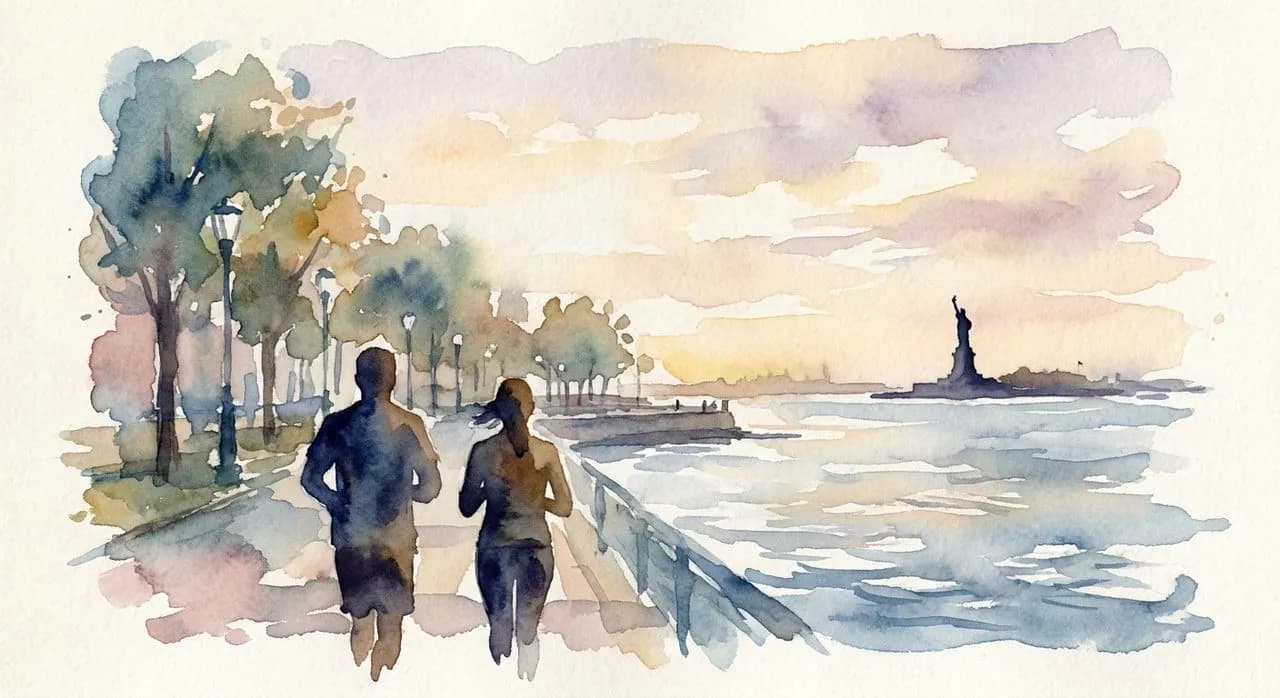
About six-tenths of a mile in, the path passes the western edge of the World Trade Center site. The North Pool of the 9/11 Memorial sits about 200 feet east of the river path. You can detour east for 5 minutes to walk the memorial's plaza, or stay on the river path and continue north.
The west side of the WTC site has a quieter relationship to the memorial than the east. Most visitors approach from the East — the subway exits and tour bus drop-offs are all to the east. From the river side, the towers (One World Trade and the Oculus transit hub) frame the memorial's pools without the foot traffic.
Mile 0.9 — The Brookfield Place Entrance
The midpoint of the route is at Brookfield Place, the indoor-and-outdoor mixed-use development at the foot of the Vesey Street Pier. The Winter Garden — a 120-foot-tall glass-domed atrium — is publicly accessible and serves as a covered crossing-point for inclement weather.
Brookfield Place's plaza level has a row of restaurants and food halls (Le District is the most ambitious; Hudson Eats is the casual option). For a 15-minute coffee break, the rotation of cafes here is reliable and the restrooms are clean. The route then continues north along the riverfront.
Mile 1.2 — Stuyvesant High School and Pier 25
Continue north past the Stuyvesant High School complex (the school's main entrance faces Chambers Street, not the river, but the school's western windows look over the path). Just past Stuyvesant, the path passes Pier 25 — currently a community garden, mini-golf course, and beach volleyball complex.
Pier 25 is also the home of the Downtown Boathouse's main location, where free kayaking is offered most weekends from May through October. The boathouse itself is an unmarked white shed at the western end of the pier; you'll pass it without noticing unless you know it's there.
Mile 1.4 — Pier 26's Salt Marsh and Tribeca Finish
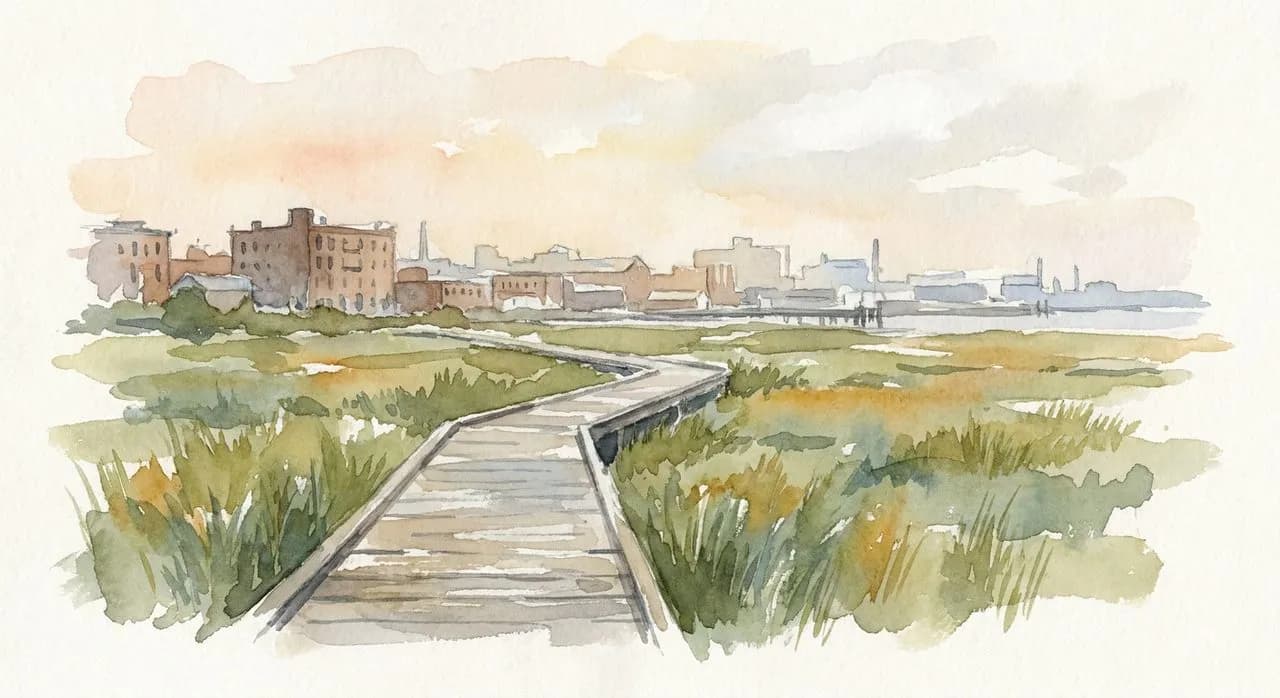
The final stretch from Pier 25 north passes Pier 26 — the city's first ecologically restored pier, with a 16-acre platform that includes a tidal salt marsh, a public meadow, and the Pier 26 Tide Deck Cafe. The salt marsh boardwalk is a 5-minute loop and a striking visual contrast to the urban waterfront.
The walk finishes at the North Moore Street entrance to Hudson River Park, in the heart of Tribeca. From there, walk one block east to West Street and you're at the foot of Tribeca's restaurant district. Bubby's, a Tribeca institution since 1990, is two blocks south; Locanda Verde is two blocks north.
How Long It Actually Takes
A direct walk with no stops: 32 minutes at a moderate pace. With brief stops at Battery Park, Brookfield Place's coffee, and Pier 26's salt marsh: about 90 minutes. With longer detours (the 9/11 Memorial, the Skyscraper Museum): two and a half hours.
The route works in any season but is best from late April through October when the river path is fully sun-exposed and the gardens are in bloom. Winter walks are possible but need a windbreaker — the river-facing sections are uniformly cold.
Practical notes
- Address: Start at Battery Park's State Street entrance; finish at North Moore Street, Tribeca
- Getting there: Start: 1 to South Ferry; 4/5 to Bowling Green. Finish: 1 to Franklin Street; A/C/E to Canal Street.
- Go for: The 1640s Dutch colonial plaque, the 9/11 Memorial detour, Pier 26's salt marsh, the Brookfield Place coffee break
- Size / timing: 1.6 miles, 90 minutes with stops, 32 minutes direct. Free, paved, flat, accessible year-round.
- Photograph it, but know this: The morning light makes the western New Jersey shoreline backlit and the Manhattan skyline a flat gray. Walk in the late afternoon for warm light on both shores.
This walk does the rare thing of compressing the entire historic-to-modern arc of Manhattan into 90 minutes of unbroken waterfront. The first half mile shows the city's earliest history; the second half mile shows its 21st-century architecture; the final quarter mile is the working Tribeca riverfront. The path is one of the few in the city where the four centuries are all visible from the same angle.
#hudsonriverpark #batteryparknyc #tribecanyc #911memorial #lowermanhattan #manhattanwalk #waterfrontnyc #longwayhome #nyctour #freenyc #nycculture #pier26 #brookfieldplace #nycwalking #urbantrail
Sources consulted: Hudson River Park Trust · Battery Park Conservancy · The New York Times · NYC & Company · Atlas Obscura
All trademarks are the property of their respective owners.