The tile floor at Lucy's Lounge amplifies everything—the scrape of a barstool leg, the clatter of a rocks glass hitting the rail, the pneumatic click when the Seeburg jukebox swaps one 45 for the next. It's a narrow room on Avenue A, the kind of place that holds maybe thirty people before elbows start colliding, and in late 2026 it remains blessedly unchanged: wood paneling the color of old tobacco, a back room lit only by string lights, and a row of bar stools that function as both seating and social theater. This is not a bar designed for weekend plans that require reservations or strategic timing. It's a bar that rewards showing up, claiming the right stool, and knowing when to feed the jukebox.
The center stools and the geography of the room
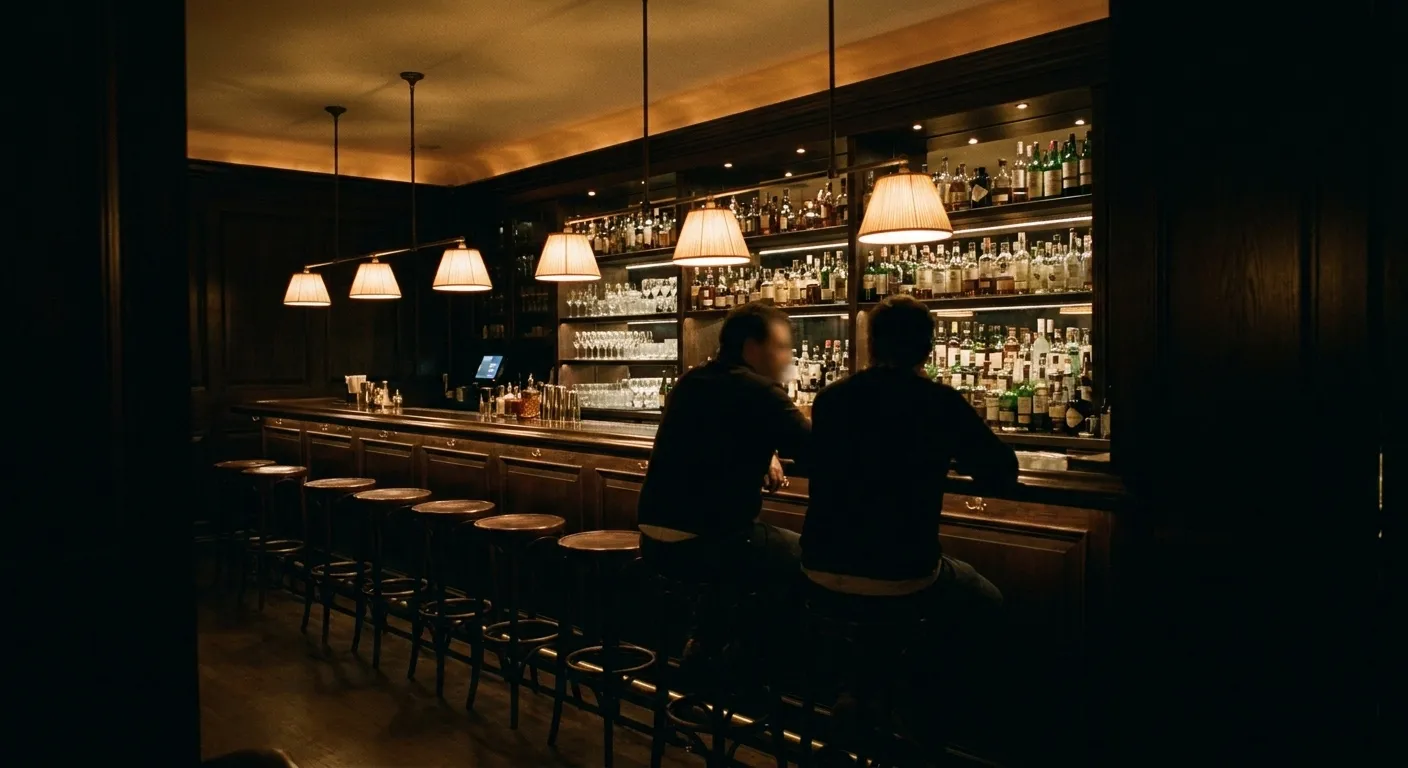
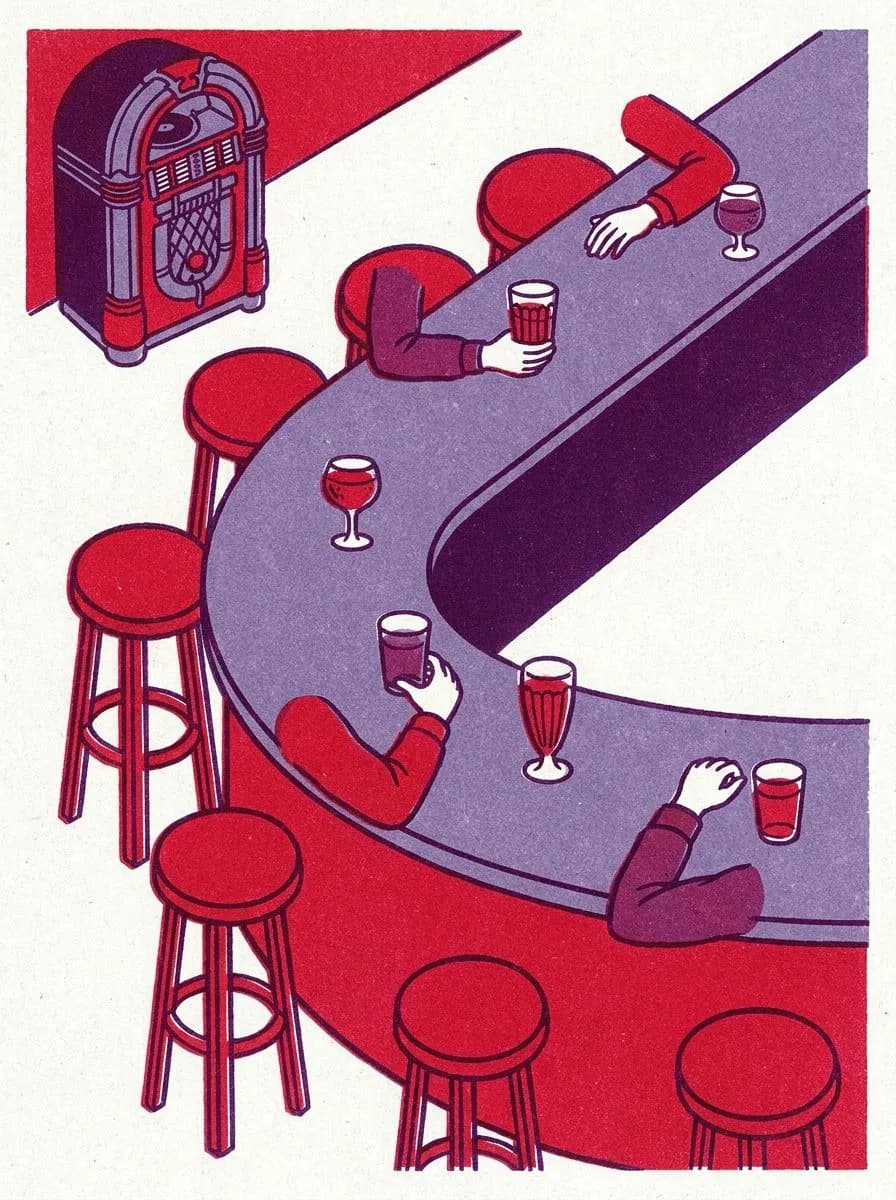
The three center stools offer the best access to both bartender and jukebox, a spatial truth that regulars understand without discussion. Sit here and you can catch the bartender's eye with a subtle nod, lean back to scan the jukebox selections, and maintain conversational access to both ends of the bar. The geometry matters. Lucy's is narrow enough that the center becomes a natural hub, the point where sight lines converge and where the sound from the Seeburg hits cleanest before ricocheting off the tile.
The two stools nearest the door, by contrast, are considered transitional seating for solo drinkers waiting for friends. They're colder in winter when the door swings open, and they trap you in the eddy of arrivals and departures. No one settles there for the long haul. The stools at the far end, near the hallway to the restrooms, are fine if you want to disappear into your drink, but you'll wait longer for a refill and miss the jukebox's best fidelity.
Jukebox protocol and the quarter economy
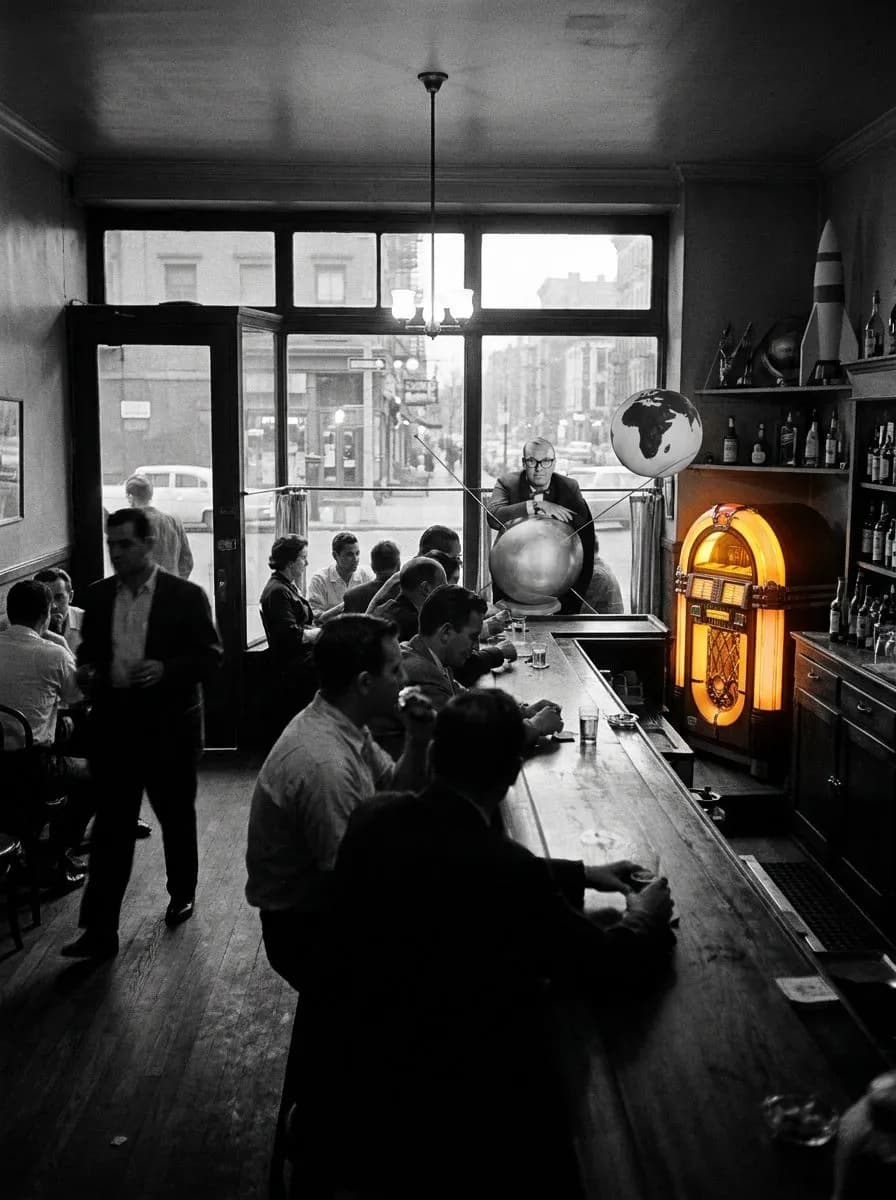
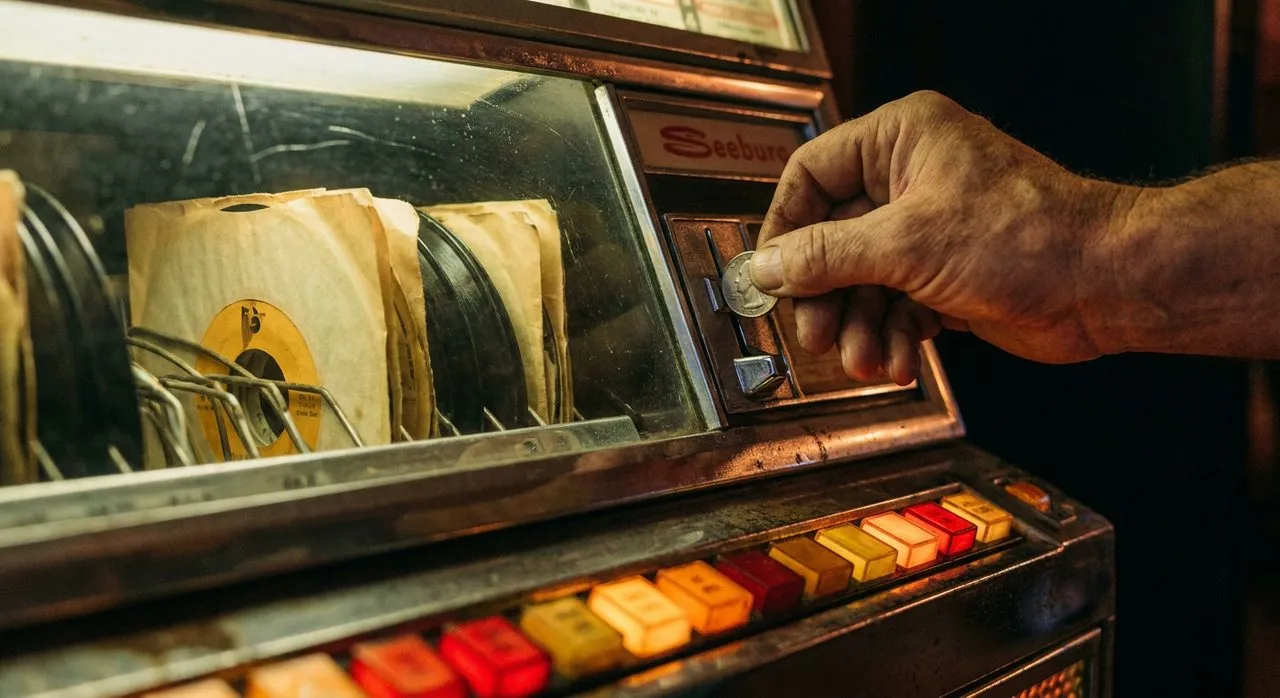
The Seeburg holds two hundred 45s, a collection that skews toward early soul, doo-wop, and the kind of rock and roll that predates the British Invasion. A quarter buys one play. A dollar buys four. The jukebox plays approximately two minutes and forty-five seconds per song, which means a dollar nets you roughly eleven minutes of control over the room's emotional temperature. You can set a mood or break one, and that power comes with responsibility.
There's an unspoken rule against playing the same song twice in one visit. It marks you as either a tourist or someone nursing a breakup, neither of which earns you much goodwill. The regulars rotate through deep cuts—obscure B-sides, regional hits that never cracked the Top 40—and they remember what was played earlier in the night. The jukebox becomes a shared text, a conversation conducted in three-minute intervals. When it falls silent between selections, the room reveals itself: the hiss of the soda gun, the murmur of a couple in the back room, the way the tile makes every sound feel both intimate and exposed.
The bartender's rhythm and the speed rail
The bartender works fastest between nine and eleven in the evening when regulars are settled and the room hasn't yet absorbed the overflow from other bars. During this window, drinks appear almost before you finish the previous one. There's no measuring, no elaborate mise en place—just muscle memory and a heavy hand with the speed rail. Well whiskey, vodka, gin: they all arrive in generous pours that make the eight-dollar price feel like a relic from another decade.
After midnight, service slows as the room fills with late arrivals. The dynamic shifts. The bartender must navigate a denser crowd, and the easy efficiency of the earlier hours gives way to the usual late-night bottleneck. The center stools remain prime real estate, but now you're holding your ground against people who just want one more drink before heading home. The jukebox keeps playing, but the songs get lost under the rising conversational volume.
The acoustics of tile and wood
When the jukebox is between songs, Lucy's reveals its bones. The tile floor and wood paneling create a resonance that most modern bars, with their sound-dampening treatments and acoustic tiles, have engineered away. Every glass, every laugh, every struck match registers. It's not unpleasant—it's clarifying. You become aware of the room as an instrument, responsive to the number of bodies, the volume of conversation, the presence or absence of music.
This acoustic quality makes the Seeburg's role even more important. When a 45 drops and the needle finds the groove, the scratch and hiss fill the space completely. The songs aren't background; they're architecture. A slow ballad can empty the bar of chatter, while an uptempo number from the Shirelles or the Drifters resets the energy. The room bends to the music, and the music—pressed onto vinyl decades before anyone in the bar was born—still commands attention.
The back room and the string lights
The back room at Lucy's stays dark except for string lights strung along the ceiling in no particular pattern. It's where couples retreat, where solo drinkers go when they want to read without interruption, where the noise from the front bar softens into a manageable hum. The string lights cast just enough glow to navigate but not enough to make the space feel exposed. It's a room for people who have already decided to stay.
No one serves you back there. If you want another drink, you return to the bar, reclaim a stool if one's available, and carry your glass back into the shadows. The back room exists in a different temporal zone—later, quieter, more forgiving. By two in the morning, it's often fuller than the front bar, populated by the holdouts and the night-shift workers and the people who know that Lucy's is one of the last places in Alphabet City where you can sit in near-darkness and not be asked what you're still doing there.
What remains unchanged
Lucy's Lounge has survived the Avenue A transformation not by adapting but by refusing to. No craft cocktail menu, no small plates, no Edison bulbs or exposed brick treated like a design feature. Just a narrow room with a working jukebox, a bartender who knows the pour, and a row of stools that accommodate whoever shows up. In late 2026, as the neighborhood continues its churn of openings and closures, Lucy's endures as a monument to a simpler infrastructure: vinyl, tile, wood, and the social contract that binds a handful of regulars to three center bar stools.
Practical notes
Lucy's Lounge is located on Avenue A in the East Village; verify hours directly as they shift seasonally. Nearest subway: L train to 1st Avenue or F train to 2nd Avenue. Street parking is scarce; public transit or ride-share recommended. The bar is cash-friendly; bring small bills for the jukebox. Two steps at entry; narrow aisles and single-stall restrooms make wheelchair access difficult. Seating is first-come; no reservations. Expect a neighborhood crowd between eight and midnight. The back room is for seating; service is at the bar.
Tags: #PullUpAChair #LucysLounge #AlphabetCity #NYC #VinylJukebox #DiveBar #AvenueA #45Records #SeeburgJukebox #BarStools #LateNight #NeighborhoodBar #ClassicDive #WinterInTheCity #NYCNightlife
Please drink responsibly. Must be of legal drinking age.
Sources consulted: Alphabet City, Manhattan · Jukebox · Seeburg Corporation · NYC State Liquor Authority · Time Out New York Bars
All trademarks are the property of their respective owners.