 WORD Bookstore in Greenpoint Remains a Community-Focused Indie Bookstore Near Me
Hidden Gems & Odd Finds
Vintage Cowboy Boot and Western Wear Shops in East Austin
East Austin's vintage cowboy boot specialists hold court along weathered storefronts where third-generation craftsmen still take custom orders and hand-tooled belts are making a comeback this late spring.
The sun hits the plate glass differently in East Austin this time of year. By late afternoon in May, the light slants across scuffed wood floors and glass cases filled with stitched leather, catching dust motes that smell faintly of saddle soap and old denim. The neighborhood's vintage cowboy boot and western wear shops—some third-generation operations, others newer keepers of the flame—are busier than usual as the city heats up and festival season kicks in. These aren't costume shops. They're working archives where a pair of 1970s Lucchese ropers might sit beside a custom order slip for hand-tooled belt work that won't be ready until August. Five shops are worth the trip, each holding a different thread of the tradition.
The third-generation boot shops
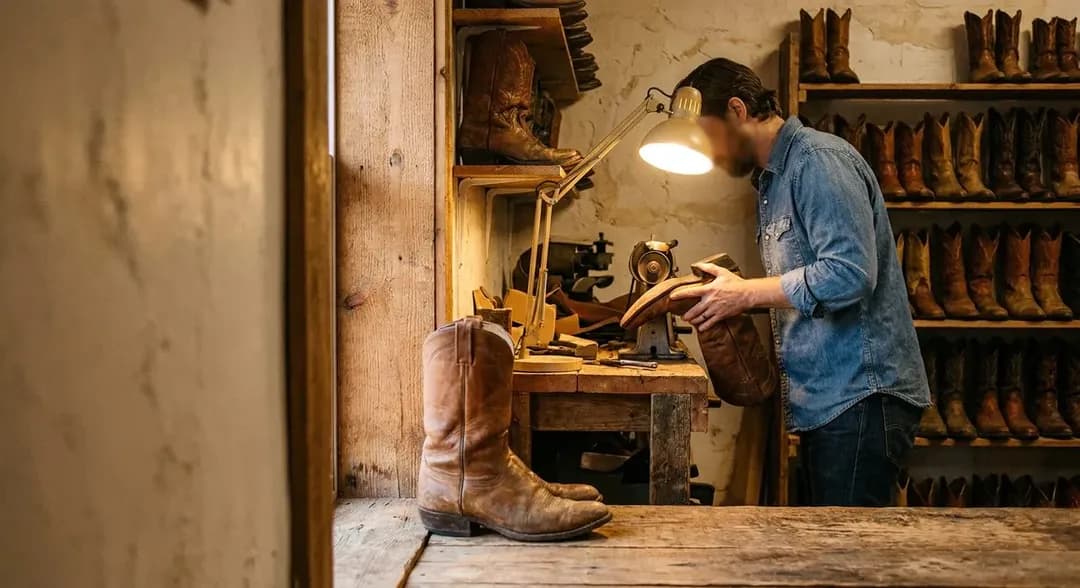
Two family-run operations anchor the scene, both east of Interstate 35 where the neighborhood still carries traces of its pre-boom character. The older of the two occupies a narrow building with a tin awning and a door that sticks in humid weather. Inside, boots line the walls floor to ceiling—vintage Justins, Noconas, Acmes, some dating back to the 1950s. The owner's grandfather opened the place selling work boots and tack; now the focus is resale and restoration, though they still take custom orders through a bootmaker in Seguin. Turnaround time as of late May 2026: twelve to fourteen weeks.
The second shop, a few blocks south, occupies a converted garage bay with better parking and a younger clientele. The grandson who runs it now has added a small selection of vintage pearl-snap shirts and bolo ties, but boots remain the core business. He knows the provenance of nearly every pair in stock and can tell you which factory a particular stitch pattern came from. On a Thursday afternoon the place smells like leather conditioner and cold brew from the thermos he keeps near the register.
The vintage western wear specialist
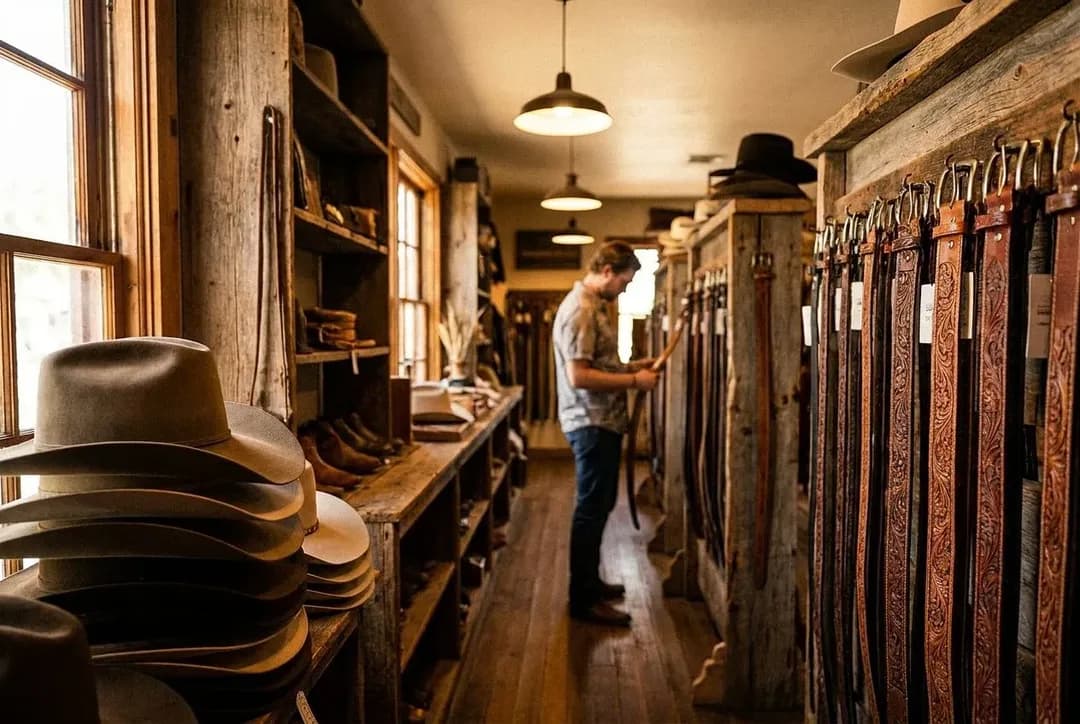
One shop has carved out a niche in the full western outfit: vintage Wrangler jackets, 1980s rodeo shirts with elaborate yoke embroidery, turquoise-studded belts, even the occasional fringed vest that looks like it walked off a Cosmic Cowboy album cover. The owner—a former costume buyer who moved to Austin a decade ago—sources from estate sales across Texas and New Mexico. Her eye is sharp. The rails are organized by era and color, and she's unafraid to tell you when something doesn't fit right.
The shop sits in a small commercial strip that also houses a taqueria and a used furniture store. Natural light floods in through a wide front window, and by late May the ceiling fans are already working overtime. She keeps a rack of lighter-weight summer shirts near the door—cotton blends, short sleeves, patterns that lean more honky-tonk than rodeo. The boot selection is modest but well-curated, mostly women's sizes, mostly 1970s and 1980s stock. She also holds a rotating selection of vintage leather bags and the occasional belt buckle that makes you wonder about its original owner's life story.
The hand-tooled belt revival
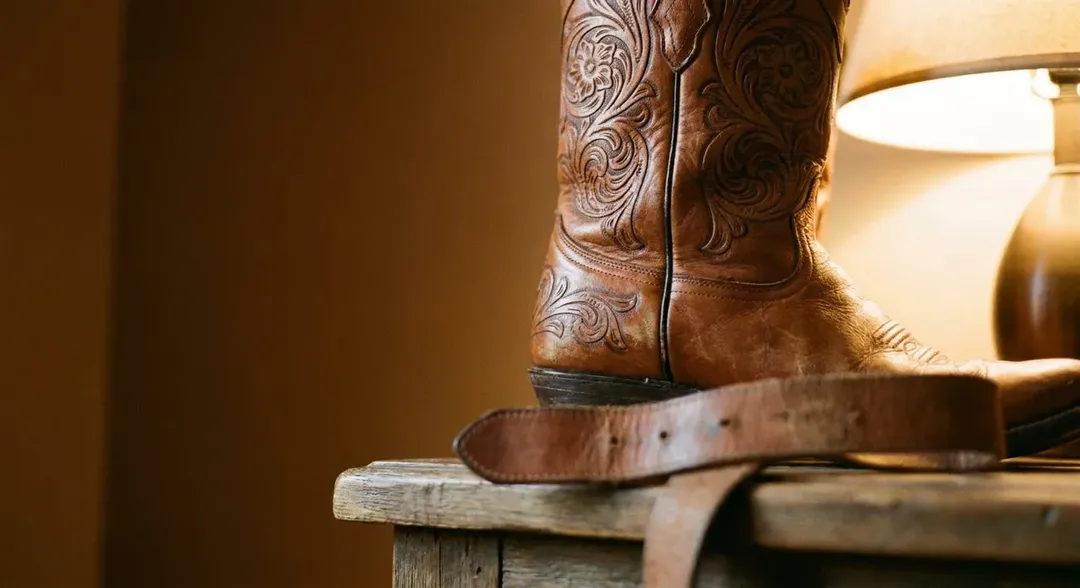
The newest addition to the scene recently opened in 2026 and focuses almost exclusively on belts—vintage stock and new work from a leatherworker who learned the trade in Marfa. The shop is tiny, just a front room with a workbench visible in back, but the smell of vegetable-tanned leather announces itself half a block away. Hand-tooled belts are making a comeback, and this place is riding the wave with custom orders that range from classic floral patterns to more contemporary geometric designs.
Custom belt orders currently run six to eight weeks, longer if you want initials or a more intricate motif. The leather itself comes from a tannery in Leon Springs, and the buckles are sourced separately—some vintage, some new cast brass. The owner also stocks a small selection of vintage belts, mostly 1960s through 1980s, including a few with original rodeo association buckles still attached. Prices reflect the labor involved. This isn't fast fashion, and the clientele seems to understand that. On a recent visit, a man was placing an order for three belts, one for himself and two as wedding gifts, delivery expected in late July.
What the regulars know
The best selection arrives on Thursdays and Fridays, after the owners have made their weekly rounds of estate sales and auctions. Serious buyers show up early, especially during spring when people are outfitting themselves for summer dance halls and outdoor shows. Sizes can be unpredictable—vintage boots often run narrow, and what's marked as a size nine might fit more like an eight and a half. Bring socks if you're planning to try things on. A few shops keep loaner socks on hand, but not all.
Negotiation is sometimes possible, especially if you're buying multiple pieces or if an item has been in stock for months. But don't expect steep discounts on pristine vintage Lucchese or newly completed custom work. The owners know their inventory and the market. What you will find is knowledge—these shopkeepers can talk construction, leather grades, the differences between various bootmaker's lasts, and why certain stitching patterns hold up better than others. It's the kind of expertise that doesn't show up on a product page.
The texture of late May
By the end of May 2026, East Austin is already leaning into summer heat. The shops keep their doors propped open in the morning, ceiling fans turning slowly, before the air conditioning kicks in around noon. Outside, the light is bright and unforgiving, but inside these stores the shadows are long and cool, the interiors arranged more for function than Instagram aesthetics. You hear the occasional creak of old floorboards, the rustle of tissue paper as someone wraps a purchase, the low murmur of conversation about shaft height and heel pitch.
This is still a working neighborhood, though gentrification has crept in around the edges. Food trucks and newer coffee shops have appeared on nearby blocks, but the boot shops remain grounded in an older version of the city. They're places where a contractor might come in looking for work boots and leave with a vintage pair of Fryes, where a musician stocks up on stage wear, where someone planning a destination wedding in Marfa orders custom belts for the groomsmen. The merchandise changes, but the rhythm holds steady.
Practical notes
The shops are located in East Austin; verify exact addresses and whether all five are actually clustered on East Sixth Street between Comal and Chicon. Street parking is generally available, though it fills up on weekends; a public lot sits near the corner of East Seventh and Onion. Verify current Capital Metro routes for the area before naming specific lines. Most shops open around 11 a.m. or noon and close by 6 or 7 p.m.; verify hours directly, as several close Mondays or Tuesdays. Interiors range from tight and crowded to open-floor layouts; not all offer step-free entry, so call ahead if accessibility is a concern. Bring cash for smaller purchases, though most accept cards. If you're placing a custom order, expect to leave a deposit—typically half down—and confirm the timeline in writing.
Tags: #AustinVintage #CowboyBoots #EastAustin #WesternWear #TheOddEdit #VintageTexas #AustinShopping #BootShops #HandTooledLeather #May2026 #LateSpring #TexasStyle #CustomBoots #VintageStyle #AustinFinds
All trademarks are the property of their respective owners.
Ask Karpo for more information.
Keep reading
- WORD Bookstore in Greenpoint Remains a Community-Focused Indie Bookstore Near Me
 The Corner Bookstore on Madison Avenue Is Carnegie Hill's Indie Bookstore Near Me
 192 Books in Chelsea Brings Art and Fiction to Indie Bookstore Near Me