Astoria, Queens: The Neighborhood That Has Never Needed to Try Hard
Astoria has a particular talent for absorbing change without losing its shape. While other New York neighborhoods have been hollowed out and rebuilt in the image of whoever arrived most recently, this stretch of northwest Queens has maintained a stubborn continuity since the 1960s. Greek bakeries still sell koulouria by the dozen. Egyptian families still gather on Steinway Street after Friday prayers. The elevated N and W trains still rattle overhead, casting the same shadows they have for decades. What makes Astoria remarkable isn't resistance to change — it's that the neighborhood has simply never stopped being itself long enough for anyone to replace it with something else.
A Steinway Street Education in Middle Eastern Grocery Shopping
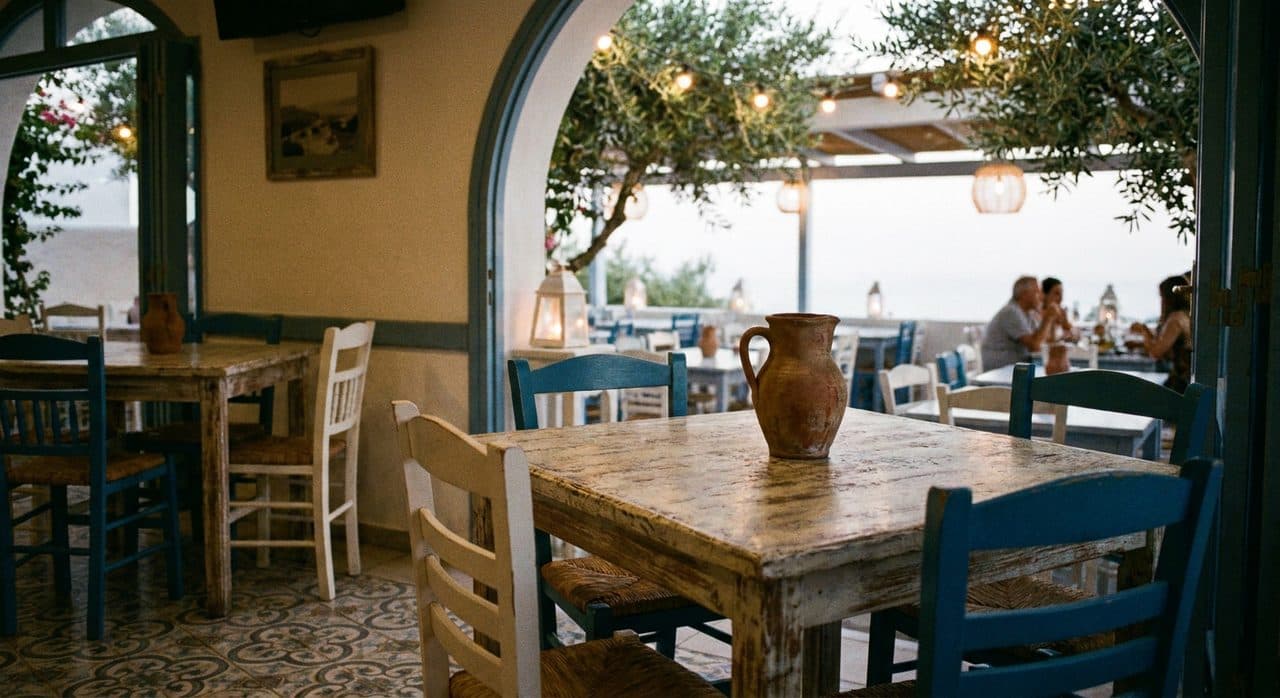
The commercial stretch of Steinway Street between 25th Avenue and Astoria Boulevard operates as the unofficial main street of New York's Egyptian community, and no single establishment captures this better than a modest grocery store that most Manhattan shoppers will never find on their own. From the outside, it reads as a standard halal market: pyramids of canned foul medames in the window, bags of pita stacked near the register, the usual assortment of tahini brands. But regular customers know to ask about the back storeroom, an invitation-only space that functions as both a specialty pantry and an informal community bulletin board.
The walls of this back room are papered with handwritten notices in Arabic — apartments for rent, services offered, community events — while the shelves hold ingredients that simply don't exist in Manhattan's import shops. Egyptian dried molokhia, the jute leaves essential to the country's national soup, sits in bulk bags alongside multiple varieties of koshari lentils, each suited to a different regional preparation. The owner, who has operated the store for nineteen years, will explain the differences if asked: the small brown lentils for Cairo-style koshari, the larger green variety for the Alexandrian version. A pound of dried molokhia runs around $8, roughly half what specialty online retailers charge. The store opens at 8am and closes at 10pm daily, though the back room is typically accessible only after 2pm when the morning rush subsides.
The Greek Institutions That Outlasted the Trends
Taverna Kyclades on Ditmars Boulevard has been serving whole grilled fish since 1998, and its reputation has only compounded with time. The dining room now carries a two-to-three-week reservation wait on weekends, a timeline that would discourage most casual visitors. But the restaurant's eight-seat bar operates on a different system entirely: walk-ins are accepted, the full menu is available, and the same whole branzino that draws the reservation crowds can be ordered without planning. The catch is timing. That branzino sells out by 7:30pm on Fridays, which means a 5:30pm arrival is strategic rather than early. The fish, priced at market rate (typically $28-32), arrives deboned tableside with the same lemon-oil treatment whether you're seated at a white-clothed table or a barstool.
Beyond Kyclades, Ditmars and its surrounding blocks maintain a density of Greek-owned establishments that reflects the neighborhood's mid-century immigration patterns. Artopolis, a bakery and café at 23-18 31st Street, sells spinach pies for $4.50 and loukoumades (honey-soaked dough balls) by the half-dozen for $7. Titan Foods, the massive Greek supermarket on 31st Street, stocks over forty varieties of feta and operates a prepared foods counter where a lamb gyro platter runs $12.95. These aren't nostalgia projects or heritage revivals — they're functional businesses that have served the same community for decades and simply never stopped.
Wine Bars With Aegean Accents and Zero Pretension
The recent wave of natural wine enthusiasm that swept through Brooklyn eventually reached Astoria, but it arrived with a distinctly local accent. The Bonnie, a wine bar at 29-12 23rd Avenue, occupies a narrow storefront with exposed brick and mismatched chairs, pouring Greek varieties alongside the expected French and Italian selections. A glass of Assyrtiko from Santorini runs $14-18, and the staff can explain why volcanic soil matters without making the explanation feel like a lecture. The bar opens at 5pm on weekdays and 2pm on weekends, with the back garden available in warmer months.
What distinguishes Astoria's wine scene from its Manhattan counterparts is the absence of performance. At Ornella Trattoria, an Italian restaurant at 29-17 23rd Avenue that doubles as a neighborhood wine bar after 9pm, the owner might pour you something from his personal collection if the conversation turns interesting. The markup on bottles stays reasonable — a $40 retail bottle typically appears on the list for $55-65 — because the clientele is local and returns weekly. These aren't destination bars designed for Instagram documentation; they're places where the same faces appear on the same stools every Thursday.
Astoria Park's Hidden Geography
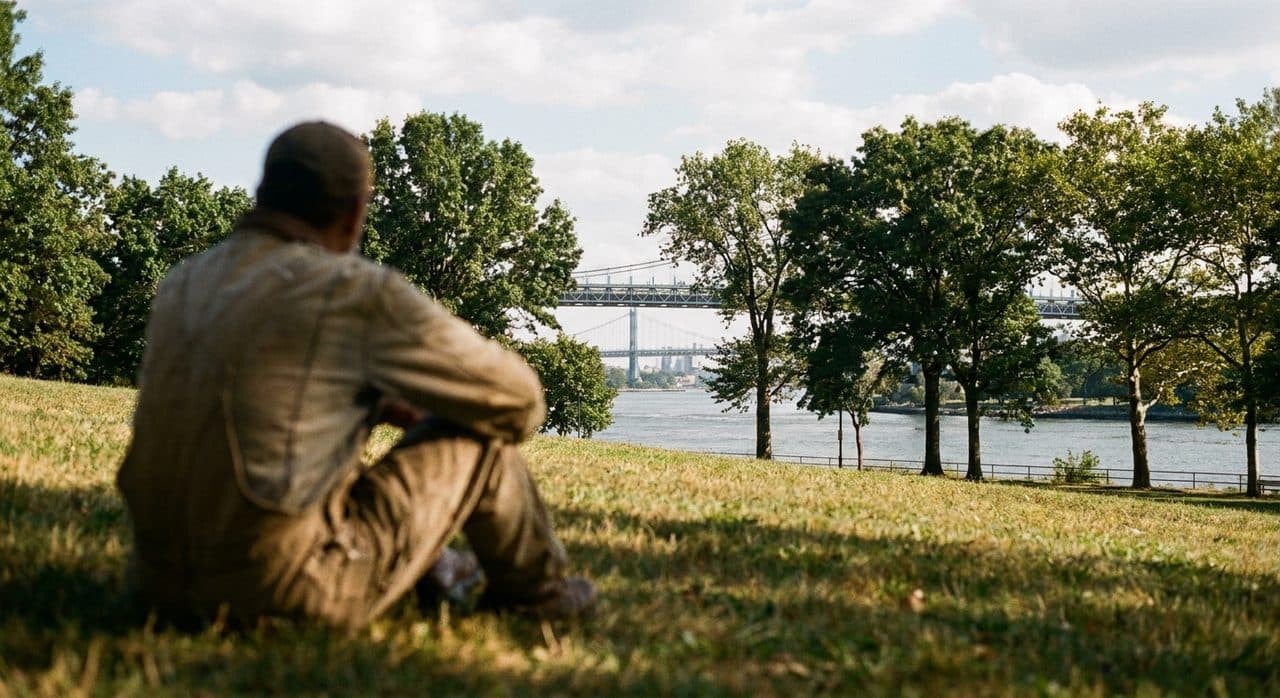
Astoria Park's 60 acres along the East River include the city's oldest and largest public pool, a significant track-and-field facility, and unobstructed views of the Hell Gate Bridge's steel arch. What the park maps don't adequately convey is the topography. The lawn directly beneath the Hell Gate Bridge arch sits on city parkland that rarely appears on official maps and receives no directional signage from the main entrance. Locals call it the "arch spot," and reaching it requires a four-minute walk north from the park's Shore Boulevard entrance, past the pool complex and through a tree line that obscures the destination until you're nearly upon it.
The reward is a patch of grass that remains consistently uncrowded even on summer weekends when the main lawn resembles a beach resort. The arch looms directly overhead, close enough that its rivets are visible, and the acoustic effect of the train crossing creates a low rumble that somehow enhances rather than disrupts the atmosphere. Sunset here, around 8:15pm in late June, turns the bridge's red paint almost amber. The walk back to the Astoria Boulevard station takes twelve minutes at a reasonable pace.
The Dining Spectrum Beyond the Obvious
Astoria's restaurant density rivals any neighborhood in the city, but its range is what distinguishes it. MP Taverna, a modern Greek spot from Michael Psilakis at 31-29 Ditmars Boulevard, serves a $26 lamb burger that justifies its price through technique. Three blocks away, King of Falafel & Shawarma on Broadway sells a chicken shawarma platter for $9 that has won Vendy Awards and feeds two moderate appetites. The Egyptian restaurants clustered on Steinway — Kabab Café, Mombar, and the lesser-known Saray — offer variations on the same cuisine that range from the theatrical (Kabab Café's chef serves whatever he's inspired to cook that day) to the straightforward (Saray's koshari for $8, served in Styrofoam).
For breakfast, the Queensboro at 33-04 36th Avenue operates as a diner that happens to serve excellent food rather than an excellent restaurant that happens to look like a diner. The pancakes are $12 and sized accordingly. The coffee is drip, refilled without asking. The weekend wait can reach 45 minutes by 11am, but the weekday 8am crowd is almost entirely locals reading newspapers, which is its own kind of recommendation.
Why the Commute Converts Skeptics
The N and W trains connect Astoria to Midtown Manhattan in approximately 25 minutes from the Ditmars Boulevard terminus, a commute time that surprises first-time visitors accustomed to thinking of Queens as remote. The elevated tracks that run along 31st Street provide the neighborhood with its particular rhythm — the rumble and pause, rumble and pause — while also ensuring that real estate prices, though risen significantly since 2010, remain below comparable Brooklyn neighborhoods. A one-bedroom along Ditmars currently averages $2,200-2,600 monthly, roughly $400-600 less than equivalent apartments in Williamsburg or Park Slope.
The result is a neighborhood that retains working families, longtime residents, and the small business owners who serve them. Gentrification has arrived, certainly — the boutique fitness studios and specialty coffee shops confirm that — but it has layered onto the existing fabric rather than replacing it. The Greek grandmother buying phyllo dough at Titan Foods and the young copywriter ordering a cortado at Kinship Coffee exist in the same commercial ecosystem, neither displacing the other. This coexistence isn't ideological; it's simply how Astoria has always worked.
Practical Notes
Transit: N/W trains to Astoria-Ditmars Blvd (terminus), 30th Avenue, or Broadway stations. The M60 SBS bus connects to LaGuardia Airport in 15 minutes. Timing: Greek restaurants peak 7-9pm Friday-Saturday; arrive by 5:30pm for Kyclades bar seating. Steinway Street grocery stores are busiest Friday afternoons. Astoria Park's arch spot is best visited 6-8pm in summer for optimal light and minimal crowds. Costs: Expect $15-25 per person for casual dining, $35-50 for full-service Greek seafood. Coffee runs $3.50-5. Walking: The neighborhood rewards exploration on foot; Ditmars to Steinway via 31st Street takes 20 minutes and covers the major commercial stretches. Street parking is challenging on weekends; the municipal lot at 31st Street and Ditmars charges $2/hour.
Tags: #Astoria #QueensNY #NYCneighborhoods #GreekFood #MiddleEasternFood #AstoriaPark #HellGateBridge #SteinwayStreet #NTrainLife #NYCfoodie #QueensEats #neighborhoodguide #localNYC #urbanexploration #NewYorkCity
Sources consulted: timeout.com · nymag.com · thrillist.com · eater.com
All trademarks are the property of their respective owners.
Ask Karpo first
Want to know which Astoria restaurants take same-day walk-ins this weekend, what's on at the Museum of the Moving Image, and the fastest route from Midtown without transferring? Ask Karpo for an Astoria itinerary, dining picks by time of day, and live transit options before you head out.