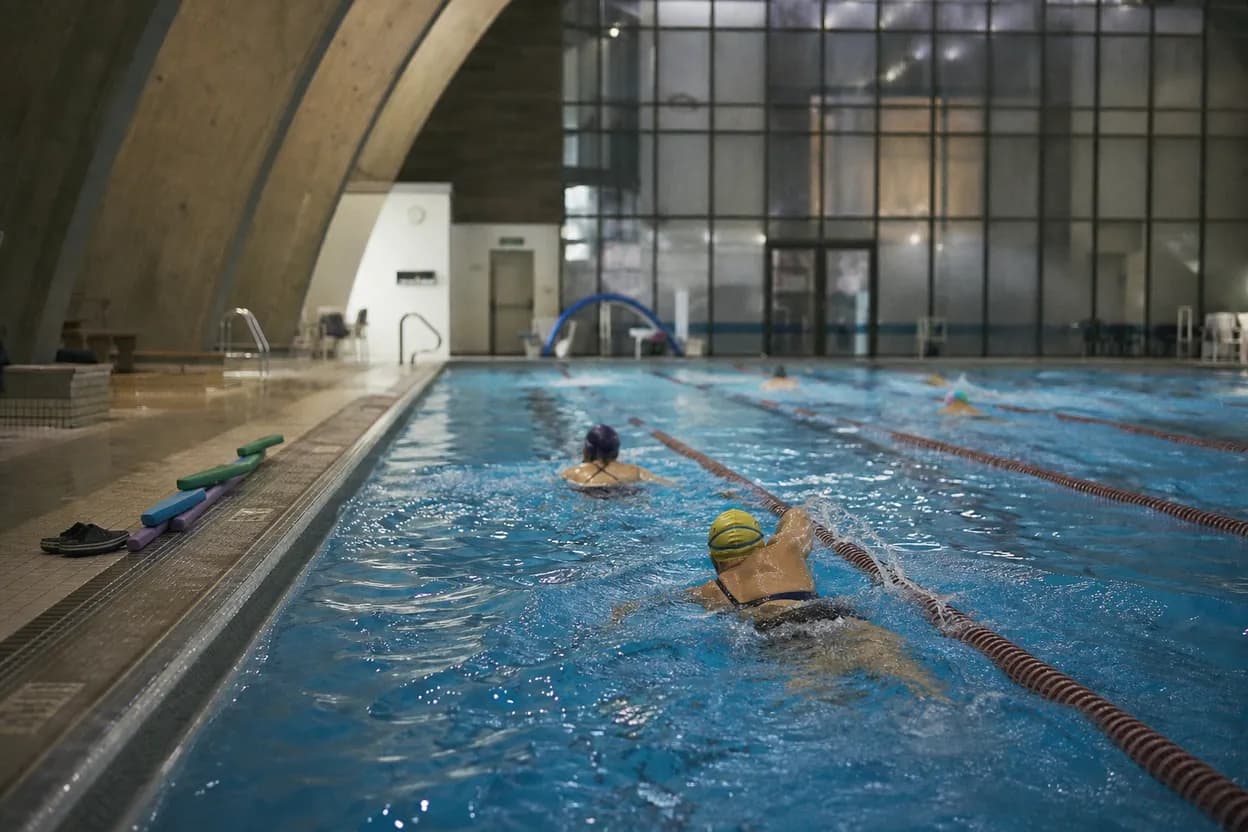
A first lap swim can feel more stressful than the workout: fast swimmers are circling, lane signs look formal, and the deck seems full of people who already know the code. Asphalt Green’s Upper East Side campus helps because its public pool rules are unusually explicit. The organization identifies a 50-meter Olympic-sized pool at UES, posts member lap swim and recreational swim schedule downloads, and explains showering, caps, deck shoes, lane choice, circle swimming, passing, lifeguards, and age requirements. The changing details are access, time blocks, guest rules, and prices. Verify those first, then use the posted rules to make the first visit calmer.
Want a lower-stress first pool visit with fewer deck surprises? Text Karpo with your swim comfort, membership status, and preferred time window before choosing a slot.
Check Access First
Asphalt Green’s UES schedule page lists member lap swim and member recreational swim schedule downloads, and it notes that member lap swim starts July 13. It also displays broad facility hours, but those hours are not the same as swim availability. Treat the downloadable schedule as the swim-specific reference, then confirm it is still current before leaving home, because aquatic programming can shift faster than a saved browser tab.
Before going, verify membership status, guest access, locker-room logistics, and the current UES lap swim schedule directly with Asphalt Green. The source does not support inventing day-pass rules, prices, exact lane counts, or every lap block. A nervous first-timer should remove those uncertainties early, because access confusion is much harder to solve while dressed for the pool and trying to interpret deck traffic under time pressure.
Use The UES Pool
Asphalt Green’s pools page distinguishes the two locations clearly: the Upper East Side campus has a 50-meter, Olympic-sized pool, while Battery Park City has a 25-yard lap pool. That difference matters when searching schedules, planning a commute, or asking staff where lap swim is happening. For this plan, use the UES materials, because a distance, schedule, or program note from the other campus may not transfer cleanly.
Build in a backup decision before you travel. If the UES schedule download is unreadable, outdated, or inconsistent with what staff says, defer to Asphalt Green’s current guidance rather than a third-party listing. If your available window is narrow, confirm the campus, schedule date, pool availability, and any temporary closures. The tradeoff is simple: one extra check prevents arriving ready to swim when the usable pool block has changed.
Pack For Rules
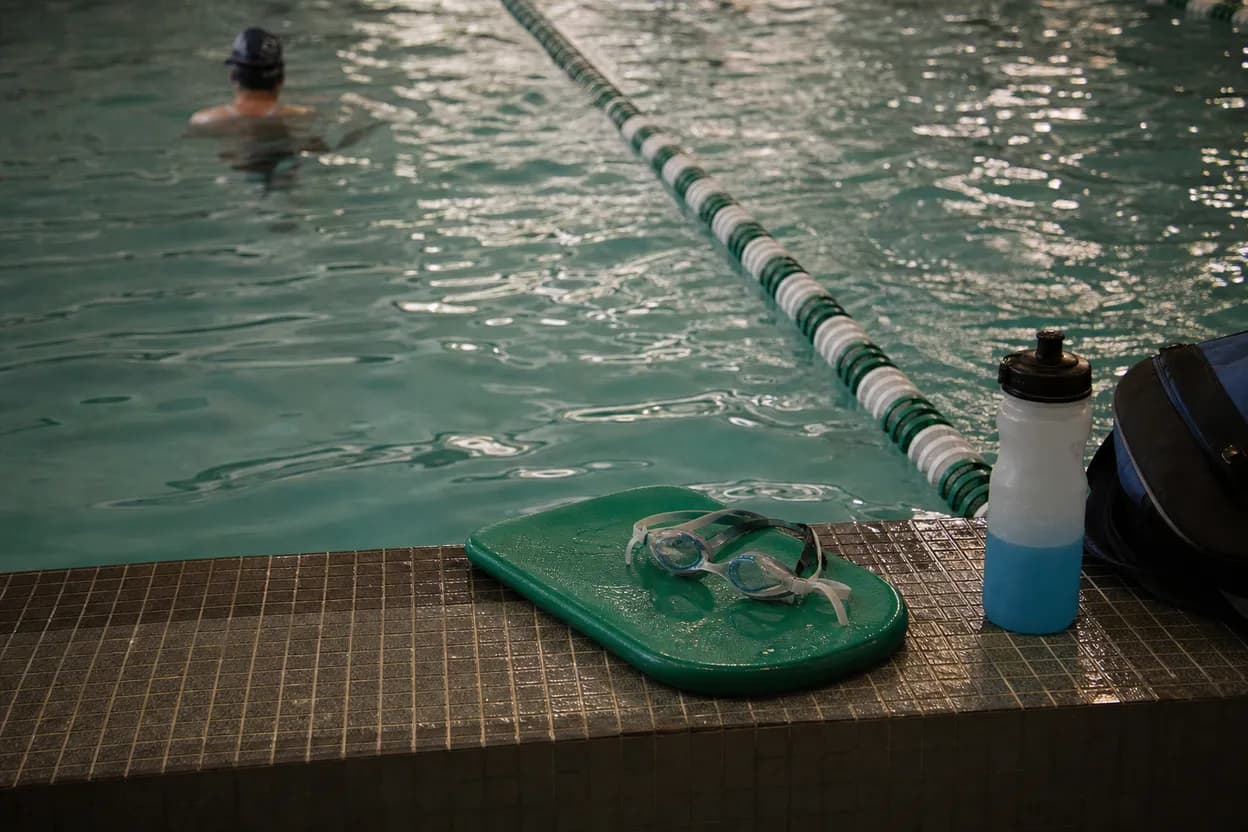
The posted pool policies require swimmers to shower with soap and remove makeup and bandages before entering the water. Swimmers with hair past the chin must wear a swim cap, and only deck shoes are allowed on the pool deck, with shoe covers noted at locker room entrances. For adults who feel self-conscious, these rules are useful because they turn the first visit into a checklist rather than a guessing game.
Pack for compliance rather than improvisation: swimsuit, goggles, towel, cap if needed, lock if appropriate, and deck-safe footwear. Leave food, beverages, gum, glass, and street-shoe assumptions out of the pool area. Accessibility planning belongs in the same check: ask ahead about entry, changing, shower, or mobility needs if they affect your visit. The first goal is not a perfect workout; it is reaching the water without breaking a posted rule.
Choose Pace Honestly
Asphalt Green tells swimmers to note fast, medium, and slow lane designations before entering, then choose a lane where swimmers are moving closest to their pace. That is the most useful instruction for adults who worry they will be too slow, too rusty, or too visible. It makes lane choice about matching traffic, not proving fitness, and it gives beginners a defensible reason to wait and watch first.
A slow lane is not an admission of failure. It is traffic management. Watch two or three laps, compare turn speed and rest patterns, then choose the lane where your presence changes the flow least. If every lane looks too fast, ask staff rather than forcing yourself into a poor match. The common failure mode is pride: entering an unsuitable lane creates more anxiety than choosing conservatively and settling in.
Enter With Communication
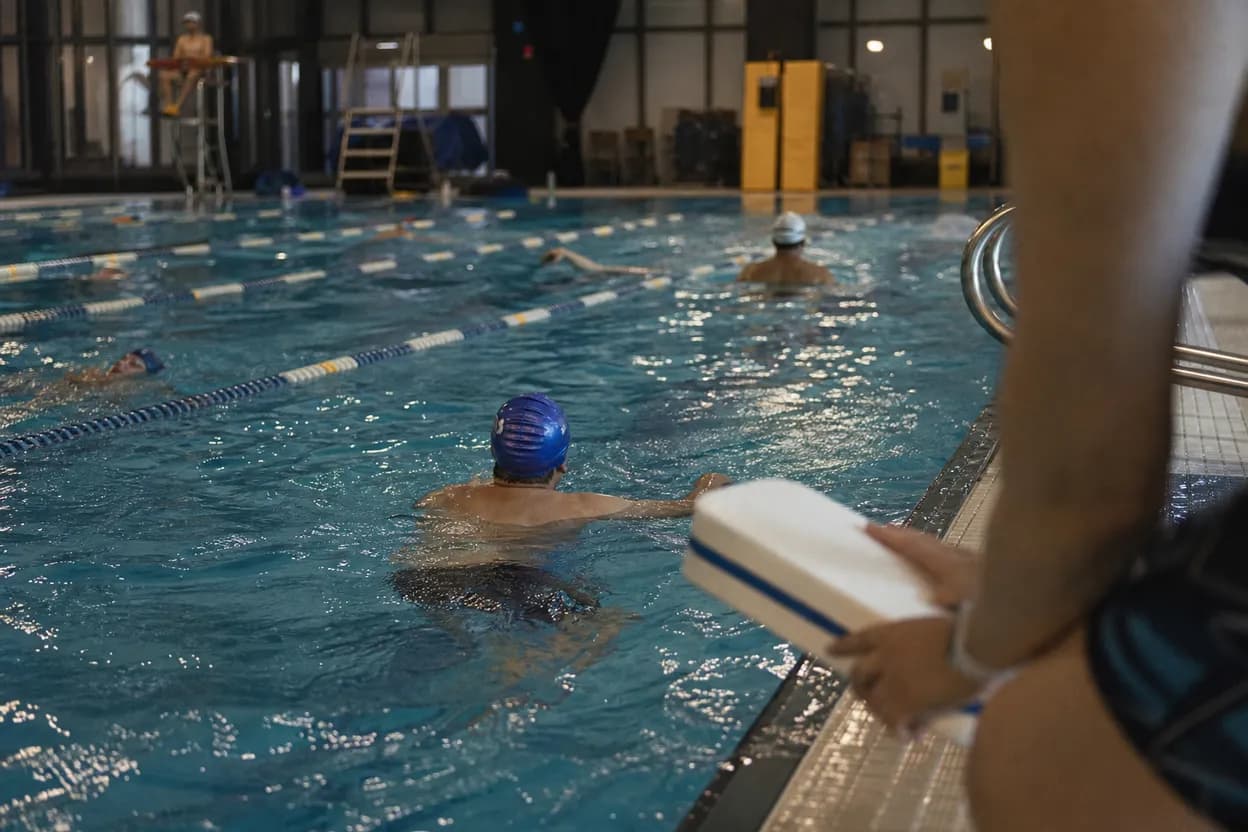
The rules say circle swimming is required when three or more people choose a lane, while two swimmers may split. They also say swimmers should communicate when joining a lane. That small exchange is the difference between orderly traffic and silent confusion at the wall. For a first-timer, it also provides social cover: you are not interrupting the lane, you are following the venue’s posted etiquette.
Do not slide in and hope people notice. Make eye contact, say you are joining, and clarify whether the lane is splitting or circling. If someone is mid-set, wait at the wall until they can respond. If you have low vision, hearing needs, or anxiety around quick verbal exchanges, ask a lifeguard or staff member for help reading lane flow before entry. Clear communication reads as respectful, not inexperienced.
Pass Without Drama
Asphalt Green’s lap swim etiquette says not to pass if you can barely hold the pace, not to swim wide around a slower swimmer, and to pass only at the wall after a gentle foot tap. That keeps passing predictable inside a shared lane. For nervous adults, the practical lesson is to avoid improvising in the middle of the pool, where a sudden change can surprise another swimmer.
If someone taps your feet, continue to the next wall, then stop in the right corner so the faster swimmer can pass. Do not stop mid-pool, speed up after being tagged, or treat the tap as criticism. It is a traffic signal, and responding calmly protects everyone’s rhythm. If repeated passing makes the lane feel unworkable, switch lanes when appropriate or pause at the wall and ask staff about a better fit.
Verify Safety Boundaries
Asphalt Green prohibits swimming without a lifeguard, diving, repetitive or prolonged breath-holding, intentional hyperventilation, and underwater breath-holding competitions. It also bars swimmers with evident skin or bodily infections from entering the pool. These rules matter even for confident adults because lap swim is shared, supervised space. A first-timer plan should therefore skip breath-holding experiments, underwater challenges, and any workout borrowed from social media that conflicts with posted policy.
Final checklist: verify current UES access, schedule downloads, membership or guest rules, and any temporary closures directly with Asphalt Green; bring cap, goggles, towel, lock if needed, and deck-safe footwear; shower with soap; choose the closest pace lane; communicate before entering; pass only as posted; stop if safety, illness, or confusion becomes an issue. Member lap and recreational swim are listed for adults and children 13 and older, with ages 13 to 17 needing a swim test.
Tags: #AsphaltGreen #LapSwim #UpperEastSide #NYCSwimming #AdultSwim #PoolEtiquette #FitnessNYC #Aquatics #SwimPractice #FirstTimer #UESFitness #AskKarpo #BeforeYouGo #KarpoNYC
Sources consulted: Source 1: asphaltgreen.org · Source 2: asphaltgreen.org · Source 3: asphaltgreen.org · Source 4: asphaltgreen.org · Source 5: asphaltgreen.org
All trademarks are the property of their respective owners.
Ask Karpo first
Tell Karpo your date, group size, budget, and starting neighborhood. We’ll check current access, timing, transit, and the cleanest plan for Asphalt Green Upper East Side before you head out.


