The Three Free Hours Every Friday Evening
Friday at the Asia Society Museum runs eleven a.m. to nine p.m. Paid admission covers the first seven hours — twelve dollars for adults, less for students and seniors. At six, the cashier stops collecting. From six to nine, the museum is free and stays free until the last person is walked out at closing.
The three-hour window is funded in part by the New York City Department of Cultural Affairs, in partnership with the City Council — meaning the city covers the door revenue on the public's behalf. It's the kind of arrangement most New Yorkers don't know exists and the Asia Society doesn't loudly advertise. The poster in the lobby is small. The website mentions it twice. Then the policy has run, week after week, for years.
The crowd is specific: couples in office clothes from the Sixties or Seventies, solo readers with a book to finish, graduate students who have figured out the hack, and almost no tourists. By 8:30 the galleries thin out enough that you can stand alone in front of a Tang dynasty horse for as long as you want.
What John D. Rockefeller 3rd Started in 1956
The Asia Society was founded in 1956 by John D. Rockefeller 3rd — eldest son of John D. Rockefeller Jr., older brother to Nelson — with a single-sentence mission: to increase American understanding of Asia. The Cold War was on. Asia was, in the American imagination of the 1950s, a binary of allies and adversaries with not much in between. Rockefeller's bet was that the corrective was art, scholarship, and direct contact rather than diplomacy.
The Society's first decades were nomadic — rented space, lecture programs, small shows in borrowed galleries. The turn came in 1974, when Rockefeller and his wife Blanchette announced they would donate their personal collection of pan-Asian art — sculpture, ceramics, paintings, gathered over thirty years of buying — to the Society. A collection that size needed a building. The Rockefellers paid for that too.
The Building Edward Larrabee Barnes Made for the Collection
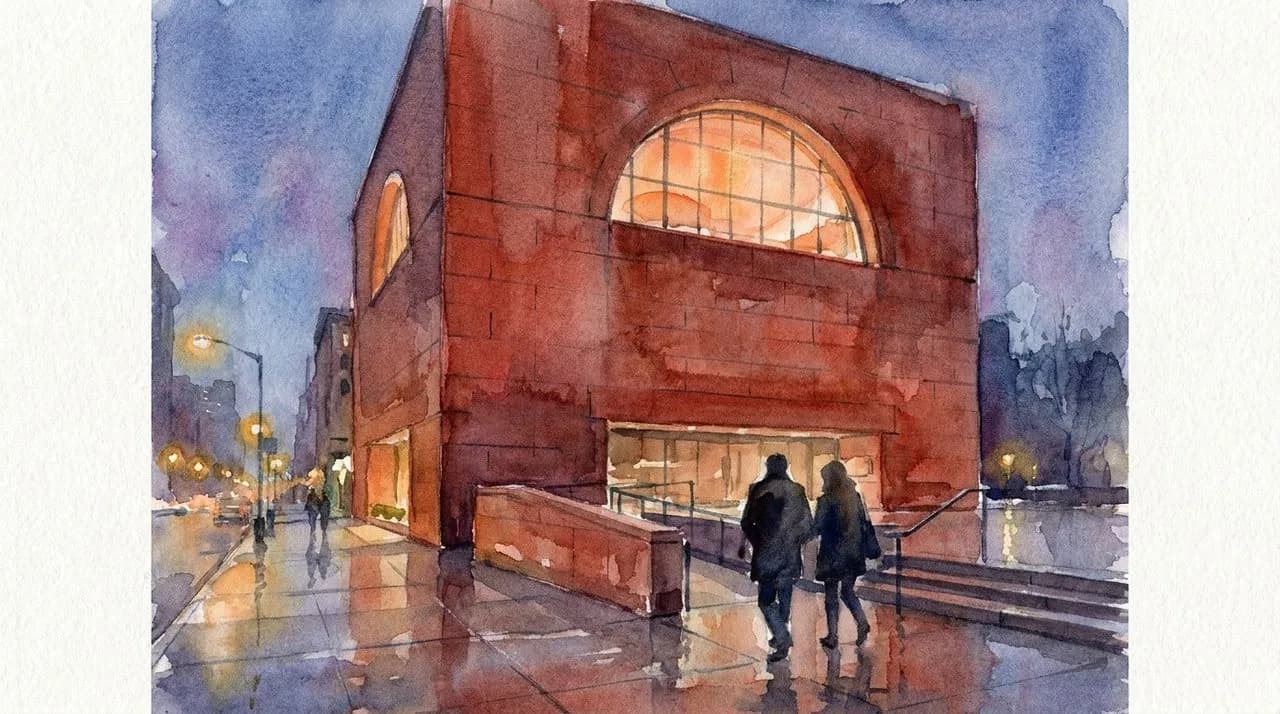
The headquarters at 725 Park Avenue opened in 1981, on the Society's twenty-fifth anniversary. Edward Larrabee Barnes, working with John M.Y. Lee Architects, designed it as a smooth eight-story cube faced in red Oklahoma granite, with a single semicircular arched window on the upper façade. The granite shifts from rust to deep brick depending on the time of day, and the arch is a quiet nod to Asian temple geometry without committing to any one tradition.
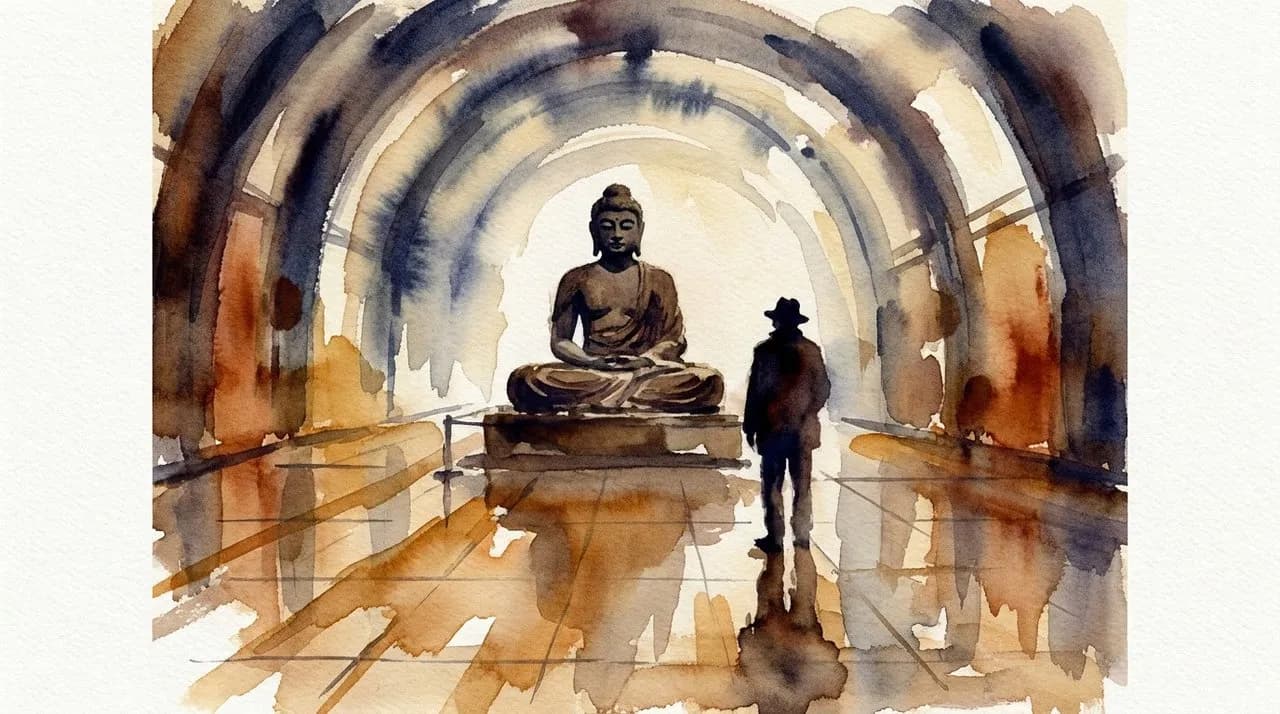
Inside, Barnes built a barrel-vaulted lobby gallery sized to hold the largest stone sculptures in the Rockefeller bequest. The galleries above rotate; the lobby's monumental pieces don't. A first-century Gandhara Buddha, a Khmer torso, a Tang horse — they sit roughly where they sat in 1981, the building's anchor and the part most visitors recognize on a second visit.
What's on the Walls Now
The permanent collection — the Rockefeller core — spans South Asia, Southeast Asia, the Himalayas, China, Japan, and Korea, from the second millennium B.C. to the nineteenth century. A rotating selection sits in the second-floor galleries; the lobby's monumental stones are always up.
Special exhibitions occupy the third and fourth floors and turn over every few months. Recent seasons have run contemporary Korean ceramics, Edo-period Japanese painting, South Asian textiles — a programming pattern the curators have settled into: one contemporary, one historical, one regional deep-dive, rotated through the year. None are blockbusters. All are the work of a small team that's been doing this for long enough to trust its own taste.
What you get from a Friday-night visit, in practice, is two hours — enough for either the permanent galleries or one special exhibition, with twenty minutes for the Garden Court at the end. Trying to do everything is the rookie mistake. The museum is small. Slowing down is the point.
The Garden Court & Leo Bar at the End of the Night
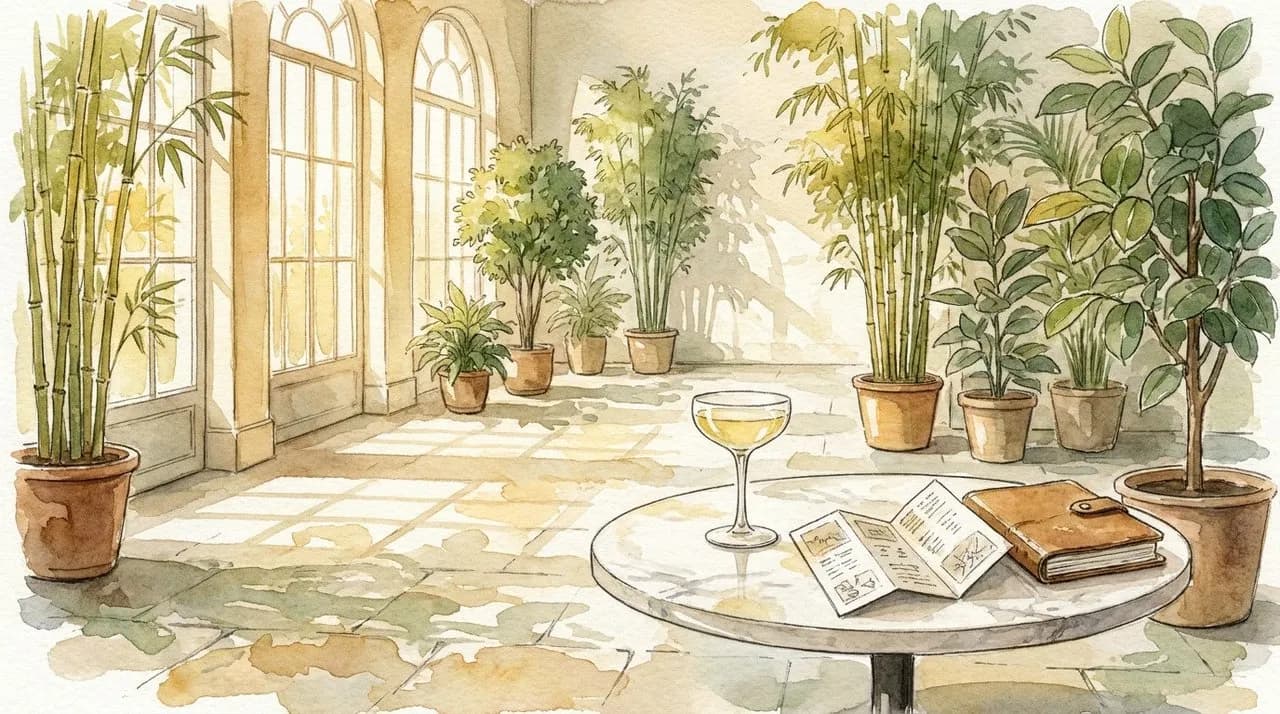
The Garden Court is the indoor atrium on the ground floor — bamboo, ficus, marble tables, glass roof — and on Friday nights it becomes Leo Bar, the museum's wine-and-beer counter open to anyone in the building. Wine by the glass, beer on tap, a short snack menu of small plates. Gallery-cafe prices, not restaurant prices.
The right way to use it is not as a destination. It's the after-room. You spend two hours upstairs, come back down at 8:30 with the show still in your head, order one glass of something cold, and sit at a small table for the last half hour before the museum closes. Bright enough to read in, quiet enough to think in, three blocks from a subway when you're done.
How to Use the Three Hours
The clean plan: arrive at six on the dot, walk past the cashier, take the elevator to the second floor. Forty-five minutes in the permanent galleries. Take the stairs (not the elevator) up to the special exhibition floor and spend an hour there. Walk back down, the long way, through the lobby gallery to give the monumental sculptures a second look. Land at Leo Bar with twenty minutes to spare.
If you only have an hour, skip the special exhibition. If you brought a first-time museumgoer, do the lobby first — the monumental sculptures are the most immediately readable pieces in the building, and they soften everything that comes after.
The bookshop on the ground floor closes when the museum does and is genuinely good — small, curated, heavy on Asian art catalogues that don't show up at the Strand. Buy on the way out.
Why the Free Friday Policy Survives
Most "free Friday" museum policies in New York are loss leaders — the institution eats the door revenue for memberships and goodwill. Asia Society's version is different: the public funding from the Department of Cultural Affairs means the museum is paid to be free for those three hours. A small, durable subsidy with no real political opposition, held through three different mayoral administrations.
What that means in practice is that the policy is not on the bubble. It will be there in 2026 and 2027, every Friday the museum is open. Most New Yorkers will still not know about it. The ones who do treat it the way locals treat a slightly secret thing — they don't post, they just go.
Practical notes
- Address: Asia Society and Museum, 725 Park Avenue (at East 70th Street), New York, NY 10021
- Free Friday hours: every Friday, 6 p.m.–9 p.m. — free admission, no ticket required, walk in off Park Avenue
- Regular hours: Tuesday–Sunday 11 a.m.–6 p.m.; Friday 11 a.m.–9 p.m.; closed Monday
- Paid admission: $12 adults, $10 seniors, $7 students; free for members and under-16
- Getting there: 6 train to 68th Street–Hunter College (one block south); Q train to 72nd Street–Second Avenue (three blocks east); M66, M72, or M101/M102/M103 buses
- What to see: the lobby's monumental Rockefeller stone sculptures (always up), one rotating special exhibition (third/fourth floor), the second-floor permanent galleries
- What to do after: Leo Bar in the Garden Court until 9 p.m., or walk one block south to the Frick Collection's lit façade on East 70th Street before heading to the 68th Street subway
- Best window: arrive at 6 p.m. for the quietest start; the museum thins out after 8:15 and is at its calmest in the final forty-five minutes
The point
The most generous thing a New York museum can do is stay open after the rest of the city has stopped paying attention. Asia Society does it once a week, for three hours, for free — a slow look at a Tang horse, a glass of something at the Garden Court, the walk home through a Park Avenue that's already gone quiet. Not the loudest free thing in the city. The one that asks the least and gives back the most.
Tags: #asiasociety #asiasocietymuseum #parkavenuemuseum #freefridaymuseum #uppereastsidenyc #rockefellercollection #asianart #edwardlarrabeebarnes #freenyc #nycfreemuseums #leobar #gardencourt #karpofinds #nicebutfree #fridayartnight
Sources consulted: asiasociety.org · asiasociety.org/new-york/free-fridays · en.wikipedia.org · rbf.org · apollo-magazine.com · asiasocietymuseum.com
All trademarks are the property of their respective owners.