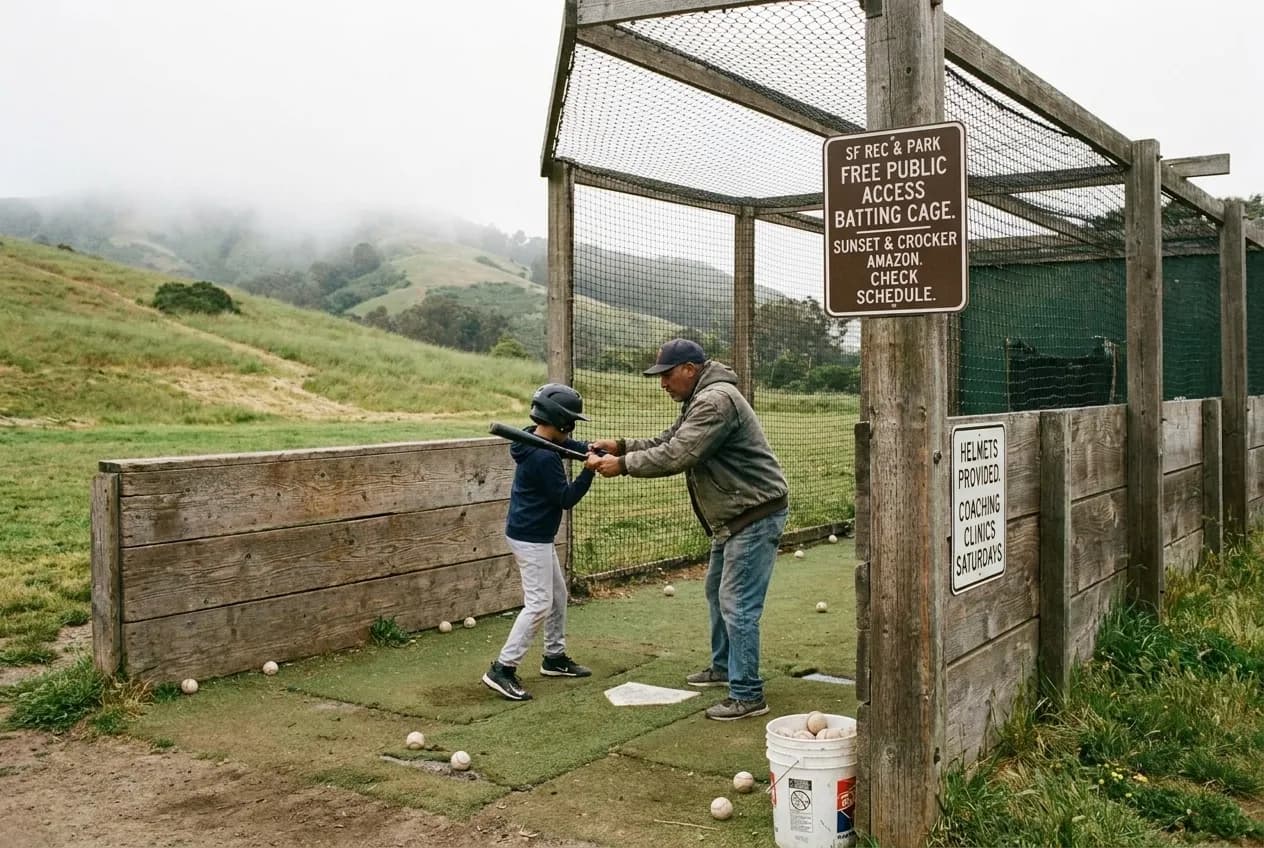
Amateur baseball players fascinated by elite contact-hitting mechanics—particularly the disciplined approach associated with searches for arraez batting technique—face a practical question: where can teammates practice those skills without membership fees? San Francisco's public recreation system maintains batting cage facilities at select locations, with designated free-access windows that theoretically allow weekend morning practice sessions. Yet the gap between searching for professional swing studies and actually securing cage time involves several coordination steps: confirming current public-access schedules, understanding what equipment the city provides versus what you must bring, determining whether volunteer coaches appear during open hours, and planning transit routes that get two or more people to the same facility on time. This guide addresses the decision points and verification tasks that turn interest in refined batting mechanics into actionable weekend plans, acknowledging both the appeal of zero-cost practice and the moderate scheduling effort required.
Text Karpo your starting point, timing, group size, and priorities for a San Francisco plan tailored to this exact situation, with one realistic backup before you leave.

Why Contact-Hitting Searches Lead to Public Cage Inquiries
When amateur players study professional contact hitters—those who consistently put the ball in play with minimal strikeouts—they often seek practice environments that reward repetition over power. The appeal of free public batting cages lies in volume: unlike pay-per-token commercial facilities, designated public hours theoretically allow extended sessions where a player and teammate can experiment with stance adjustments, timing tweaks, and pitch recognition drills inspired by film study. The tradeoff emerges in availability; free windows compress demand into narrow time slots, meaning weekend mornings may feature multiple groups rotating through limited cage space rather than the private, uninterrupted rounds a paid facility offers.
Skill-improvement focus also shifts the evaluation criteria. A player studying elite contact mechanics cares less about cage aesthetics and more about functional details: Does the pitching machine offer variable speeds to simulate off-speed pitches? Is there enough foul territory to safely practice opposite-field approaches? Can a teammate stand behind an L-screen to provide immediate feedback on swing plane? These questions matter more than amenities, yet official facility descriptions rarely specify machine capabilities or layout dimensions, requiring in-person reconnaissance or phone calls to rec center staff before committing a weekend morning.

Navigating SF Rec & Park Facility Information Gaps
San Francisco Recreation and Parks operates numerous athletic facilities citywide, and anecdotal mentions point to batting cages at locations such as Sunset Recreation Center and Crocker Amazon as candidates for public access. However, the official extracts provided show no current schedules, equipment inventories, or helmet-provision policies. This absence means prospective users must verify details directly: calling the facility phone line, visiting in person during staffed hours, or checking bulletin boards for posted schedules. The coordination burden increases when planning with a teammate, since both parties need confidence that the trip will yield actual cage availability rather than a locked gate or conflicting reservation.
The distinction between "designated public hours" and "open facility hours" also requires clarification. A recreation center may be open for general use while the batting cage remains reserved for league practice or maintenance. Some facilities rotate free-access windows seasonally, expanding them in spring and summer when youth leagues pause, then contracting them in fall. Without real-time online calendars—none appear in the official extracts—players rely on phone confirmation within a few days of the intended visit, accepting that plans may need last-minute adjustment if the cage becomes unavailable due to repairs or special events.
Helmet Policies and Equipment Logistics
Safety equipment provision varies widely across public facilities. Some batting cages supply helmets in multiple sizes, disinfecting them between users; others expect participants to bring their own, citing hygiene and liability concerns. The official extracts contain no helmet policy details for SF Rec & Park cages, leaving players to assume the worst-case scenario: arrive with your own helmet, bat, and batting gloves. This assumption adds a logistics layer—transporting bulky equipment via public transit or coordinating a carpool—but eliminates the risk of discovering on-site that no helmets are available and the session must be canceled.
Teammates planning joint practice should also discuss bat sharing versus individual preferences. A player studying contact mechanics may prefer a lighter bat with balanced weight distribution to emphasize bat control, while a power-focused teammate wants end-loaded models. If the facility allows multiple users in adjacent cages, each can work on distinct approaches simultaneously; if only one cage is accessible during the free window, the group must negotiate rotation intervals and whether to use the same machine settings or adjust speed and height between turns, potentially eating into productive repetition time.

Coaching Clinics and Peer Feedback Realities
The phrase "if coaching clinics accompany open sessions" introduces an appealing possibility: volunteer instructors or rec department staff offering tips during public hours, transforming solo cage work into guided skill development. Yet the conditional "if" is critical—no official extract confirms such programming exists at SF facilities, let alone specifies which days or times coaches appear. Players hoping for expert feedback should research separately, contacting the rec center to ask whether any structured instruction overlaps with free cage access, or whether the open hours remain purely self-directed.
In the absence of formal coaching, the teammate relationship becomes the primary feedback mechanism. One player hits while the other observes from a safe angle, noting whether the swing path matches the contact-oriented goals discussed beforehand—staying through the zone longer, using the whole field, minimizing uppercut. This peer-coaching model works best when both individuals share a common vocabulary from video study or previous instruction, allowing specific cues ("You're pulling off the ball early") rather than vague encouragement. The tradeoff is that neither party brings professional expertise, so ingrained mechanical flaws may go undetected or even reinforced through repetition.
Transit Coordination and Weekend Morning Logistics
Reaching batting cage facilities by the start of weekend morning public hours requires transit planning, especially when coordinating with a teammate who lives in a different neighborhood. The SFMTA extract confirms that Muni serves all city neighborhoods and offers trip-planning tools, but does not list specific routes to Sunset Recreation Center or Crocker Amazon. Players must use the online trip planner or mobile app, inputting the facility address and departure location, then comparing travel times. Weekend Muni frequencies often differ from weekday schedules, and early-morning service may involve longer waits or transfers, so building a buffer—arriving fifteen minutes before the cage window opens—prevents losing practice time to transit delays.
Driving and parking present alternative tradeoffs. A car allows equipment transport and flexible departure timing, but street parking near popular rec centers fills quickly on weekend mornings when youth sports and family activities peak. Some facilities offer dedicated lots; others rely on metered or residential permit zones. The decision hinges on whether the convenience of door-to-door travel and guaranteed equipment space outweighs the risk of circling for parking or paying meter fees that erode the "free" nature of the cage access. For teammates traveling together, carpooling splits costs and simplifies coordination, provided both commit to the same arrival and departure times rather than one wanting extended practice while the other has a midday obligation.
Tags: #SanFranciscobattingcages #freebaseballpracticeSF #SFRecandParkfacilities #contacthittingdrills #amateurbaseballtraining #weekendsportsactivities #SunsetRecreationCenter #CrockerAmazon #publicsportsfacilities #baseballskilldevelopment #Munisportsaccess #teammatepracticecoordination #freethingstodoSF
Sources consulted: Source 1: sf.gov · Source 3: sfmta.com · Source 4: sfpl.org
All trademarks are the property of their respective owners.
Ask Karpo first
Ask Karpo to turn this San Francisco idea into a current plan for your date, budget, companion, transit preference, and energy level. Karpo can narrow the route and flag what to verify before you go.