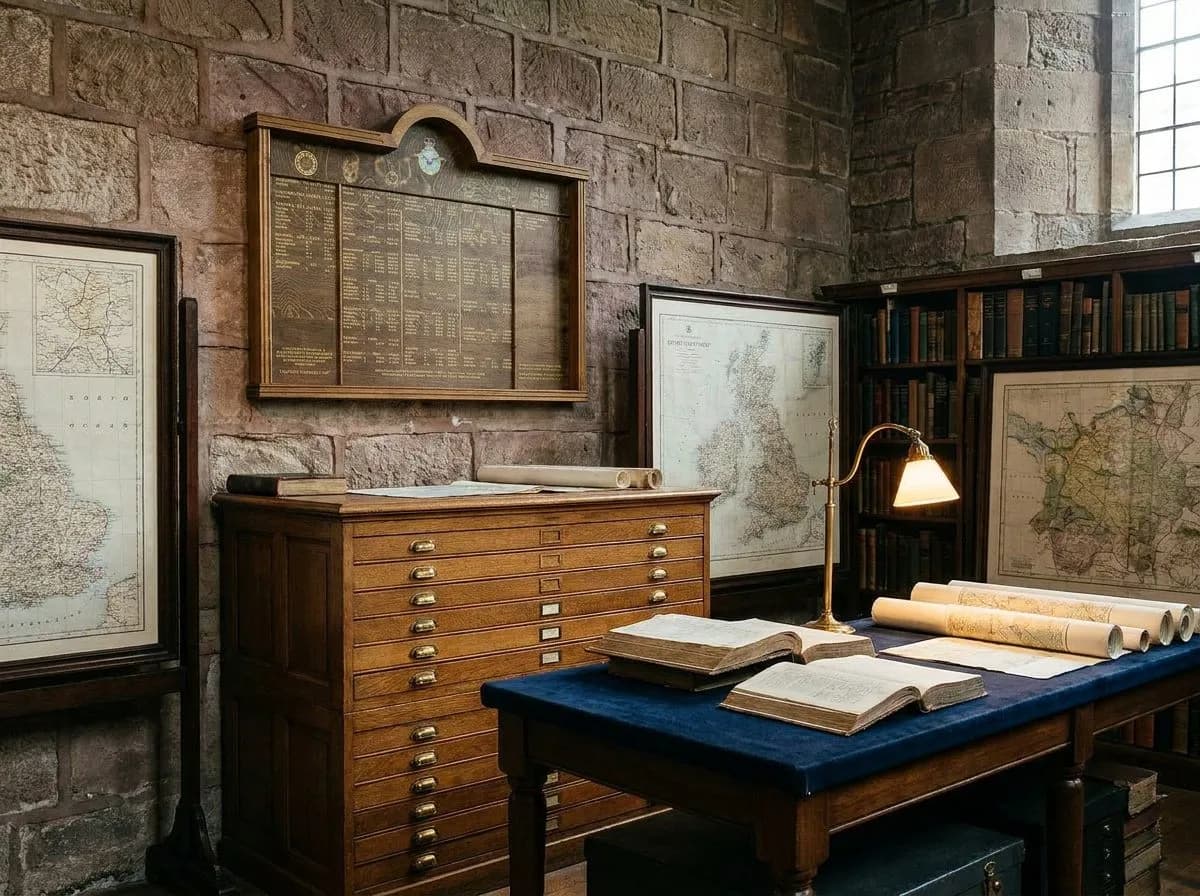
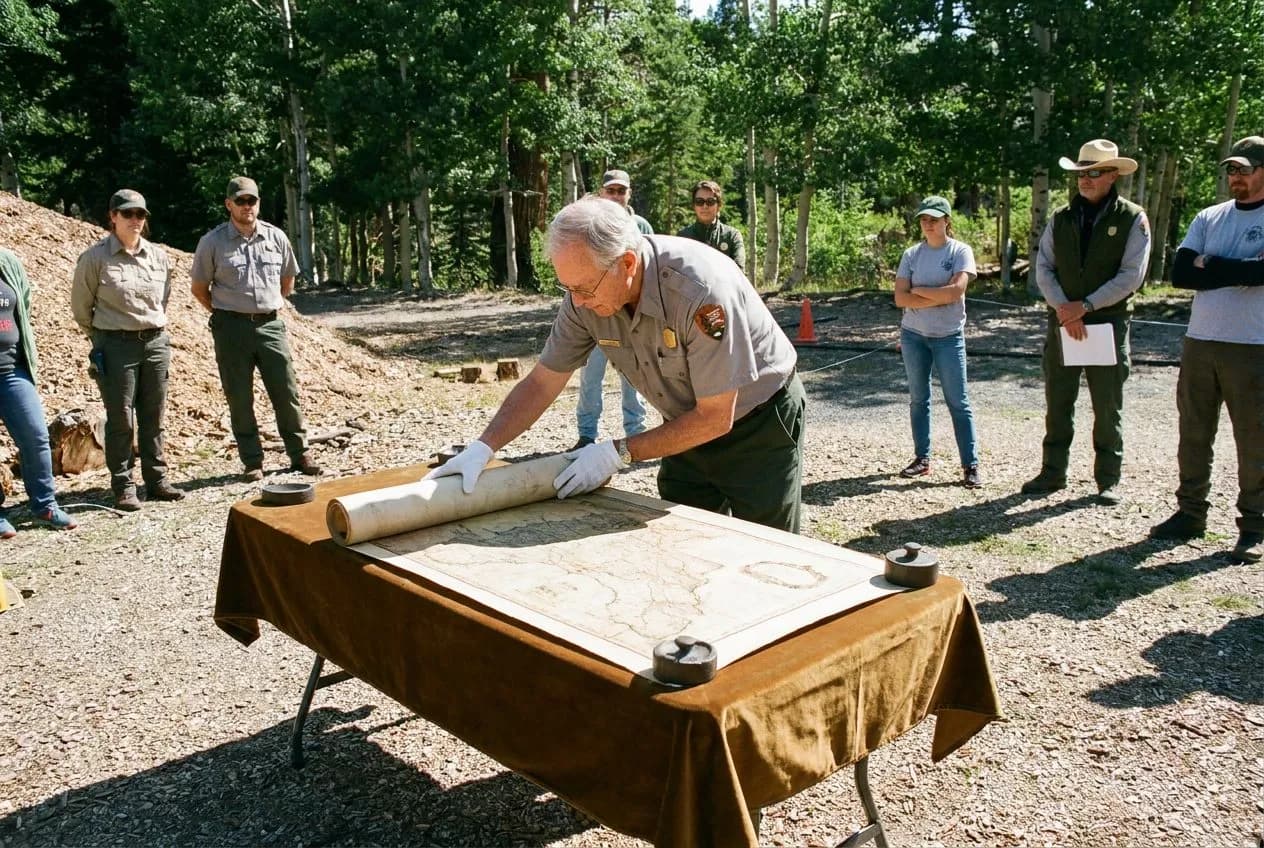
Most Manhattan antiquarian bookshops display their finest wares behind glass or in climate-controlled cases, inviting browsers to admire from a respectful distance. Argosy Book Store takes a different approach on its fourth floor: a private map room where serious collectors sit across from staff members who unroll 18th-century cartographic prints with cotton-gloved hands, adjusting archival weights at each corner of a velvet-lined examination table. The ritual is unhurried, tactile, and decidedly analog—no plexiglass barriers, no self-guided browsing. Just you, a specialist, and several hundred years of ink on laid paper.
Booking the fourth-floor session
Map room appointments are available by appointment; confirm current days and times by phone, and the shop requests at least 48 hours' notice when you call to schedule. This lead time isn't mere logistics; staff use it to pull portfolios aligned with your stated interests—whether that's 17th-century Dutch cartography, early surveys of the Hudson Valley, or hand-colored Pacific explorations. Specify your geographic or period preferences when booking, and the team will have relevant sheets ready for your session.
The advance arrangement also signals intent. Argosy's map room operates on the understanding that visitors arrive with genuine collecting interest, not casual curiosity. It's a model that has sustained the shop since the Cohen family opened the doors in 1925, and it keeps the fourth floor a working archive rather than a ticketed attraction.
The 1925 elevator and fourth-floor arrival
Access to the viewing room requires a ride in the building's original 1925 elevator, a compact cage lift with brass gate and polished wood paneling that feels more like stepping into a piece of furniture than a conveyance. A staff member escorts you up, and the slow mechanical ascent—past floors crowded with military history, Americana, and leather-bound first editions—sets the tempo for what follows. Sessions last 45 to 60 minutes, long enough to examine a dozen maps without rushing, short enough to keep focus sharp.
The fourth-floor room itself is compact and unpretentious: one large examination table, good northern light from tall windows, shelves lined with portfolio boxes labeled by region and century. There's a faint scent of old paper and linen, the kind of archival quiet that makes you instinctively lower your voice. The space has the feel of a private study—because that's essentially what it is, a place where transactions happen after careful looking and conversation, not impulse.
The examination ritual
Once you're seated, the staff member opens a portfolio and begins the slow reveal. Each map is unrolled carefully on the velvet-lined table, corners held in place with small archival weights. Cotton gloves are standard; handling protocols are explained matter-of-factly. You're invited to lean in, to trace coastlines and decorative cartouches, to note watermarks and engraver signatures. Questions are encouraged—provenance, condition, comparable examples—and answers come with the ease of people who've spent years in the company of these sheets.
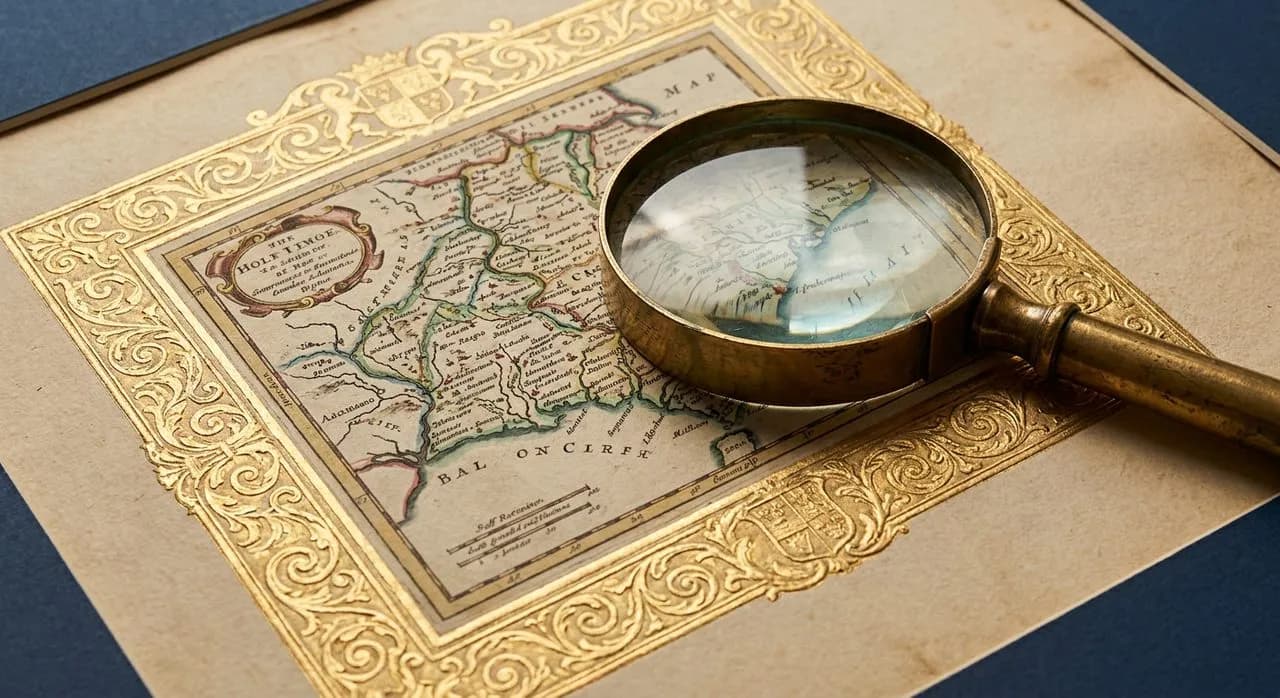
The maps themselves span the 16th through 19th centuries, with particular depth in New York and colonial Americas material. A 1776 British military survey of Manhattan. An 18th-century Delisle rendering of Louisiana Territory. Hand-colored Dutch atlases where California still appears as an island. Each piece carries the aesthetic idiosyncrasies of its era—sea monsters in empty ocean, speculative mountain ranges, Indigenous place names rendered phonetically by European cartographers. The layers of error and artistry are part of the appeal.
Inventory and collecting expectations
Argosy's antique map inventory spans a wide price range, from $400 sheets suitable for entry-level collectors to museum-quality pieces approaching $25,000. Serious collecting interest is expected for private portfolio viewing access—not because the shop is exclusionary, but because the appointment model works best when both parties arrive prepared. If you're uncertain where your interests or budget lie, the ground-floor print bins offer a lower-stakes entry point before committing to a fourth-floor session.
The staff are practiced at reading the room. They'll gauge your reaction to a first map or two, adjust the portfolio selection accordingly, and offer context without overwhelming. There's no pressure to purchase, but there's an implicit understanding that you've come to look with intent. For anyone building a collection—or contemplating the start of one—the appointment structure clarifies priorities quickly. You learn what moves you, what fits the wall space or archival box at home, and what remains aspirational.
Why this still works in 2026
In a city guide landscape increasingly dominated by algorithm-optimized browsing and one-click acquisition, Argosy's map room appointment feels like an artifact from another century—which is precisely the point. The model survives because it aligns medium and method: old maps require slow looking, and slow looking benefits from expert curation. The physical ritual matters. The elevator ride, the velvet table, the cotton gloves—they're not theater, they're the infrastructure of careful attention.
Late 2026 hasn't changed much here. The portfolios still come out one at a time, the light still slants through the same tall windows, and the shop still closes promptly at six. In a neighborhood otherwise defined by high-rise construction and corporate headquarters, Argosy's fourth floor remains a pocket of analog patience. You leave with a map, or you leave with the memory of looking at one properly. Both outcomes feel like small acts of resistance against the usual pace.
Practical notes
Argosy Book Store is located at 116 East 59th Street, between Park and Lexington avenues, three blocks south of Central Park and a short walk from Grand Central Terminal. Nearest subway: N/R/W to Lexington Avenue–59th Street, or 4/5/6 to 59th Street. Street parking is scarce; nearby parking garages may be available; verify current rates before visiting. General shop hours run Monday through Saturday, but confirm current hours before visiting, but confirm by phone before visiting. Map room appointments are booked separately; call ahead and specify your collecting interests. The building predates ADA requirements; the 1925 elevator and narrow staircases may pose challenges for visitors with mobility concerns. Bring a notebook if you tend to forget details mid-session; photography policies vary, so ask before snapping reference shots.
Tags: #ArgosyBookStore #MapsAndPrints #NYCCollectors #EastSideAntiquarian #TheOddEdit #CartographicArchive #PrivateViewings #MidtownManhattan #CollectorCulture #AnalogRituals #AntiqueMapRoom #BookshopDiscoveries #Spring2026NYC #CuratedBrowsing #GrandCentralDistrict
Sources consulted: Argosy Book Store – Wikipedia · Argosy Book Store Official Site · History of Cartography – Wikipedia · MTA – Grand Central Access · The New York Times Books
All trademarks are the property of their respective owners.