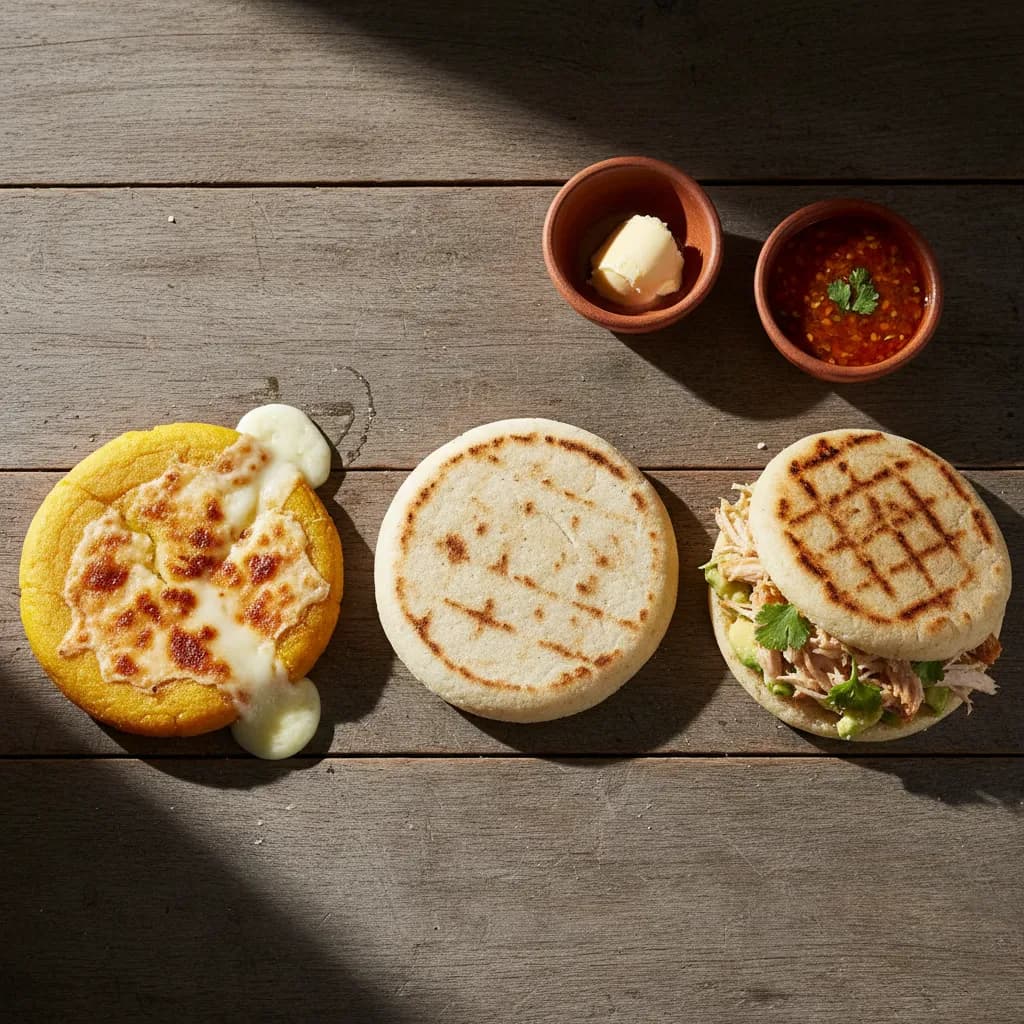
Order "an arepa" in Miami and you could get three completely different foods. A Venezuelan arepa is a crisp-shelled pocket split open and stuffed until it barely closes. A Colombian arepa antioquena is a thin, plain white disc that shows up next to your eggs like toast. And an arepa boyacense — the one search engines say everyone is hunting for lately — is a thick, slightly sweet, cheese-laced griddle cake from the Colombian Andes that most Miami menus don't even carry. Same word, wildly different intentions. This is the field guide: what each style actually is, how to spot it across the table, and a few Miami spots where you can taste the difference for yourself.
Text Karpo which arepa style you're craving — boyacense, antioquena, or a stuffed Venezuelan — and it'll point you to a Miami spot that actually makes it.

One word, three different foods
All arepas start the same way: ground corn, water, salt, shaped into a round and cooked. Where they diverge is everything else. Venezuela treats the arepa as a vessel — the bread is the delivery system, the filling is the point. Colombia mostly treats it as a companion — the arepa sits beside the meal, or under it, and the corn itself is the point. Then Boyaca, a highland department northeast of Bogota, broke both rules and made an arepa that's basically dessert-adjacent: yellow corn cut with wheat flour, sweetened with panela, with fresh cheese worked into the dough. Once you know the three intentions — vessel, companion, treat — you can read any arepa menu in the city.
The Venezuelan arepa: a pocket built for filling
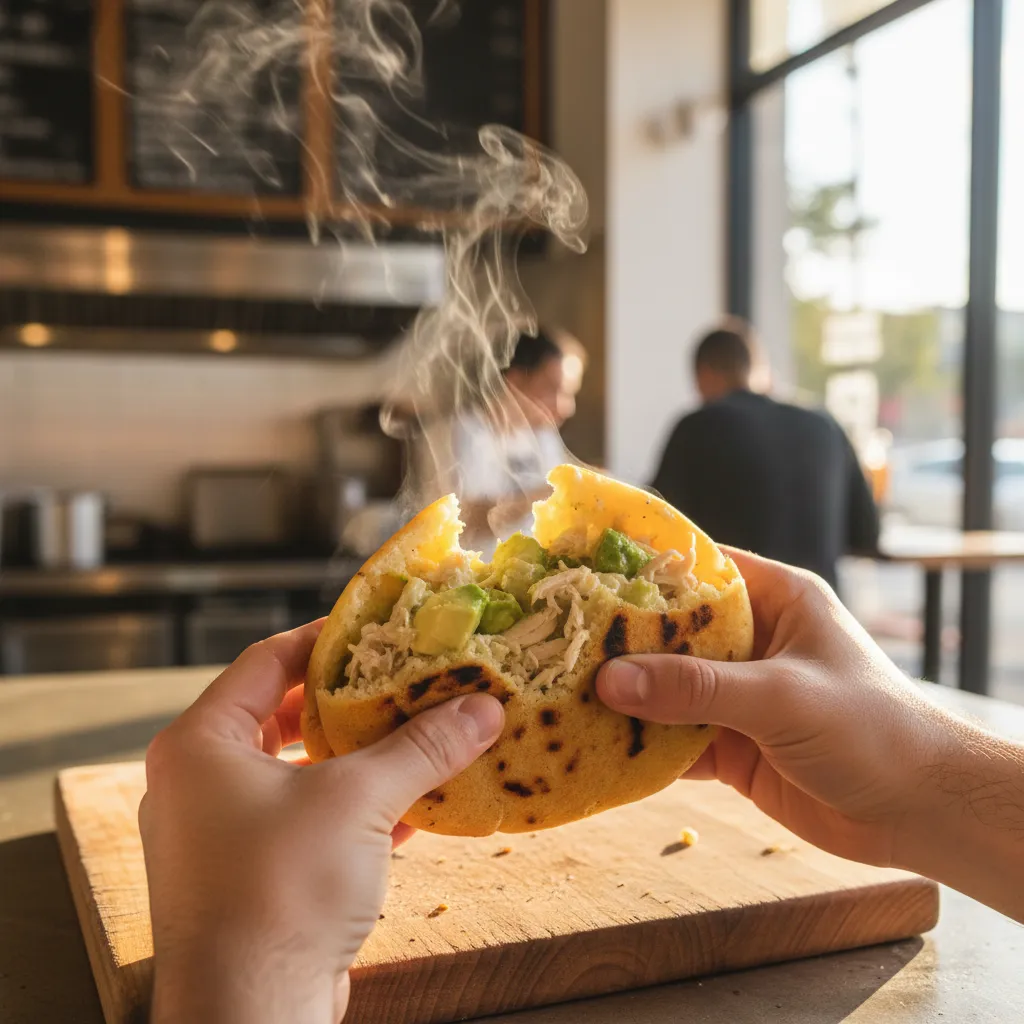
The Venezuelan version is thicker than its Colombian cousins, griddled or fried until the outside crackles, then split like a pita and packed. The gateway order is the reina pepiada — shredded chicken, avocado, and mayo, named for a 1950s Venezuelan beauty queen — followed closely by the pelua, which pairs shredded beef with gouda. In Miami you're spoiled for it. Doggi's Arepa Bar grew from a food truck into a small local group with locations across Miami-Dade and Broward, and its reina pepiada is the version most locals use as a benchmark. Arepa Bar in Wynwood does the street-food take, griddled to order with a proper crunch. La Latina on NE 2nd Avenue in Edgewater has been the neighborhood's Venezuelan standby for years — order at the counter, wait for your number, no ceremony.
Arepa antioquena: the thin white one that comes with everything
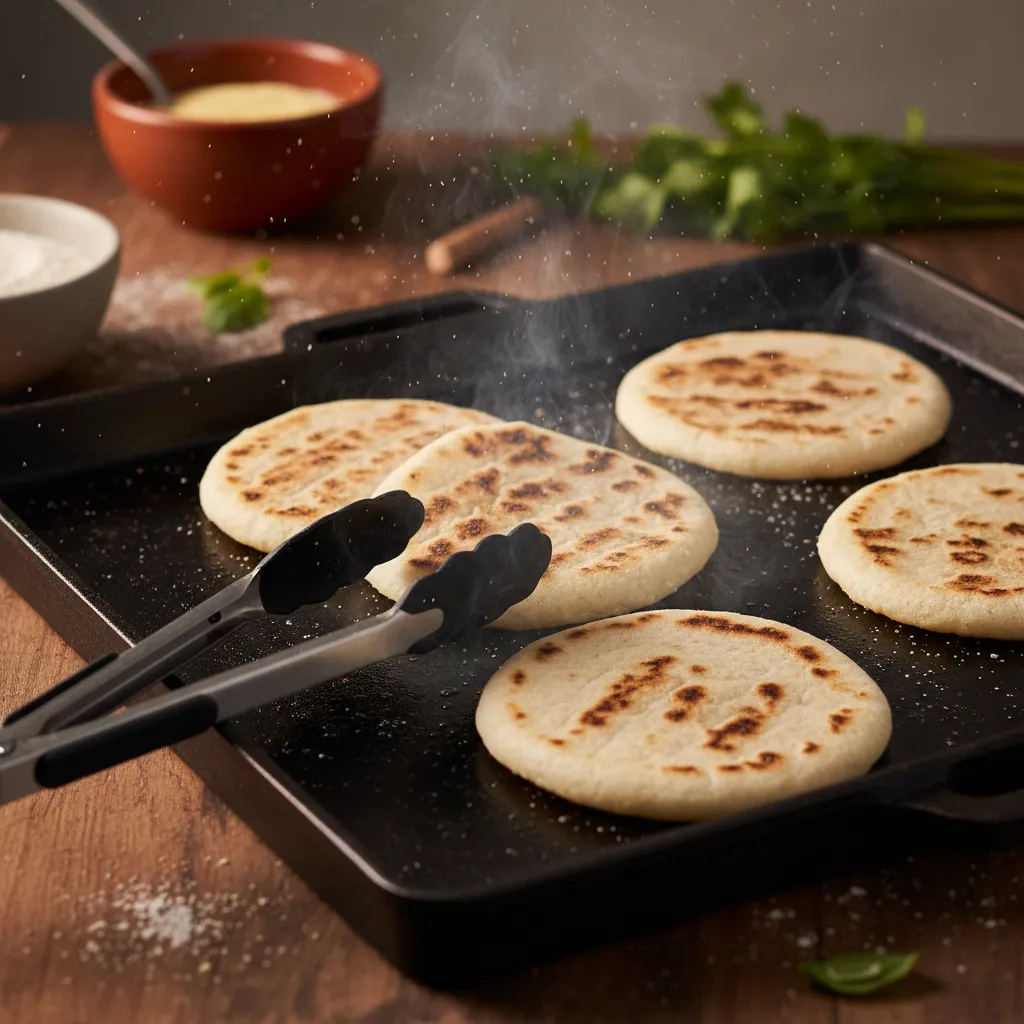
The arepa antioquena — also called arepa paisa, after the people of the Antioquia region around Medellin — is the opposite of a stuffed arepa. It's a thin white disc, a centimeter or less, made from white corn with no filling and traditionally no salt, toasted on a dry griddle until it picks up light char marks. On its own it's plain by design; its job is to carry butter, salty cheese, hogao, or whatever's on the plate next to it. In Miami it mostly appears as a supporting actor: La Ventana on Washington Avenue in Miami Beach, a paisa kitchen that's been going for over a decade, serves it the traditional way alongside its grilled-meat platters, and Mi Colombia in North Beach — an old-school bakery-restaurant — keeps it in rotation with the bandeja paisa crowd. If your arepa arrives unfilled and nobody apologizes, you're eating antioqueno style. That's the point.
Arepa boyacense: the sweet one nobody told you about
Here's the honest answer to "best arepa boyacense near me" in Miami: it's the rarest of the three, and you mostly won't find it on restaurant menus. The boyacense is a thick, golden round from Boyaca that blends pre-cooked yellow cornmeal with wheat flour, gets its gentle sweetness from panela, and hides fresh cheese or cuajada inside the dough itself — crunchy edge, pillowy middle, somewhere between bread and cake. Your most reliable Miami source is Amasijos del Buen Gusto, a local operation that sells boyacenses baked from Colombian ingredients in packs of two or four, delivered to your door — you finish them on a hot griddle or in the oven at home with coffee or hot chocolate, which is exactly how Boyaca eats them. If you spot one at a Colombian bakery counter, buy it on sight.
Wild cards worth knowing: choclo and rellena
Two more styles will show up on Miami menus and confuse the taxonomy. The arepa de choclo is made from sweet fresh corn, cooked more like a pancake and usually folded around melting cheese — Macita's Restaurant & Bakery in Kendall, a longtime Colombian institution, is a good place to meet one. And the arepa rellena is Colombia's answer to the stuffed format: thicker than an antioquena, split and filled, which is how Mi Fondita in Hialeah serves theirs. If a Colombian spot hands you a filled arepa, it isn't breaking the rules — it's just playing Venezuela's game with Colombian corn.
How to order like you know the difference
Quick cheat sheet. Want a full meal in your hand? Order Venezuelan and name your filling — reina pepiada if you're new, pelua if you're hungry. Want the corn itself, as a side or breakfast base? Ask for an arepa paisa or antioquena, and put butter and cheese on top like a local would. Want something sweet with your afternoon coffee? That's boyacense territory — or a choclo if the boyacense hunt comes up empty. And don't ask a Venezuelan spot for a boyacense or a Colombian bakery for a reina pepiada; you'll get a polite no and mark yourself a tourist in one move.
- Doggi's Arepa Bar: multiple locations across Miami-Dade and Broward — Venezuelan; benchmark reina pepiada
- Arepa Bar: Wynwood — Venezuelan street-food arepas griddled to order
- La Latina: 3509 NE 2nd Ave, Edgewater — casual Venezuelan counter standby
- La Ventana: 710 Washington Ave, Miami Beach — paisa cooking with traditional antioquena arepas on the side
- Mi Colombia: North Beach — old-school Colombian bakery-restaurant, bandeja paisa territory
- Macita's Restaurant & Bakery: Kendall — Colombian institution, go for the arepa de choclo
- Mi Fondita: Hialeah — Colombian arepas rellenas, the stuffed exception
- Amasijos del Buen Gusto: Miami-based delivery — packs of true arepa boyacense made from Colombian ingredients
Practical notes
Hours and menus shift often in Miami, especially at family-run counters, so call ahead or check the restaurant's own page before you drive across town — particularly if you're chasing one specific style. Boyacenses from Amasijos del Buen Gusto are a delivery order, not a walk-in, so plan a day ahead. And at any arepera, ask what came off the griddle most recently; an arepa's lifespan is measured in minutes.
Tags: #arepas #arepaboyacense #arepaantioquena #venezuelanfood #colombianfood #miamieats #reinapepiada #miamifood
Sources consulted: eatdoggis.com · arepabarmiami.com · lalatinamiami.com · laventanamiami.com · theinfatuation.com · elbuengusto.us
All trademarks are the property of their respective owners.
Ask Karpo first
Next time the arepa craving hits, skip the twenty-tab research spiral. Text Karpo the style you want and the neighborhood you're in, and it'll come back with a spot, a backup, and what to order — like a friend who already did the homework.