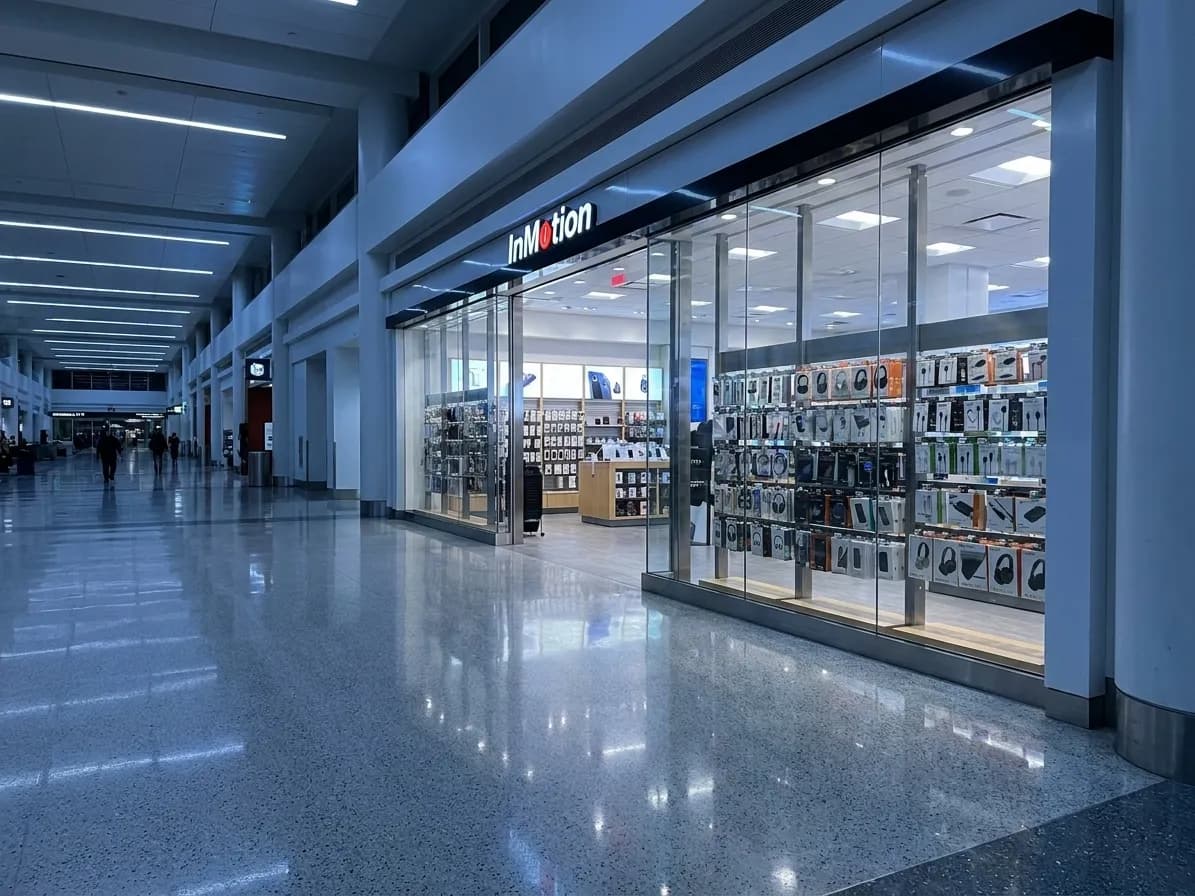
The charging cable that worked perfectly fine yesterday stops transferring power somewhere between the TSA checkpoint and Gate 47, leaving you with eighteen percent battery and a three-hour flight ahead. This failure mode concentrates itself in airports, where cables endure more stuffing, yanking, and general abuse in a single day than they see in a month of home use. InMotion's four post-security locations at San Francisco International Airport exist primarily to solve this exact problem, stocking TSA-compliant battery packs, replacement cables in every current format, and the adapters that transform incompatible plugs into functional charging solutions. The stores occupy small footprints near gate clusters in Terminals 3 and both International terminals, positioning themselves as emergency supply depots rather than leisurely browsing destinations.
Karpo tracks real-time gate locations and operating hours for all four InMotion stores at SFO, so you know exactly which terminal location stocks what you need before your boarding call.
When flight disruptions demand immediate tech solutions
The American Airlines flight from Dallas that filled Terminal 2 with smoke in late August 2026 left two hundred passengers scrambling for alternatives, many discovering their phones had drained to single-digit percentages while monitoring rebooking options. The InMotion store near Gate A6 in the International Terminal saw a forty-minute run on portable chargers and Lightning cables as travelers realized their backup plans required functioning devices. This scenario plays out weekly at San Francisco International Airport, where mechanical issues, weather delays, and missed connections turn electronics retailers into essential infrastructure.
InMotion operates four locations past SFO security checkpoints, each stocking different concentrations of charging gear, adapters, and backup batteries based on the terminal's typical passenger mix. The International Terminal A shop near Gate A6 carries the broadest range of international plug adapters and voltage converters, reflecting its long-haul clientele. Terminal 3's location near Gate E4 prioritizes domestic-travel staples like Apple and Samsung fast chargers. The International Terminal G store near Gate G6 balances both inventories for passengers connecting between domestic and international flights.
Terminal-specific inventory and strategic positioning
The Terminal 3 InMotion opens at six in the morning, ninety minutes before most airport retail, serving business travelers on the first departures to Los Angeles, Seattle, and New York. Its placement near Gate E4 puts it within a three-minute walk of seventeen departure gates, making it the fastest stop for United passengers facing device emergencies. The store stocks fifteen different USB-C cable lengths and configurations, recognizing that airplane seat power ports often sit in awkward positions requiring longer or angled connectors.
International Terminal A's location serves a different need pattern. Passengers clearing customs after fourteen-hour Pacific crossings frequently discover their charging bricks won't work with American outlets, or that their battery packs died somewhere over the ocean. This store maintains the airport's largest selection of universal travel adapters and keeps pre-charged Anker and Mophie battery packs in stock for immediate use. The staff will test your adapter-outlet combination at the counter before purchase, a service that prevents the frustration of discovering incompatibility at your hotel.
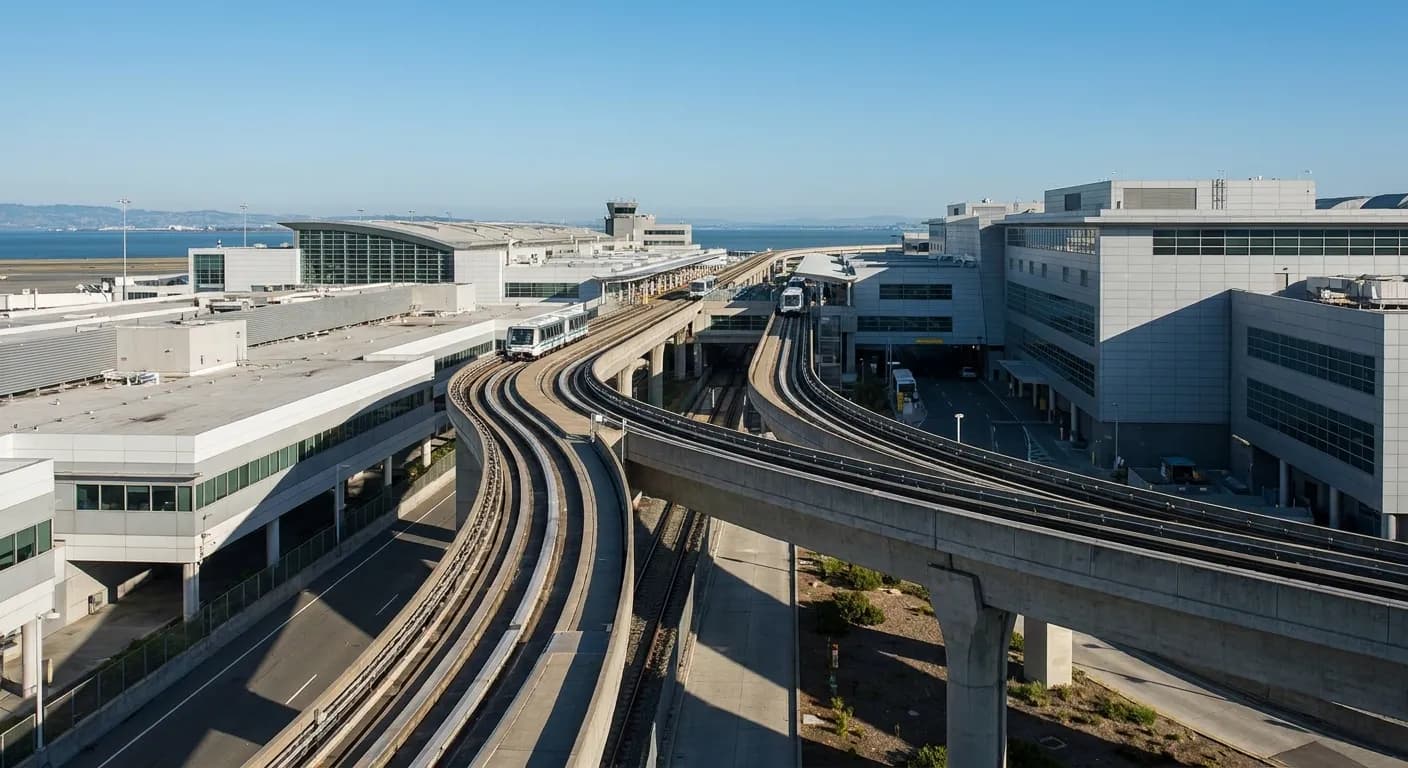
The International Terminal G shop near Gate G6 operates as the system's overflow valve. When Terminal 3 sells out of a popular item during holiday rushes, gate agents direct passengers to ride the AirTrain two stops to International G. This location also stocks the airport's only selection of international SIM cards and eSIM activation kits, useful for travelers whose domestic carriers failed mid-journey or who need immediate connectivity for rebooking.
TSA compliance and the battery pack lottery
Every InMotion location displays a laminated TSA lithium battery chart behind the register, showing which capacities can ride in carry-on bags versus checked luggage. The 20,000 mAh Anker PowerCore sits right at the regulatory edge—legal in carry-on, prohibited in checked bags, and the most frequently purchased size because it provides roughly four full phone charges. Staff confirm your itinerary before completing these sales, since some international carriers impose stricter limits than American TSA guidelines.
The stores also stock 10,000 mAh and 5,000 mAh alternatives for passengers whose connections involve particularly restrictive carriers or who simply want guaranteed compliance without consulting charts. These smaller packs cost fifteen to twenty dollars less and fit more easily in already-packed carry-ons. During the 2026 summer travel surge, InMotion added prominent shelf tags marking which battery packs meet both TSA and European Union aviation authority standards, eliminating a common source of checkout confusion.
The cable replacement economy
Lightning cables make up thirty percent of InMotion's SFO transaction volume, not because they're superior products but because they fail predictably. The six-foot braided Belkin cable that survives daily use at home develops connection problems after two weeks of being stuffed into backpack pockets and yanked from airplane armrests. Passengers discover this failure mode at gates, where the cable physically plugs in but provides no charge indicator. InMotion stocks replacement Lightning cables in three-foot, six-foot, and ten-foot lengths, plus right-angle versions that reduce stress on both the cable and phone port when charging in cramped airline seats.
USB-C cables present a different problem—compatibility rather than durability. A cable that works perfectly with a Samsung phone might fail to fast-charge a MacBook, or vice versa, because USB-C specifications allow different power delivery protocols. InMotion staff ask what device you're charging before recommending a cable, then test the combination at the counter using a USB power meter. This verification step adds two minutes to the transaction but prevents the common scenario of passengers buying a cable that technically works but charges their laptop at one-tenth the expected speed.
The stores also maintain a small selection of older cable types—micro-USB, mini-USB, and even 30-pin Apple connectors—for travelers carrying older e-readers, cameras, or backup phones. These legacy cables occupy less than five percent of shelf space but command premium prices because no other airport retailers stock them. A micro-USB cable that costs three dollars on Amazon sells for eighteen at InMotion, reflecting genuine scarcity rather than pure markup.
Headphones, adapters, and the noise-cancellation arms race
InMotion's headphone wall showcases the current state of active noise cancellation technology, with Sony WH-1000XM5s and Apple AirPods Max representing the premium tier at three hundred to four hundred dollars. Most passengers shopping this wall aren't comparison-shopping—they're replacing devices that broke, got left in TSA bins, or proved inadequate for long-haul flights. The stores stock mid-tier alternatives from Bose and Beats in the one-fifty to two-fifty range, plus budget options from Anker and JLab under sixty dollars.
The International terminals stock airplane audio adapters that convert dual-prong airline jacks to standard 3.5mm plugs, essential for passengers who want to use their own headphones with in-flight entertainment systems. These adapters cost eight to twelve dollars and fail at impressive rates—the mechanical stress of repeated insertion and removal in tight seatback configurations breaks the internal connections. Experienced travelers buy two at a time.
The stores also carry Bluetooth transmitters that plug into airplane audio jacks and broadcast to wireless headphones, solving the problem of wanting to use AirPods with older in-flight entertainment systems. These devices work inconsistently depending on the aircraft's audio system and the headphones' Bluetooth version, making them the most frequently returned category. InMotion maintains a no-questions-asked return policy within the same day of purchase, acknowledging this compatibility lottery.
Practical notes
All four InMotion locations operate daily from 6:00 AM to 11:00 PM, with the Terminal 3 store near Gate E4 opening earliest. Each location accepts credit cards, contactless payment, and offers military discounts with valid ID. The stores participate in SFO's tax-free international departure program—passengers flying to foreign destinations can claim California sales tax refunds on purchases over fifty dollars. InMotion doesn't accept mail returns at airport locations; online purchases must be returned through the company's Las Vegas headquarters. The AirTrain connects all terminals in under ten minutes if your gate's nearest InMotion lacks a specific item. Peak crowding occurs between 7:00 and 9:00 AM during domestic departure waves, and again from 4:00 to 6:00 PM before evening international flights.
Tags: #SFOTravel #AirportElectronics #TravelTech #InMotionSFO #FlightDelays #AmericanAirlines #TravelEssentials #TSACompliant #SanFranciscoAirport #EmergencyCharger #GateShopping #BusinessTravel #LastMinuteGear #AirportRetail #TravelHacks
All trademarks are the property of their respective owners.
Ask Karpo first
Need to know which SFO terminal InMotion stocks that specific Apple Watch charger or noise-canceling adapter before you clear security? Ask Karpo to compare inventory across all four locations, check current wait times at nearby gates, and map the fastest AirTrain route between terminals if your connection requires a store hop.