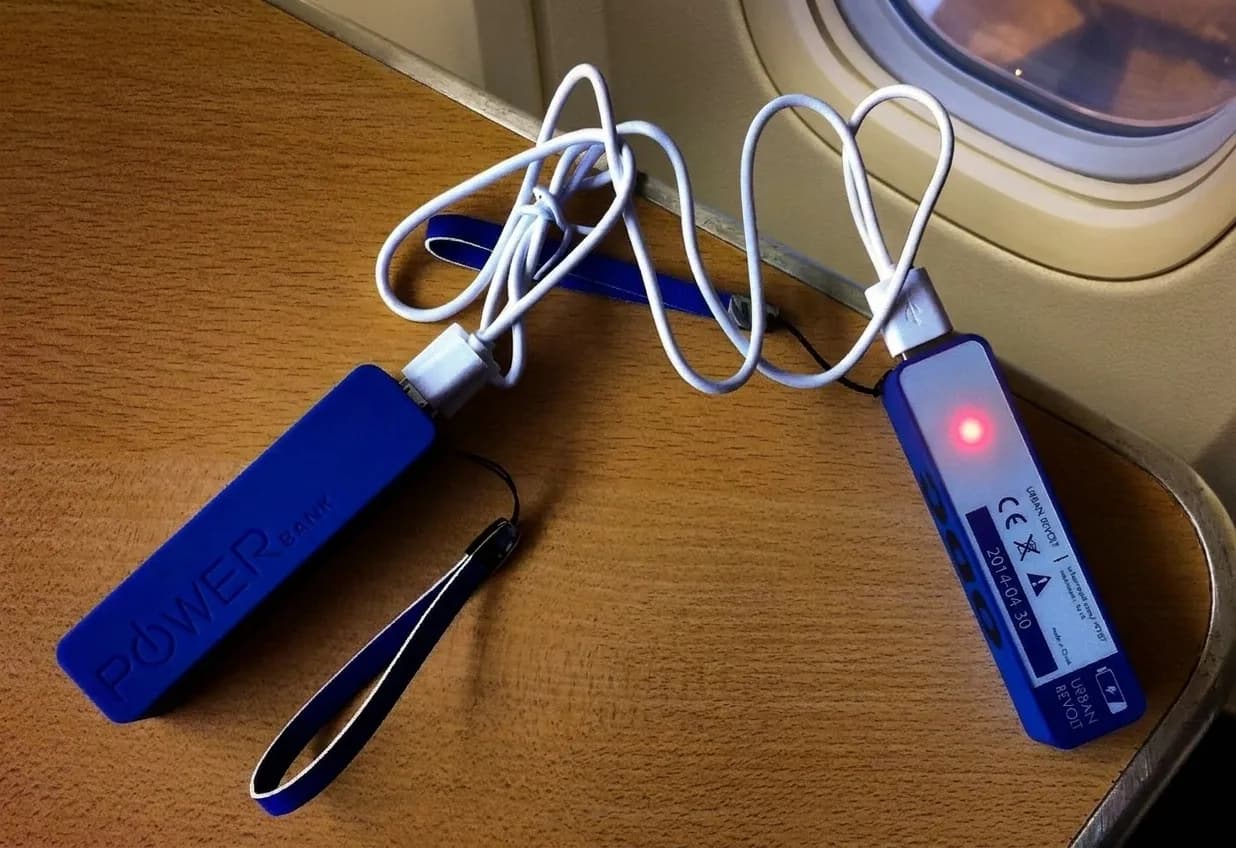
A laptop battery that ignited aboard an American Airlines flight from Atlanta to Dallas on August 21, 2026, burned four passengers and triggered a fresh round of enforcement at San Francisco International Airport. Gate agents are now counting portable chargers as travelers board long-haul flights, capping each passenger at two power banks and banning mid-flight recharging—rules the International Civil Aviation Organization issued in March but that carriers are only now enforcing with consistency. The Dallas fire followed a July 2024 incident at SFO in which a smoldering laptop in checked luggage forced an emergency evacuation, injuring one person and stranding a Miami-bound flight until nearly midnight. Together, the episodes have convinced airlines that lithium-ion batteries in overhead bins and unchecked carry-ons pose a clear and present danger, one that requires visible inspections at the gate rather than relying on passengers to self-police.
Karpo tracks real-time TSA wait times at SFO, alerts you to gate-change announcements, and surfaces which terminals have the fastest security lanes before your next trip.
What happened on the Dallas flight
American Airlines Flight 2398 was twenty minutes from touching down at Dallas Fort Worth International on August 21, 2026, when passengers in the rear cabin noticed smoke curling from an overhead bin. A laptop belonging to a traveler had ignited, its lithium-ion battery overheating inside a carry-on bag. Flight attendants grabbed a thermal containment bag—a fire-resistant pouch airlines started carrying after earlier incidents—and sealed the smoldering device inside while the pilots radioed air traffic control about cabin smoke. The Airbus A321 landed without declaring an emergency, and paramedics met the aircraft at the gate. Four people sustained minor burns, none serious enough to require hospitalization, but the Federal Aviation Administration opened an investigation the same day.
That fire followed a nearly identical scene at San Francisco International in July 2024. Passengers were boarding American's Flight 2045 to Miami when a laptop battery in checked luggage began smoking in the cargo hold. The smell of burning wires reached the cabin, prompting shouting and a scramble for emergency exits. Some travelers deployed the slides before crew could issue instructions. One person suffered minor injuries sliding down, and the airline eventually flew in a replacement aircraft from Los Angeles that didn't depart until after eleven that night. Both episodes involved lithium-ion cells—the same chemistry that powers phones, tablets, and the portable chargers millions of flyers carry.
The August incident wasn't an outlier. Delta and United each logged at least three lithium-battery events in the first eight months of 2026, according to internal safety reports cited by industry publications. An Air Busan fire on January 28, 2025, linked to a power bank stashed in an overhead bin, convinced the International Civil Aviation Organization to issue global guidance in March 2026 capping passengers at two portable chargers and banning in-flight recharging. That rule took effect immediately, but enforcement has been uneven—until now.
New carry-on limits at SFO gates
Starting this month, gate agents at San Francisco International are counting power banks during boarding, especially on long-haul routes where passengers historically packed three or four backup batteries for transcontinental or overseas legs. American, Delta, United, and Southwest all now restrict travelers to two lithium-powered portable chargers per person, and those chargers must stay within arm's reach during the flight—tucked in a seat pocket, under the seat, or on a tray table. Overhead bins are off-limits for active power banks, a change designed to keep any thermal runaway within sight of crew.
Southwest went further in late 2025, dropping its per-passenger limit to one power bank and prohibiting overhead storage entirely. American formalized its two-charger cap and visible-storage rule on a Friday in late April 2026, aligning with United's March policy. All four carriers now bar passengers from plugging power banks into seat USB ports or personal-device charging cables mid-flight, closing a loophole that let travelers top up batteries while airborne. The rationale is straightforward: a battery charging in a seat pocket can overheat and ignite, but if it's visible, a flight attendant can intervene before flames spread.
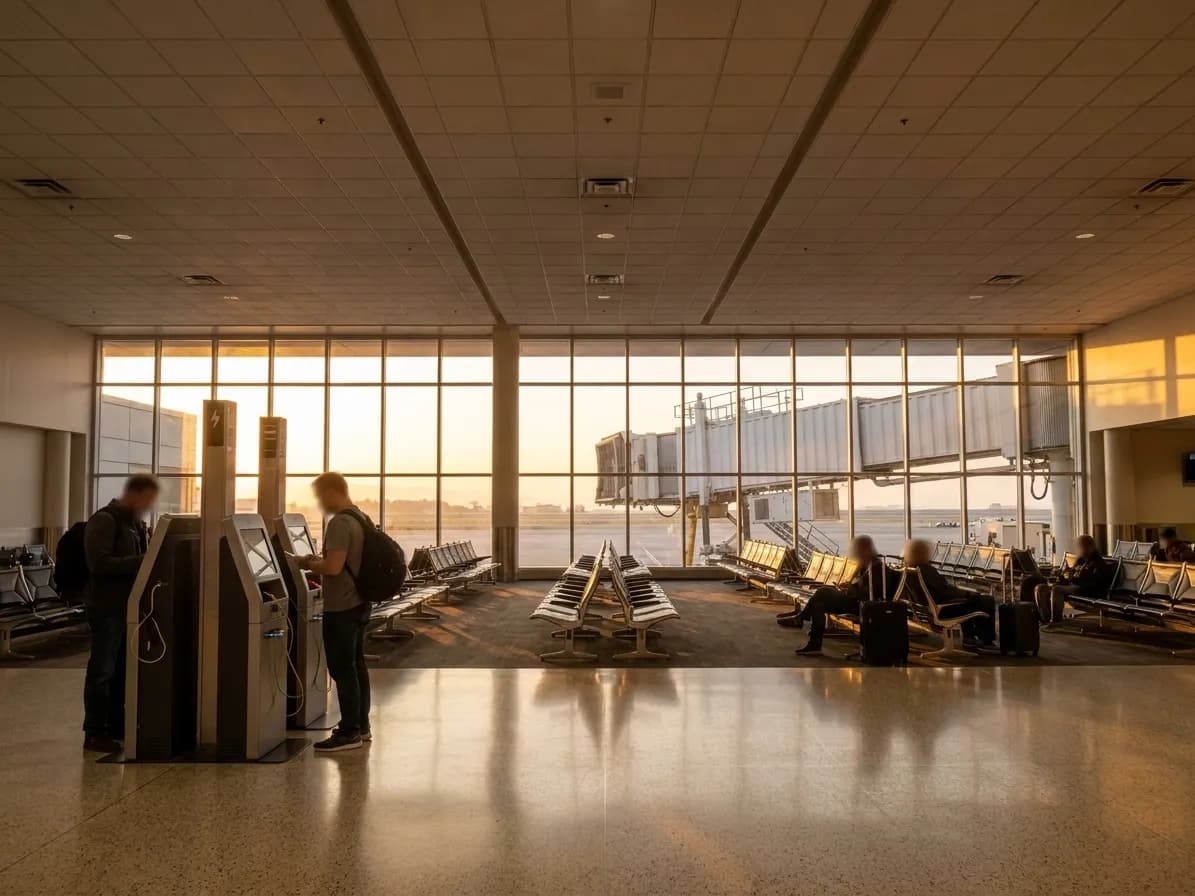
At SFO's International Terminal G—the hub for trans-Pacific American and United departures—dedicated compliance agents now stand at jet bridges, visually inspecting carry-ons for bulky battery packs and asking travelers to confirm watt-hour ratings. Most consumer power banks fall under 100 watt-hours, but units between 101 and 160 Wh require airline approval and are capped at two. Anything above 160 Wh is banned outright. The gate checks add roughly three minutes to boarding, but agents say the delays are worth avoiding a mid-flight smoke event thirty-five thousand feet over the Pacific.
Why lithium batteries catch fire
Lithium-ion cells store energy by shuttling ions between a cathode and an anode separated by a thin barrier. If that barrier tears—from a manufacturing defect, physical damage, or overheating—the cathode and anode can touch, creating a short circuit that releases all the battery's energy at once. The result is thermal runaway: temperatures spike above 500 degrees Fahrenheit, igniting the electrolyte and any nearby materials. Once one cell ignites, heat can cascade to neighboring cells, turning a phone-sized battery into a blowtorch in seconds.
Altitude doesn't cause thermal runaway, but cabin conditions can accelerate it. Air pressure at cruising altitude is equivalent to standing atop an eight-thousand-foot mountain, which slightly lowers a battery's boiling point and reduces the cooling effect of surrounding air. A laptop crammed into an overhead bin, insulated by jackets and bags, has less ventilation than the same device sitting on a tray table. Add a charging cable drawing current through a damaged cell, and the risk multiplies. That's why regulators and airlines now treat charging a power bank in-flight as a fire hazard on par with smoking in a lavatory.
The European Union Aviation Safety Agency published crew-training updates in early 2026 emphasizing recognition of lithium-battery smoke—described as acrid, with a metallic tang—and the importance of thermal containment bags. Those bags, lined with fire-resistant fiberglass, can withstand internal temperatures above 1,800 degrees and contain flames long enough for a plane to land. But the bags only work if crew spot the fire early, which is why visible storage matters. A power bank smoldering under a seat in row 32 might go unnoticed until smoke fills the cabin; the same device on a tray table gets flagged within seconds.
What travelers should do now
Pack power banks in carry-on only—checked baggage has been off-limits for loose lithium batteries for years because cargo holds lack crew access. Tape over exposed USB ports or metal terminals with electrical tape, or slip each charger into a padded pouch to prevent short circuits from keys or coins. Keep chargers in an outer pocket of your bag so you can pull them out quickly if a gate agent asks. If you're flying internationally from SFO, expect terminal G agents to check watt-hour labels; most reputable brands print capacity in milliamp-hours on the casing, and you can convert to watt-hours by multiplying mAh by voltage (typically 3.7V) and dividing by 1,000. A 20,000 mAh power bank at 3.7V is roughly 74 Wh, well under the 100 Wh no-approval threshold.
Once you board, stow power banks under the seat in front of you or in the seat pocket, not in the overhead bin. If you need to charge your phone, plug directly into the seat's USB port—do not daisy-chain through a power bank. Flight attendants are trained to confiscate any portable charger they see plugged into a device mid-flight, so save your battery top-ups for the terminal. SFO's domestic terminals B and C both have charging stations with AC outlets and USB-C ports near most gates; international terminal G has similar setups in the central seating areas past security. Arrive early enough to charge devices before boarding rather than gambling on in-flight power.
If you see smoke or smell burning plastic on a plane, alert a flight attendant immediately and move away from the source. Do not open overhead bins if you suspect a battery fire inside—depressurizing the bin can feed oxygen to smoldering cells. Crew will handle containment; your job is to stay clear and follow evacuation instructions if given. Thermal runaway can escalate in under a minute, so speed matters. Post-flight, if your device or power bank feels unusually hot or swollen, do not charge it; lithium cells that survive one thermal event often fail catastrophically during the next charge cycle. Dispose of damaged batteries at an e-waste facility, not in household trash.
How SFO enforcement will evolve
San Francisco International's compliance push mirrors a broader industry reckoning. The International Air Transport Association updated its dangerous-goods manual in March 2026 to harmonize power-bank limits across member airlines, and the FAA is reviewing whether to mandate thermal containment bags on all US passenger flights, not just long-haul international routes. Some carriers are experimenting with pre-boarding announcements that spell out the two-charger cap and visible-storage rule, hoping to catch violations before passengers settle into their seats. Others are training gate agents to use handheld watt-hour scanners that can estimate a power bank's capacity by measuring its weight and dimensions, though those tools aren't yet widespread at SFO.
Expect the rules to tighten further if battery incidents continue. Industry groups have floated ideas ranging from banning power banks above 50 Wh on certain routes to requiring passengers to register high-capacity chargers at check-in, though neither proposal has gained regulatory traction. For now, the two-charger cap and no-overhead-storage rule represent the practical middle ground: strict enough to reduce fire risk, flexible enough that business travelers and long-haul flyers can still carry backup power. The July 2024 SFO evacuation and the August 2026 Dallas fire proved that even one ignition can injure passengers and strand hundreds, so airlines are betting that visible enforcement will deter the casual rule-breakers who used to stash four or five power banks in carry-ons without a second thought.
Practical notes
San Francisco International Airport is at 780 McDonnell Road, just off US-101 about thirteen miles south of downtown. All four major US carriers operate from terminals 1 (Southwest), 2 (American and Alaska), 3 (United), and the International Terminal (A gates for United and Star Alliance, G gates for American and partners). Security checkpoints open by 4:00 a.m. on weekdays; TSA PreCheck lanes in terminals 2 and 3 typically move faster than standard screening. BART's Yellow and Red lines run directly to the airport from downtown stations; the trip takes roughly thirty minutes and costs six dollars. If you're driving, short-term parking in the domestic garages runs four dollars for the first hour, then three dollars per half-hour. Check your airline's app for real-time gate assignments and any last-minute power-bank policy updates before you leave for the airport.
Tags: #SFOTravel #AmericanAirlines #FlightSafety #LithiumBattery #PowerBankRules #SanFranciscoAirport #TravelAlert #CarryOnRules #AviationSafety #BatteryFire #SFONews #TravelTips #AirlineRegulations #InFlightSafety #SFOUpdates
All trademarks are the property of their respective owners.
Ask Karpo first
Need live SFO security wait estimates or gate-specific boarding updates? Ask Karpo in iMessage for current checkpoint times, terminal-by-terminal comparisons, and alerts when your airline posts new power-bank guidance at the gate.