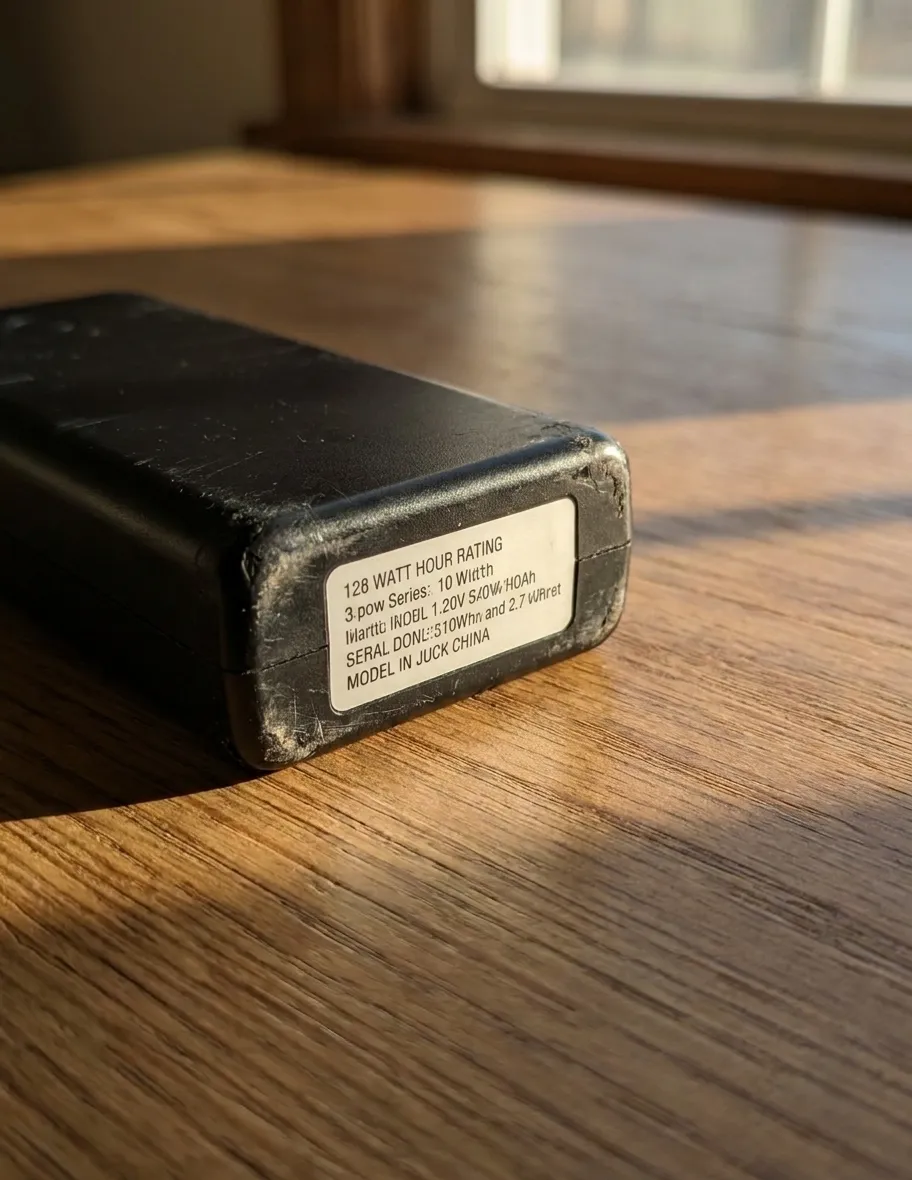
A portable charger that worked fine on last month's flight can become a checkpoint problem tonight if you haven't checked the watt-hour rating against updated airline rules. American Airlines tightened its lithium-ion battery policy in early 2026 after smoke incidents on flights from Dallas and other hubs, and the carrier now limits passengers to two power banks per person—each no larger than 100 watt-hours—with new restrictions on recharging them from seat power outlets during flight. Most travelers still shop by milliamp-hours, the bold number printed on the front of the charger, but TSA and airlines regulate energy capacity in watt-hours, a figure often hidden in fine print on the back edge of the device. If you're flying out of LAX tonight and need a compliant power bank fast, REI Santa Monica stocks Anker and Goal Zero models within a ten-minute drive of the airport, and knowing the watt-hour math before you walk into the store will save you from buying the wrong unit or getting pulled aside at security.
Karpo tracks live TSA battery rules, airline-specific portable charger limits, and current REI Santa Monica inventory so you can shop with confidence before your red-eye.
Why watt-hours matter after recent in-flight battery incidents
A string of lithium-ion battery events—including smoke reported on American Airlines flights from Dallas and other hubs—has airlines and the TSA reinforcing portable-charger rules that many travelers still measure by the wrong number. Passengers shop for power banks by milliamp-hours because that's what the front label screams in bold type. Airlines regulate energy capacity in watt-hours, a figure often buried in fine print on the back or bottom edge of the device.
The distinction matters because a 27,000 mAh power bank can exceed the carry-on threshold if its cells run at a higher nominal voltage, while a 26,800 mAh unit at standard 3.7 volts squeaks in at 99 watt-hours. American Airlines now states passengers may bring two portable chargers per person, each rated no higher than 100 Wh, and prohibits using seat power outlets to recharge those banks while airborne. That last rule is new as of early 2026 and catches frequent flyers by surprise.
If your power bank lacks a printed watt-hour rating, multiply the milliamp-hour capacity by the nominal voltage—usually 3.7 volts for lithium-ion cells—and divide by one thousand. A 20,000 mAh charger works out to roughly 74 Wh, comfortably under the limit. A 10,000 mAh unit lands around 37 Wh, the safest tier for any airline worldwide. Anything above 100 Wh requires carrier approval, and anything over 160 Wh is banned outright.

Last-minute shopping at REI Santa Monica
REI's Santa Monica store, three miles east of the beach on Wilshire Boulevard, stocks Anker, Goal Zero, and Nitecore power banks in the electronics section along the right wall as you enter. The layout puts camping gear up front and tech accessories toward the back, but staff keep fast-moving Anker PowerCore 10,000 mAh units behind the register for travelers who walk in asking specifically for a TSA-compliant charger. That cuts five minutes off your errand if you're racing the clock before an evening LAX departure.
Weekday mornings before ten o'clock are the quietest window; weekend afternoons draw hikers prepping for overnight trips, and the electronics wall can be three people deep. Prices run twenty to sixty dollars depending on capacity and output wattage. The Anker PowerCore Slim 10,000 mAh with USB-C costs around twenty-two dollars and delivers 37 watt-hours, well within carry-on rules. The Anker PowerCore III Elite 25,600 mAh—rated 94.7 Wh—sits at the high end of the no-approval zone and costs about sixty dollars, useful if you're charging a laptop on a long layover.
REI's return policy covers defective units within ninety days, but you'll want to test the charger in the parking lot before you drive to the airport. Plug in your phone, confirm the LED indicators light up, and check the watt-hour label one more time. If the printed rating is missing or illegible, ask a staff member to help you calculate it from the mAh and voltage specs. Better to spend two minutes at the register than lose the device at TSA screening.
What TSA and American Airlines actually enforce
TSA allows lithium-ion power banks in carry-on bags only; checked luggage is off-limits because cargo holds lack cabin crew access in case of thermal runaway. The baseline federal framework permits batteries up to 100 Wh with no airline approval, and 101 to 160 Wh with carrier permission—typically a maximum of two spare batteries in that higher tier. Individual airlines layer their own quantity and onboard-use restrictions on top of the federal rules, and American's current policy is stricter than the regulatory floor.
American Airlines states passengers may carry two portable chargers per person, each no larger than 100 Wh, and must keep those chargers within reach during flight—stored in a personal item under the seat or in the seatback pocket, not buried in an overhead bin. The airline prohibits recharging power banks from seat power outlets while the aircraft is in motion, a rule introduced after incidents involving overheating consumer batteries. You can use the power bank to charge your phone or tablet, but the bank itself must remain unplugged from the plane's electrical system.
If a gate agent checks your carry-on bag planeside due to limited overhead space, you must remove your power banks before handing over the bag. Lithium-ion batteries cannot ride in the cargo hold even for a ten-minute taxi to the gate. TSA officers have final discretion on damaged, swollen, or recalled batteries; if the casing is cracked or the label is missing, expect the screener to pull you aside for secondary inspection. Arriving at LAX with a clearly labeled, undamaged power bank rated under 100 Wh eliminates nearly all checkpoint friction.
Calculating capacity on the fly
Most travelers carry power banks they bought months or years ago, and the watt-hour rating has worn off or was never printed in the first place. If you have the original packaging, check the specifications panel; manufacturers list nominal capacity in mAh, nominal voltage, and sometimes watt-hours. If the box is long gone, look for a label on the power bank itself—usually a small sticker on the bottom or side edge with regulatory icons and fine-print specs.
When only mAh and voltage are visible, the formula is straightforward: multiply milliamp-hours by volts, then divide by one thousand. A 26,800 mAh charger at 3.7 volts yields 99.16 Wh, just under the no-approval threshold. A 30,000 mAh unit at the same voltage produces 111 Wh, which requires American Airlines approval and might be rejected if you show up at the gate without prior clearance. Voltage matters—some high-performance banks run at 3.85 volts, pushing the watt-hour result higher even if the mAh number looks safe.
If you're standing in a store aisle doing the math on your phone, remember that nominal voltage is not the same as the output voltage printed next to the USB ports. A power bank might advertise 5-volt or 9-volt output for fast charging, but the internal cell voltage—the number you need for the watt-hour calculation—is almost always 3.7 volts for consumer lithium-ion packs. When in doubt, ask the sales associate or look up the model number on the manufacturer's website before you buy.
Alternative pickup points near LAX
If REI Santa Monica is too far north or you're coming from the South Bay, Best Buy's Westchester location on Sepulveda Boulevard sits two miles northeast of the airport and keeps Anker, Belkin, and Mophie power banks in stock. The store opens at ten on weekdays and sees a steady flow of last-minute travelers between four and seven in the evening. Selection is narrower than REI's, but the Anker PowerCore 10,000 and PowerCore Slim models are usually available at comparable prices.
Target Manhattan Beach, four miles south of LAX on Sepulveda, carries Heyday-branded power banks in the electronics section near the back of the store. The Heyday 10,000 mAh model costs around fifteen dollars and delivers roughly 37 watt-hours, making it the cheapest TSA-compliant option within a ten-minute drive of the airport. Build quality is lighter than Anker's, but it's adequate for a single trip if you forgot to pack your regular charger.
Avoid the electronics kiosks inside LAX terminals; they stock power banks at inflated prices—often thirty to fifty dollars for a 10,000 mAh unit you can buy for twenty dollars at REI—and the watt-hour labels are not always clearly marked. If you're already past security and discover your power bank is over the limit, you'll either need to abandon it at the checkpoint or gate-check your carry-on and remove the battery, neither of which is convenient twenty minutes before boarding.
Practical notes
REI Santa Monica is at 402 Santa Monica Boulevard, open Monday through Saturday from ten until nine and Sunday from ten until seven; street parking is metered until eight PM, and the store's small lot fills by midday on weekends. American Airlines operates from Terminals 4 and 5 at LAX; allow forty-five minutes from REI to the terminal during evening rush, longer if you're dropping off a rental car. Power banks belong in your carry-on bag, never checked luggage. Keep the watt-hour label visible when you place the charger in a bin at security—screeners sometimes pull bags for secondary inspection if they can't immediately verify the rating. If your charger exceeds 100 Wh, contact American Airlines Special Assistance at least twenty-four hours before departure to request approval; showing up at the gate with an oversized battery and no clearance will delay boarding or force you to leave the device behind.
Tags: #LAXTravel #PowerBankRules #AmericanAirlines #TSACompliant #LithiumBattery #CarryOnOnly #WattHourMath #REISantaMonica #RedEyeFlight #TravelTech #AirlineSafety #PortableCharger #FlightPrep #BatteryLimits #LosAngelesTravel
All trademarks are the property of their respective owners.
Ask Karpo first
Need to know which power banks are legal for tonight's LAX departure, where to buy one within thirty minutes of the terminal, or how to calculate watt-hours from your existing charger's mAh label? Ask Karpo. I'll pull live REI Santa Monica stock, current TSA lithium-ion limits, and your airline's onboard-use policy—so you're not gambling at the security checkpoint.