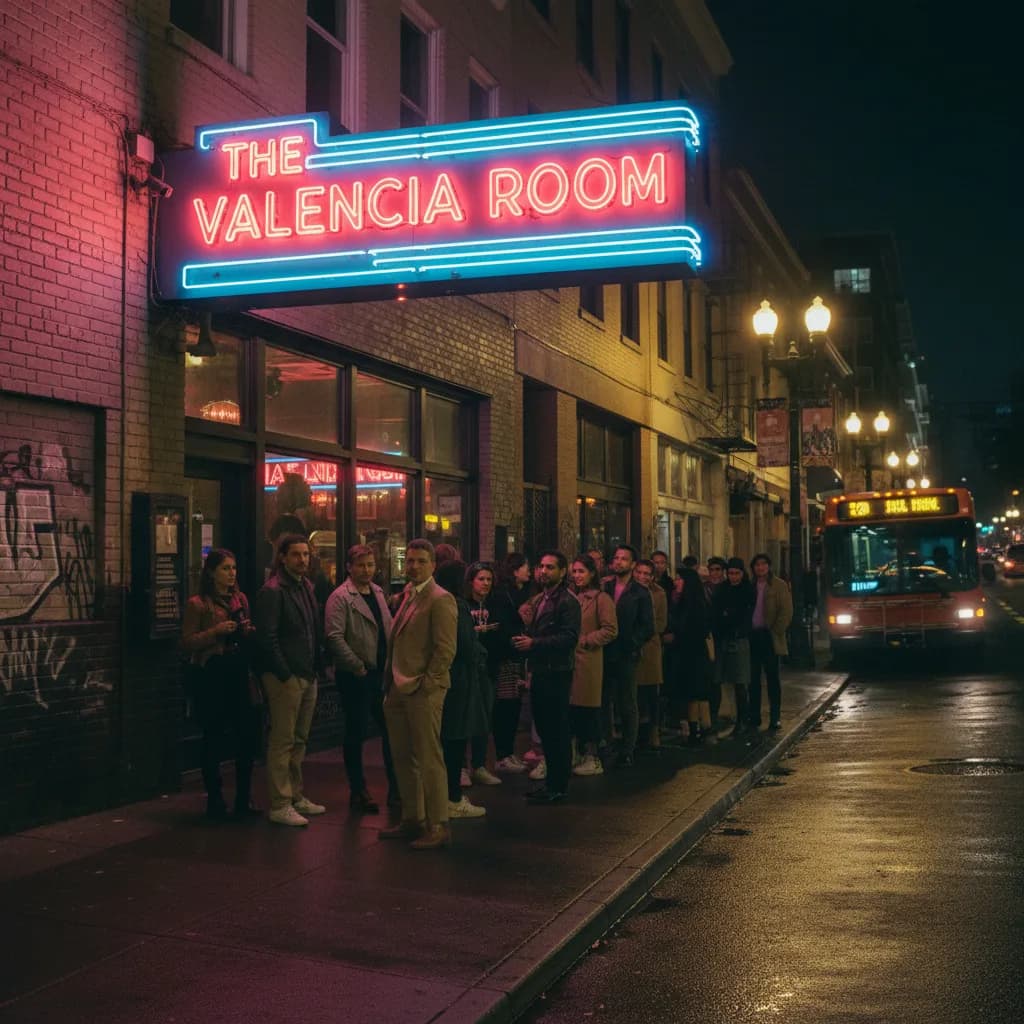
 Mission Concerts: The Valencia Room's Pulsating Beat on Valencia Street
Bars & Nights Out
Alexander Zverev Match Score: SF Quiet-Hour Cafe Work Itinerary Map
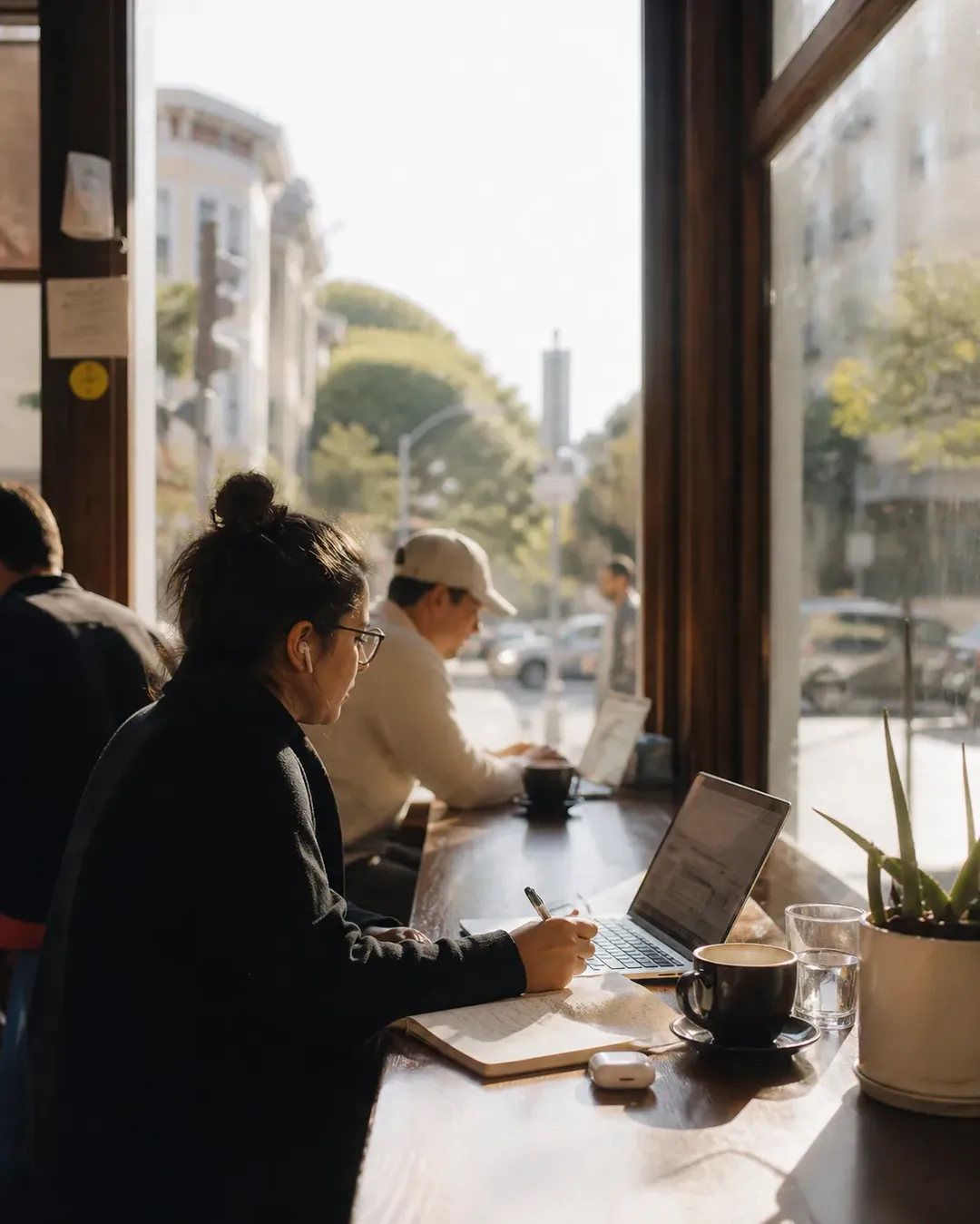
Use the alexander zverev score check as a disciplined pause, not the center of the morning. This San Francisco route frames Hayes Valley, Noe Valley, and Inner Sunset as calm work zones where laptop claims should be verified before you sit down.
A search for alexander zverev can pull you into live-score refresh loops fast, which is exactly why a morning work itinerary needs structure before the laptop opens. In San Francisco, the stronger play is not to assume every attractive cafe is built for deep work, but to choose a compact neighborhood sequence, verify quiet expectations in person, and keep public fallback spaces nearby. This plan is for solo remote workers who want early calm, minimal interruption, and short, discreet score-checking breaks between focused blocks. It treats Hayes Valley, Noe Valley, and the Inner Sunset as decision zones rather than guaranteed cafe rankings, because published city information supports mobility planning and library fallback options, while cafe outlet access, WiFi quality, quiet policies, and laptop reservations still need same-day confirmation with each venue.
What neighborhood fits your morning commute pattern, and do you need guaranteed outlet access or just strong WiFi for cloud-based work? Specify your typical session length and video call requirements, and we'll map a quiet-hour itinerary with a backup cafe for overcrowding days.
Build the Morning Around Noise Risk
Start the day with the assumption that the quietest cafe is the one you have checked before ordering. The target window is early morning before the broader cafe crowd gathers, but the exact cutoff depends on each venue, staff policy, seating layout, music volume, and whether laptop use is welcomed at the time you arrive. For this itinerary, the best first question is not whether a place looks calm; it is whether the staff allow extended laptop work, whether quiet seating is actively maintained, and whether window counters can be reserved or held for laptop users.
Use a simple two-block structure: one deep work block after arrival, one short score break, then one second work block before changing neighborhoods or moving to a library fallback. Keep alexander zverev score checks bounded to the break, ideally away from video calls and shared seating pressure. If the cafe does not clearly support low-noise work, do not negotiate the room into your office. Move to the next zone, because the value of this route is calm focus, not forcing a marginal venue to fit a morning that needs reliability.
Hayes Valley First Pass
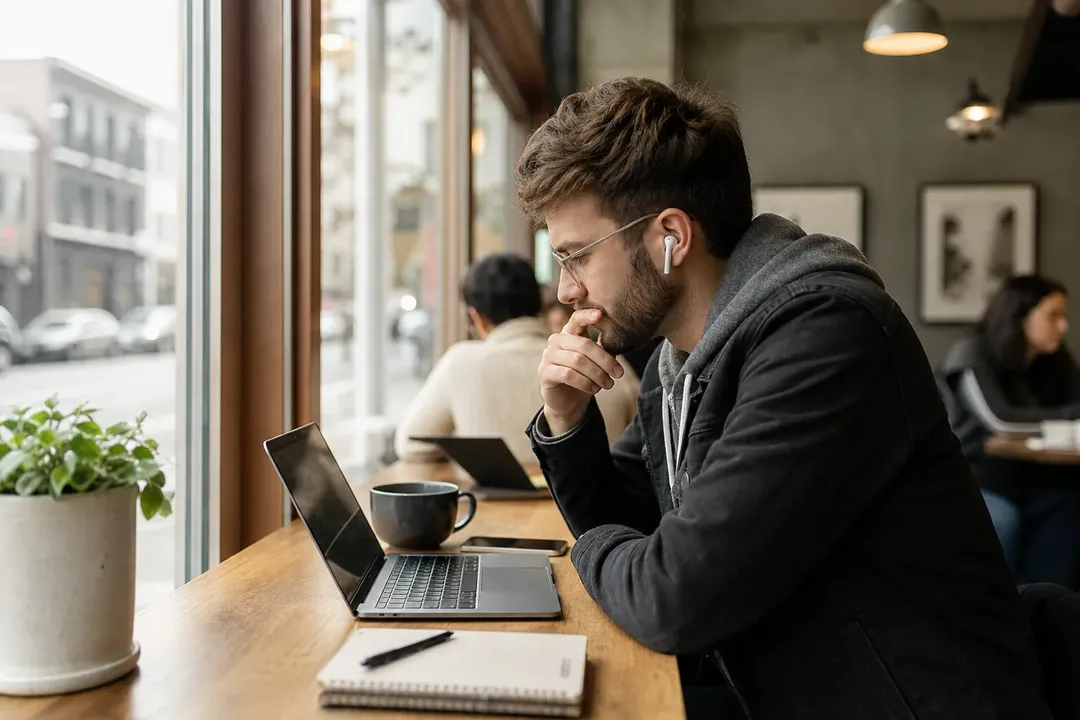
Hayes Valley works best as the opening test because it is central, walkable in feel, and easy to reposition from if the first cafe does not meet the quiet-hour standard. The city transportation guidance points travelers toward Muni, walking, biking, driving and parking, taxis, and accessibility resources, so the practical move is to choose the mode that keeps your arrival predictable and your exit flexible. For a work morning, that usually means reducing parking uncertainty and avoiding a route that leaves you dependent on one crowded room.
For August 2026, Hayes Valley also deserves a calendar check before you commit to a long session. SFMTA lists Hayes Valley Shared Spaces on Fridays from 4 to 10 p.m. and Saturdays from 7 a.m. to 10 p.m., which can change street feel and movement patterns even if your own work block is earlier than a typical night-out plan. In this neighborhood, verify three things before settling: whether quiet expectations are enforced before 11 a.m., whether outlets are close enough for a full work block, and whether WiFi is stable enough for video calls. If any answer is vague, treat the stop as coffee-only and keep the laptop closed.
Noe Valley as the Backup Anchor
Noe Valley is the steadier second zone for a solo worker who values calm over scene. Its role in the route is not to promise a perfect cafe, but to give you a neighborhood where you can reset after the first block and avoid the mental drag of searching too widely. Ask directly about laptop limits, window-counter reservations, and whether calls are acceptable indoors. If calls are not a fit, use the cafe for writing, reading, or async work only, then step outside for the brief score check instead of turning the table into a command center.
The public fallback here is clear: San Francisco Public Library lists the Noe Valley Branch at 451 Jersey Street, with Monday 11-6, Tuesday 10-8, Wednesday 12-8, Thursday 10-6, Friday 1-6, Saturday 10-6, and Sunday 1-5. That does not replace a cafe breakfast stop, and it should not be treated as a video-call guarantee, but it gives the itinerary a calmer Plan B for reading, drafting, or administrative work during listed open hours. If the morning cafe options feel too social, the library branch can carry the second half of the itinerary more predictably.
Inner Sunset for the Long Block
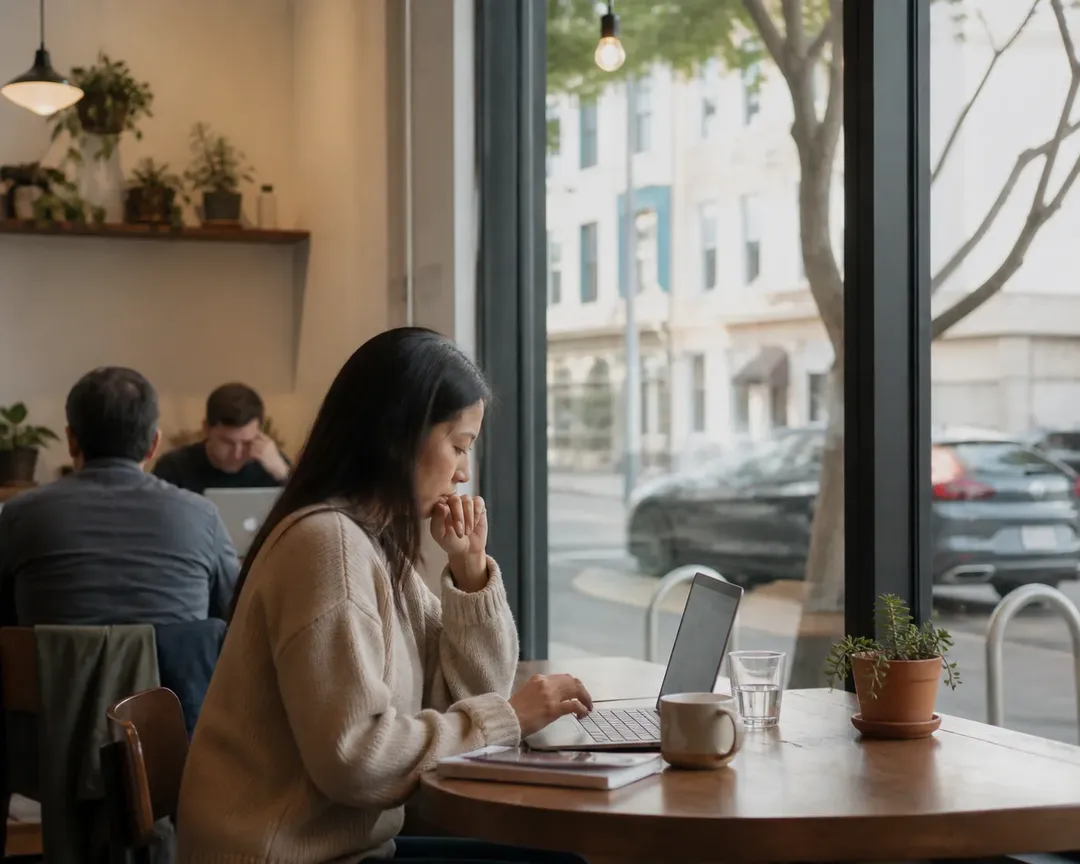
The Inner Sunset is the route’s longer-work candidate because it supports a quieter, less performative morning if you select carefully. Do not rely on assumptions about laptop culture from the storefront alone. Before opening a long document or joining a call, confirm the house rules: time limits, laptop seating, power access, WiFi expectations, and whether window counters are bookable or simply first-come seating. If the answer depends on how busy the room gets, plan your work as a shorter block with a clear exit rather than a full morning stay.
For a public-space backup, San Francisco Public Library lists the Sunset Branch at 1305 18th Avenue, with Monday 10-6, Tuesday 10-8, Wednesday 10-8, Thursday 10-8, Friday 1-6, Saturday 10-6, and Sunday 1-5. The branch gives the Inner Sunset leg a practical safety valve for quiet reading and writing when cafes become louder. Weather should also shape the route: the National Weather Service San Francisco Bay Area page on August 6, 2026 noted heat-related advisories and elevated fire concerns across parts of the region, so check conditions before making a walk-heavy plan or choosing outdoor seating for a long session.
Transit and Score-Check Rhythm
Keep the map compact enough that a transit delay does not consume the morning. SFMTA says Muni serves every neighborhood in San Francisco and also points riders toward Bay Area connections such as BART and Caltrain, which makes it reasonable to plan neighborhood hops without turning the day into a ride-planning project. Still, check SFMTA travel updates before leaving. The same page notes that temporary stop relocation status is updated every 30 minutes, and event advisories can affect how relaxed a route feels on a given day.
The score-check rhythm should protect the work, not decorate it. Use 50 to 75 minutes for focused output, then five minutes for messages, transit review, and a discreet alexander zverev score glance if the match is live. Avoid streaming, sound, or animated refresh habits in quiet rooms; those small behaviors change how long a cafe feels welcoming for everyone else. If you need a call, pick the venue only after confirming WiFi and call norms, and keep a backup route to the nearest appropriate public space instead of hoping a noisy room will settle down.
Tags: #SanFrancisco #BarsNightsOut #RemoteWork #QuietCafes #HayesValley #NoeValley #InnerSunset #ProductivityItinerary
Sources consulted: Source 1: sfmta.com · Source 2: sfpl.org · Source 3: sfmta.com · Source 4: weather.gov
Please drink responsibly. Must be of legal drinking age.
All trademarks are the property of their respective owners.
Ask Karpo first
Ask Karpo to turn this San Francisco idea into a current plan for your date, budget, companion, transit preference, and energy level. Karpo can narrow the route and flag what to verify before you go.
Ask Karpo for more information.
Keep reading
- Mission Concerts: The Valencia Room's Pulsating Beat on Valencia Street
 Happy Hour Near Me in Union Square: Pacific Cocktail Haven’s Inventive Elixirs
 Bourbon & Branch Tenderloin: Happy Hour Near Me, a Speakeasy Sanctuary