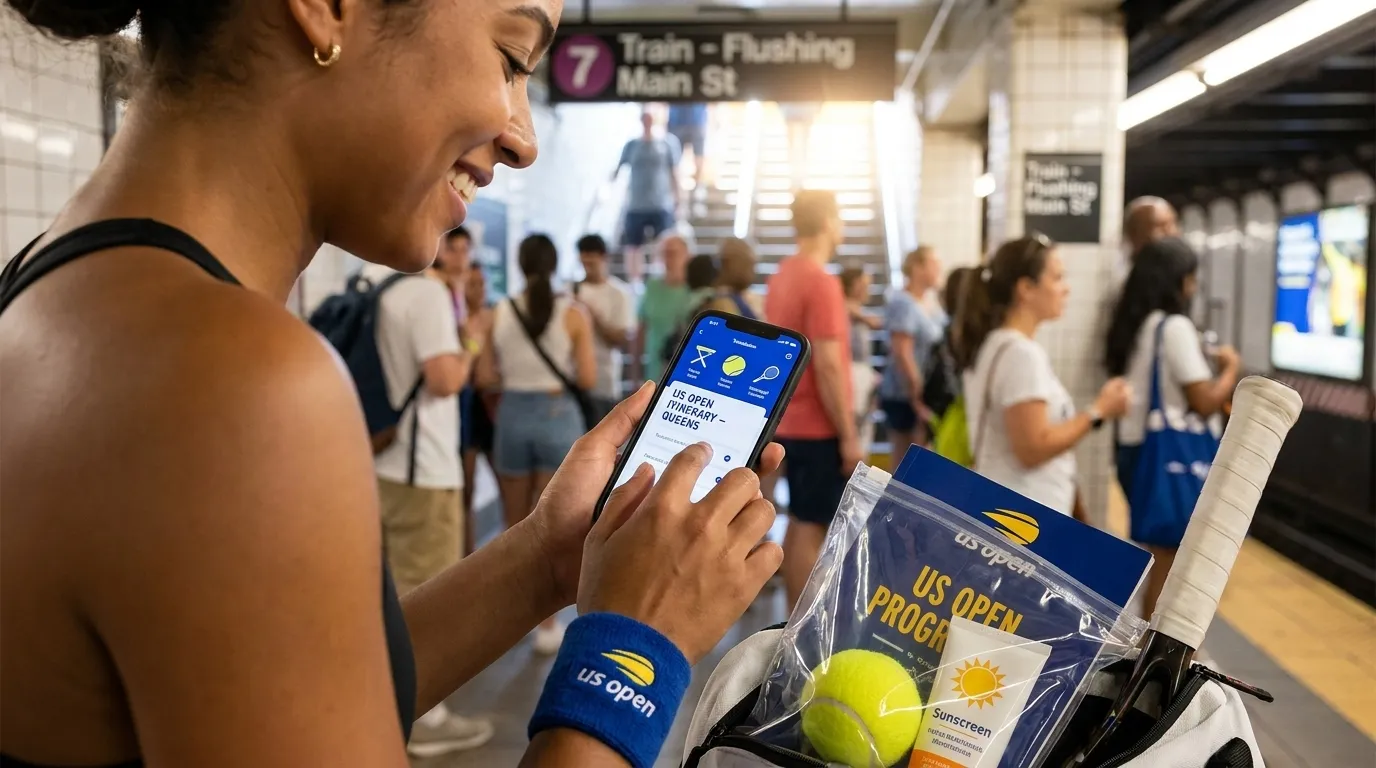
If your first US Open ticket is tied to opening weekend, protect the session first and the original itinerary second. As of July 23, 2026, the official 2026 US Open calendar runs from August 23 through September 13, with the singles main draw scheduled to begin August 30. Recheck the official schedule close to travel, because session details, gate procedures, transport guidance, venue rules, and player participation can change. The strongest backup plan is not a prediction that your airline will recover quickly. It is a written set of choices: how late you are willing to arrive, when you will search other airports, and when the cost of waiting becomes greater than the cost of acting.
Flying in for opening weekend? Text Karpo for a live backup plan that connects your flight status, airport arrival, hotel route, and first US Open session.

Anchor Every Choice to the First Ticketed Session
Start with the ticket you most want to protect. That may not be your first full day in New York; it may be the first session printed in your ticket account. Work backward from that entry time with a cushion for landing, taxiing, baggage, ground transport, hotel decisions, food, weather, and the possibility that your group moves slowly after a disrupted trip. A flight that looks efficient can be fragile if it lands too close to the session you care about.
If your budget and schedule allow, separate arrival day from tennis day. Arriving the day before your first session gives you more ways to absorb a delay without making every later choice desperate. If same-day arrival is unavoidable, choose the earliest workable flight and decide in advance whether you would go straight to the venue or stop at your hotel first. That decision should account for luggage, mobility needs, current bag rules, and the official US Open transportation and venue guidance available near your travel date.
Set a Delay Decision Line Before Alerts Start
A useful delay plan has thresholds, not hopes. For example, you might decide that a short delay is tolerable if it still leaves a comfortable margin before your session, while a longer delay triggers a search across other workable New York-area airports. Your exact line depends on ticket time, hotel location, checked baggage, group size, accessibility needs, and how much risk you are willing to carry. Write the line down before departure so you are not negotiating with yourself while airline estimates keep changing.
- If the updated arrival still leaves a meaningful buffer before the session, monitor the flight, keep devices charged, and confirm your ground route.
- If the new arrival leaves only a narrow window, compare alternate same-day flights into other workable airports before the remaining seats disappear.
- If checked baggage would slow recovery, consider whether a carry-on-only plan is worth using for this trip.
- If you are traveling with others, assign one person to airline options and another to hotel, transport, and ticket logistics.
- If waiting would likely cost the session, decide whether rebooking, rerouting, or canceling the air plan better protects the trip.
None of these steps guarantees an airline will have seats, crew, or routing that solves the problem. Weather, airspace congestion, maintenance, staffing, and airport operations can narrow the available choices. The point is to recognize the moment when passive waiting becomes its own risk.
Separate Airline Rights From Airline Help
U.S. Department of Transportation consumer guidance says passengers are entitled to a refund when an airline cancels or significantly changes a flight and the passenger chooses not to accept the alternative offered. That refund right is different from the practical help an airline may provide during a delay, such as meals, hotels, ground transport, or rebooking. Exact assistance during controllable delays varies by airline, so review the DOT airline cancellation and delay dashboard and your carrier’s current terms before the trip.
Save the DOT refund page, the DOT dashboard, your airline contact information, and your reservation details in one easy-to-find folder. If disruption happens, ask specific questions: Is this a cancellation, a significant change, or a delay? What alternative is being offered? If I decline it, what refund option applies? What delay assistance does this carrier currently provide? Keep screenshots of alerts, boarding passes, and chat transcripts, but treat official policy language as the key reference. Calm, precise questions usually work better than broad demands when seats and hotel rooms are limited.
Compare Airports by Total Recovery Time
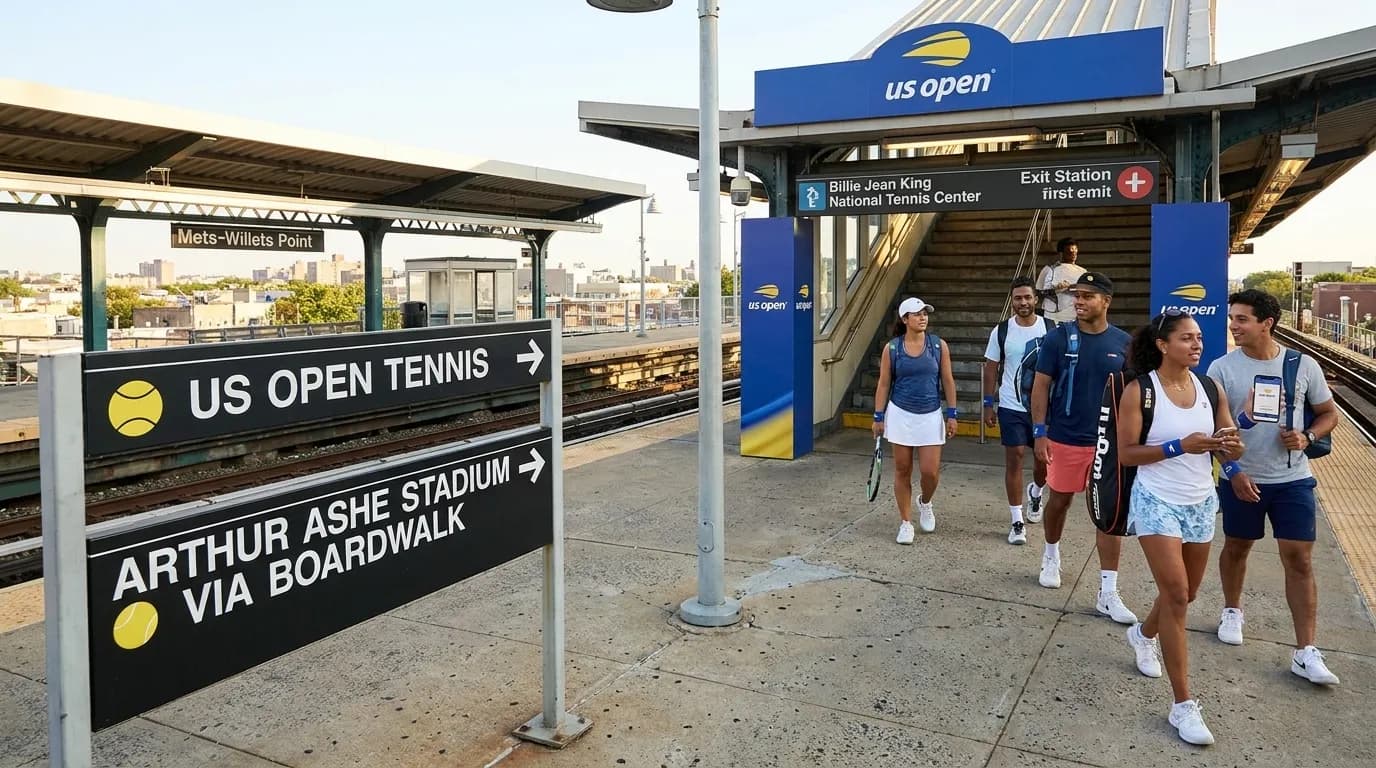
When a flight slips, do not compare only landing times. Compare total recovery time from the moment the aircraft arrives to the moment you can realistically enter the grounds or settle for the night. Include taxi time, baggage claim if needed, the route from the airport, hotel check-in if necessary, food, and the path to the Billie Jean King National Tennis Center. The official US Open transportation and directions page should be your starting point for current venue guidance, because recommended routes and access procedures can change.
The closest airport on a map is not automatically the best recovery choice. A later arrival into one airport may still beat an earlier arrival elsewhere if the onward route is simpler for your hotel or the venue. A cheaper alternate can also become expensive if it creates a long ride at peak demand or forces an extra connection. If you are heading directly to the tennis center, confirm what you can carry and whether your luggage plan fits current venue rules. Build the route around the trip you actually have, not the one your original itinerary assumed.
Keep the First Night Boring on Purpose
A bad arrival does not have to ruin the next day if the first night is designed for recovery. Choose lodging for practical access, not just scenery. For a tennis-centered weekend, reliable movement toward Flushing Meadows may matter more than being in a neighborhood that looks better in photos. If you land late, the best meal may be the one near your hotel or available without adding another long ride. Check restaurant hours, delivery availability, and hotel services directly before relying on them, because business hours and availability can shift.
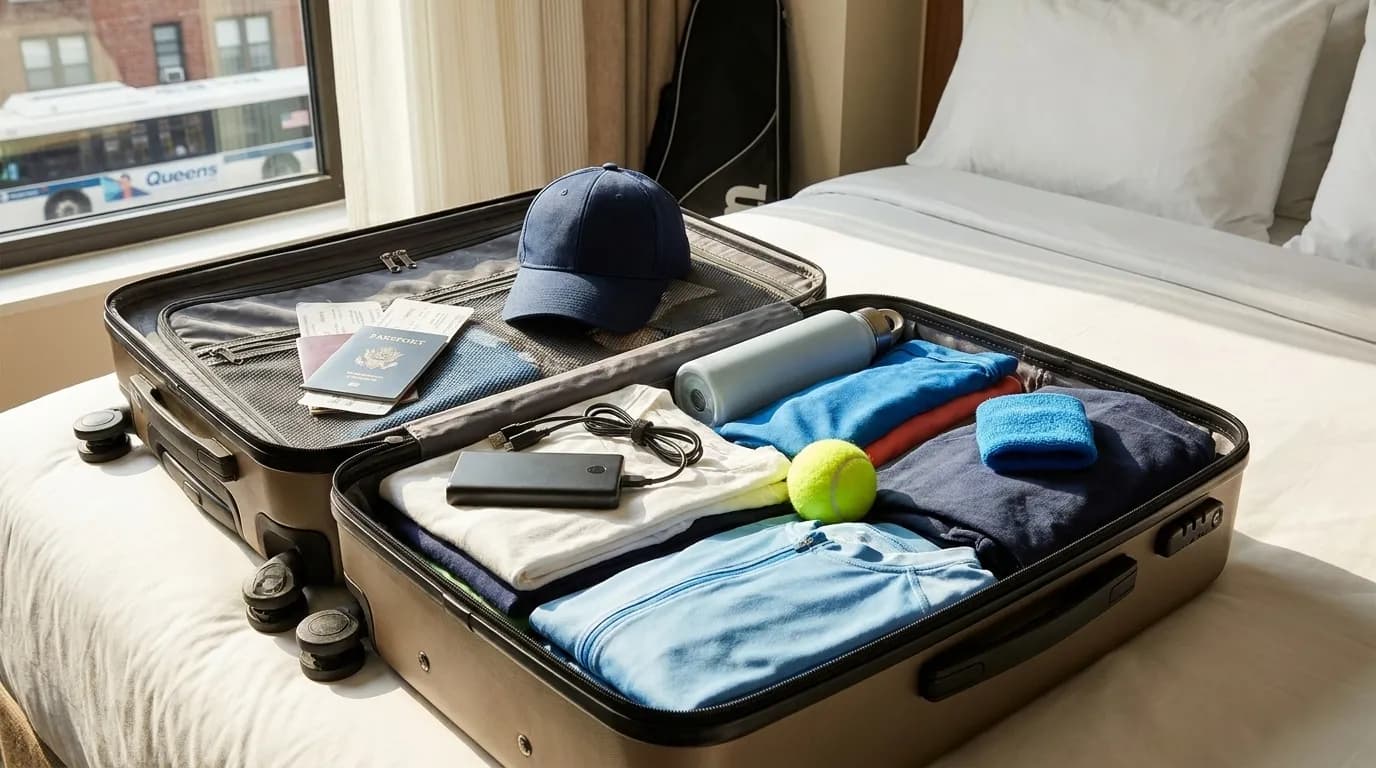
Pack the first tennis day as if you might have limited time to reorganize. Keep ticket access, ID, medication, chargers, weather-appropriate clothing, sun protection, and other essentials reachable without unpacking a full suitcase. Download airline, hotel, map, ticketing, and transit apps before leaving home, but do not assume any single feature will work exactly as expected. Device tools, wallet functions, translation options, battery performance, and sharing features can vary by model, carrier, region, and software version. Test what you need before travel.
Practical Notes
- Recheck the official US Open event schedule close to travel, including session timing, venue rules, gate information, and transportation guidance.
- Choose a latest acceptable New York arrival time for your first ticketed session and share it with everyone in your group.
- Search backup flights by total recovery time across workable airports, not by airfare or landing time alone.
- Review the DOT refund guidance, DOT cancellation-delay dashboard, and your airline’s current terms before a disruption occurs.
- After a cancellation or significant change, decide whether the airline’s alternative still serves your trip before accepting it.
- Keep one day of essentials in your carry-on, including medication, chargers, ticket access, and clothing for late-August outdoor conditions.
- Treat tennis tickets, airline recovery, hotel logistics, and ground transport as separate decisions that need to work together, not as one problem with one guaranteed fix.
Tags: #USOpen2026 #Tennis #NewYork #Queens #FlushingMeadows #USOpenGuide #TennisFans #SportsTravel #NYCEvents #KarpoFinds #Karpo #TravelPlanning
Sources consulted: usopen.org — Official reference · usopen.org — Official reference · transportation.gov — Official reference · transportation.gov — Official reference
All trademarks are the property of their respective owners.
Ask Karpo first
Ask Karpo to rebuild your opening-weekend plan around the flight you actually have, with current airport-to-Queens options and a realistic first-session timeline.