 Stern Grove Festival: Free Sunday Concert Events in Sunset District's Eucalyptus Bowl
Free Things to Do
adley rutschman: Low-Cost San Francisco Stops Worth Checking
A verification-first San Francisco route using a sports-news hook without assuming any local event or appearance.
A name can push a search, but it should not push you into a shaky plan. If adley rutschman is the phrase that brought you here, treat it as a prompt to step away from the scroll and build a San Francisco outing that can survive real city conditions: transit alerts, crowd pressure, construction notes, and access changes. This is not a claim that Rutschman is appearing in San Francisco, connected to a local venue, or tied to any public event. The better use of a timely headline is practical: choose a route that does not depend on rumor, verify the moving parts before you leave, and keep your day flexible enough that a delay or update does not ruin it.
Want a sanity check before you go? Text Karpo to verify SFMTA alerts, trip-planner links, neighborhood updates, and backup choices for this exact San Francisco plan.
Turn current interest into a genuinely free outing
The useful move is to separate the hook from the plan. adley rutschman may be the timely search phrase, but your San Francisco itinerary should stand on official checks, not on reposts or assumptions about where a person might be. Start by deciding that the outing only works if it remains worthwhile without a celebrity sighting, team tie-in, broadcast angle, or paid admission.
That mindset changes the route. Instead of chasing a promoted event, choose a simple city pattern: one public-facing anchor, one nearby walkable area, and one transit-supported backup. The official SFMTA homepage gives you the practical starting point because it includes a Trip Planner and organizes getting around by Muni, walking, biking, driving and parking, taxi, accessibility, routes and stops, neighborhoods, projects, and travel maps and guides.
Keep the budget promise narrow and honest. Free can mean no planned admission fee for the walkable part of the route, but the official extracts do not verify venue admission, food costs, fares, reservations, or program availability. Your plan is strongest when the free part is the route itself, supported by official transportation checks, not a fragile assumption about everything around it.
Start with public access rather than a promoted event
For this city plan, begin with access flow. Open the SFMTA Trip Planner before leaving and enter a starting location and ending location. The page lets you choose how you want to travel, including Muni, bike, walk, or drive. If you are visiting, SFMTA’s visitor prompt also points people toward seeing San Francisco by Muni transit, bike, foot, or car.
A practical sequence is to pick a neighborhood first, then confirm whether current travel updates affect it. The official extract from SFMTA listed travel and transit updates including Hayes Valley Shared Spaces on Fridays and Saturdays in August 2026, Chinatown Construction from July 30 to August 9, 2026, and 40-foot Bus Service Substitutions updated July 6, 2026. Those are not reasons to avoid the city; they are reasons to route carefully.
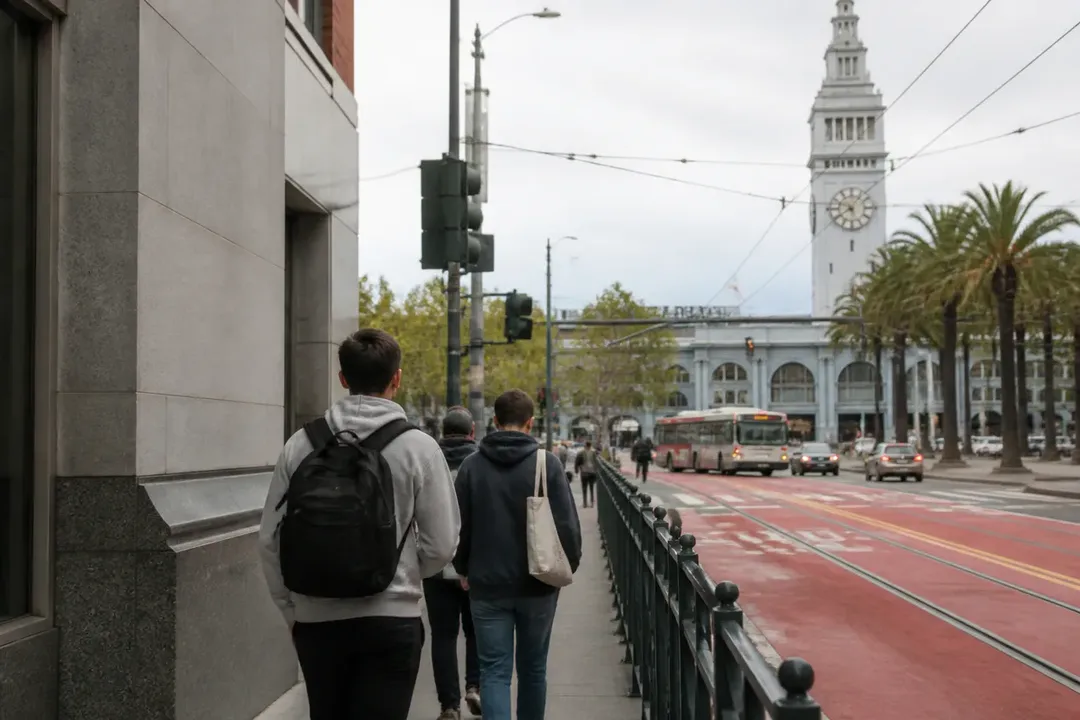
If your preferred area sits near a listed construction or shared-space update, make the walk adjustable rather than treating the first route as fixed. Use Muni routes and stops to get close, then finish on foot where the route still makes sense. If the Trip Planner points you toward a bus, train, historic streetcar, or cable car route, use that official routing as your current baseline.
Build a short route around one strong anchor
A San Francisco day gets better when it is short enough to adjust. Pick one strong anchor: a public-facing neighborhood, a transit-reachable corridor, or a walkable area where the outing still works without a ticketed stop. Then choose a second stop only if it is easy to reach by foot or through a simple SFMTA-planned connection.
Use SFMTA’s neighborhoods, routes and stops, maps, guides, and Trip Planner as your decision tools. The cleanest version is a three-part route: arrive near the anchor, walk a compact loop, then exit from a different stop if that reduces backtracking. This is especially useful when a current headline has created vague momentum but not a real plan. The adley rutschman hook can get you moving; the route should be built from transportation reality.
Keep backups adjacent. If you are aiming for Hayes Valley during a Friday or Saturday in August 2026, check the Hayes Valley Shared Spaces update before treating any street layout as fixed. If you are considering Chinatown through August 9, 2026, check the Chinatown Construction update first and be ready to shift the start or end point. The best backup is not across town. It is the next workable block, stop, or neighborhood edge.
Use weather and crowd pressure as decision points
San Francisco plans get weaker when people ignore conditions until they are already committed. Before leaving, check the weather through a current source and decide whether your outing should be sun-exposed, sheltered, hill-light, or transit-heavy. The official extracts do not provide a forecast, so weather should be verified separately on the day, not assumed from the season.
Crowd pressure also deserves a real check. SFMTA’s homepage called out Outside Lands from August 7 to 9 with the message, “Let Muni Move You Through the Summer.” That matters even if your route is not centered on that event. Major city events can affect how comfortable a route feels, especially when you are relying on transit, sidewalks, and backup choices.
Set thresholds before you go. If an alert affects your first Muni line, switch to the backup stop. If the neighborhood feels jammed, shorten the walk rather than forcing the full loop. If weather makes exposed time unpleasant, move the anchor closer to transit. An outing is not less successful because it changes; it is more successful because you planned for change.
Know when free still requires registration
One of the easiest mistakes in a free-things-to-do search is treating “free” as the same thing as “walk in anytime.” Some public programs, civic meetings, indoor cultural spaces, special access days, or venue-hosted activities may cost nothing but still require registration, timed entry, security screening, capacity limits, or a calendar check. The official extracts here do not confirm any specific free venue admission or program availability, so do not build your day around unverified entry.
SFMTA’s calendar shows how official listings can be time-bound: the extract listed a Citizens’ Advisory Council regular meeting on August 6, 2026, an Engineering Public Hearing Meeting on August 7, 2026, and ISCOTT Meeting 1621 on August 13. Those listings are civic calendar items, not sightseeing guarantees. The lesson is broader: dates, locations, formats, and access rules belong to the official listing, not to a search snippet.
If your route includes any indoor stop or organized activity, check three things before leaving: whether the listing is still current, whether any entry requirement is stated, and whether arrival timing matters. If the answer is unclear, downgrade that stop to optional. Your core plan should still work as a walk, view, or public-space visit.
Recheck access on the day
The last check should happen close to departure, not the night before. SFMTA’s homepage displays alerts and travel updates, and the extract included a final update saying a delay near 19th and Holloway had cleared and inbound M Ocean View service was resuming. That kind of change is exactly why a same-day look matters. Cleared delays, new alerts, and substitutions can all reshape the smartest route.
Use a simple pre-departure checklist: open the SFMTA Trip Planner, confirm your first and last stops, scan alerts, review travel and transit updates for your chosen neighborhood, and decide your backup before you board. If driving is part of the plan, use official driving and parking information rather than assuming curb access. If accessibility matters, start with SFMTA’s accessibility resources instead of treating stairs, grades, or transfer distance as afterthoughts.
This is the San Francisco version of being skeptical of hype without becoming allergic to spontaneity. A current search phrase can give you a reason to step outside, but official trip planning, alerts, travel updates, and realistic timing give the day its shape. Keep the route short, make the free part genuine, and verify anything that can change.
Tags: #adleyrutschman #SanFrancisco #FreeThingsToDo #AskKarpo #BeforeYouGo #SFMTA #Muni #SFTransit #LowCostTravel #PublicSpaces #HayesValley #ChinatownSF #CityPlanning #TravelSmart
Sources consulted: sftravel.com · sfmta.com · sfrecpark.org
All trademarks are the property of their respective owners.
Ask Karpo first
Ask Karpo first before you turn a timely headline into a city plan. Karpo can help check SFMTA alerts, Trip Planner options, neighborhood travel updates, access notes, and backup routing so the outing stays practical even if the original adley rutschman hook has nothing local behind it.
Ask Karpo for more information.
Keep reading
- Stern Grove Festival: Free Sunday Concert Events in Sunset District's Eucalyptus Bowl
 Unveiling Free Events at the Museum of the African Diaspora SoMa
 Free Local Events Happening This Week: Yerba Buena Gardens Festival Outdoor Music