 Westwood's Shamshiri Grill: Premier Mediterranean Food, Kabobs, and Saffron Rice
Neighborhood Guides
adam hamilton: LA Neighborhoods With Progressive Faith and Coffee Shops
Los Angeles neighborhoods offer progressive faith communities, welcoming coffee shops, and public spaces ideal for Sunday afternoon theological discussion groups. Mapping routes that honor both spiritual inquiry and practical logistics helps book clubs thrive without pressure.
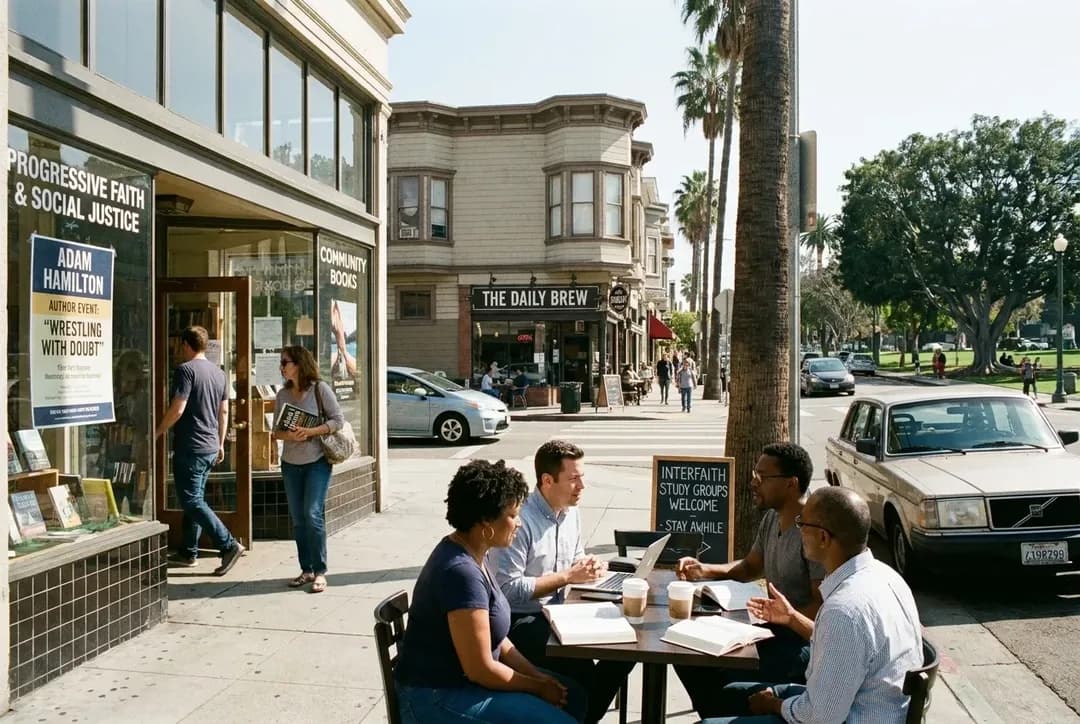
Readers drawn to adam hamilton theology—known for its emphasis on thoughtful, inclusive Christianity—often seek physical spaces in Los Angeles where progressive faith conversations can unfold over several unhurried hours. A Sunday afternoon walk linking bookstores, cafés, and parks becomes more than a route; it's a framework for book clubs of five to eight members who want to discuss scripture, doubt, and justice without feeling rushed to vacate a table or navigate unwelcoming atmospheres. The challenge lies in confirming which independent bookstores schedule author events relevant to progressive Christian themes, which cafés genuinely welcome multi-hour religious discussion, and which public parks offer shaded benches and accessible restrooms. This guide maps decision points across several LA neighborhoods, weighing transit access via Metro buses and rail, the tradeoff between quiet intimacy and diverse foot traffic, and the rhythm of a three-hour Sunday that balances reflection with movement.
Text Karpo your Los Angeles starting point, timing, companion, and priorities for a current neighborhood thematic walk inspired by adam hamilton, with one realistic backup before you leave.
Weighing Silverlake and Echo Park for Interfaith Café Culture
Silverlake and Echo Park host a density of independent coffee shops where laptop users linger and conversation flows across topics from poetry to politics. For a book club discussing progressive theology, the question is whether staff tolerate a group occupying a corner table from 1 p.m. to 4 p.m. on a Sunday, ordering intermittently rather than in a single rush. Some cafés post policies about table time during peak hours; calling ahead or visiting on a prior Sunday to observe turnover patterns helps gauge whether your group will feel welcome or subtly pressured. The advantage here is walkability: Sunset Junction and the Echo Park Lake loop allow a group to start at a bookstore, migrate to a café midway, then finish with a lakeside discussion on public benches.
Metro access is straightforward via the B Line (Red) to Vermont/Sunset, then a short walk or bus connection. The tradeoff is parking scarcity if members drive; street parking fills quickly on weekends, and lots charge hourly rates that add up over three hours. Echo Park Lake itself offers free public space with shade trees, restrooms, and a mix of families and solo readers, creating an atmosphere that normalizes extended presence. Confirm whether your chosen café has outdoor seating; August heat in LA can make indoor-only venues uncomfortable if air conditioning is inconsistent, and outdoor tables often feel less restrictive for longer stays.
Pasadena's Bookstore-to-Park Corridor and Author Event Calendars
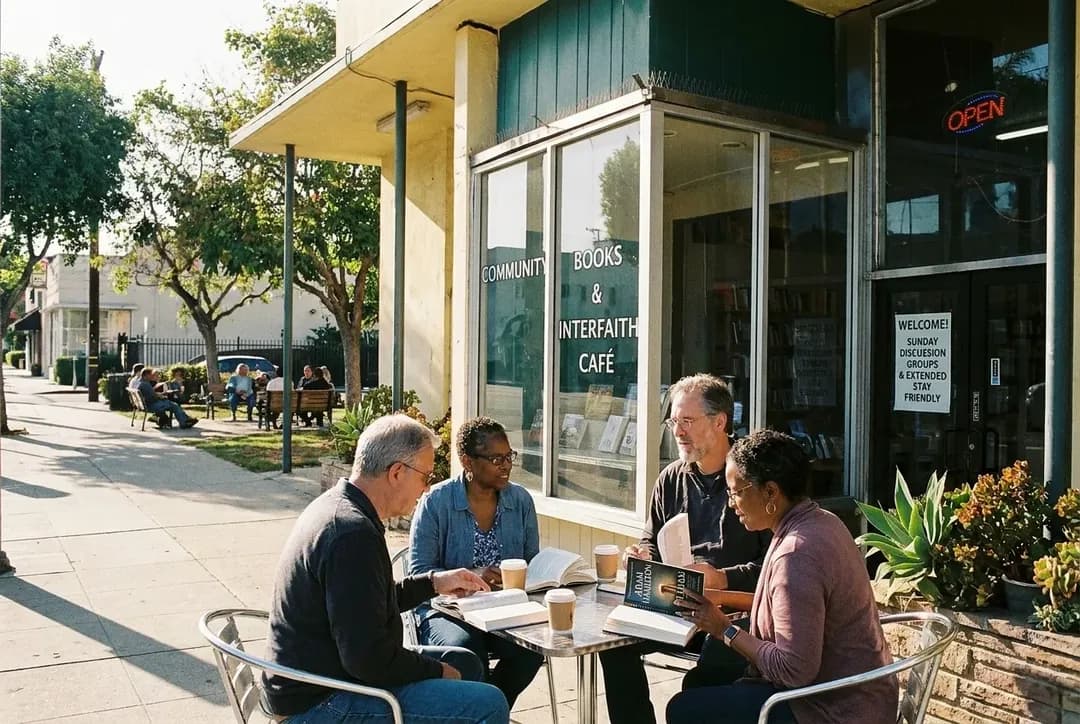
Pasadena anchors its Old Town district with Vroman's Bookstore, which lists bookstore events including author talks and panel discussions. According to official event calendars, Vroman's schedules evening author events; verifying whether progressive Christian authors or theologians appear requires checking their online calendar monthly, as lineups shift. A Sunday afternoon study group might browse Vroman's religion and spirituality section first, then walk three blocks south to a café on Colorado Boulevard, and conclude at Central Park, a public green space with benches and minimal commercial pressure. The rhythm here favors a slower start—bookstore browsing can anchor the first hour—followed by focused discussion over coffee, then a reflective walk.
The tradeoff is suburban pacing: Pasadena feels less dense than Silverlake, which some groups find calming and others find isolating. Metro access via the L Line (Gold) to Memorial Park station is reliable, and the area is more car-friendly if members prefer to drive and split parking costs. Cafés along Colorado Boulevard vary in their tolerance for extended stays; those with communal tables or explicit "study-friendly" signage are safer bets. Pasadena's public libraries also host free meeting rooms bookable in advance, offering a fallback if café seating proves unreliable, though this shifts the experience from spontaneous to scheduled.
West Adams and Leimert Park for Justice-Oriented Faith Spaces
West Adams and Leimert Park neighborhoods center African American cultural history and social justice activism, themes that resonate with progressive Christian readers exploring liberation theology or racial reconciliation. Independent bookstores and cultural centers in Leimert Park occasionally host panels on spirituality and justice, though confirming schedules requires direct contact or monitoring social media, as these events may not appear on citywide calendars. A Sunday route might begin at a bookstore or cultural center, move to a café on Crenshaw Boulevard, and finish at a public plaza where live drumming or spoken word performances create an energizing backdrop rather than silent contemplation.
This neighborhood suits groups comfortable with diverse, bustling public space rather than quiet seclusion. Metro access via the E Line (Expo) to Expo/Crenshaw provides a starting point, with local buses filling gaps. The tradeoff is fewer cafés explicitly marketed as "study-friendly"; calling ahead to ask whether a group can occupy a table for two to three hours on a Sunday afternoon is essential. Leimert Park's public spaces—plazas, parklets—are designed for gathering, but shade can be limited during midday heat, making late afternoon starts (3 p.m. to 6 p.m.) more comfortable. Groups interested in connecting progressive faith with community activism may find this neighborhood's energy aligns with their theological priorities.
Westwood and the UCLA Periphery for Academic-Adjacent Discussion
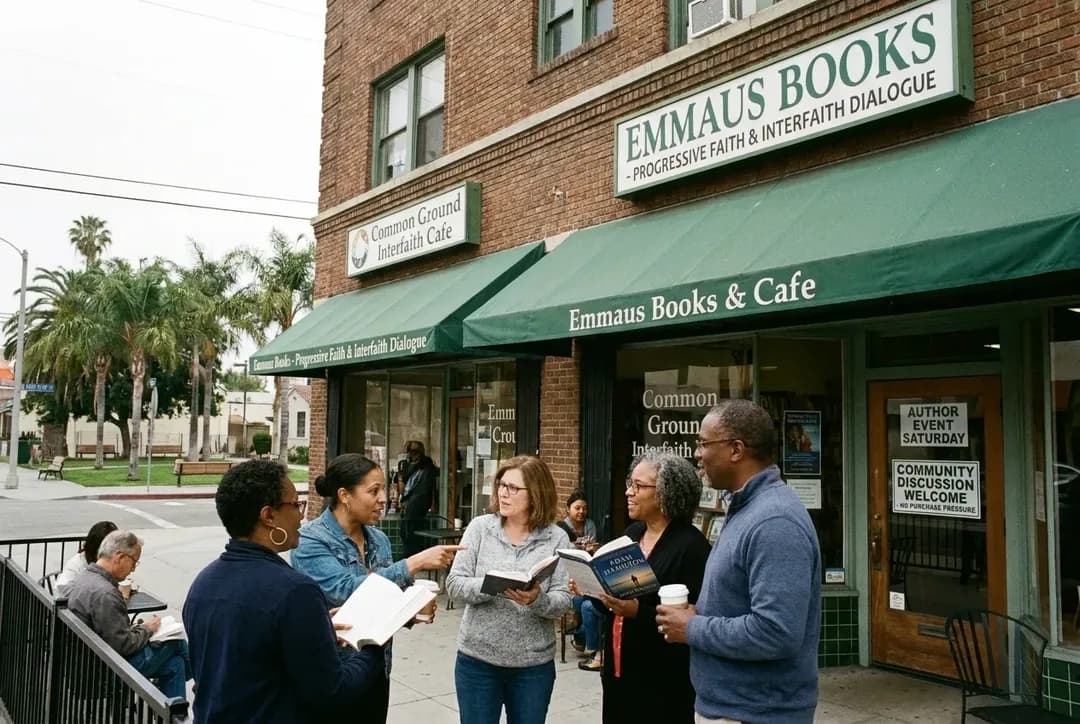
Westwood, adjacent to UCLA, offers cafés accustomed to students and reading groups occupying tables for extended periods, especially on weekends when campus activity slows. The Westwood Branch Library, part of the Los Angeles Public Library system, provides free meeting rooms bookable online, offering a no-cost anchor if café seating proves unreliable or if the group prefers climate-controlled predictability. A hybrid approach—start at a bookstore or café, then migrate to a reserved library room for the final hour—balances spontaneity with structure. Westwood Village's walkability allows a group to cover several blocks without needing transit between stops.
The tradeoff is a more transient neighborhood feel; Westwood caters to students and visitors rather than long-term residents, which can make it harder to build rapport with café staff over repeat visits. Parking is challenging and expensive, but Metro access via multiple bus lines (2, 8, 20, 720) compensates. For groups drawn to academic rigor in their theological discussions, proximity to UCLA's bookstores and occasional public lectures (check UCLA event calendars for accessibility) adds intellectual texture. Confirming café policies remains critical: some Westwood cafés enforce table time limits during brunch hours, even on Sundays, so scouting visits or phone calls prevent mid-discussion displacement.
Practical Verification Steps and Group Fit Considerations
Before committing to a neighborhood route, assign one group member to call two or three cafés, explaining that a book club of five to eight people hopes to meet for three hours on Sunday afternoons, ordering drinks and possibly light food throughout. Ask whether the café has a table that accommodates that size, whether reservations are possible, and whether there are time limits. This single phone call prevents the awkwardness of settling in only to be asked to leave. Similarly, check bookstore event calendars online—Vroman's and others list schedules publicly—and note whether progressive Christian authors appear; if not, the bookstore still functions as a browsing anchor, but expectations adjust.
Group fit matters as much as location. A club seeking quiet, contemplative discussion may prefer Pasadena's slower pace and park benches over Leimert Park's vibrant plazas. A group energized by diverse public life and justice themes may find Silverlake or West Adams more resonant than Westwood's academic transience. Metro's $1.75 fare and free two-hour transfers make public transit economical for all members, but groups with mobility considerations should verify that chosen cafés and parks have accessible restrooms and seating. Finally, August heat in LA demands hydration and shade awareness; routes that include tree-covered parks or late-afternoon start times (3 p.m. instead of noon) reduce discomfort and sustain the welcoming, unhurried spirit that makes theological discussion thrive.
Tags: #adamhamilton #progressiveChristian #LosAngelesneighborhoods #bookclubs #interfaithcafs #Sundaystudygroups #Silverlake #EchoPark #Pasadena #LeimertPark #Westwood #theologicaldiscussion #Metrotransit #publicparks #bookstoreevents
Sources consulted: Source 1: metro.net · Source 2: discoverlosangeles.com · Source 3: lacity.gov · Source 4: lapl.org
All trademarks are the property of their respective owners.
Ask Karpo first
Ask Karpo to turn this Los Angeles idea into a current plan for your date, budget, companion, transit preference, and energy level. Karpo can narrow the route and flag what to verify before you go.
Ask Karpo for more information.
Keep reading
- Westwood's Shamshiri Grill: Premier Mediterranean Food, Kabobs, and Saffron Rice
 Best Food Places Near Me: Corporation Food Hall in Downtown LA
 Unveiling Thai Town Marketplace: Food Places Near Me in Thai Town