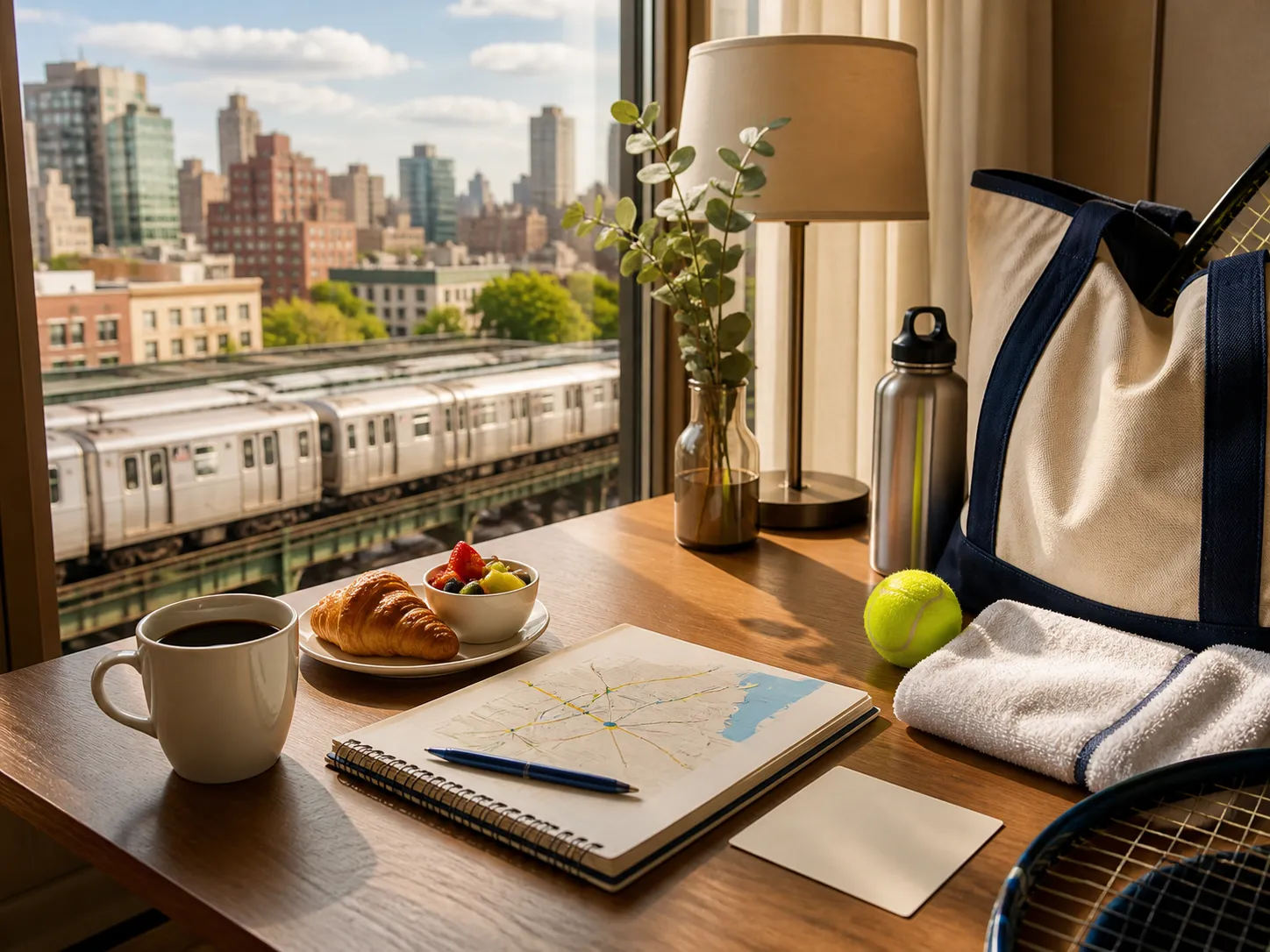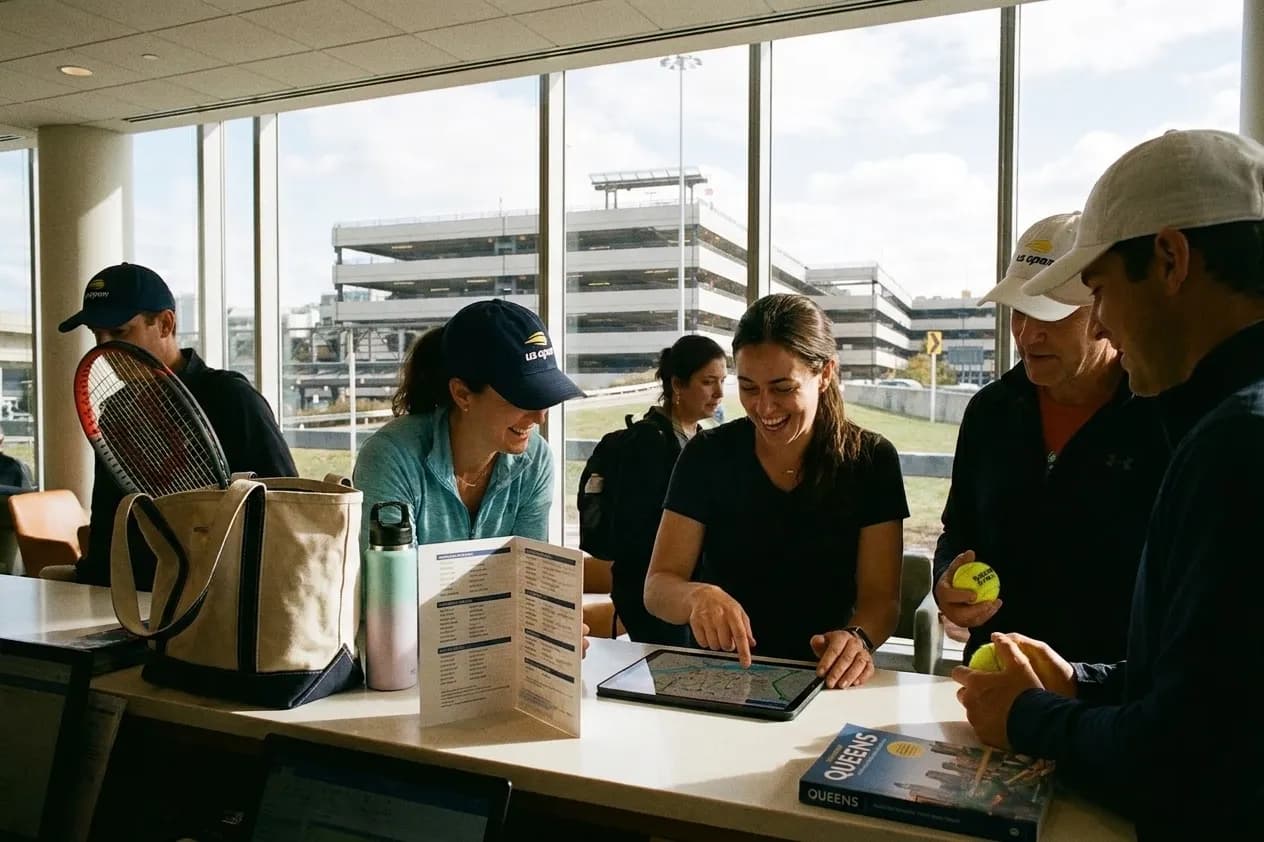
When news of AA1937's emergency landing circulated, it served as a sharp reminder that air travel doesn't always go as planned—and that lesson applies directly to anyone flying into New York for the US Open. Whether you're landing at JFK, LaGuardia, or Newark, the final leg to the Billie Jean King National Tennis Center in Flushing Meadows depends on tight connections, reliable transit, and backup plans. Flight delays, gate changes, and unexpected holds can compress your arrival window, leaving you scrambling to make a first-round match or evening session. This article treats emergency landing news as a practical planning lens: how do you build resilient travel buffers, backup routes, and communication plans for US Open days when your inbound flight—or your return—doesn't go smoothly?
Text Karpo with your US Open session time and Queens starting point, and we’ll turn this flight disruption backup planning into a practical local plan.
Why Flight Disruptions Matter for US Open Timing
The US Open runs for two weeks each late August and early September, with day and night sessions that start promptly. According to the official event schedule at usopen.org, day sessions typically begin at the posted time, and evening sessions at the posted time. If your inbound flight is delayed by two hours, diverted, or held on the tarmac, that cushion evaporates fast. The tournament's official transportation directions page emphasizes that the USTA Billie Jean King National Tennis Center is accessible by subway, LIRR, and car, but none of those modes forgive a late arrival. Building a buffer means booking flights that land at least four to five hours before your session, choosing accommodations along the 7 train corridor, and having a backup plan if your original itinerary falls apart.
JFK to Flushing Meadows: Primary and Backup Routes
Most US Open visitors flying into New York land at JFK, which sits just a few miles south of Flushing Meadows Corona Park. The MTA's official US Open transit guide recommends taking the AirTrain JFK to Jamaica Station, then transferring to the E train toward Manhattan and switching to the 7 at Jackson Heights–Roosevelt Avenue, or taking the Long Island Rail Road from Jamaica to Mets–Willets Point. Both routes work well when flights arrive on time. But if your flight is delayed or you face a long customs line, the backup plan becomes critical: know the AirTrain schedule, confirm whether your MetroCard or OMNY account is funded, and have the MTA service status page bookmarked so you can check for 7 train delays or E train reroutes before you leave the terminal.
Choosing Accommodations Along the 7 Train Corridor
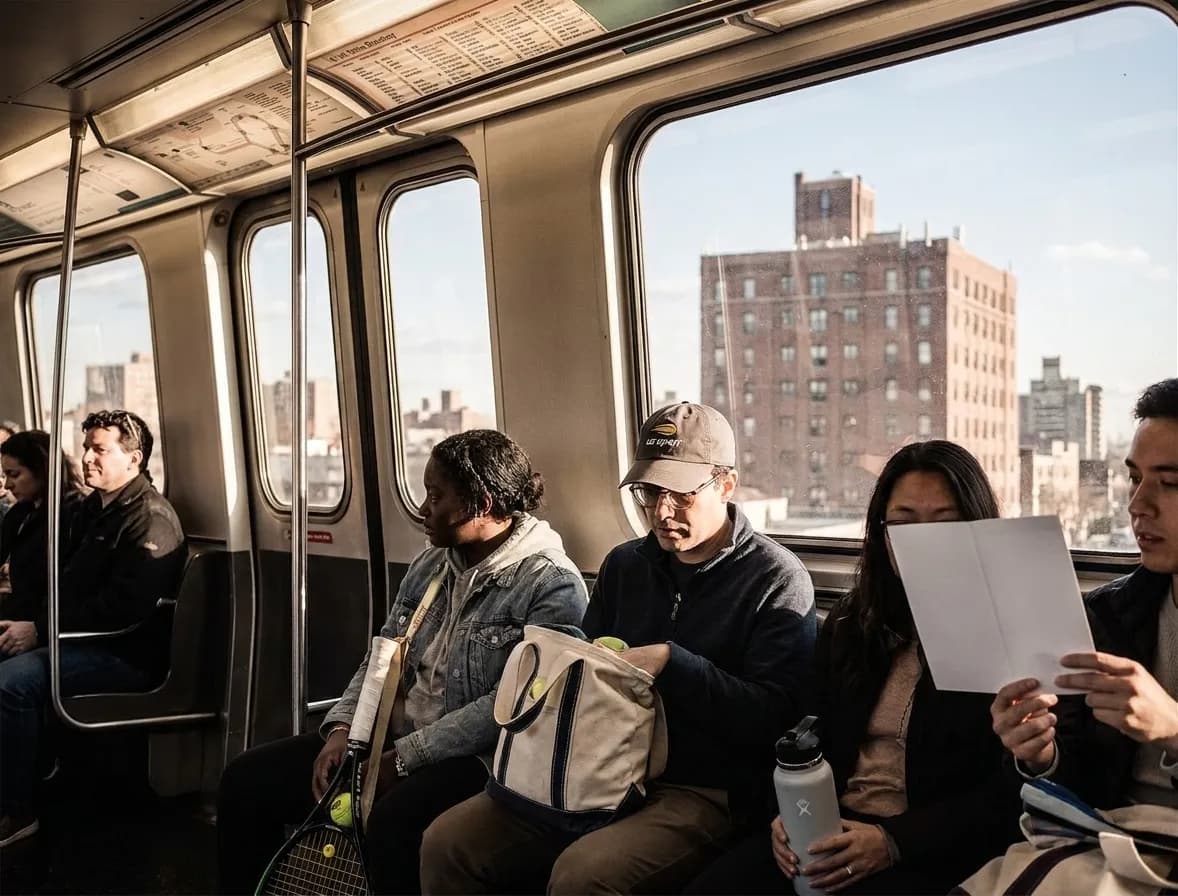
If your flight is disrupted and you arrive late, staying near a 7 train stop turns a potential disaster into a manageable inconvenience. Long Island City, Sunnyside, Woodside, Jackson Heights, and Flushing all offer hotel and short-term rental options within a few blocks of the elevated line. The 7 runs frequently during US Open hours, and the Mets–Willets Point stop is a dedicated station for both Citi Field and the tennis center. Booking a room in Long Island City gives you quick access to Manhattan if you want to explore between sessions, while staying in Flushing puts you closer to the venue and to the neighborhood's dumpling houses, bakeries, and late-night food courts. Either way, proximity to the 7 means you can adjust your schedule on the fly without relying on ride-hail surge pricing or hunting for parking.
What to Do If Your Inbound Flight Is Delayed
If you're still in the air or on the ground at another airport when your US Open session is approaching, act quickly. Check the official usopen.org visitor A-Z guide for ticket-exchange and entry policies—some sessions allow late entry, but others have strict cutoffs. Text your travel companion or hotel to confirm they have your ticket barcode and ID, in case you need someone to pick up a credential or hold your spot. If you're flying into JFK and the delay is short, consider taking a taxi or ride-hail directly to the tennis center instead of the subway; the drive is roughly fifteen to twenty minutes in light traffic, though rush hour can double that. If the delay is long enough that you'll miss the first match, use the time to grab a meal in the terminal, charge your devices, and plan your next-day schedule so you don't lose momentum.
Building a Communication and Document Backup Plan
Emergency landings and flight diversions often mean lost connectivity, drained batteries, and scrambled logistics. Before you leave home, offline copies your US Open ticket confirmation, save the venue's address and phone number offline, and share your itinerary with a friend or family member who can monitor flight status and text you updates. The official prohibited-items guide at usopen.org notes that portable chargers are allowed, so pack one in your carry-on and keep it topped off. If your phone dies and you're stuck at JFK or LaGuardia, most terminals have charging stations and free Wi-Fi, but knowing your backup contact's number by heart—or writing it on a card—can save you if your device fails entirely.
Return-Flight Buffers and Post-Match Timing
Flight disruptions don't only affect arrivals. If you're flying home the same day as a US Open session, build in extra time for subway delays, security lines, and the unpredictable length of tennis matches. Evening sessions can run past midnight if a match goes to five sets, and the 7 train's overnight frequency drops significantly. The MTA's service status page will show whether weekend or late-night work is scheduled, and the Port Authority's JFK Airport site lists terminal layouts and TSA wait-time estimates. A good rule of thumb: if your evening session ends at the posted time, don't book a flight before the posted time the next morning unless you're staying near the airport. That buffer gives you time to sleep, pack, and navigate any last-minute transit hiccups without sprinting through the terminal.
Local Stops for Regrouping After a Disrupted Arrival
If your flight lands late and you need to regroup before heading to the tennis center, the 7 train corridor offers plenty of spots to catch your breath. In Jackson Heights, the blocks around Roosevelt Avenue are lined with South Asian and Latin American bakeries, juice bars, and casual restaurants where you can grab a quick meal and use the restroom. In Flushing, the blocks north of Main Street are home to food courts, tea shops, and supermarkets open late into the evening. Flushing Meadows Corona Park itself, according to NYC Parks, includes playgrounds, walking paths, and the iconic Unisphere, so if you arrive early and want to stretch your legs before the session, the park's southern meadows are a quiet place to decompress. Just remember that the park's public restrooms and water fountains are seasonal, so check conditions close to your visit.
Practical Notes for Flight-Disruption Backup Planning
- Book flights that land at least four to five hours before your US Open session start time.
- Save the MTA service status page and Port Authority JFK site as mobile bookmarks before you travel.
- Carry a portable charger, offline copies of your ticket and itinerary, and a backup contact number.
- Know both the subway and LIRR routes from JFK to Mets–Willets Point, and have MetroCard or OMNY funds ready.
- If your flight is delayed, check the usopen.org A-Z guide for late-entry and ticket-exchange policies.
- Stay near a 7 train stop in Long Island City, Sunnyside, Jackson Heights, or Flushing for maximum flexibility.
- Build return-flight buffers of at least ten to twelve hours after an evening session ends.
- Use Jackson Heights or Flushing for quick meals, restrooms, and regrouping if your arrival is disrupted.
aa1937 emergency landing, US Open travel backup, flight disruption planning, JFK to Flushing Meadows, Queens transit buffer, 7 train US Open, emergency landing lessons, US Open flight delay
US Open®, USTA Billie Jean King National Tennis Center®, and all related marks are trademarks of the United States Tennis Association. MTA, AirTrain, and MetroCard are marks of the Metropolitan Transportation Authority. This article is an independent editorial guide and is not endorsed by, affiliated with, or sponsored by the USTA, MTA, Port Authority of New York and New Jersey, or any airline.
Ask Karpo First
Tags: #USOpen2026 #Queens #FlushingMeadows #KarpoFinds #Karpo #aa1937emergencylanding #NewYorkLocal #TennisTravel #NYCLocalLife #TennisTravel
Sources consulted: usopen.org — Official event schedule · usopen.org — Official visitor A-Z guide · usopen.org — Official transportation directions · usopen.org — Official prohibited-items guide · MTA — Official US Open transit guide · NYC Parks — Flushing Meadows Corona Park · MTA — Service status · Port Authority — JFK Airport
All trademarks are the property of their respective owners.
Ask Karpo first
Want to know what is actually open, how to time the trip, and where to pause around Queens? Ask Karpo for the latest public US Open context, a respectful visitor plan, and a live route around Flushing Meadows before you head out.