 South Miami Country Bar Night With a DJ: Pub 52
Bars & Nights Out
A Weekend Barcelona Wine Bar Guide for Miami Wine Lovers
Miami's natural wine scene runs on imports and small pours, so Barcelona's low-intervention bars feel like a homecoming with better hours.
If you've spent any time at Mandolin Aegean Bistro in the Design District or waited for a seat at Uvaggio in Coral Gables, you already know the rhythm of a good wine bar: small producers, rotating lists, staff who remember what you ordered last time. Barcelona's wine bar culture works the same way, just with earlier closing times, cheaper pours, and a density Miami can't match. The city has entire blocks in Gràcia and Sant Antoni where every third door opens into a low-lit room with natural wine and someone's grandmother's preserved anchovies.
Karpo can pull live Barcelona wine bar hours, check which neighborhoods have the highest concentration of natural wine spots tonight, and route you between three bars without backtracking across the Eixample grid.
Why Miami wine drinkers recognize Barcelona immediately
The Barcelona wine bar scene leans heavily on low-intervention wines from Catalonia, the Canary Islands, and small growers in Priorat and Penedès. It's the same aesthetic Miami's better wine spots have been chasing for years—minimal sulfites, cloudy pours, labels that look like they were printed on a home inkjet. The difference is density and price. In Miami, you drive twenty minutes and pay eighteen dollars for a glass. In Barcelona, you walk four minutes and pay five euros. For a weekend trip, that math changes how you drink.
Start in Sant Antoni if you want walkable concentration
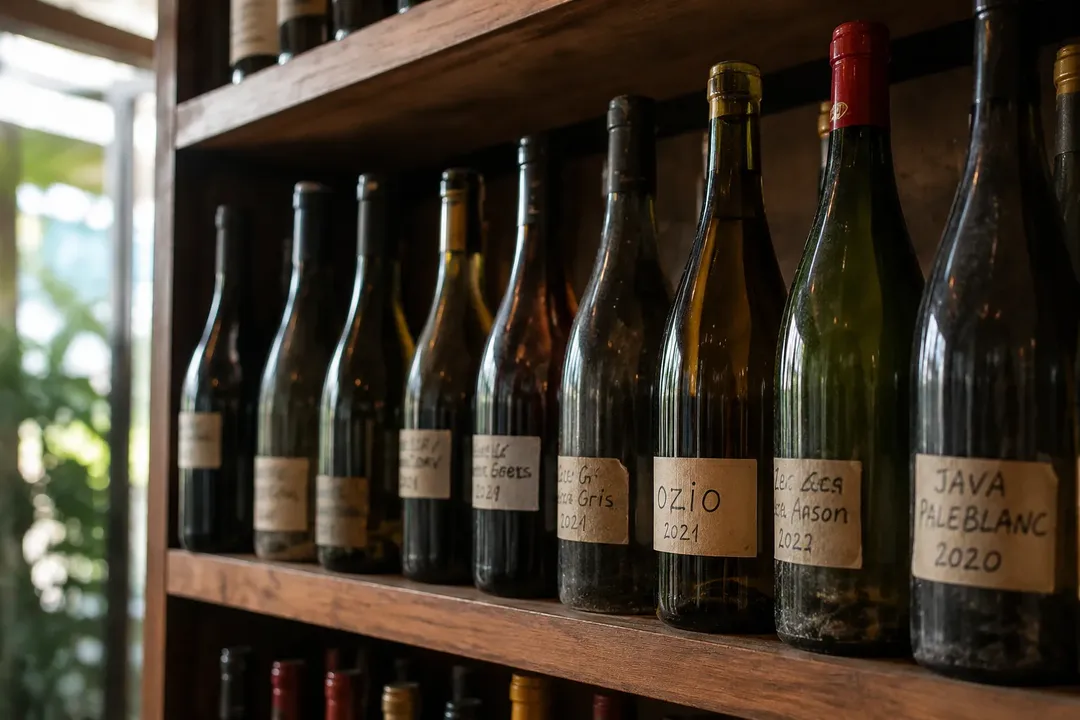
Sant Antoni, just southwest of the Eixample grid, has become the natural wine anchor in Barcelona. The neighborhood sits between the Mercat de Sant Antoni and Carrer del Parlament, and on a Friday or Saturday night, you can hit four wine bars without crossing a major avenue. The format is consistent: small rooms, natural light until sunset, chalkboard menus, and staff who will talk you through a Galician white or a skin-contact orange from Empordà if you ask.
The Barcelona wine bar experience here is walk-in friendly. Most spots don't take reservations for fewer than six people, and the local rhythm is to arrive around eight or nine, drink two glasses, share something small, and move on. It's the opposite of Miami's long-table, reservation-required model. If you're used to planning a week ahead for a Saturday night at Uvaggio, this feels loose. But it also means you can adjust on the fly—if a place is packed or the vibe is off, you're thirty seconds from another option.
Parking in Sant Antoni is not worth attempting. If you're staying in Eixample or Gràcia, it's a fifteen-minute walk or a short metro ride to Sant Antoni station on the L2. If you're coming from Barceloneta or the waterfront, expect a longer ride and plan accordingly. The neighborhood is flat, well-lit, and easy to navigate on foot once you're there.
Gràcia trades convenience for neighborhood feel
Gràcia, north of Eixample, is where Barcelona wine bar culture started leaning younger and more residential. The streets are narrower, the plazas smaller, and the bars feel less like destinations and more like living rooms that happen to sell wine. If Sant Antoni is Miami's Brickell wine corridor—professional, polished, easy to parse—Gràcia is closer to the Design District's northern blocks, where things get quieter and more particular.
The trade-off is spacing. Gràcia's wine bars are scattered across a dozen small plazas, and you'll walk ten or fifteen minutes between them instead of three. But the neighborhood itself is worth the slower pace. Plaça del Sol and Plaça de la Virreina both have outdoor seating that stays active until midnight, and the walk between bars takes you past small produce shops, bakeries, and the kind of corner architecture that makes you stop to look up.
Gràcia is also where you'll find more hybrid spots—wine bars that double as small-plate restaurants or bookshops with a back room and six tables. It's less of a bar-hop neighborhood and more of a pick-one-place-and-settle rhythm. If you're used to Miami's habit of planning a night around two or three stops, Gràcia asks you to slow down. That works better on a Sunday evening than a Saturday night, but it depends on what you're after.
What to eat and when to stop drinking
Barcelona wine bars serve food, but it's not the Miami model of shared plates and composed dishes. Expect tinned fish, cured meats, cheeses, olives, and bread. Some places will have a short menu of hot items—grilled squid, sautéed mushrooms, a tortilla—but the assumption is that you're drinking first and eating enough to keep going, not sitting down for a full meal.
If you want a proper dinner, eat before or after the wine bar portion of the night. The timing works better that way. Have an early dinner around seven or eight, then move into wine bars around nine or ten. Or reverse it: start with wine and small bites at eight, then find a late kitchen around eleven. Barcelona's restaurant hours run later than Miami's, and many kitchens stay open until midnight or later on weekends.
On the responsible drinking front, Barcelona's metro runs until midnight on weeknights and until 2 a.m. on Fridays, with all-night service on Saturdays. Taxis are easy to flag, and ride-hailing apps work without the same surge-pricing chaos Miami imposes during peak hours. If you're drinking across multiple Barcelona wine bar stops, plan your route so the last place is close to your hotel or a direct metro line. The city is walkable, but wine-drunk navigation on narrow sidewalks is still navigation.
How to leave without losing an hour
Barcelona wine bars close earlier than you'd expect if you're used to Miami's late licenses. Many natural wine spots start winding down around midnight, and by one a.m., your options narrow significantly. If you're planning a longer night, check whether the place you're in serves past midnight or if you need to move before last call. Unlike Miami, where you can usually find something open until two or three, Barcelona's wine bar scene doesn't stretch that late unless you shift into cocktail bars or clubs, which is a different energy entirely.
The metro timing matters here. If you're in Gràcia or Sant Antoni and your hotel is in Eixample or Ciutat Vella, confirm your metro line's last train. On weeknights, missing the midnight cutoff means a taxi or a thirty-minute walk. On weekends, you have more buffer, but it's still worth checking before you settle in for a third glass somewhere far from your route home.
What to confirm the morning you go
Wine bars in Barcelona don't always keep consistent hours, especially smaller spots that operate with one or two people behind the bar. Check online or call ahead if you're targeting a specific place, particularly on Sundays or Mondays when some natural wine bars close entirely. Google hours are often wrong, and the city's tourism sites don't update fast enough to catch short-term closures or vacation weeks.
If you're visiting during August, expect reduced hours or temporary closures across the board. Barcelona empties out in late summer, and many small businesses close for two or three weeks. The larger, more tourist-facing spots stay open, but the neighborhood wine bars that make the city worth visiting often don't. Plan accordingly, or shift your trip to September or October when the city is back at full capacity and the evening weather is better for walking between bars.
Finally, verify that the Barcelona wine bar you're heading to is actually a wine bar and not a restaurant that happens to have a wine list. The distinction matters when you're planning a night of movement rather than a single long sit-down. Look for menus that emphasize by-the-glass pours, standing room or high-top seating, and a focus on natural or low-intervention producers. If the menu leads with entrees and reservations are required, it's not the same format, and your night will move differently.
Practical notes
- Sant Antoni and Gràcia are the densest wine bar neighborhoods; Sant Antoni is more compact, Gràcia spreads out across plazas
- Most Barcelona wine bars don't take reservations for small groups and operate walk-in only after 8 p.m.
- Metro runs until midnight weeknights, 2 a.m. Fridays, and all night Saturdays; confirm your last train if you're bar-hopping late
- Many natural wine spots close by midnight or 1 a.m., earlier than Miami's typical bar hours
- August sees widespread closures; September and October are better months for full wine bar availability
- Drink responsibly and plan your metro route or rideshare pickup before your last stop; Barcelona's transit is reliable but not infinite
Tags: #karpo #miami #miamiwinelover #barcelonaguide #barcelonawinebar #naturalwine #sanantonibarcelona #graciabarcelona #weekendinbarcelona #winetravel #miaminights #europeweekend #winebarcrawl #designdistrictmiami #barsandnightsout
Sources consulted: Barcelona Turisme · TMB Barcelona Metro
Please drink responsibly. Must be of legal drinking age.
All trademarks are the property of their respective owners.
Ask Karpo first
Text Karpo to confirm which Barcelona wine bars are open tonight, check live transit timing between Sant Antoni and Gràcia, and get a route that prioritizes natural wine spots with current walk-in availability. Karpo can also flag which neighborhoods have the shortest metro ride back to your hotel after midnight.
Ask Karpo for more information.
Keep reading
- South Miami Country Bar Night With a DJ: Pub 52
 Doral Country Bar Night With Line Dancing: Copper Blues
 Miami Country Bar With Free Bull Rides: PBR Cowboy Bar