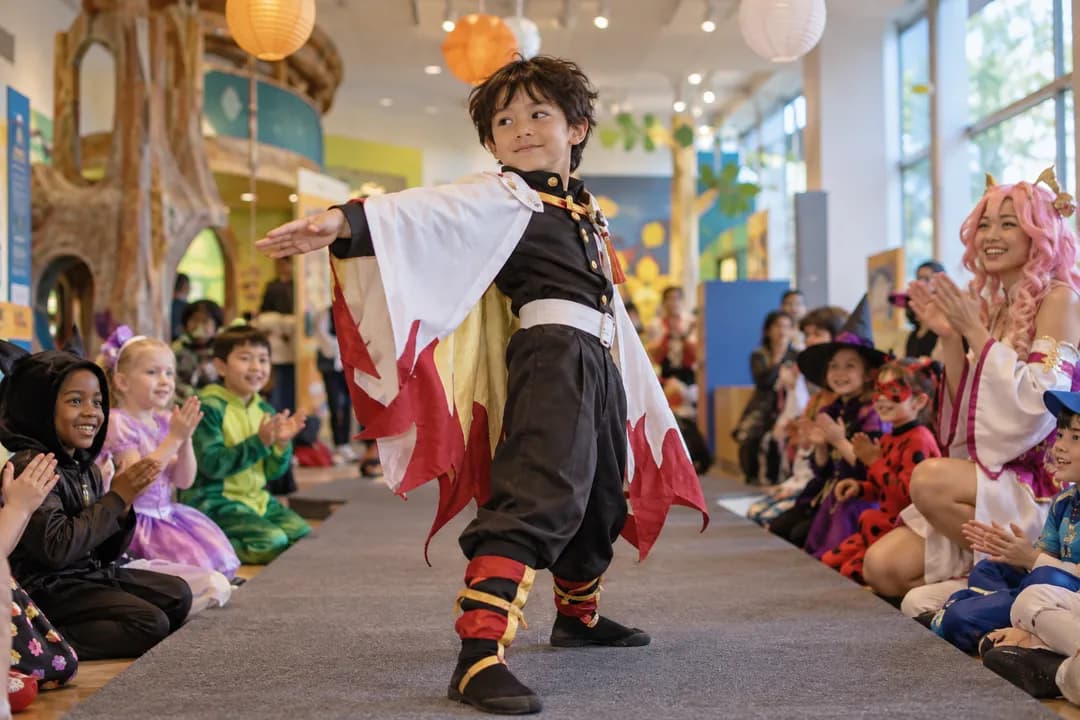
 Halloween Events for Kids Near Me: Anime Halloween at Brooklyn Children's Museum
Weekend Plans
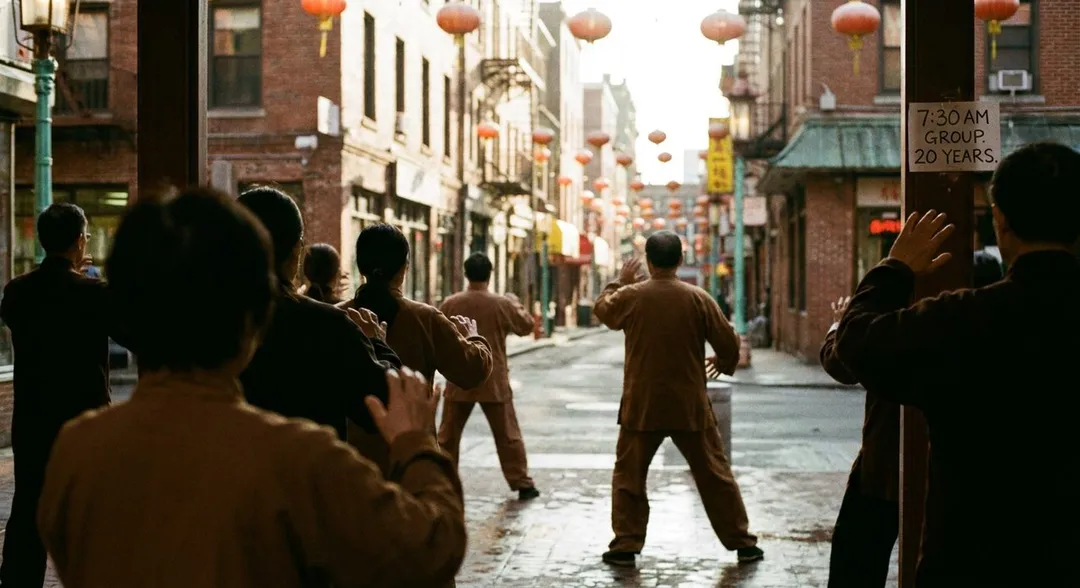
A Wednesday Morning Tai Chi Session in Columbus Park
The 7:30 group has met for 20 years; new practitioners welcome, silent instruction
You arrive at Columbus Park just as Bayard Street starts to hum with delivery trucks and the first dim sum carts rattle into position. The 7:30 group is already there, twenty-some bodies moving through forms near the pavilion's northwest corner, and nobody looks up when you join the back row. This is how Wednesday mornings have opened here for two decades.
The Unspoken Invitation
The group assembles without announcement or roll call. You'll see the same core practitioners—Mr. Chen in his windbreaker regardless of season, the woman with the jade bracelet who always claims the spot nearest the ginkgo tree, a retired postal worker whose name nobody uses but everyone knows by his Yankees cap. They don't introduce themselves because the practice isn't about conversation. You mirror what you see. The forms are taught through repetition and peripheral vision, and if you're struggling with a particular transition, someone will eventually drift closer so you can observe their angle more clearly. Usually this happens around week three. The group leader, a man in his seventies who wears wire-rimmed glasses and moves like water finding its level, never speaks during practice. He demonstrated the first form in 1994 and hasn't stopped since.
What Your Body Learns Before Your Mind
The opening sequence takes eleven minutes. Your weight shifts from right foot to left in a pattern that feels arbitrary until the fourth or fifth session, when your hips suddenly understand the logic. The park's morning sounds layer over the movement—pigeons in the London plane trees, someone's radio playing Cantonese opera from a bench near Mulberry Street, the metallic screech of the B train entering Canal Station two blocks south. You're not blocking these out. The practice folds them in. Your hands rise and fall in movements called "grasping the sparrow's tail" and "parting the wild horse's mane," and these aren't metaphors so much as physical facts your muscles begin to recognize. By mid-September, you'll notice your shoulders have dropped two inches from where they usually live. By November, you'll catch yourself breathing differently on the subway.
The Pavilion Politics Nobody Mentions
The northwest corner belongs to this group on Wednesday mornings, but only because they've held it consistently since the park's renovation in 2000. The southeast corner is claimed by a ballroom dancing group that arrives at 8:15, and there's a qigong circle that sets up near the basketball courts on Tuesdays and Thursdays. These territories aren't marked or enforced—they're understood through presence and pattern. Once, a fitness bootcamp tried to set up in the tai chi space at 7:45, and the group simply continued their forms, moving through and around the confused trainer and his clients until the interlopers relocated. The park's morning ecosystem operates on seniority and consistency, not confrontation. If you keep showing up, you're part of the pattern. If you don't, the space fills with someone else's practice.
The Weather Exception That Isn't

The group meets every Wednesday except Christmas, and even then, three or four practitioners usually appear out of habit. Rain doesn't cancel practice—it changes it. The forms move under the pavilion's concrete roof when it's pouring, and the sound of water on that surface turns the session into something else entirely, more internal, more focused on breath than movement. Snow brings a different quality. Your feet find purchase differently on cold concrete, and the forms slow down to accommodate the caution. The coldest morning on record for this group was January 2004, six degrees with wind that came straight down Bayard Street like a river. Eleven people showed up. Mr. Chen brought a thermos of chrysanthemum tea that he poured into paper cups afterward, the only time anyone remembers him bringing anything to share. The group doesn't discuss these exceptions. They simply demonstrate that the practice continues regardless of conditions.
What Happens at 8:15
The session ends without ceremony. The last form completes, bodies return to stillness, and then people drift toward their actual days—the subway, the bakery, the walk back to apartments on Henry Street or East Broadway. Some practitioners nod to each other. Most don't. But there's a regular breakfast contingent that heads to Hop Kee at 21 Mott Street, downstairs from the street-level entrance. They order jook with century egg and lean pork, fried crullers, sometimes the salt and pepper squid if they're particularly hungry. The owner, who's been there since 1968, knows the Wednesday morning group and has coffee ready before anyone asks. This isn't an official extension of practice—it's just what some people do. You're welcome to join, or you're welcome to leave. The practice doesn't require community beyond the hour itself.
The Instructions You'll Never Hear
Nobody will tell you to tuck your tailbone or relax your shoulders or breathe from your diaphragm. You'll learn these things by watching and by the small corrections your body makes when something feels misaligned. The group leader occasionally adjusts his own posture in a way that seems directed at no one and everyone—a slight deepening of his stance, a more pronounced turn of his waist—and you'll realize later that he was offering instruction through demonstration. There's a woman who's been practicing for fifteen years who sometimes positions herself where beginners can see her more clearly during complicated transitions. These aren't formal teaching moments. They're the way information moves through a group that's chosen silence as its primary language. You'll find yourself doing the same thing eventually, shifting your position so someone newer can observe your form, passing along the practice the way it was passed to you.
Practical Notes
Columbus Park sits between Mulberry Street and Baxter Street, with the pavilion area accessible from the Bayard Street entrance. The Wednesday 7:30 group meets year-round near the northwest corner of the pavilion structure. No registration, no fees, no equipment required—wear comfortable clothes and flat shoes. The practice runs until approximately 8:15. Arrive by 7:35 at the latest to catch the full sequence. The N, Q, R, W, J, Z, and 6 trains all stop within three blocks at Canal Street. If you're driving, the parking lot at 44 Bayard Street opens at 7:00 and charges $18 for two hours. Hop Kee (21 Mott Street, downstairs) opens at 8:00 for the post-practice breakfast crowd—cash only, jook runs $4.50.
Tags: #TaiChi #ColumbusParc #ChinatownNYC #WednesdayMorning #SilentPractice #MorningRitual #UrbanWellness #NewYorkRituals #BodyPractice #MindfulMovement #LowerManhattan #NYCMornings #TwentyYearTradition #CommunityPractice #RightOnTime
Sources consulted: timeout.com · secretnyc.co · thrillist.com
All trademarks are the property of their respective owners.
Ask Karpo for more information.
Keep reading
- Halloween Events for Kids Near Me: Anime Halloween at Brooklyn Children's Museum
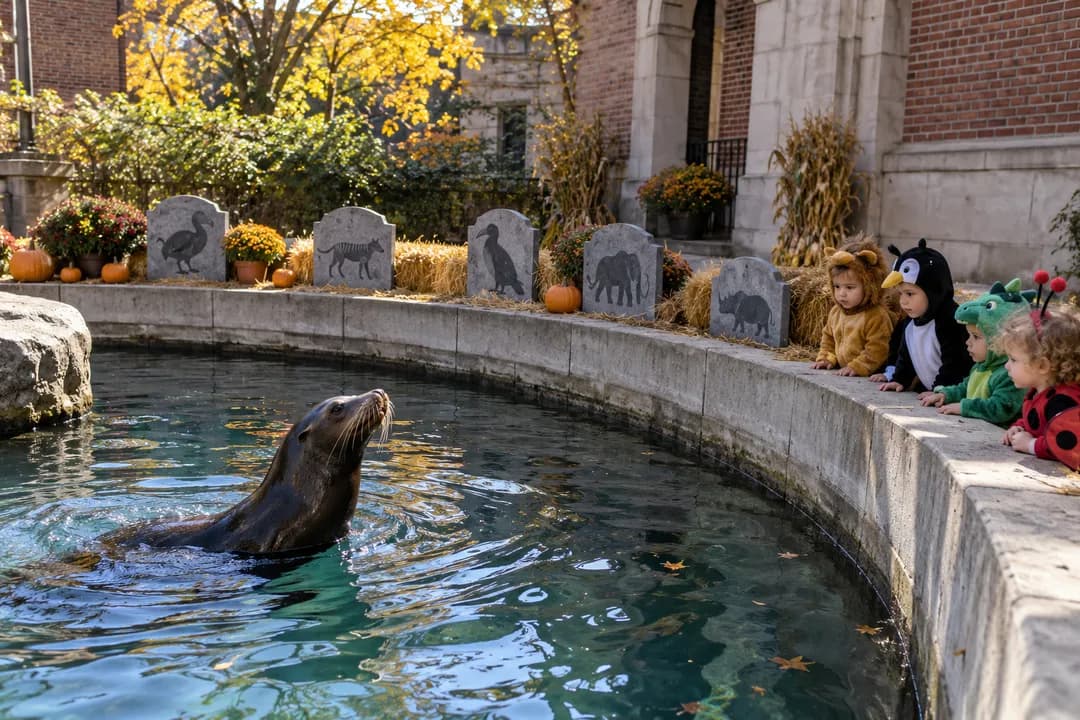 Halloween Events for Kids Near Me: Spooktober at Prospect Park Zoo
 Halloween Events for Kids Near Me: Boo at the Zoo in the Bronx