Three donations, 47 years, one building
The NUS Museum's collections are not the result of a single curatorial vision. They are the result of three institutional mergers and one generous bequest, layered on top of each other.
The Lee Kong Chian Collection is the oldest component. It originated at the Lee Kong Chian Art Museum, established at Nanyang University in 1970 — a collection of Chinese art and artefacts named for the philanthropist whose funding made the museum possible. When Nanyang University merged with the University of Singapore in 1980 to form the present-day NUS, the collection transferred to the new institution.
The University Art Museum at the University of Malaya, established in 1955, is the other founding root. It followed NUS through its various campus reorganizations and was consolidated into the present building in 2002.
The Ng Eng Teng Collection is the most recent and the most personal. Singaporean sculptor Ng Eng Teng (1934–2001), one of the country's most significant modern artists, began donating works to NUS in 1997. After his death, additional gifts from his estate in 2002 brought the total donation to over 1,000 works — sculptures, paintings, sketches, maquettes. It is the most complete collection of any single Singaporean artist held by any museum in the country.
The Straits Chinese Collection and a South & Southeast Asian Collection round out the museum's four permanent strands, alongside a rotating programme of contemporary and research exhibitions.
The total holdings are over 8,000 objects. Which — if the arithmetic is interesting to you — means the NUS Museum holds more individual items per square metre than some of the marquee museums downtown, at zero dollars admission.
Why being a university museum changes the experience
Most museums are built to do one of two things. National museums narrate — they tell a coherent story about a country, a period, a civilization. Private collection museums curate — they show you what one person or one trust thought was important at a specific time.
University museums do neither. They are, by their nature, research collections — holdings organized by teaching and scholarship logic rather than by narrative. Which means when you walk through the NUS Museum, you are not being told a single story about Singapore. You are being offered three parallel vantages on the same material: a Chinese modernist painter can be read alongside a Ng Eng Teng sculpture alongside a Straits Chinese piece of domestic porcelain, and the links between them are for you to make rather than for wall text to make on your behalf.
This is the quiet reason the museum is often half-empty. National Gallery Singapore, ten kilometres away downtown, tells you what Singaporean art is. The NUS Museum shows you the component materials that Singaporean art historians use to make that argument. It is the draft notebook to National Gallery's finished book.
The Ng Eng Teng rooms
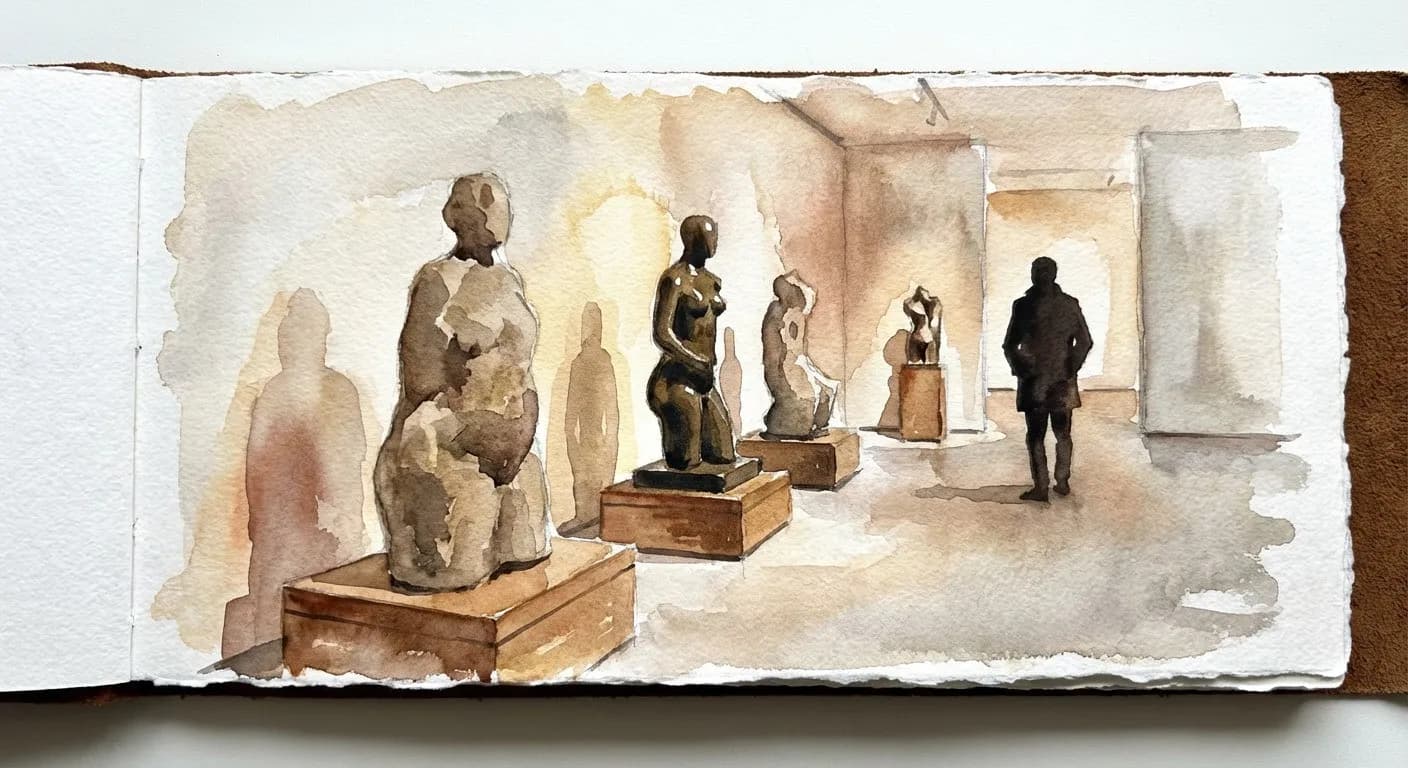
If you have time for only one thing in the museum, the Ng Eng Teng gallery is the thing.
Ng Eng Teng trained in ceramics in England in the late 1950s and returned to Singapore to spend the next four decades developing a sculptural practice rooted in the human figure — enlarged limbs, compressed torsos, faces that read as masks. He became the country's most recognised sculptor without ever fully entering the international contemporary art circuit. Which means his work is, unusually for a Singaporean artist of his generation, held overwhelmingly in Singapore.
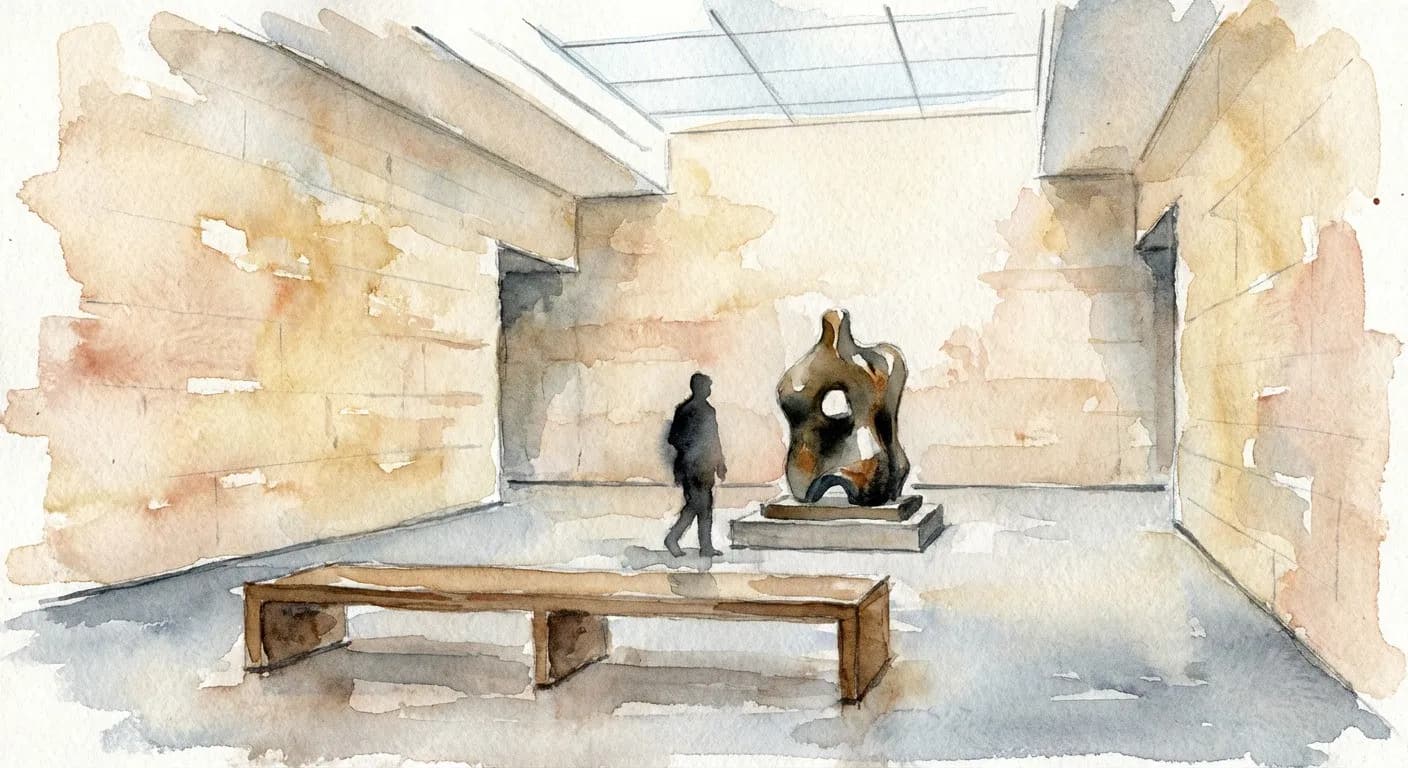
The NUS gallery rotates through the collection, showing perhaps 60 to 80 works at a time from the 1,000-plus in storage. The effect, in a room that is usually occupied by three or four visitors, is close to being inside an artist's studio rather than inside a museum — a density of one person's output, undiluted by competing voices.
Practical notes
- When to go: Tuesday to Saturday, 10am to 6pm. Closed Mondays and on public holidays. Best window is weekday afternoon, roughly 2 to 4pm — the campus is active but the museum itself is near-empty.
- Admission: free. There is no ticketing desk to queue at. Walk in, sign the guest book if you feel like it, proceed upstairs.
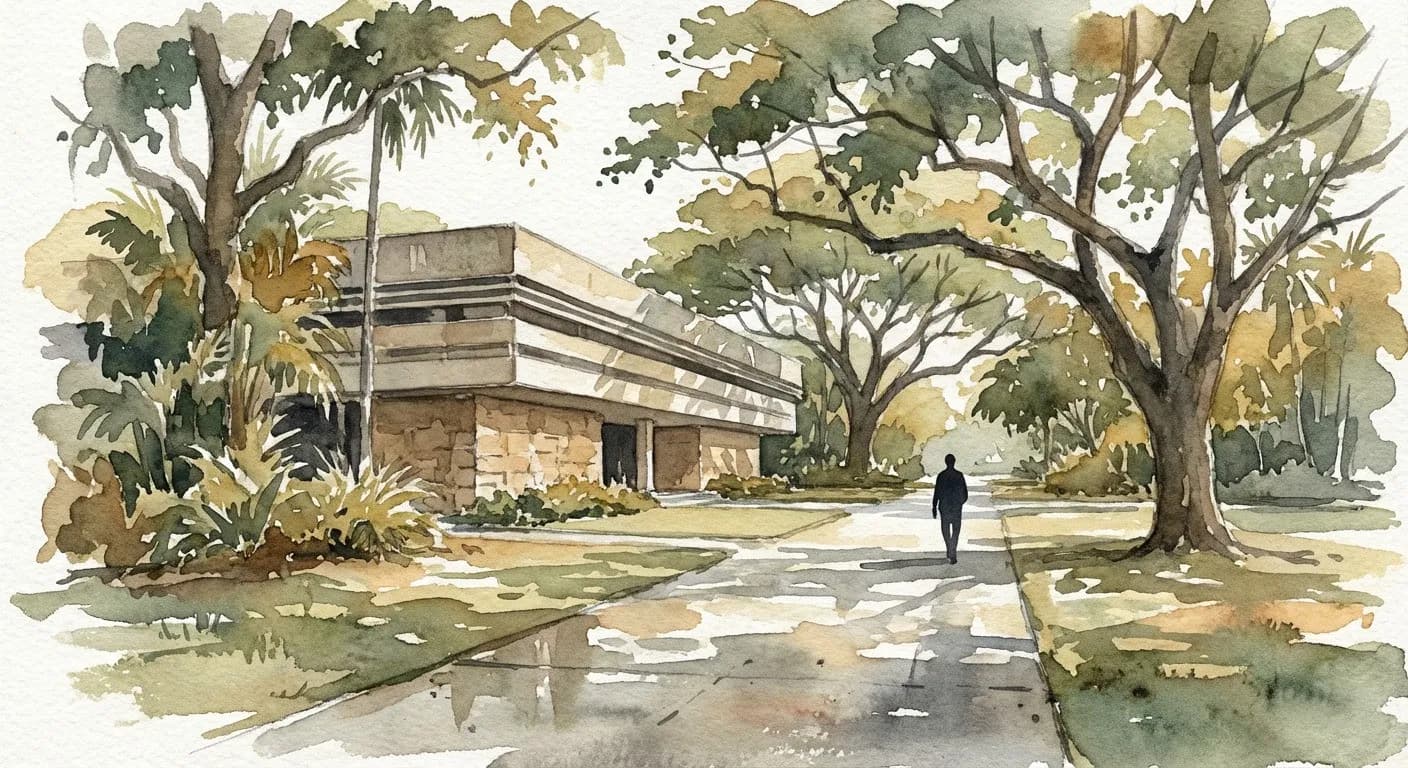
- Getting there: Kent Ridge MRT (Circle Line) is the nearest station, about a 15-minute walk through the NUS campus uphill. The internal shuttle bus system runs frequently from the MRT station to the University Cultural Centre stop; the museum is a two-minute walk from there. A Grab/taxi drop at the University Cultural Centre is the most efficient option for a short visit.
- Walking solo: the NUS campus is one of the safer walking environments in Singapore during daylight hours — university security presence, active student population, well-maintained paths. Solo weekday visits are common and unremarkable. Evening visits are not an option as the museum closes at 6pm.
- What to do after: the Kent Ridge campus has a handful of canteens within walking distance; the UCC cafe is steps from the museum. For a wider meal, Holland Village is a short Grab away.
- Location: 50 Kent Ridge Crescent, Singapore 119279.
The point
Some museums want to be destinations. Some museums want to be authorities. The NUS Museum does not particularly want to be either. It wants to hold the working papers — the objects that let Singapore's art historians argue about what Singapore's art history actually is.
You do not go to it for the confirmation of a national story. You go to it to see a room of Ng Eng Teng sculptures with almost no one else in the room, on a Tuesday afternoon, for free, on the campus of a university that happens to own the most interesting quiet collection in the city.
That the entry is free is not the point. That the entry is always free, that the building has been free since 2002 and will likely remain free for institutional reasons as long as NUS exists — that is the point. It is a museum designed to be returned to, not visited once.
Tags: #nusmuseum #singapore #freemuseum #ngEngTeng #singaporeart #kentridge #nicebutfree #karpofinds #freesingapore #sgmuseum #universitymuseum
Sources consulted: museum.nus.edu.sg · en.wikipedia.org · nus.edu.sg · roots.gov.sg · nhb.gov.sg
All trademarks are the property of their respective owners.