The Subway Series — Mets vs. Yankees, the second weekend of May 2026 — exists because the 7-train, the 4-train, and a 22-minute subway transfer at Grand Central connect the two stadiums. Almost no one has ever walked the distance between them. The cross-borough walk from Yankee Stadium in the South Bronx to Citi Field in Flushing Meadows is roughly 8.4 miles, runs through six neighborhoods most New Yorkers have never set foot in, and takes about two hours and forty minutes at a steady pace. It is the route the trains take, on foot. Here is what is actually there.
Why Walk It
The argument against walking 8.4 miles between two ballparks is obvious. The subway takes 50 minutes door to door, costs $2.90, and works in every weather. The argument for is the one this column keeps making: the parts of New York worth seeing are the parts between the places you are trying to get to. The Yankee Stadium-to-Citi Field route is, for most of its length, neighborhoods that the Subway Series cycles over, under, and past without ever stopping in. The 7-train spine in Queens runs through Sunnyside, Woodside, Jackson Heights, Corona, and Flushing in sequence, and each of those is one of the most distinct ten-block grids of food, signage, and street culture in North America. Two of them are reasonable destinations for a Subway Series afternoon. All five are worth walking through.
The Route, in Six Pieces
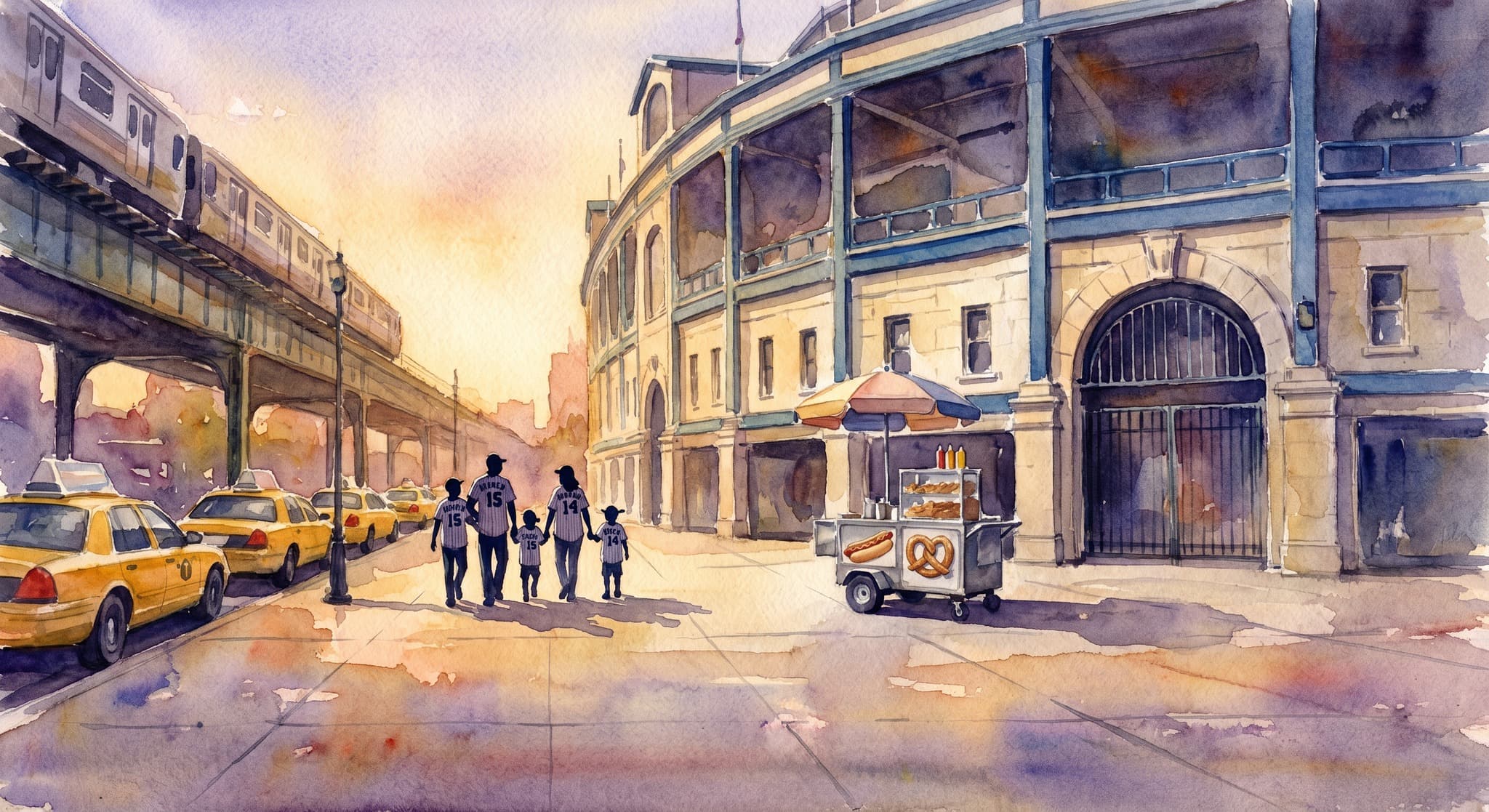
**Piece one: Yankee Stadium gate to the Macombs Dam Bridge.** Fifteen minutes. The 161st Street/River Avenue corner outside Gate 4 is the official starting line. Walk south on River Avenue under the elevated 4-train tracks — this is the loudest 600 feet of the walk, screech-and-rivet train noise overhead, dollar-pretzel carts on the curb, a Bud Light sign in every window. The Macombs Dam Bridge crosses the Harlem River at 155th Street and opens onto Harlem's east side.
**Piece two: Macombs Dam to Astoria.** Forty-five minutes. East across 155th, south down Frederick Douglass Boulevard for ten blocks, then a hard left east on 125th Street and over the Triborough — sorry, the Robert F. Kennedy — Bridge pedestrian path. The bridge walk is the structural high point of the route: ten minutes elevated above the East River, the Bronx receding behind you, Manhattan to your right, the Queens skyline coming up to your left, and the river traffic below. The bridge deposits you on Hoyt Avenue in Astoria.
**Piece three: Astoria to Sunnyside.** Thirty minutes. Down 31st Street under the elevated N/W tracks, through the heart of Greek Astoria — souvlaki signage, a half-dozen kafenia, the Bohemian Hall garden if it is open. Continue south on 31st until it merges into Queens Boulevard at Northern. You are now under the 7-train, and you will be under or beside the 7-train for the next 90 minutes.
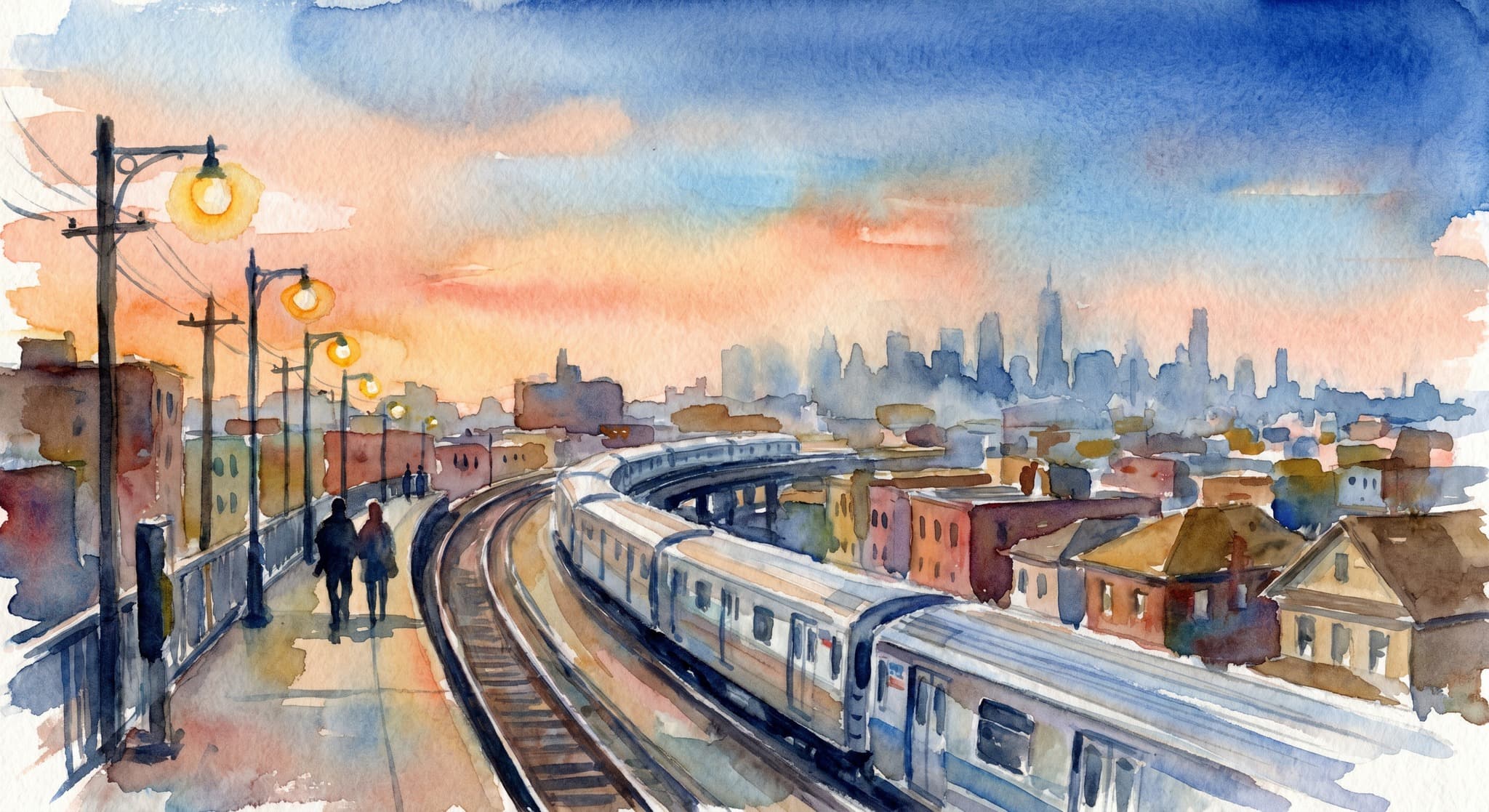
**Piece four: The 7-train spine — Woodside to Jackson Heights to Corona.** Sixty minutes. This is the centerpiece of the walk. The 7-train runs elevated above Roosevelt Avenue for roughly four miles, and the four miles below it are the densest, most-spoken-language strip of street food in the United States. Roosevelt at 61st is Filipino. Roosevelt at 74th is Bangladeshi and Bhutanese. Roosevelt at 82nd is Colombian and Mexican. Roosevelt at 103rd is Ecuadorian. Roosevelt at 111th is Honduran. You can eat an actual meal at any of these intersections for under $10 and walk it off in the next three blocks. The walk on this stretch is loud, fluorescent, full of carts, and structurally lit from above by the underside of the elevated tracks.
**Piece five: Corona to Flushing Meadows.** Twenty minutes. East from 111th to 114th, then south through Corona Plaza — the Saturday street market is one of the best in the city — and into Flushing Meadows-Corona Park via the 111th Street entrance. The Unisphere comes into view through the trees about three minutes after you enter the park. This is the geographic center of New York City's borough system, and almost no one in Manhattan ever sees it.
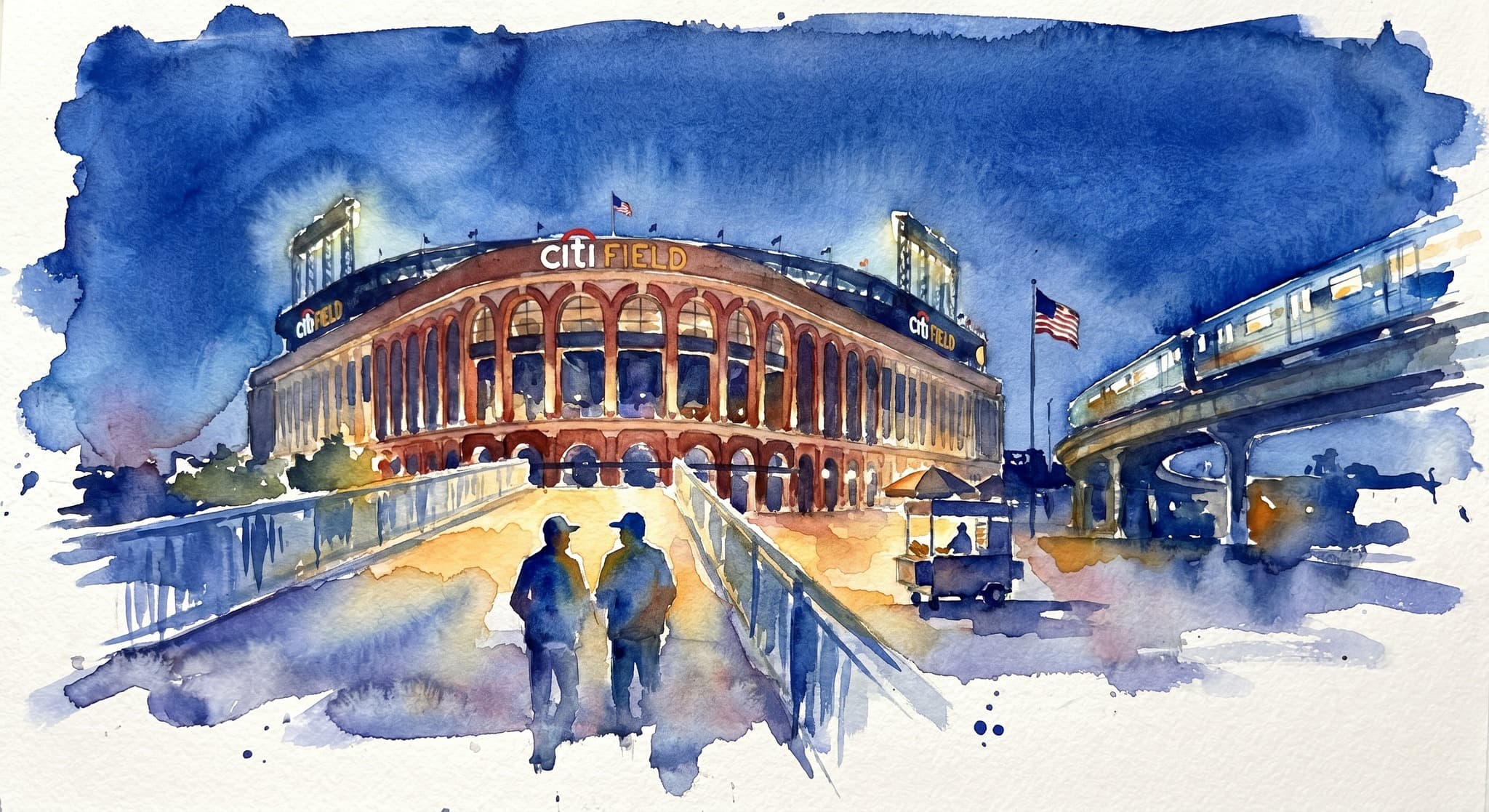
**Piece six: The park to Citi Field.** Ten minutes. Walk north past the Unisphere, past the New York State Pavilion towers, around the Billie Jean King National Tennis Center, and Citi Field's brick-and-glass facade comes up across the Roosevelt Avenue overpass. The 7-train station is the same one you have been walking under for ninety minutes. The transit-and-pedestrian symmetry is the whole reason this walk works.
What to Eat Along the Way
Two stops are non-negotiable. **Tortas Neza** at Roosevelt and 111th (around the Corona piece of the walk) for a torta — the menu is forty Mexican sandwiches named for soccer teams and the line on a Saturday is real but moves. **Bun-Ker Vietnamese** at Metropolitan and 56th Drive (off-route by three minutes, but worth a detour at the Sunnyside-Woodside transition) for the pork-belly bánh mì. If you want one stop only, take Tortas Neza on the way to the game and let the second half of the walk digest it.
For walking food — the kind you eat with your free hand without sitting down — three carts on the Roosevelt corridor are the standards. The Birria cart at 74th, the Tibetan momo cart at 78th, the Colombian arepa stand at 103rd. None of them are signposted online. All of them are obvious when you walk by.
When to Start
The Subway Series weekend games (Friday and Saturday, May 16-17 2026) both start at 7:15pm at Yankee Stadium. If you want to walk from one stadium to the other on game day, you do not walk to the next-day game from the same-day stadium — you walk during a daytime, on a non-game day. The walk wants to be a Saturday or Sunday afternoon project, leaving Yankee Stadium around 1pm, arriving Citi Field around 4pm with time for a beer at McFadden's outside Gate D before either subway home or staying for the 7:15 first pitch if it is a Mets home weekend.
The optimal start time, allowing for golden-hour light on the back half of the walk, is **1:30pm to 2:00pm**. Roosevelt Avenue at 4:00pm under late-afternoon sun is the route's best forty minutes. Citi Field at 4:30pm in early-evening light, with the stadium just turning on its grid, is the right place to stop.
Why It Works as "The Long Way Home"
The Subway Series is the city's most efficient sports rivalry — two teams, two stadiums, one transit system, three games a weekend. The efficiency is the point and the cost. The seventy-five thousand people who attend across the three games will, almost without exception, move between the stadiums in two ways: subway or rideshare. The route below the subway, walked on foot, is the part of New York the rivalry literally rides above and never touches.
Walking the route does what the column always argues for. It puts the city's overhead structure — in this case the 7-train, the most-photographed elevated line in the borough — at its actual scale. The 7 looks like the spine of Queens on a map. On foot, underneath it, you understand that the spine is hung above the world's densest immigrant-food corridor and that the corridor was there first and the train was built to serve it. The Mets and the Yankees ride over the top of one of the most important streetscapes in the United States twice a year, and you can walk the streetscape in three hours.
Practical notes
- Route: Yankee Stadium (Gate 4, 161st & River) → Macombs Dam Bridge → 125th Street → Triborough/RFK Bridge pedestrian path → Astoria (31st Street) → Sunnyside-Woodside (Queens Boulevard under the 7) → Jackson Heights → Corona (Roosevelt Avenue) → Flushing Meadows Park → Citi Field. 8.4 miles, 2h40m at a steady pace.
- Best day: Saturday or Sunday afternoon, non-game day or daytime well before first pitch.
- Best window: Start 1:30–2:00pm. Arrive Citi Field 4:30–5:00pm.
- Cost: $0 for the walk itself; $10–$20 for food along Roosevelt.
- Getting back: 7-train from Mets-Willets Point Station to Times Square, 35 minutes. Or stay for the 7:15 Mets game if it is a Mets home weekend.
- What to bring: Comfortable shoes (the walk is mostly concrete sidewalk); a hat for the bridge crossing; cash for the carts; a phone charged for the GPS-and-Roosevelt-Avenue food-stop navigation.
- What to skip: The walk in the rain (the bridge sections are exposed); the walk in deep winter (the elevated-train-shadow corridor on Roosevelt is cold). May, September, and October are the route's three best months.
- Bailout points: Astoria (N/W trains back to Manhattan, the 31-minute mark); Jackson Heights (the 7 train at 74th–Roosevelt, the 90-minute mark); Corona (7 train at 103rd, the 2-hour mark).
The point
Sports rivalries are usually a question of who beats whom. The Mets and the Yankees argue this every May and September on the field. The other rivalry the Subway Series sets up — and the one the city quietly resolves every weekend — is the rivalry between the two boroughs the stadiums sit in. The Bronx and Queens are connected by a single subway transfer and a 25-mile geographic gap that contains six of the most distinct neighborhoods on the East Coast. Walk the gap, and the Subway Series stops being a series and starts being a route. The route is what the city actually is. The series is the part that fits on television.
#subwayseries #nyclongwalk #thelongwayhome #yankeestadium #citifield #7train #queenswalk #rooseveltavenue #jacksonheights #corona #nycwalks #flushingmeadows #nycpedestrian #downtownnyc #fivebourough
Sources consulted: mlb.com/yankees · mlb.com/mets · nyc.gov/parks/flushing-meadows · eater.com · mta.info
All trademarks are the property of their respective owners.