 Best Trick or Treating Neighborhoods Near Me: West Portal
Neighborhood Guides
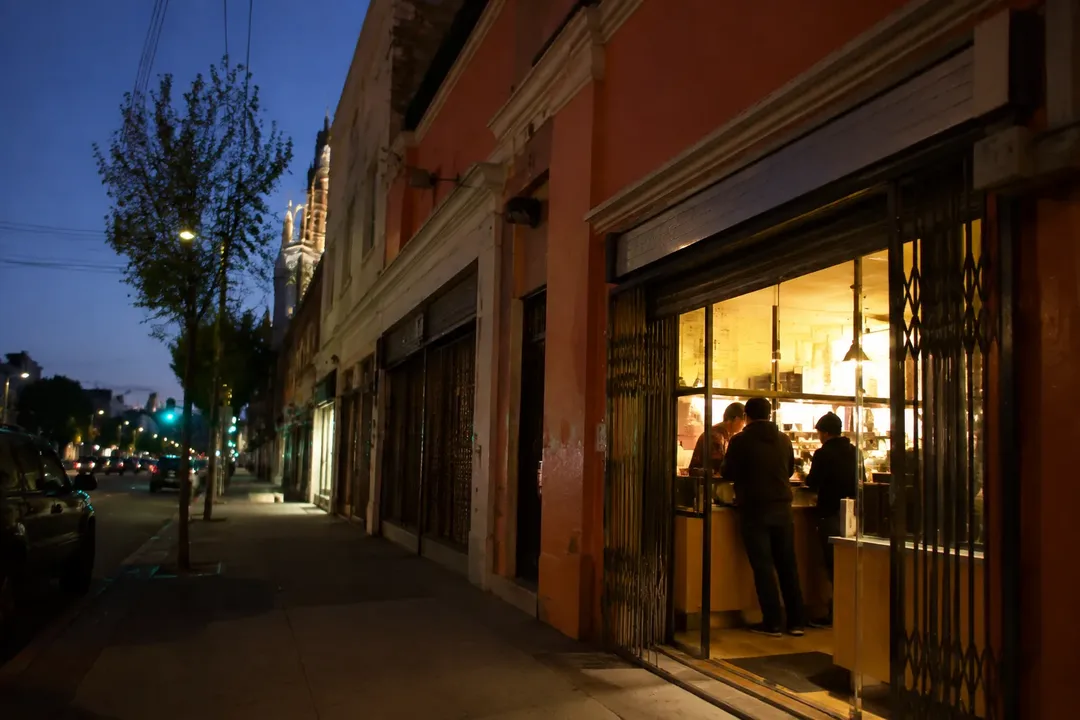
A Local's Guide to Mission Burritos in San Francisco This Summer
Mission-style burritos arrive oversized, foil-wrapped, and still warm at the corner where the fog hasn't burned off yet.
The first time you unwrap a Mission burrito on a sidewalk bench, you notice the weight before the flavor—substantial enough to matter, still radiating heat through the foil, rice and beans packed so tight the tortilla stretches but never tears. This is not a regional variation or a marketing category. It is a specific architectural achievement that emerged in the Mission District in the early 1960s, when taquerías serving largely Mexican and Central American workers began folding rice, beans, meat, salsa, cheese, sour cream, and guacamole into a single oversized flour tortilla. The format solved a practical problem: a complete, portable lunch that stayed warm through a shift and required no plate.
Karpo can track which taquerías have the shortest lines right now, map a route that skips the steepest blocks, and flag backup spots if your first choice is closed early or out of carnitas.
Why the Mission District still owns this meal
By summer, the district's rhythm changes slightly. Tourists clog the sidewalk outside the most famous spots on 24th Street and Valencia, but the neighborhood's deeper grid—from 16th down to Cesar Chavez, between Mission and Potrero—holds dozens of long-running taquerías where the line moves faster and the quality holds. The fog usually burns off by noon, but mornings stay gray and cool, which means you can walk farther without overheating. That matters when you are carrying a burrito the size of a forearm and deciding where to sit down and eat it.
The Mission's layout favors this kind of eating. Dolores Park offers grass and sun if you time it right, but the eastern blocks—around Harrison, Folsom, and the industrial stretch near Division—have quieter plazas, bus-stop benches, and loading-dock ledges where locals post up without fanfare. The food itself is consistent across price points: whether you pay eight dollars or twelve, you are getting a structurally sound cylinder with enough heft to count as two meals if you are honest about portion sizes.
Start near 24th and Mission, then move east
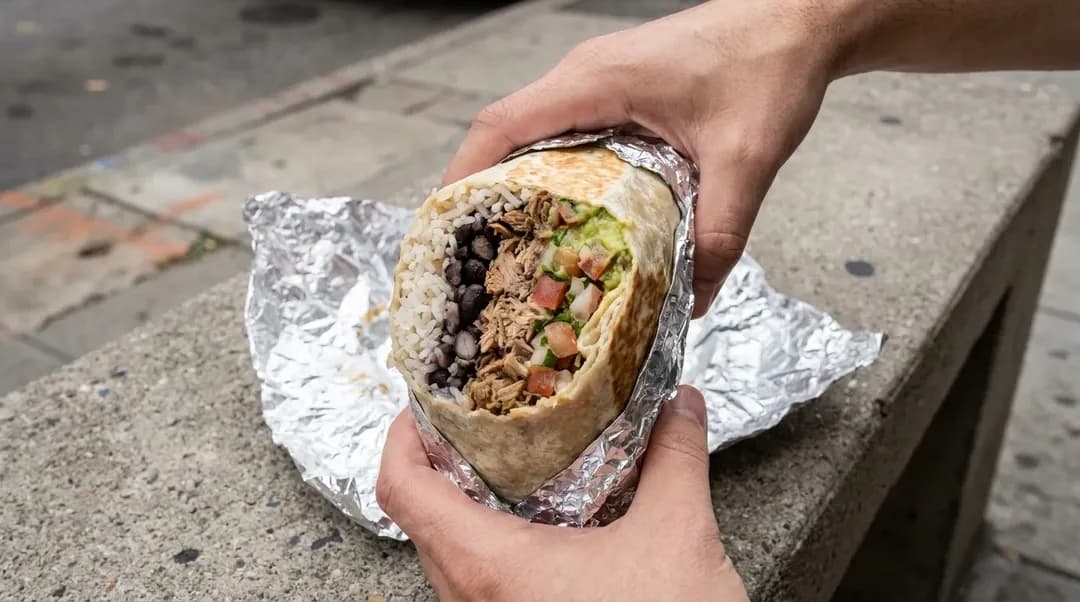
The BART station at 24th and Mission is the natural anchor. Exit onto Mission Street and you are within two blocks of at least four long-established taquerías, all of which have been serving the same core menu since the 1990s or earlier. The morning crowd here is locals buying breakfast burritos before work; by 11:30 the line starts to build, and by 12:30 you may wait fifteen minutes. If you are new to the format, order a carne asada or carnitas burrito with everything—the full build includes pinto or black beans, Spanish rice, cheese, sour cream, guacamole, and your choice of salsa. The kitchen will ask if you want it grilled; say yes if you prefer the tortilla slightly crisp and the cheese melted through.
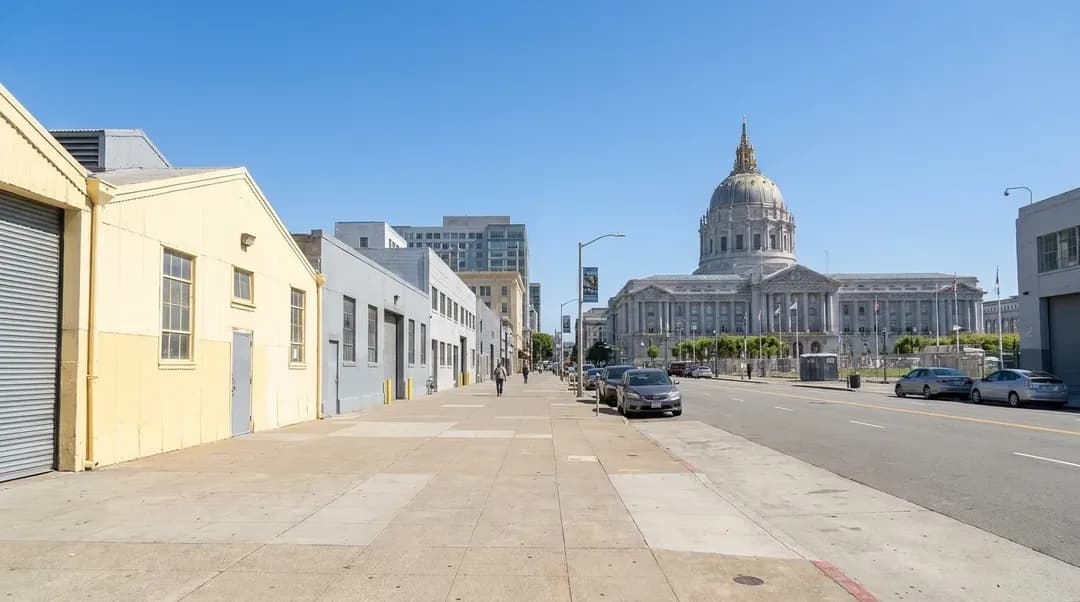
Once you have the burrito, walk east on 24th toward Harrison. This stretch has less foot traffic and more room to navigate. Harrison Street itself is wide, industrial-adjacent, and lined with warehouses that have been converted into studios and small shops. There are benches near the corner of 24th and Harrison, and a small parklet two blocks south at 26th that catches midday sun. If you want a longer walk, continue east to Potrero Avenue, where the neighborhood opens into light-industrial blocks with wider sidewalks and fewer crowds.
The alternative is to skip the BART station entirely and start farther south, near 24th and York or 24th and Bryant. These blocks have fewer tourists and several taquerías that have served the same families for decades. The burritos here cost a dollar or two less and arrive just as large. York Street in particular stays quiet even on weekends, and the walk west from there back toward Mission takes you through residential blocks where you can see how the neighborhood actually functions outside the commercial corridor.
The walk south toward Cesar Chavez and back
If you are still hungry or want to compare styles, the stretch between 24th and Cesar Chavez holds another dozen spots worth checking. Balmy Alley, one block east of Harrison between 24th and 25th, is a public alley lined with murals that date back to the 1970s. It is a narrow, one-block detour, but it gives you a sense of the neighborhood's longer history and offers a shaded pause if the afternoon sun has broken through. From there, walk south on Harrison or Folsom; both streets have wider sidewalks and fewer storefronts, which makes for easier movement if you are carrying a bag or trying to avoid crowded blocks.
Around 26th and Mission, the commercial density picks up again. There are taquerías here that specialize in specific regional styles—Jalisco, Michoacán, Oaxaca—and the menus expand beyond burritos to include tortas, huaraches, and tamales. If you want a sit-down break, several spots have small dining rooms with plastic tables and Spanish-language television playing in the corner. The atmosphere is functional, not scenic, but the food is consistent and the staff will correct your pronunciation without making it a moment.
By the time you reach Cesar Chavez, the neighborhood feels quieter and more residential. The boulevard itself is wide and car-heavy, but the side streets—Shotwell, Treat, Folsom—have front porches, corner stores, and small parks where people sit in folding chairs on warm evenings. If you are planning to loop back north, take Folsom or Harrison rather than retracing Mission Street. The walk is flatter, the sidewalks are clearer, and you will pass through blocks that feel less like a destination and more like a place where people live and eat without ceremony.
When the line is too long or the kitchen runs out
Most taquerías in the Mission operate on a simple supply model: they prep a certain amount of each protein in the morning, and when it runs out, it is gone. Carnitas and carne asada tend to sell out first, usually by mid-afternoon on weekends. If you arrive and the counter staff tells you they are out of your first choice, ask what they still have rather than leaving. Pollo and chile verde almost always last longer, and both hold up well in the burrito format.
If the line at your planned spot is wrapped around the block, walk two blocks in any direction and you will find another taquería with a shorter wait. The quality variance in the Mission is narrow—most of these places have been run by the same families for twenty or thirty years, and the techniques are shared across generations and neighborhoods. The difference is usually in the salsa bar: some offer five or six house-made options ranging from mild tomatillo to extremely hot chile de árbol, while others keep it simple with red and green. Taste before you commit; the hottest salsa is often unmarked and will overpower everything else if you are not prepared.
If you are visiting on a Monday, confirm that your target spot is open. Several well-known taquerías close on Mondays, and there is no universal signage to warn you in advance. The Mission Ballroom and other nearby venues sometimes draw evening crowds that spill into the surrounding blocks, which can slow down service at taquerías nearby. If you are planning to eat before or after an event, build in extra time or pick a spot farther from the venue.
What to check the morning you go
San Francisco's microclimates mean the Mission can be fifteen degrees warmer than the Sunset or the Richmond, but summer mornings still start cool and foggy. By noon the fog usually pulls back, but if it lingers, the eastern blocks near Potrero stay gray and windier than the Valencia corridor. Check the forecast for the Mission specifically, not the city-wide average, and bring a layer if you are planning to sit outside for more than twenty minutes.
Muni lines that serve the Mission run frequently during the day but can slow down in the evening. If you are coming from another neighborhood, BART to 24th Street Mission or 16th Street Mission is the most reliable option. Both stations are safe and well-lit, but the surrounding blocks get quieter after dark, especially south of 24th. If you are planning a late visit, confirm that the taquería you want is still open; many close earlier than you might expect for a city neighborhood.
Parking in the Mission is metered and competitive. Street spots near 24th and Mission turn over quickly, but the blocks east of Harrison and south of 26th have more availability. If you are driving, plan to walk a few blocks from wherever you park. The neighborhood is flat between 16th and Cesar Chavez, which makes walking easier than in most San Francisco districts, but the hills start sharply west of Dolores Street and east of Potrero Avenue. If you have mobility concerns, stick to the central Mission grid and avoid routes that cut west toward the Castro or east toward the freeway.
Practical notes
- BART to 24th Street Mission is the fastest access; the station opens directly onto the main taquería corridor
- Most taquerías close by 9 or 10 PM, earlier than other SF restaurant types; verify hours before a late visit
- Carnitas and carne asada sell out by mid-afternoon on weekends; ask what proteins are still available when you order
- Fog usually clears by noon in summer, but mornings stay cool; bring a layer if you plan to eat outside early
- Street parking is metered and tight near 24th and Mission; walk two blocks east or south for easier spots
- Salsa bars vary widely in heat level; taste before adding to your burrito, especially unmarked red salsas
Tags: #karpo #sanfrancisco #missiondistrict #missionburrito #sfburritos #24thmission #sffood #taquerialife #neighborhoodguides #sflocals #dolorespark #bartaccess #realburrito #missionlife #sfwalks
Sources consulted: San Francisco Recreation and Parks · BART schedules and stations · SF Muni transit information
All trademarks are the property of their respective owners.
Ask Karpo first
Text Karpo to check which taquerías near 24th and Mission have the shortest current wait times, confirm what proteins are still available if it is after 2 PM, and get a walking route that avoids the steepest blocks between BART and the eastern Mission. Karpo can also flag backup spots if your first choice has closed early or run out of what you wanted.
Ask Karpo for more information.
Keep reading
- Best Trick or Treating Neighborhoods Near Me: West Portal
 Best Trick or Treating Neighborhoods Near Me: Noe Valley
 Best Trick or Treating Neighborhoods Near Me: Bernal Heights