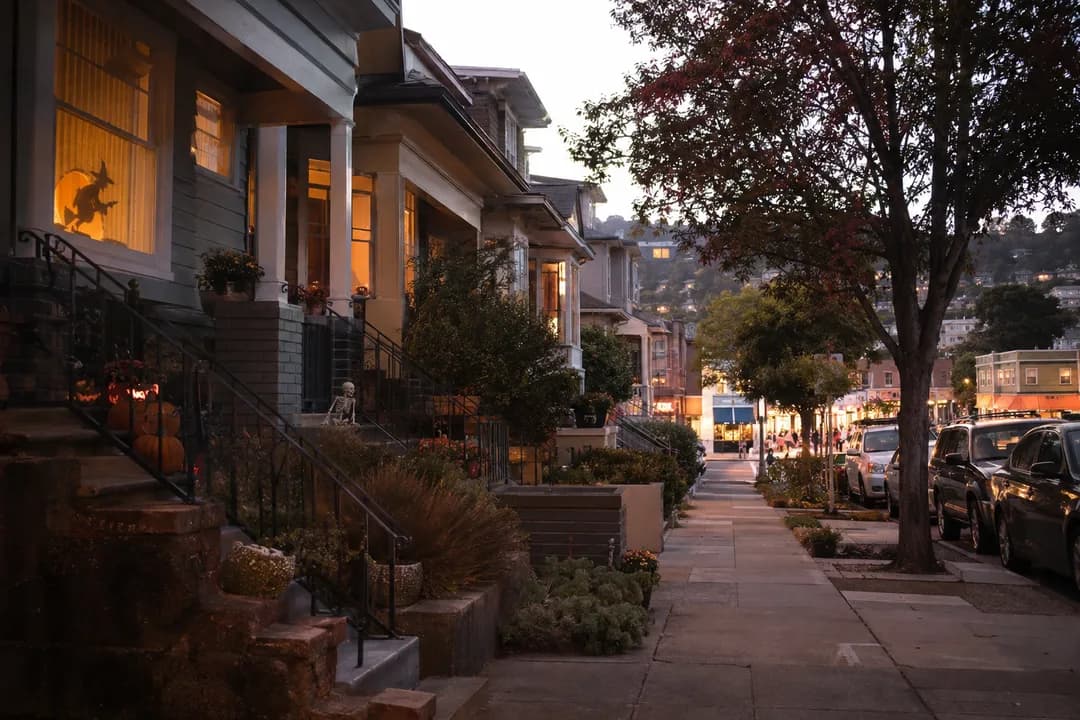
 Best Trick or Treating Neighborhoods Near Me: West Portal
Neighborhood Guides
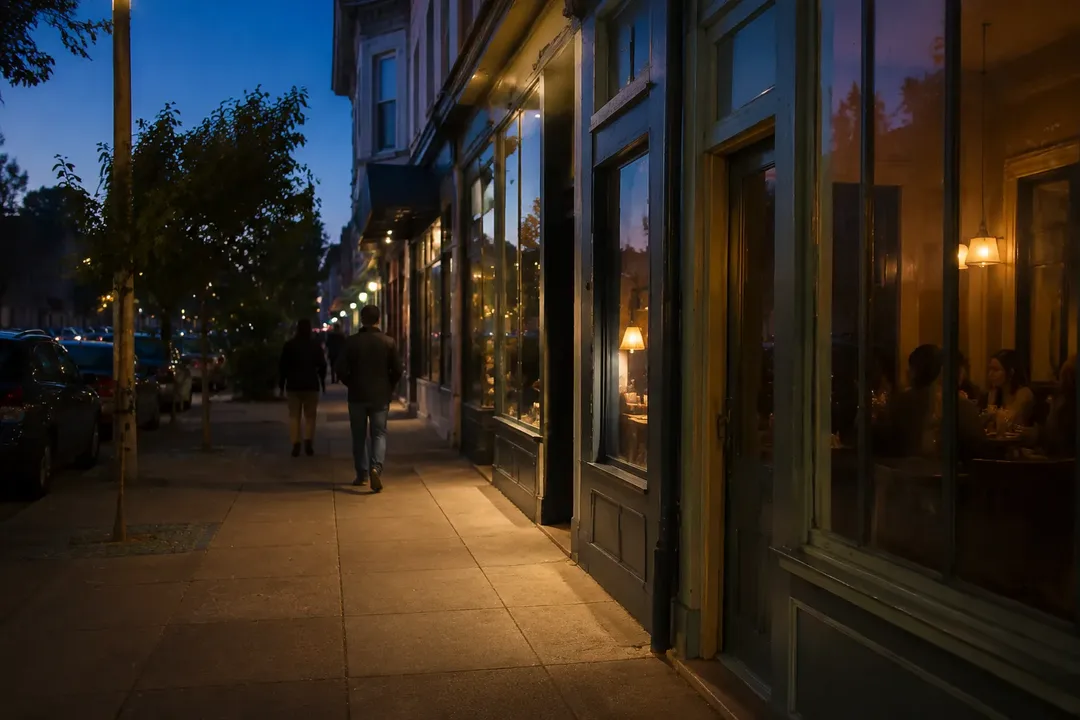
A Local's Guide to Best Restaurants in San Francisco This Summer
Most people map restaurants by neighborhood, then wonder why dinner feels like a forced march through fog and uphill blocks.
The standard approach is to pick a neighborhood—North Beach, the Mission, Hayes Valley—and assume you can walk between restaurants if your first choice has a wait. But San Francisco's hills and microclimates make that harder than it looks on a map. A fifteen-minute walk from Flour + Water to Tartine Manufactory is mostly flat until you hit the grade on Eighteenth Street, and by seven-thirty on a June evening the wind off Twin Peaks has already dropped the temperature ten degrees. You end up cold, uphill, and still twenty minutes from a table.
Text Karpo before you leave and get a live route that accounts for which kitchens are actually seating tonight, plus transit timing if the N-Judah is running slow. It saves you the guesswork when plans change.
Why clustering reservations by district rarely works
Better to think in terms of transit corridors and kitchen schedules. Restaurants along the same Muni line—say, the J-Church from Noe Valley through the Castro and into the Mission—give you fallback options without the climb. And because most kitchens in San Francisco stop seating between nine and nine-thirty, even on weekends, knowing which places hold later tickets matters more than knowing which has the best Yelp score. A reservation at eight forty-five is useful only if the kitchen is still firing full menus, and plenty of well-regarded spots start eighty-sixing half the menu by nine.
Build the route around an arrival window, not a sequence that depends on every stop working out. Leave enough time to read a wait estimate, walk to the next option, and decide whether a bar seat is acceptable before the remaining kitchens start winding down. A route can look compact on a map and still fail once a delayed train, a steep block, or a full host stand takes ten extra minutes.
A working route from Noe Valley to the Inner Mission
Start in Noe Valley, where Twenty-Fourth Street between Church and Diamond has a density of restaurants that stay busy but not impossible. Firefly is the anchor—California comfort food, a dining room that fills early but turns tables, and a bar where you can eat the full menu if the main room is booked. If Firefly is slammed, walk two blocks west to Lupa Trattoria for Roman-style pasta and a quieter vibe. Both close their kitchens by nine-thirty, so plan to arrive by seven-fifteen if you want the full menu.
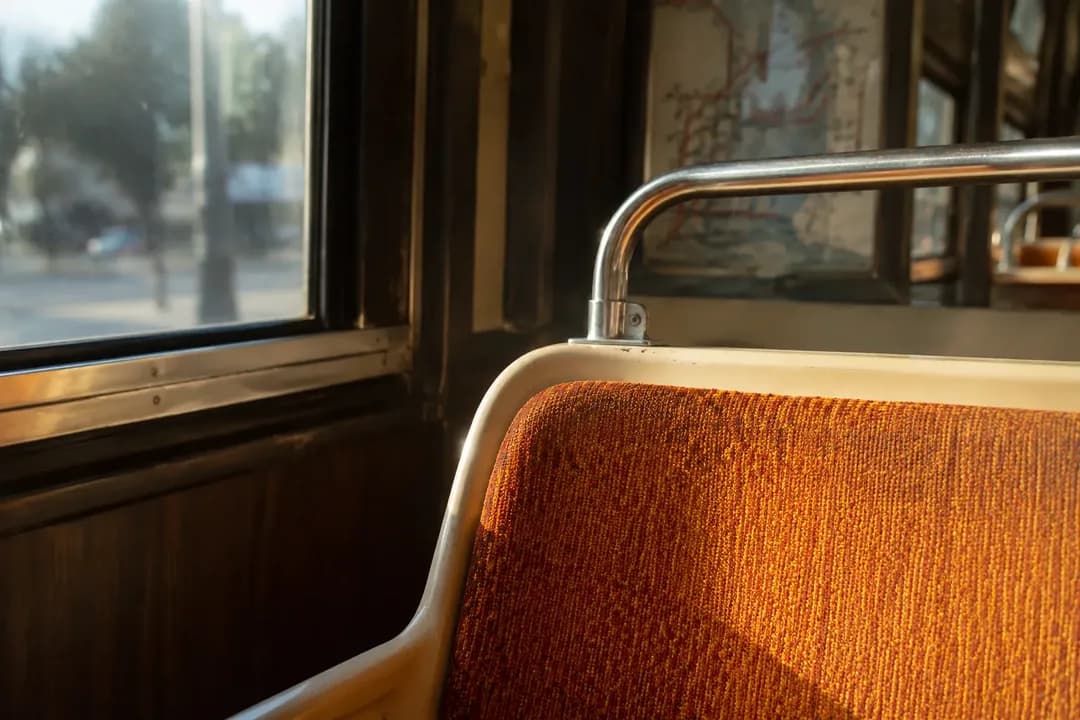
From there, take the J-Church inbound toward the Mission. Get off at Twenty-Fourth and Valencia and you have a second cluster: Tartine Manufactory for California vegetables and natural wine, Lazy Bear if you booked the tasting menu weeks ago, or just walk Valencia between Twenty-Fourth and Twentieth to see what has space. This stretch has enough turnover that you can usually find a counter seat or a small table without a reservation, especially if you're willing to eat at eight-thirty. The key is that you're moving downhill and with the transit line, so backtracking costs you five minutes, not twenty.
Treat the transfer as a decision point rather than a promise. Before leaving Noe Valley, check whether the next stop can actually seat you and whether the travel time still leaves a useful dinner window. If the answer is no, staying put for a later table can be better than arriving in the Mission with only a few minutes before multiple kitchens stop taking orders.
If the Mission feels too crowded, reroute to the Castro. Anchor Oyster Bar on Castro near Market has been open since the seventies, serves until nine-thirty, and almost always has room at the bar for two. It's not trendy, but the cioppino is solid and you're a short walk from the Castro Muni and BART station if you need to head home. The real advantage is that you're building a route with logical exits: if one spot is too loud, too full, or just closed for a private event, the next option is a short, flat walk or a single transit connection away.
This plan assumes you are fine with compromise
If you need a specific table at a specific restaurant—a birthday, an anniversary, a booking you made a month ago—none of this applies. This is a guide for people who want a good meal without the anxiety of a single reservation dictating the entire evening. It assumes you are comfortable eating at a bar, that you can handle a menu that has three things eighty-sixed by the time you sit down, and that you are not trying to impress someone who equates spontaneity with failure to plan.
It also assumes you know that best restaurants in San Francisco does not mean the same thing to everyone. If you want white tablecloths and a sommelier, you are looking at a different list. If you want a scene, you are booking State Bird Provisions or Nari and hoping for a cancellation. This guide is for the middle case: places that are good enough to recommend, reliable enough to visit without a reservation safety net, and distributed along routes that make sense when your first plan falls apart. That is a different kind of best, and it requires a different kind of flexibility.
The practical version of flexibility is deciding in advance what you will trade: a preferred dining room for a bar, an early seating for a later one, or a first-choice menu for a nearby backup. Once the group agrees on that threshold, the host stand conversation is simpler and no one loses time debating every option on the sidewalk.
What to confirm the day you go
Check whether the restaurant is open. San Francisco kitchens close for private events, staff shortages, and unexplained single-day shutdowns more often than you would expect. If you are counting on a fallback, verify that the fallback is actually operating that night. Most places post updates on Instagram or their voicemail; calling at four in the afternoon usually gets you a human who knows whether the kitchen is running full service.
Check the Muni and BART status before you leave. The N-Judah and the J-Church both run slower after seven on weekdays, and weekend subway schedules are unpredictable enough that a twenty-minute trip can stretch to forty if you just miss a train. If you are moving between neighborhoods, build in an extra fifteen minutes. If you are planning to end the night in the Outer Sunset or the Richmond, know that the last reliable transit window is around ten-thirty; after that, you are looking at a rideshare or a long wait.
Confirm what time the kitchen stops taking orders. Most San Francisco restaurants list a closing time that is actually when they lock the door, not when they stop seating. If the website says ten, assume the kitchen closes at nine or nine-fifteen. If you are arriving after eight-thirty, call ahead and ask. You do not want to sit down at nine only to be told the kitchen is down to three dishes and a dessert.
Also confirm the format of service that night. A restaurant may be open while limiting bar seating, pausing walk-ins, or running a shortened menu. Ask whether the full menu is available, whether parties are seated only when complete, and whether a quoted wait is for the dining room or for any available seat. Those details determine whether a backup is real or only appears to be one.
Practical notes
- Kitchens in San Francisco typically stop seating by 9:30 PM, even on weekends—arrive by 7:30 if you want the full menu.
- The J-Church connects Noe Valley, the Castro, and the Mission in a straight line; it runs every 12-15 minutes after 7 PM on weekdays.
- Fog and wind pick up after sunset in summer; bring a layer even if it is seventy degrees at six.
- Bar seating at most restaurants does not require a reservation and serves the full menu—plan for that as your backup.
- Verify the restaurant is open the day you go; private events and unannounced closures are common.
- If you are ending the night in the Outer Sunset or Richmond, last reliable transit is around 10:30 PM.
Tags: #karpo #sanfrancisco #noevalley #restaurants #themission #thecastro #dinnerplans #sfrestaurants #sanfranciscofood #localguide #neighborhoodguide #sfmuni #summerdining #wheretoeat #sflocal
Sources consulted: SFMTA Muni schedules · SF Chronicle dining coverage · Firefly Restaurant
All trademarks are the property of their respective owners.
Ask Karpo first
Text Karpo the morning of or an hour before you leave and ask which restaurants along the J-Church or in Noe Valley are actually seating tonight, and whether any have bar space available. It will give you a live route with Muni timing and an exit plan if your first stop is full or closed.
Ask Karpo for more information.
Keep reading
- Best Trick or Treating Neighborhoods Near Me: West Portal
 Best Trick or Treating Neighborhoods Near Me: Noe Valley
 Best Trick or Treating Neighborhoods Near Me: Bernal Heights