 Live Music Near Me in the Theater District: Birdland's Nightly Jazz Sets
Bars & Nights Out
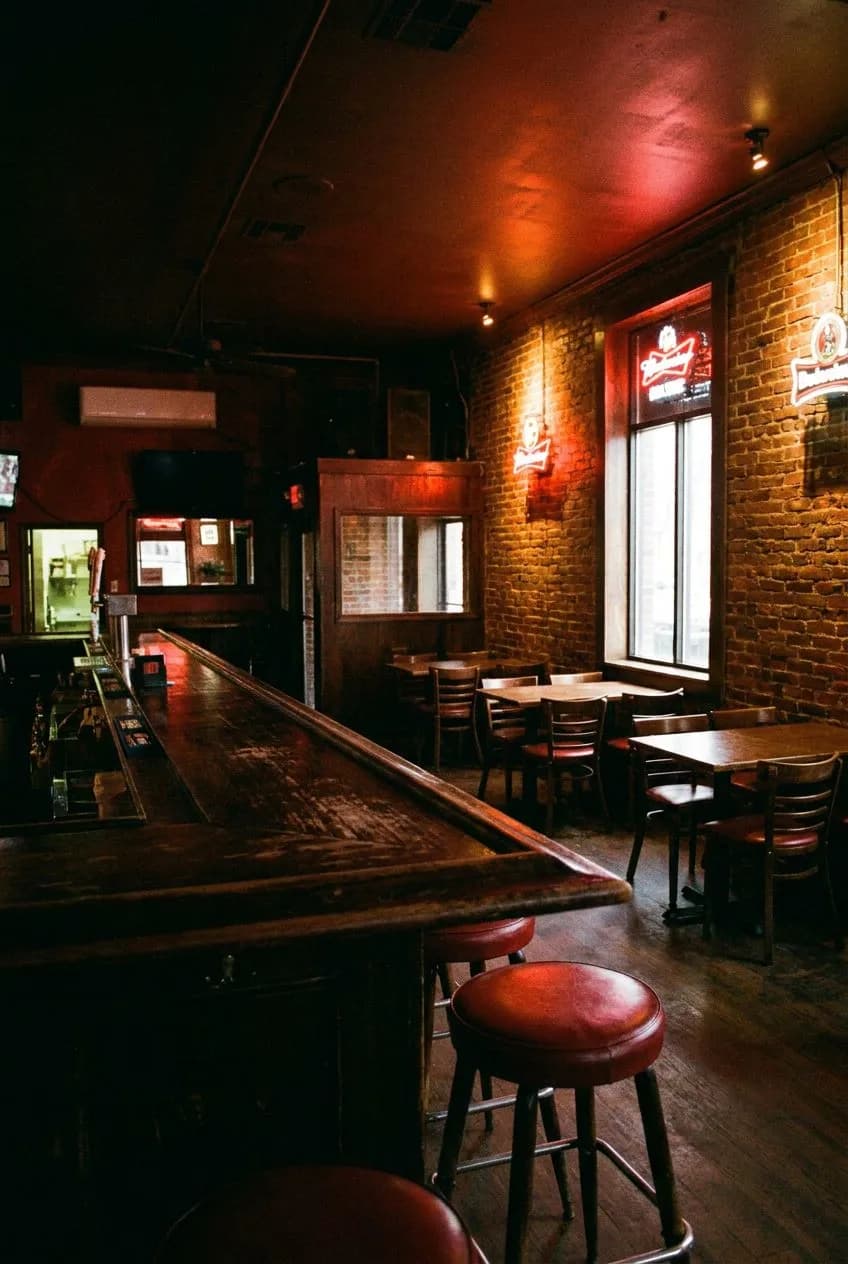
A Late Weeknight at a Polish Dive Bar in Greenpoint, Before the Walk Home
Worn wood, cheap pours, neon in the window: the slow tail end of the night in an old Greenpoint bar where the regulars linger and the city feels far away.
The bar sits a few blocks from the waterfront, wedged between a bodega and a shuttered storefront with hand-painted lettering still fading on the glass. The neon sign in the window flickers amber and blue, casting uneven light onto the sidewalk where a couple of regulars stand smoking, leaning against the brick. Inside, the air smells like old wood, spilled beer, and something faintly floral from the cleaning solution someone ran over the bar top hours ago.
The Counter and the Crowd That Knows It
The bar itself runs the length of the room, dark wood worn smooth in the spots where elbows rest. A few locals occupy the stools—men in canvas jackets, a woman scrolling through her phone with a rocks glass sweating beside her hand. The bartender moves without urgency, pouring shots of Żubrówka and sliding them across the counter with the quiet efficiency of someone who's done this a thousand nights in a row. The vodka bottles line the back wall in uneven rows, labels in Polish and English, backlit by a mirror that's seen better decades. The television above the register plays a soccer match with the sound off, the screen reflecting in the glass of framed photographs hung along the opposite wall—old Greenpoint, old faces, a different skyline.
The music is low, something Eastern European and melancholic threading through the conversation. No one's performing here. No one's trying to impress. The regulars talk in a mix of Polish and English, code-switching mid-sentence, and the newcomers who wander in late on a Tuesday or Wednesday tend to stay quiet at first, reading the room.
The Light After Eleven
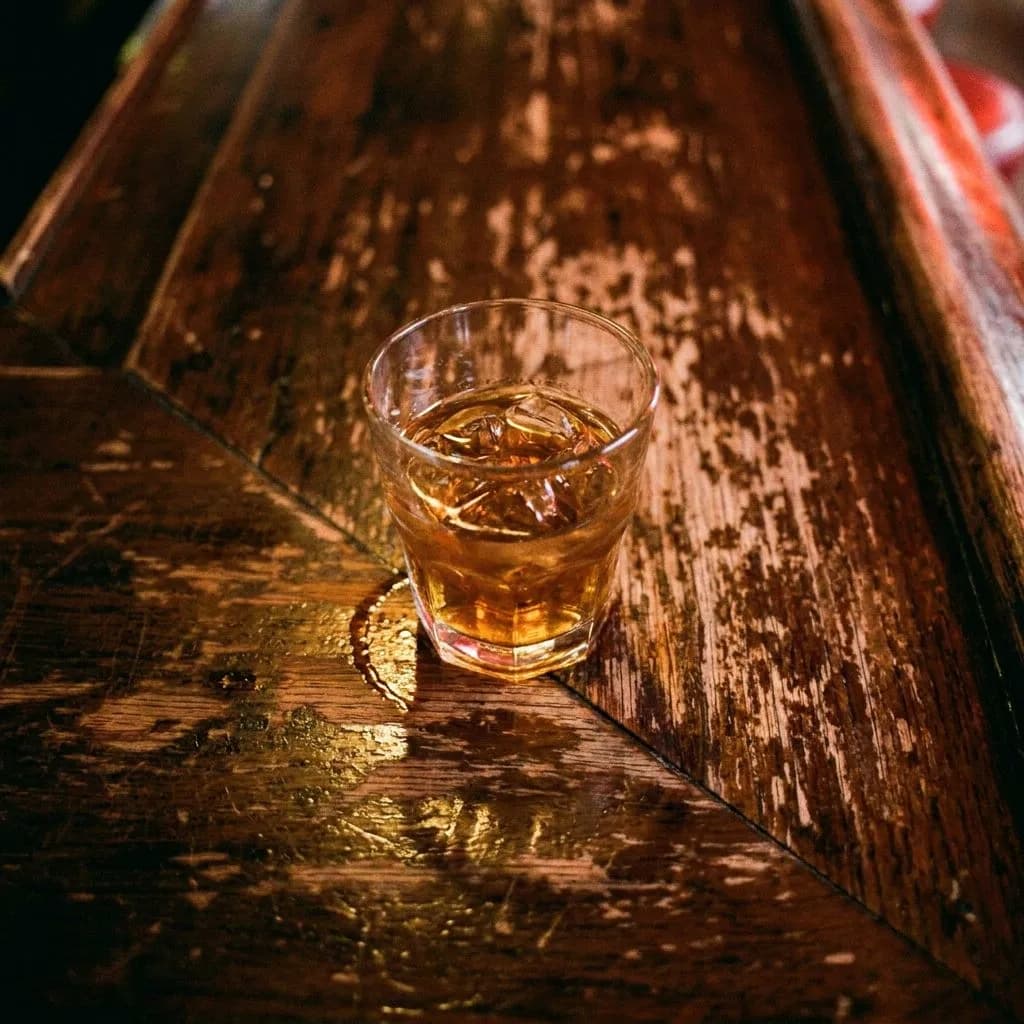
By the time the hour tips past eleven, the bar takes on a different rhythm. The after-work rush has long since cleared out, and what's left is the core—the ones who live within a few blocks, the ones who don't need to check the time. The overhead lights stay dim, and the glow from the neon sign outside becomes the dominant source of illumination, casting everything in a warm, unsteady wash. Shadows pool in the corners. The jukebox in the back corner blinks red and green, but no one's fed it coins in an hour.
The bartender leans against the register, talking to a man in a faded denim shirt about something that happened last weekend. Their voices are low, unhurried. Someone orders another round. The pour is generous, the price is low, and the transaction happens without fanfare. The cash register dings open, coins rattle, the drawer slides shut. Outside, a truck rumbles past on the avenue, but inside the sound barely registers.
The Regulars and Their Rituals
There's a man who sits at the far end of the bar every weeknight, always in the same spot, always with a glass of pilsner and a folded newspaper. He doesn't speak much, but the bartender knows his order before he sits down. There's a couple who come in late, after their shifts at a restaurant a few blocks over, still smelling faintly of fryer oil and dish soap. They take a booth near the back and nurse their drinks slowly, unwinding in increments.
The regulars don't perform their presence. They simply occupy space with the ease of people who've been coming here long enough that the bar feels like an extension of their own living rooms. They know which stool wobbles, which tap pours a little faster, which night the pierogi come out of the kitchen. They know the bartender's name, and the bartender knows theirs, and that quiet reciprocity is the bar's real currency.
The Kitchen Window and What Comes Through It
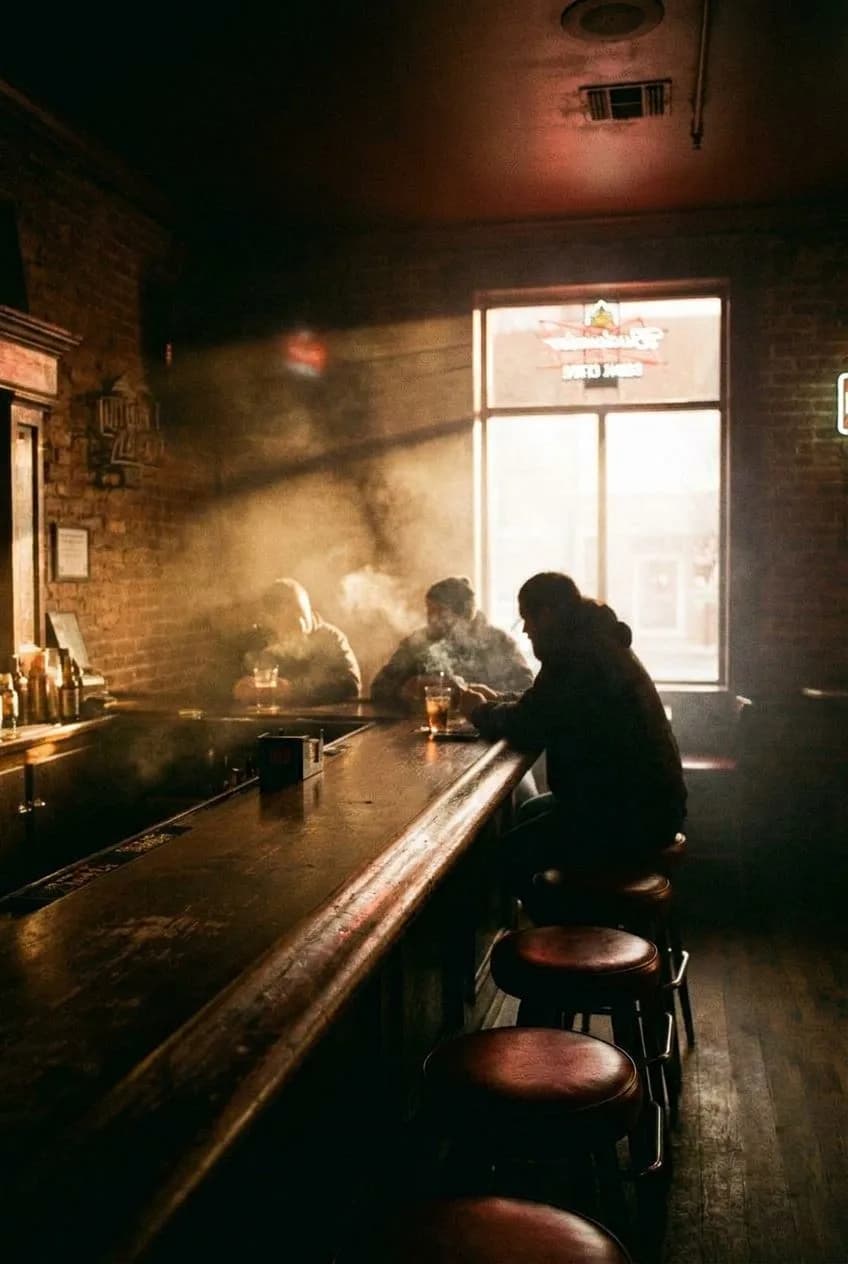
There's a small kitchen window cut into the back wall, and on certain nights—never predictable, but often enough—someone's back there frying pierogi or kielbasa. The smell drifts out into the bar, rich and unmistakable, and plates start moving across the counter. The food is simple, made without ceremony, and served on paper plates with a side of mustard or sour cream in a plastic cup. The pierogi are thick-skinned and heavy, filled with potato or cheese, edges crisped in butter. The kielbasa comes sliced, still sizzling faintly.
No one makes a fuss about it. The regulars order without looking at a menu, because there isn't one. The bartender shouts the order through the window, and a few minutes later, the plate appears. It's the kind of food that exists to accompany drinking, to slow the night down, to give hands something to do between sips.
The Walk Home Starts Here
The bar doesn't close early, but it doesn't need to stay open late to serve its purpose. By midnight, the crowd has thinned to a handful. The television still glows. The neon still flickers. The bartender wipes down the counter one more time, not because it needs it, but because the motion is part of the routine. Someone settles their tab, pulls on a jacket, pushes through the door into the cold. The walk home from here is short for most—a few blocks through quiet streets, past row houses with lights still on in upper windows, past the bodega on the corner where the cat sleeps in the window.
The bar doesn't ask for much. It doesn't try to be anything other than what it is: a place to sit, to drink, to let the night taper off at its own pace. The city feels far away in here, even though it's just outside, humming along the avenues and over the bridge. The distance is psychological, not geographic. The bar holds that distance in its dim light and worn wood, in the quiet conversations and the cold pour of vodka, in the way the regulars linger without needing a reason.
Practical Notes
The bar opens late afternoon and stays open until the small hours, though the exact closing time depends on the crowd. It's a short walk from the Greenpoint Avenue station, or a longer walk from McCarren Park if the night's warm enough to justify the detour. No reservations, no dress code, no pretense. Cash is preferred. The pierogi aren't always available, but asking never hurts. The bar's been here long enough that it doesn't advertise, doesn't need to. Those who find it tend to come back.
Tags: #TheLongWayHome #GreenpointNYC #PolishBar #DiveBarChronicles #LateNightNYC #BrooklynNights #NeighborhoodBar #LocalsOnly #NYCAfterDark #QuietCorners #CityWithinTheCity #AuthenticGreenpoint #UrbanRituals #ThirdShiftDrinks #NYCNocturnal
Sources consulted: timeout.com · atlasobscura.com · nycgo.com
Please drink responsibly. Must be of legal drinking age.
All trademarks are the property of their respective owners.
Ask Karpo first
Want to know when the crowd thins out, which stool gives the best vantage, and what's worth ordering besides the obvious?
Ask Karpo for the ideal late arrival time, where the regulars don't sit, what to drink when the bartender's generous, and a live route around Greenpoint before you head out.
Ask Karpo for more information.
Keep reading
- Live Music Near Me in the Theater District: Birdland's Nightly Jazz Sets
 Live Music Near Me in the West Village: The Vanguard's Monday Big Band
 Live Music Near Me in Park Slope: Barbès' Back-Room World Music