
A hole in the pavement on Foley Street
Walk north off Oxford Street into Fitzrovia and you'll pass the Crown & Sceptre pub without noticing what's directly in front of it: an ornate wrought-iron cage rising out of the pavement, with a flight of black-and-white tiled steps disappearing underneath. Locals have been stepping around this little cast-iron island for 130-odd years. Most still don't know it opens.
Push through the railing, take the stairs, and you land inside The Attendant — a 390-square-foot specialty coffee shop built into a Victorian gentlemen's convenience that had been largely sealed up since roughly 1960.
The kind of space that, once you clock what it used to be, you can't un-clock.
Built 1890. Closed 1960. Abandoned for fifty years.
The facts are unusually well-documented for a public toilet. This subterranean loo opened around 1890, part of London's great Victorian campaign to install dignified lavatories across the city — a mix of municipal pride, public-health engineering, and a fair bit of decorative showmanship. Walls were lined in glazed white brick tiling. Floors were laid in small green-and-white mosaic. The urinals themselves were made by Doulton & Co, the same Lambeth ceramics house responsible for sanitaryware in half the grand hotels of the Empire. The attendant on duty (hence the name) worked out of a tiny office at the bottom of the stairs.
It served gentlemen of Fitzrovia for roughly seventy years, then shut in the 1960s when the council quietly decommissioned a wave of underground toilets across London. The iron cage was locked. The space was left to dust and slow water damage. For the next fifty years, thousands of people walked past it every day and never went in.
Then, around 2011, two Londoners named Pete Tomlinson and Ben Russel took a look.
Two years, about £100,000, and a lot of scrubbing
Tomlinson and Russel had an unusual thesis: the bones of a late-Victorian loo were actually, weirdly, the bones of a very good café. A tiled, easy-to-clean room. A single controlled entrance. A compact footprint. A ceiling that forced people to sit close. And enough strange detail — the cages, the cubicle partitions, the original cisterns on the walls — to give a small coffee bar the one thing small coffee bars almost never have: character you didn't have to buy.
Reports at the time put the conversion at roughly two years and around £100,000. They stripped back decades of grime. They thoroughly sanitised the original Doulton urinals lining one wall, and laid a long wooden worktop across the top of them, turning the whole row into the café's main counter. Customers now sit there in a line of bright green stools, drinking flat whites directly above century-old Doulton porcelain. The Victorian green-and-white floor mosaic was rescued. The white brick tiling was kept. The cubicle partitions were left where they stood and became little booths. The old attendant's office became the owners' tiny back office.
The only significant edit: there are now, deliberately, no toilets on site.

What they kept vs. what they changed
This is where Attendant is genuinely interesting, and not just a stunt. A lot of 'adaptive reuse' projects gut a space and leave a vague gesture — one exposed brick wall, a plaque — to signal heritage. Tomlinson and Russel did the opposite. The logic seems to have been: if you keep 90% of the original fabric, the 10% you change reads as hospitality rather than renovation.
Kept: the iron cage, the staircase tiles, the urinals (all of them), the glazed white brick walls, the green mosaic, the cubicle partitions, the Victorian cisterns high on the walls, even an old hand-dryer.
Changed: the lighting (warm, low, deliberately unhurried), the counter surface (a slab of timber laid across ceramics), the seating (green leather to echo the floor tiles), and the use of the attendant's office (now the owners' tiny back office).
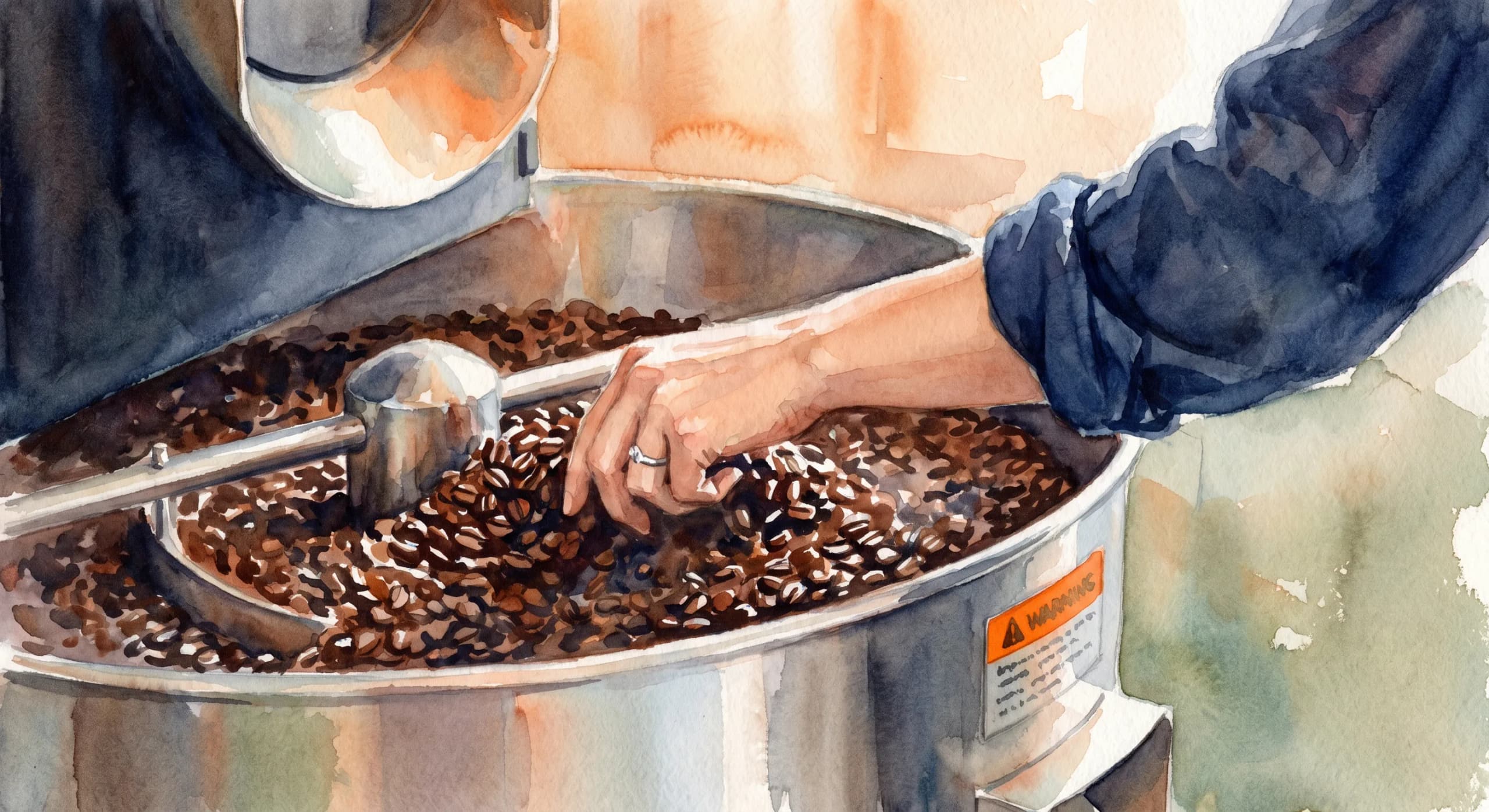
Added: a full specialty-coffee operation — a La Marzocco espresso machine, beans roasted in-house at Attendant's own London roastery, single-origin filters on V60 and AeroPress, and a rotating seasonal espresso blend.
Everything that looks Victorian is Victorian. Everything that looks like a 2020s coffee shop was added in layers on top. Nothing pretends to be something it isn't — which is, counter-intuitively, what stops the whole thing from feeling like a theme restaurant.
The coffee, to be fair, holds up
A space like this could get away with average coffee. The Attendant doesn't, which is probably why it's still here a decade in rather than having cycled through three concepts. They roast their own beans at their London roastery. The bar pulls cortados and flat whites that regularly get named among the best in central London. A pistachio latte has quietly accumulated its own cult following. The kitchen runs a short, seasonal menu — the banana bread with honey butter is the item people come back for, alongside brunch plates and sandwiches that punch well above a 390-sq-ft kitchen's weight.
The coffee program sits slightly independent of the room. Blindfold the bean and you'd still call it a solid third-wave London café. That's the point.
Why 'odd' becomes 'cozy'
Here's the trick, and it's worth naming, because it's the thing Attendant does that a lot of design-forward cafés miss.
A truly strange space makes people self-conscious — the first thirty seconds inside are always wait, am I allowed to be here? Most quirky venues lean into that by cranking the theatre: more signage, more props, more winking. Attendant does the opposite. Once you're down the stairs, the room is warm, low-lit, and quiet. The staff don't make a thing of the history. The menu is a normal, good coffee menu. Nobody tells you you're sitting on top of Doulton & Co porcelain from 1890.
The weirdness is allowed to be load-bearing but not performative. You notice the tiles, you clock the cisterns, and then you go back to your laptop. Ten minutes in, the strangeness has flipped from novelty to texture. The room doesn't need to be explained, so it stops feeling like a museum and starts feeling like a neighbourhood café that happens to have an unusually good ceiling.
That's the move: keep the bones weird, keep the service normal, and let the customer decide on their own time how much of the history they want to engage with.
Practical notes
- Address — 27a Foley Street, Fitzrovia, London W1W 6DY. Look for the iron railing outside the Crown & Sceptre pub.
- Getting there — five minutes on foot from Oxford Circus or Goodge Street tube.
- Go for — flat white, pistachio latte, banana bread with honey butter.
- Size — tiny. Around 10–14 seats downstairs. Expect to share the counter. Mornings are calmer; mid-afternoons fill up with nearby media offices.
- Photograph it, but know this — the light is low and the ceiling is lower. It reads better in person than on camera, which is honestly a compliment.
One last thing. Of the handful of Victorian underground toilets that once dotted central London, almost none survived intact. Most were filled in, converted into plant rooms, or sealed over. That there is a working one you can walk into on a Tuesday, order a cortado in, and sit above original 1890 Doulton porcelain — is a quiet piece of London luck.
Weird, on inspection, turns out to be cozy.
Tags: #londoncafe #fitzrovia #attendantcoffee #victorianlondon #adaptivereuse #specialtycoffee #londoncoffeeshops #oddedit #londonsecrets #undergroundlondon #coffeehopping #slowinterior #hiddenlondon #eastlondonvibes #thirdwavecoffee
Sources consulted: attendantcoffee.com · Atlas Obscura · Food Republic · Archilovers · Designboom
All trademarks are the property of their respective owners.