The Door Doesn't Look Like a Door
134 Eldridge Street, between Broome and Delancey. If you've walked past it, you've probably walked past it. There is no sign. There is a plain metal door, dull grey, with two small letters — AB — stamped where a peephole would sit, and a panel that says Please Wait To Be Greeted. A buzzer is hidden in the reveal of the frame. You press it. You wait.
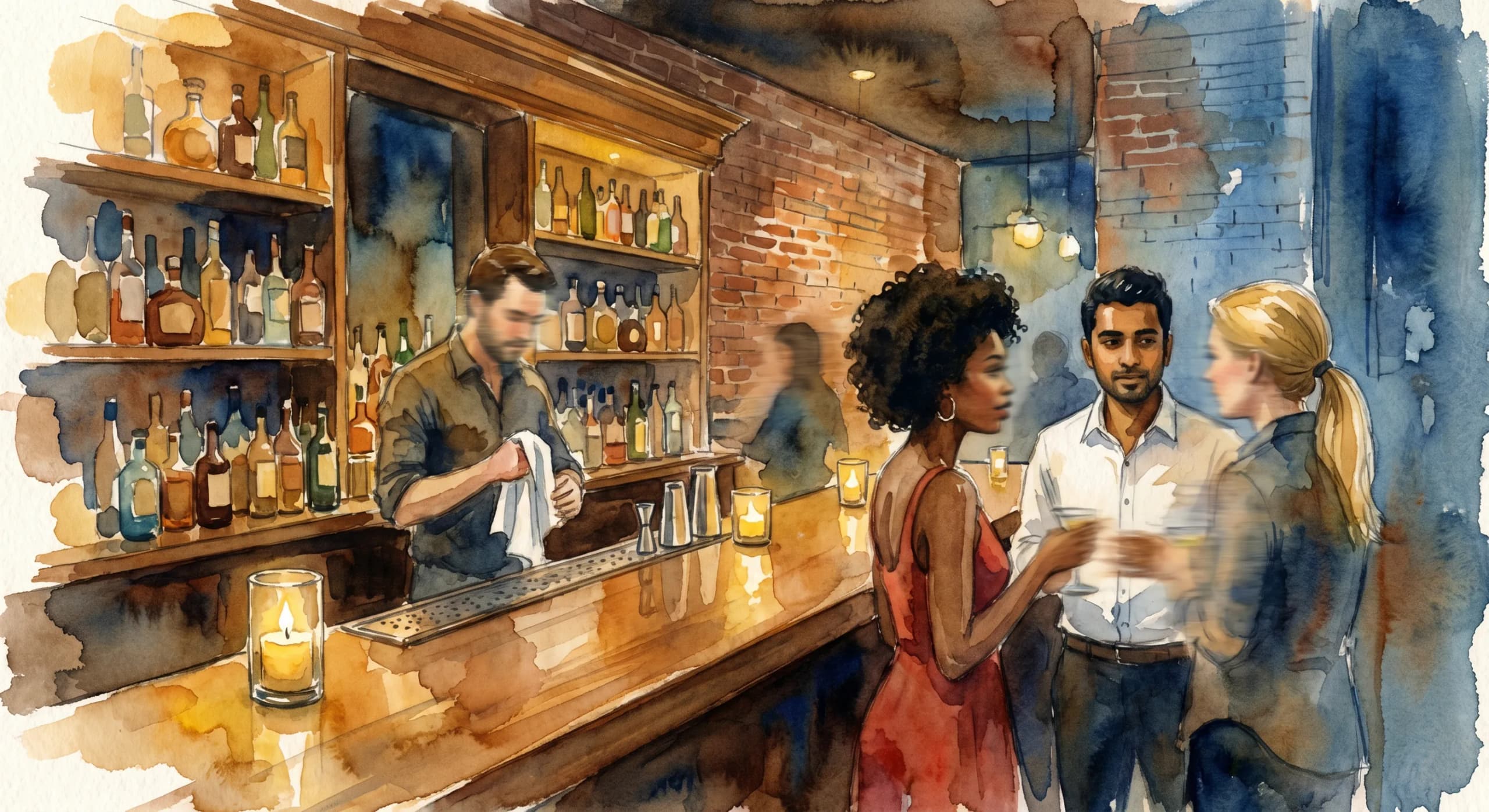
Someone opens the door, asks whether you have a reservation, and leads you past a curtain into a long, narrow room: twelve stools along a lengthened bar, a few booths at the back, twenty-eight seats in total. Dimly lit, pressed tin, quiet. No music fighting you. No menu on the counter. No wine list. Nothing to read.
Most new guests, at this point, realise they have no idea what to order.
Tell the Bartender What Kind of Night It Is
This is the part that catches people out. The bartender stands in front of you with a small nod and says, more or less: so what are we drinking tonight?
The correct answer is not the name of a cocktail. The correct answer, at Attaboy, is a sentence about your evening. Something light, something boozy, something bitter, something that tastes like a ginger snap, something to match the weather, something to wake you up, something to wind you down. Any of those works. Specificity helps; so does honesty.
Sam Ross, one of the two owners, has joked that his original mentor Sasha Petraske ran without menus "because Sasha couldn't operate a laser printer." The line is affectionate, but the system has long outlived the joke. Twelve years in, it is the core product.
How a Speakeasy Inherited a Speakeasy
To understand Attaboy you have to talk about the bar it replaced. Milk & Honey opened at 134 Eldridge on 31 December 1999 — Sasha Petraske's genre-defining LES speakeasy, a by-reservation-only, four-bar-stools, no-jeans, no-shouting temple of the early cocktail revival. It shaped a generation of American bartenders and, by extension, most of what your local bar now calls a Negroni.
Petraske closed the Eldridge room in December 2012 and moved the name uptown. Two of his alumni, Sam Ross and Michael McIlroy, took over the lease within weeks. In the turn-of-the-year days between late 2012 and early 2013, they rebranded it Attaboy, pulled out the front booths, extended the bar, and kept almost everything else. The door is new. The rhythm is not.
Ross is the man behind the Penicillin (2005) and the Paper Plane (2008) — two cocktails that now sit, matter-of-factly, on menus from Seoul to Copenhagen. McIlroy's Greenpoint, a whiskey / yellow Chartreuse / sweet vermouth number, is the quieter modern classic of the pair. Handing them the bar that had already trained a generation was continuity, not succession.
What They Actually Ask You
The ordering ritual, once you relax into it, is a four-question interview delivered conversationally.
Spirit. "Gin, whiskey, tequila, mezcal, something else, anything but?" This is where most guests over-think it. Just answer what you feel like.
Style. "Stirred or shaken? Up or on the rocks? Clean, or riffed?" Translation: do you want something that looks like a martini, or something that looks like a sour.
Flavour. This is the interesting one. The vocabulary the bartenders respond to is not the language of cocktails — it is the language of weather. Brisk. Lush. Bitter. Grassy. Smoky. Bright. One regular we sat next to just said "autumn"; the bartender nodded and went to work.
Anything you hate. Banana. Cilantro. Coconut. Fernet. Egg white. Say it now, before the drink happens.
The drinks, when they arrive, are around $20 each — not a secret, just never printed. They come out in about four minutes.
Our Three Drinks, and What We Said to Get Them
We went in on a cold Tuesday, around seven. Here is what we asked for, and what we got.
Drink one — "Gin, stirred, brisk like the weather." What arrived was a coupe of pale straw, a slim strip of grapefruit peel crossed over the rim. Gin, a bone-dry vermouth, one edge of a bitter orange liqueur, a hint of salt. It tasted like 5pm walking out of a building into wind. We asked what it was. The bartender shrugged and said, "Whatever that was." We looked it up later: a relative of a Tuxedo, reworked.
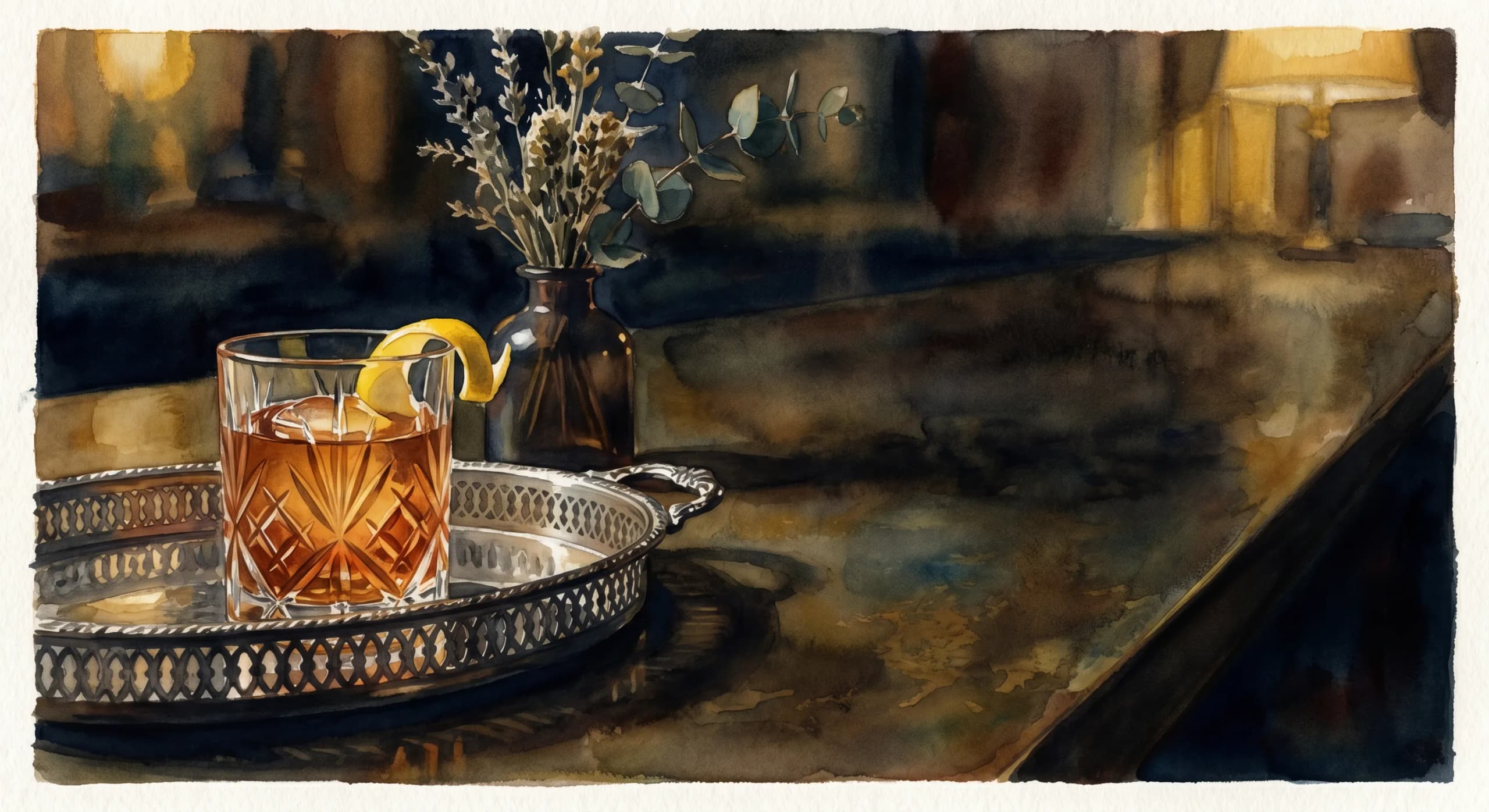
Drink two — "Tequila, rocks, a little smoky, not sweet." A rocks glass with a big cube. Reposado tequila, a rinse of mezcal, a restrained dose of sweet vermouth, a lemon twist lit briefly before it landed. A Tequila Old Fashioned with a campfire walking past. Drier than expected; easier to sit with than the first.
Drink three — "Whiskey. Warm me up. Dealer's choice." This one we let him run. The glass came back with rye, a spoon of ginger liqueur, fresh lemon, honey, a scorched peel of something citrus. Recognisable, in hindsight, as a Penicillin relative — Ross's own 2005 invention, paraphrased into ginger-snap territory. It tasted exactly like the sentence we had ordered.
What the No-Menu Actually Trains You To Do
By drink three you notice something. You are not ordering cocktails anymore. You are narrating a night, and the bar is filling in the prop department.
That is the quiet point of the whole system. A menu is a list of answers. Attaboy removes the list and leaves the question — what kind of night is this? — for you to answer. It forces a level of self-report most NYC bars strenuously avoid. You are asked, three or four times across an evening, to say out loud what you actually want. That turns out to be the rare thing.
The bartenders, for their part, are doing classical improvisation: listen, accept, offer. No bartender at Attaboy will ever tell you that you ordered wrong, because you can't. You can only describe a mood. They build it.
In a roundabout way, the room is still running the programme that opened on this corner on New Year's Day 2000 — the quiet lighting, the good ice, the listen-first service. Twelve years into its current name, Attaboy is still asking the better question.
Practical notes
- Address: 134 Eldridge Street (between Broome and Delancey), Lower East Side, Manhattan
- Getting there: F/J/Z to Delancey–Essex; B/D to Grand Street; walk two minutes.
- Go for: the ordering ritual, a Penicillin, a Greenpoint, and the door itself.
- Size / timing: 28 seats, 12 at the bar. Open daily 5pm–3am. Show up before 6.30pm for a walk-in stool; otherwise expect a wait on the sidewalk.
- Photograph it, but know this: the room is deliberately dim and the bartenders won't love a flash. One phone shot of your drink is fine; anything more, expect a polite word. Average cocktail ~$20.
The best compliment you can pay a bar is to stop describing drinks and start describing your evening. Attaboy makes you do it on the first visit. Twelve years in, that is still the trick.
Tags: #attaboy #attaboynyc #speakeasybar #craftcocktails #nomenubar #lowereastside #nycbars #eldridgestreet #manhattannightlife #lesnightlife #oddedit #bartendersknowbest #moodpairing #bespokecocktails #classicrevival
Sources consulted: attaboy.us · en.wikipedia.org · timeout.com · insidehook.com · imbibemagazine.com · punchdrink.com · theworlds50best.com · diffordsguide.com
All trademarks are the property of their respective owners.
Please drink responsibly. Must be of legal drinking age.