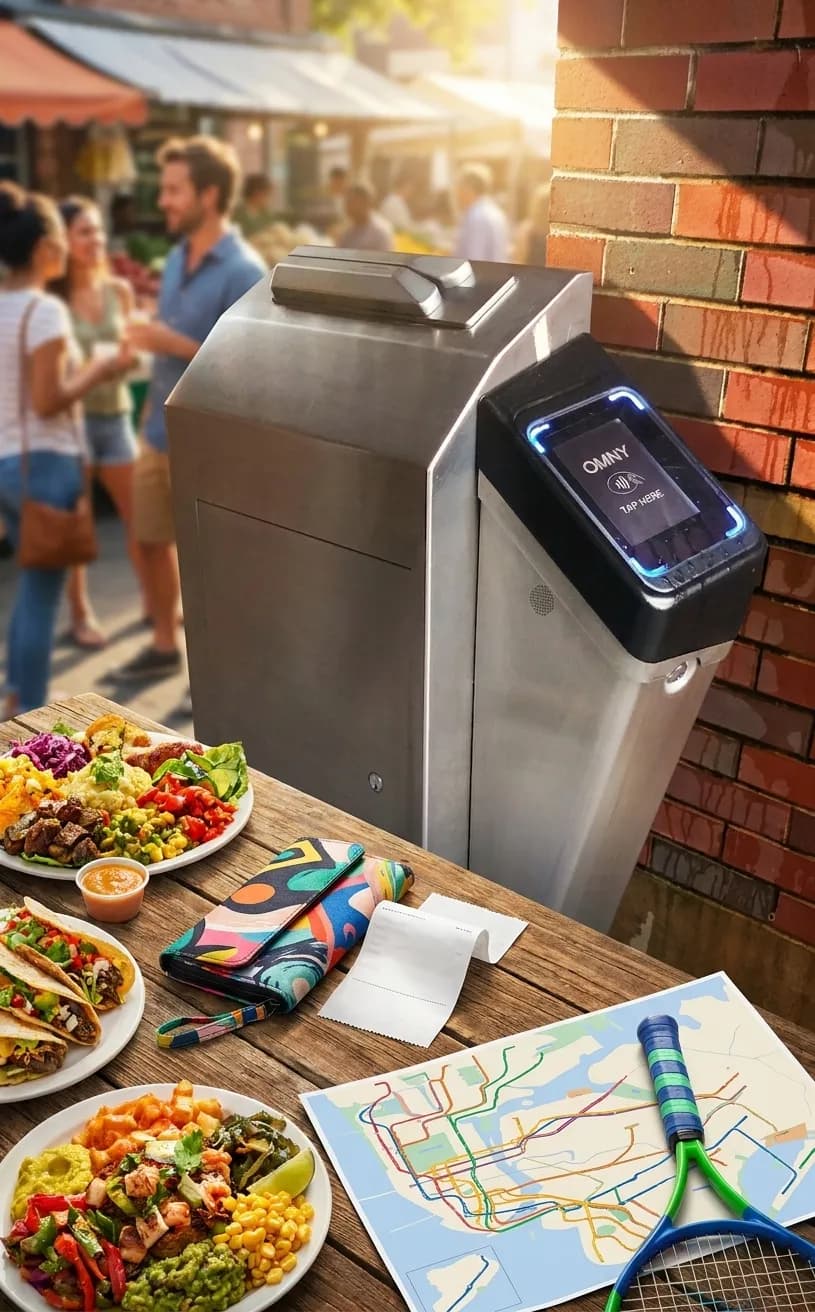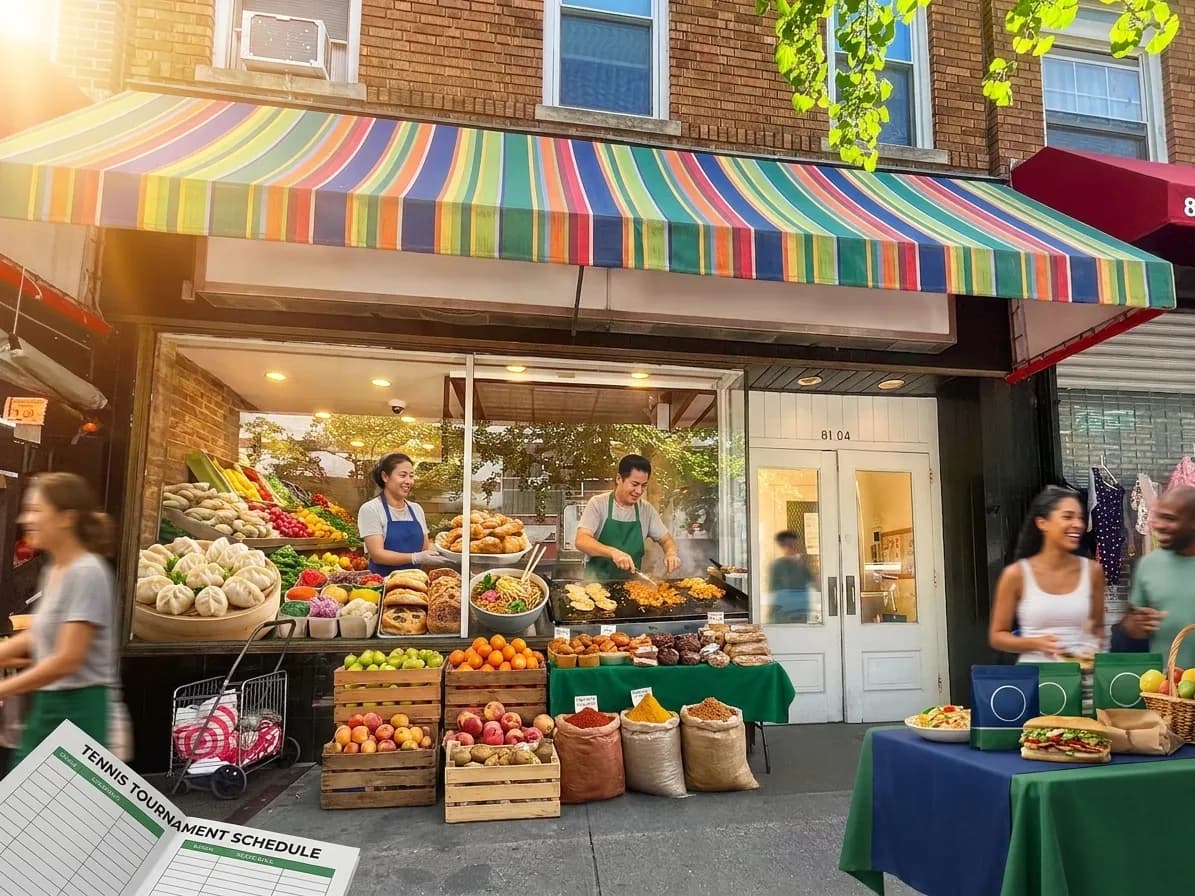
Most visitors treat the US Open as a day trip—drive in, watch tennis, leave. But if you're traveling to Flushing Meadows Corona Park for a session during the 2026 tournament, you have a rare excuse to spend 72 hours in Queens, the borough that feeds, houses, and moves more New Yorkers than any other. This itinerary assumes you'll attend one session at the Billie Jean King National Tennis Center and use the remaining time to eat well, walk interesting blocks, and understand why Queens feels less like a single neighborhood and more like a collection of small cities that happen to share a subway line.
Text Karpo with your US Open session time and Queens starting point, and we’ll turn this queens itinerary idea into a practical local plan.

If you're flying into LaGuardia or JFK, both airports sit in Queens, which makes your first afternoon straightforward. Check into your hotel—Flushing, Long Island City, and Astoria all offer lodging options—then head to downtown Flushing for an early dinner. Flushing's dining scene reflects decades of immigration from China, Korea, Taiwan, and beyond, so you'll find hand-pulled noodles, hot pot, Korean barbecue, and dim sum within a few blocks of the Main Street subway station. Walk Roosevelt Avenue and Main Street to get oriented, then choose a restaurant based on what looks busy. Crowds at dinner hour on a weeknight usually indicate both quality and turnover.
After dinner, walk through Flushing Meadows Corona Park if daylight permits. The Unisphere—the steel globe left over from the 1964 World's Fair—sits just south of the tennis center and makes a useful landmark. The park spans 897 acres, so don't attempt to cover it all tonight. A short loop around Meadow Lake or a look at the Queens Museum from the outside will give you a sense of scale without exhausting you before day two.
Start day two with breakfast in Jackson Heights, a neighborhood known for its South Asian and Latin American communities. The 74th Street–Roosevelt Avenue subway station puts you at the center of the action. Walk along 37th Avenue or Roosevelt Avenue to find Colombian bakeries, Tibetan momos, Bangladeshi sweets, and Ecuadorian breakfast plates. The density of small businesses here is remarkable, and you'll notice that English is often the third or fourth language on storefront signs.
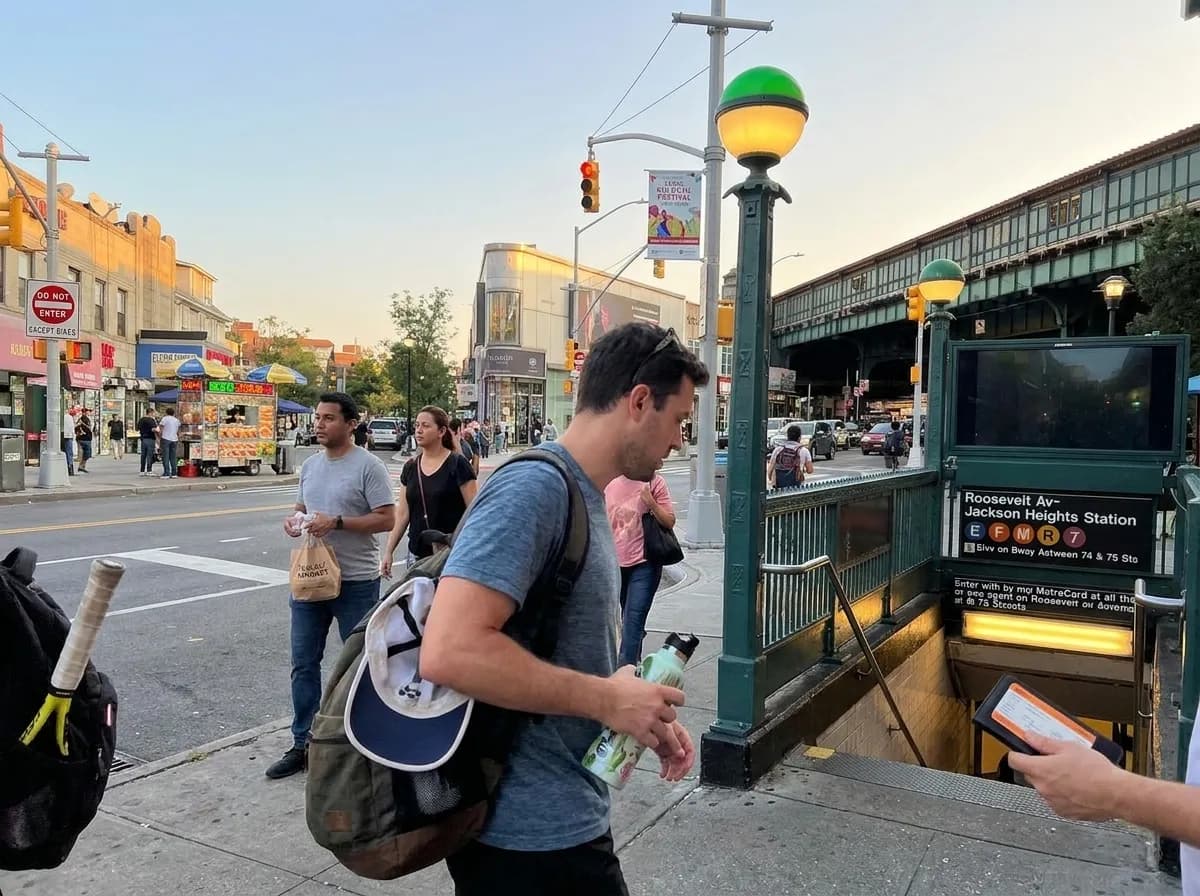
If you have time, walk a few blocks south to the Jackson Heights Historic District, where garden apartments from the 1920s and 1930s line quiet streets. The contrast between the commercial energy of Roosevelt Avenue and the residential calm of these blocks illustrates how Queens neighborhoods layer different eras and uses on top of each other. Return to the 7 train and ride east toward Flushing, watching the neighborhoods shift as you pass through Woodside, Elmhurst, and Corona.
Plan to arrive at the Billie Jean King National Tennis Center well before your session starts to allow time for security and orientation. The USTA Billie Jean King National Tennis Center is accessible via the Mets–Willets Point station on the 7 train. Review the official US Open transportation directions and prohibited-items guide before you leave your hotel—security lines move faster when you know what to leave behind. Bags larger than specified dimensions are not permitted, and outside food and beverages are restricted.
Once inside, your session ticket grants access to the grounds, including the outer courts, food vendors, and sponsor areas. If you hold a grounds pass rather than a reserved seat for Arthur Ashe or Louis Armstrong Stadium, you can move between courts and catch multiple matches. Check the official event schedule closer to your visit for session times and matchups, as the tournament schedule is released in stages and subject to change.
After your session, exit the tennis center and take the 7 train west one or two stops to Corona or Elmhurst. Both neighborhoods sit close enough to Flushing Meadows that you won't spend much time in transit, and both offer excellent dining. Corona's commercial strips along Roosevelt Avenue and Junction Boulevard feature Mexican tacos, Salvadoran pupusas, and Chinese-Ecuadorian chifa restaurants. Elmhurst, particularly around Broadway and Whitney Avenue, is known for Thai, Malaysian, and Chinese regional cuisines.
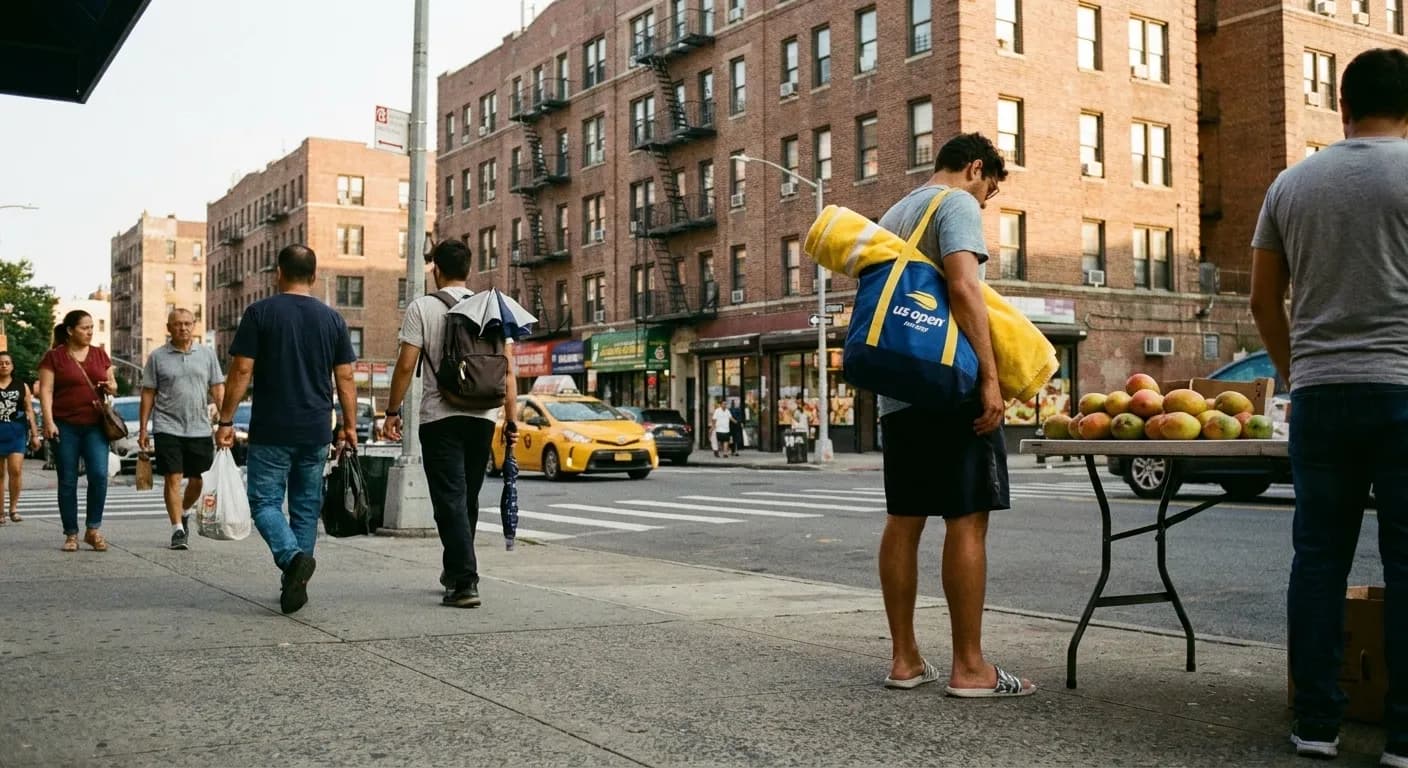
Choose a restaurant that looks full but not impossibly crowded, and expect to wait a few minutes for a table. This is a good sign. If you're unsure what to order, ask the server what's popular—most kitchens have a specialty that regulars request by name, even if it's not highlighted on the English menu.
Spend your final morning in Long Island City or Astoria, both of which offer a different view of Queens than the immigrant commercial corridors you've explored so far. Long Island City has transformed over the past two decades into a mix of high-rise residential towers, art galleries, and waterfront parks. Gantry Plaza State Park provides views of the Manhattan skyline across the East River, and the area around Court Square and Jackson Avenue includes coffee shops and brunch spots that cater to the neighborhood's newer residents.
Astoria, a few stops north on the N or W train, retains more of its mid-century Greek character alongside growing Egyptian, Bangladeshi, and Brazilian communities. Steinway Street and 30th Avenue are the main commercial strips, with bakeries, cafés, and weekend markets. If you're interested in museums, the Museum of the Moving Image sits on 36th Street and offers exhibits on film, television, and digital media. Verify current hours, admission, and access policies on the museum's official website before you go.
Depending on your departure time, you may have room for one more meal or a final walk. If you're leaving from LaGuardia, consider a last stop in Astoria or Jackson Heights, both of which are reasonably close to the airport by taxi or rideshare. If you're departing from JFK, Flushing or Jamaica are more convenient. Use the extra time to revisit a restaurant you enjoyed earlier in the weekend, or try a cuisine you haven't tasted yet—Queens has more than 138 languages spoken at home, and the food reflects that density.
- The 7 train runs frequently between Manhattan and Flushing, and it connects most of the neighborhoods in this itinerary. Check the MTA service status before each trip, especially on weekends when maintenance can affect service.
- Queens restaurants often operate on different schedules than Manhattan establishments. Some open early for breakfast, close mid-afternoon, and reopen for dinner. Verify current hours online or by phone if you're planning around a specific meal.
- The US Open grounds are outdoors, and weather in late August and early September can vary. Bring sunscreen, a hat, and a light rain layer. Review the official visitor guide for current umbrella and weather-gear policies.
- If you're staying in Flushing during the tournament, book accommodations early. Hotels near the tennis center fill quickly as the event approaches.
- Cash is still useful in many Queens restaurants and markets, especially smaller family-run businesses. ATMs are common, but carrying some bills will speed up transactions.
- The US Open visitor A-Z guide on the official website covers accessibility services, bag policies, food options, and other logistics. Review it before your session so you know what to expect.
This itinerary assumes you're comfortable using public transit, walking several miles over three days, and eating in neighborhoods where English may not be the primary language. If that describes you, 72 hours in Queens will give you a ground-level view of how New York actually lives, works, and eats—far beyond the postcard version of the city. Recheck transit, museum, and restaurant details closer to your visit, and leave room in your schedule for detours. The best meals and moments in Queens are often the ones you didn't plan.
Tags: #USOpen2026 #Queens #FlushingMeadows #KarpoFinds #Karpo #72hours #NewYorkLocal #TennisTravel
Sources consulted: usopen.org — Official event schedule · usopen.org — Official visitor A-Z guide · usopen.org — Official transportation directions · usopen.org — Official prohibited-items guide · NYC Tourism — Queens · MTA — Official service status
All trademarks are the property of their respective owners.