San Francisco's reputation as a late-night city is largely inherited from a different era. The genuine all-night list here is short — shorter than in Los Angeles, far shorter than in New York — and it got shorter again over the last few years, with several long-running institutions cutting back or closing. What remains is not random. Almost every kitchen still running at 3am in this city is running for a specific group of people who are awake at 3am, and knowing who those people are tells you where to go.
A city this small has a short late list, and knowing it is mostly about knowing who is awake — hospital shifts, market workers, bar staff going home. Tell Karpo the hour and it will send you where a kitchen is genuinely still on.
The hospital and hotel districts
Wherever there is a large hospital running shifts or a cluster of hotels with night staff, something stays open. These are not destinations and they do not appear on late-night listicles, but a counter serving nurses coming off a shift at two in the morning is reliable in a way that a trendy late-night pop-up is not. The food is plain and the room is bright. Both are the point at that hour.
Chinatown and the Richmond, on their own schedule
The city's Chinese kitchens run the most durable late service in San Francisco, particularly the noodle and congee counters, several of which serve well past midnight and open again very early for the produce and restaurant trade. Congee at 5am in this city is a real and slightly wonderful option, and it is one of the few things here that is genuinely better late than it is at lunch.
The taquerías, which are the practical answer
The Mission's taquerías are what most people actually eat after midnight in San Francisco, and a handful run very late on weekends. They are also the format best suited to the hour: fast, hot, cheap, and served over a counter to people on foot, which matters in a city where a large share of late-night eaters do not have a car. Weekday hours are considerably shorter than weekend ones, which is the most common way people get caught out.
The diners and the bar-adjacent kitchens
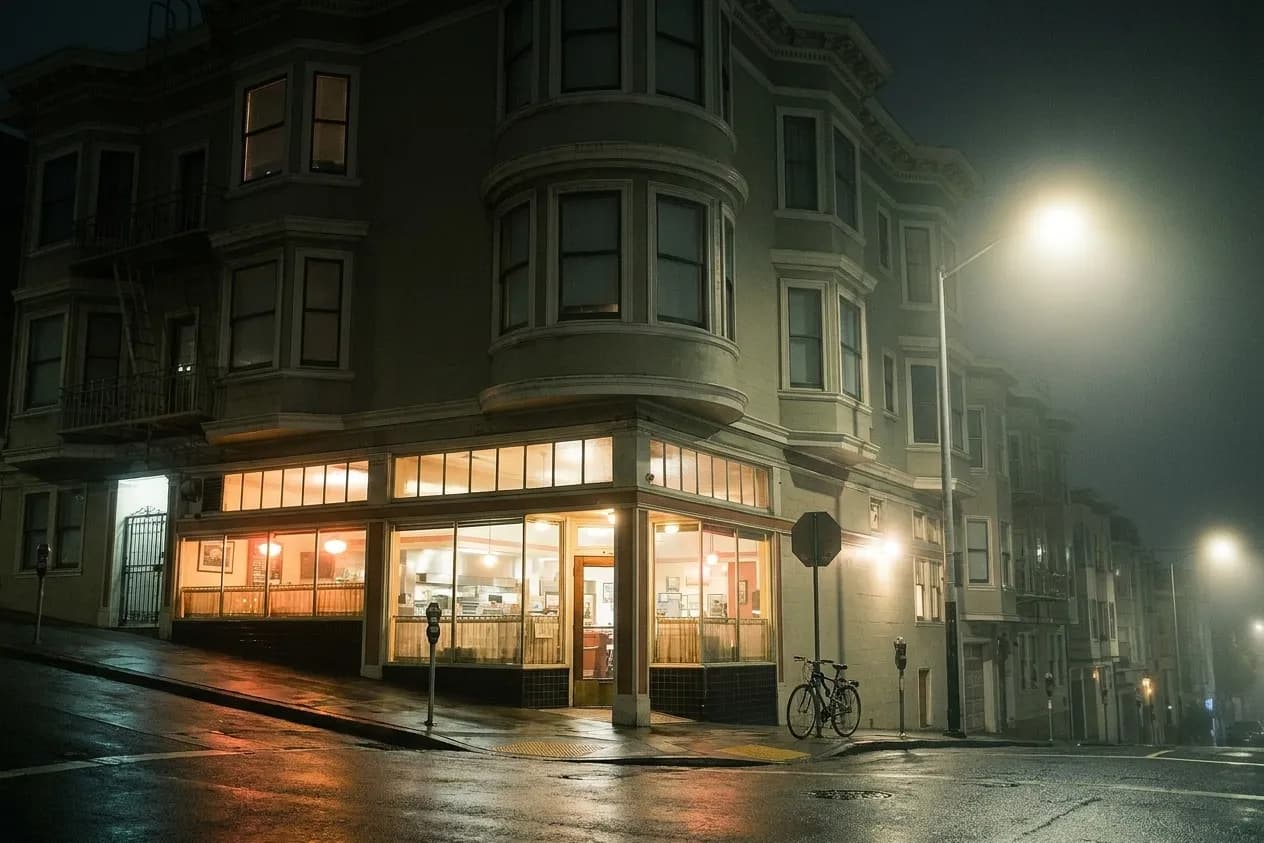
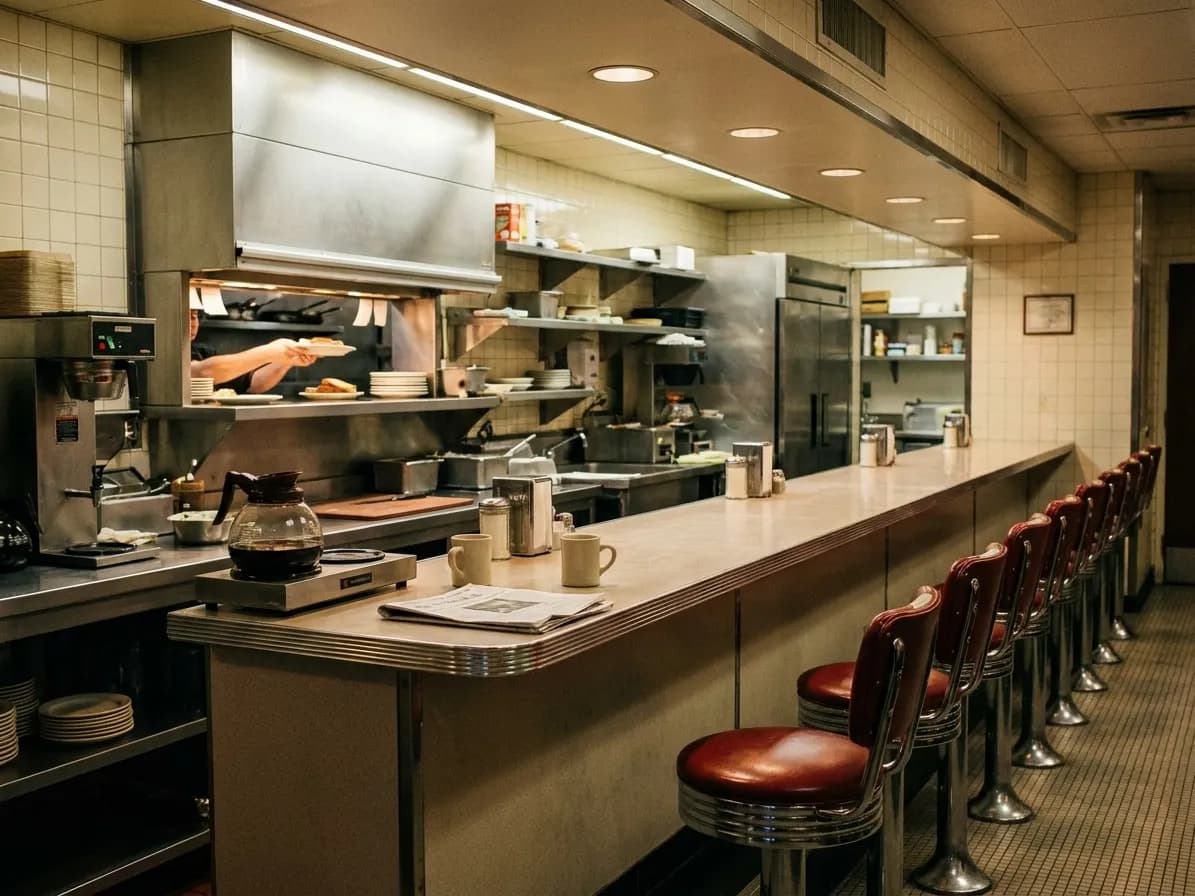
A small number of diners and bar kitchens hold the classic all-night role — the ones that survive are near dense nightlife, usually with a counter, and they get very busy for a narrow window between about 1.30 and 2.30 when the bars empty. If you arrive inside that window expect a wait; arrive at 3.15 and you will have the room to yourself with the same kitchen.
What is genuinely not available
Being honest is more useful than padding the list: after about 2am, most neighbourhoods in San Francisco have nothing at all. The Sunset, the outer Richmond, Bernal, Noe, Potrero and most of the residential west and south of the city go entirely dark. If you are in one of those and hungry at 2.30, the realistic options are a 24-hour pharmacy or fuel station, a delivery order with a long wait, or a rideshare to the Mission or downtown. Planning for that before you go out is better than discovering it.
The reliable habit
Decide where your late food is coming from before the evening starts, not after. In a city with a thin late list, the useful move is to choose the neighbourhood you end the night in partly on the basis of what is still open there. Hours at the late end change frequently and listings lag badly, so confirm on the day.
Why the late list got shorter
Worth being straight about the cause, because it explains what to expect. Staffing is the binding constraint: a night shift requires a premium, and in a city with this cost of living the arithmetic on a quiet 3am service stopped working for a lot of operators. Several long-running institutions cut their overnight hours during the pandemic and never restored them, and a few closed entirely.
The practical consequence is that listings are unusually unreliable in this category, because a restaurant that ran all night for forty years still carries that reputation and frequently still shows those hours online. Treat any 24-hour claim in San Francisco as needing verification rather than as a fact, and expect weekend hours and weekday hours to differ more here than in a larger city.
What to do when nothing is open
Worth having a plan, since this happens more here than people expect. A 24-hour supermarket or pharmacy will have something edible and is far more widely distributed than any restaurant. Convenience stores in the denser neighbourhoods run late and some run all night. And a number of hotels serve non-guests at the bar later than the restaurants around them, which is an under-used option downtown.
The other move is to plan the end of the night rather than the start. Buying something at eleven to eat at two is unglamorous and works perfectly, and it is what most people who are regularly out late in this city quietly do.
Tags: #SanFrancisco #SF #BayArea #NightsOut #BarHopping #AfterDark #SFEats #SFGuide #ExploreSF #SFLocal #SFWeekend #SFNights #SFFood #SFLife
Sources consulted: sfgate.com · sf.eater.com · sfchronicle.com
All trademarks are the property of their respective owners.
Ask Karpo first
Karpo is a proactive AI assistant that lives in iMessage. Ask it what is open at this hour and it will keep the answer to kitchens that really are.