The Lower Manhattan skyline is once again evolving with the renewed construction of 2 World Trade Center. This significant project, nearly 25 years after the events of September 11th, marks the final major commercial tower in the World Trade Center campus redevelopment. Expected to rise to an impressive 1,226 feet, this supertall skyscraper will not only house American Express's new global headquarters but also significantly alter the visual landscape of the Financial District. Its design, emphasizing sustainability and modern workspaces, reflects a forward-looking vision for urban development, solidifying the World Trade Center's role as a vital commercial and cultural hub for New York City.
Want to navigate the evolving cityscape and understand its broader implications? Text Karpo "2 WTC" for real-time updates on construction impacts and nearby attractions.
A New Landmark for Lower Manhattan
The 2 World Trade Center tower is poised to become a defining feature of the Lower Manhattan skyline. Rising to 1,226 feet with 55 stories, it officially falls into the "supertall" category, making it one of the tallest structures in the United States, though it will not surpass the 1,776-foot One World Trade Center. Designed by Foster + Partners, the building features a sleek, glazed rectangular form with three open-air terraces and six landscaped corner gardens, integrating greenery into its urban profile. This design represents an evolution from earlier concepts, including a previous iteration by Bjarke Ingels Group, to a final hybrid vision that blends modern aesthetics with functional green spaces.
This project is more than just a building; it's the final commercial component in the extensive World Trade Center campus redevelopment, aiming for completion by 2031. Its strategic location, bounded by Vesey, Fulton, Church, and Greenwich Streets, ensures its visibility and integration into the bustling Financial District. The tower will offer nearly two million square feet of usable space, predominantly for offices, capable of accommodating approximately 10,000 workers. American Express, serving as the anchor tenant, plans to make it their new global headquarters, highlighting the building's role in attracting major corporations and reinforcing the area's commercial vitality.
Sustainability and Smart Design at the Forefront
In line with contemporary urban development trends, 2 World Trade Center is being constructed with a strong emphasis on sustainability and advanced technology. The tower aims for LEED certification, a standard that has become a baseline expectation for major commercial projects, indicating a commitment to environmentally responsible design and operation. American Express has stated that the building will incorporate smart building technology and energy-efficient systems throughout its design, reflecting a move towards more intelligent and eco-conscious infrastructure within the city.
The building's design also integrates flexible floor arrangements and modern workspaces to support its large workforce. The inclusion of over an acre of outdoor space across its stepped terraces further underscores a commitment to employee well-being and green urban design. These features contribute to a modern, efficient, and healthy working environment, aligning with the evolving needs of businesses and their employees in a post-pandemic world.
Economic Impact and Job Creation
The construction of 2 World Trade Center is projected to have a significant positive impact on New York City's economy and job market. The project is expected to create over 3,200 direct and indirect construction-related jobs, providing substantial employment opportunities within the metropolitan area. This influx of jobs supports the local economy and contributes to the city's broader recovery and growth, demonstrating the scale of investment in urban infrastructure.
Beyond direct job creation, the development is anticipated to inject nearly $5.9 billion into New York City's economy and $6.3 billion into the economy of New York State. This economic stimulus extends beyond the construction phase, as the fully operational tower will house a large workforce, further contributing to local businesses and services. The project reinforces the World Trade Center's status as a critical center of commerce, solidifying its role in the region's economic landscape.
A Journey Through Design Evolution
The path to the current design of 2 World Trade Center has been marked by several iterations and significant changes. Initially, in 2005, Foster + Partners unveiled a design featuring four columns culminating in a diamond crown. However, this was later replaced by a striking terraced concept from Bjarke Ingels Group in 2015, driven by efforts to secure anchor tenants like Fox Corporation. The project then cycled through various proposals as Silverstein Properties sought to finalize an anchor tenant, eventually bringing Foster + Partners back to the drawing board.
The current design, based on recently released renderings, is a hybrid, merging the stacked massing of some previous proposals with a staggered crown. This evolution highlights the complex process of major urban architectural projects, often adapting to changing tenant needs and economic conditions. The final design, with its glazed exterior and integrated green spaces, represents a culmination of these efforts, aiming to create a building that is both architecturally significant and functionally modern.
Construction Timeline and Milestones
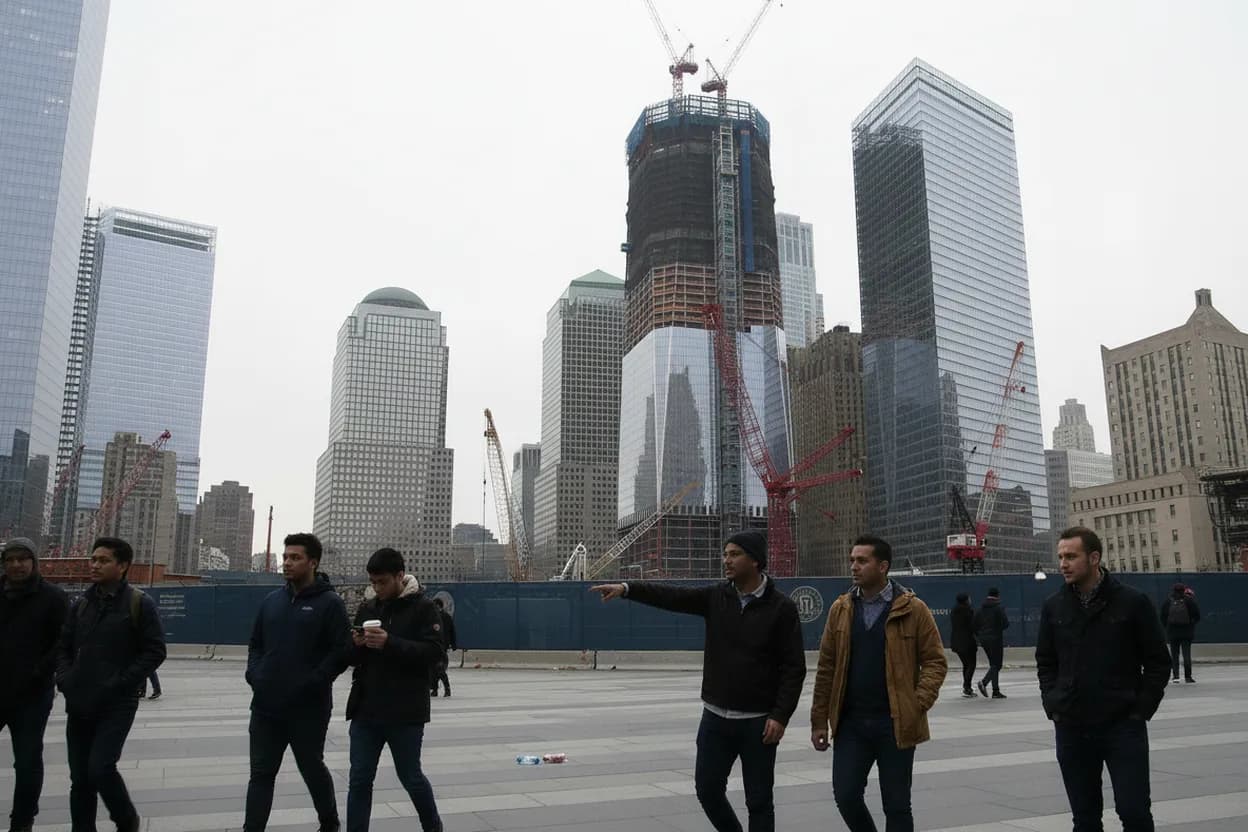
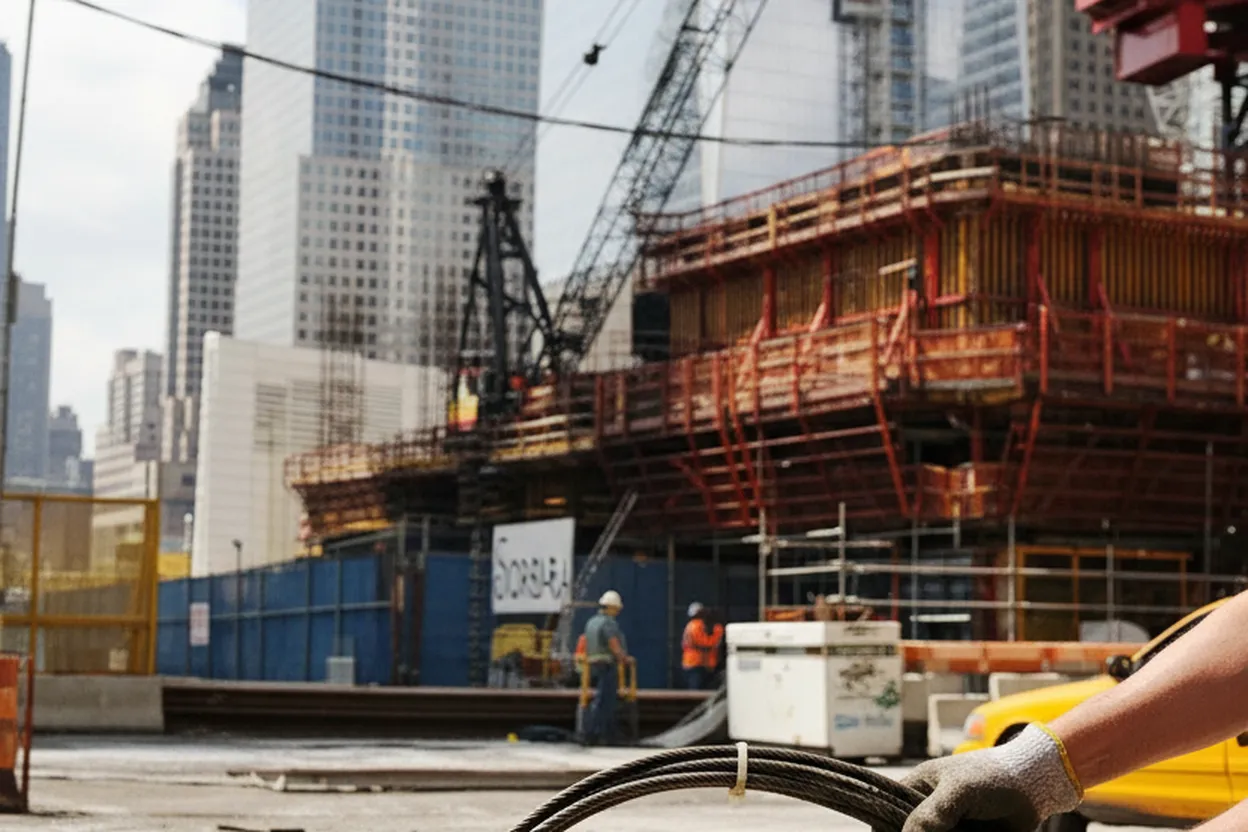
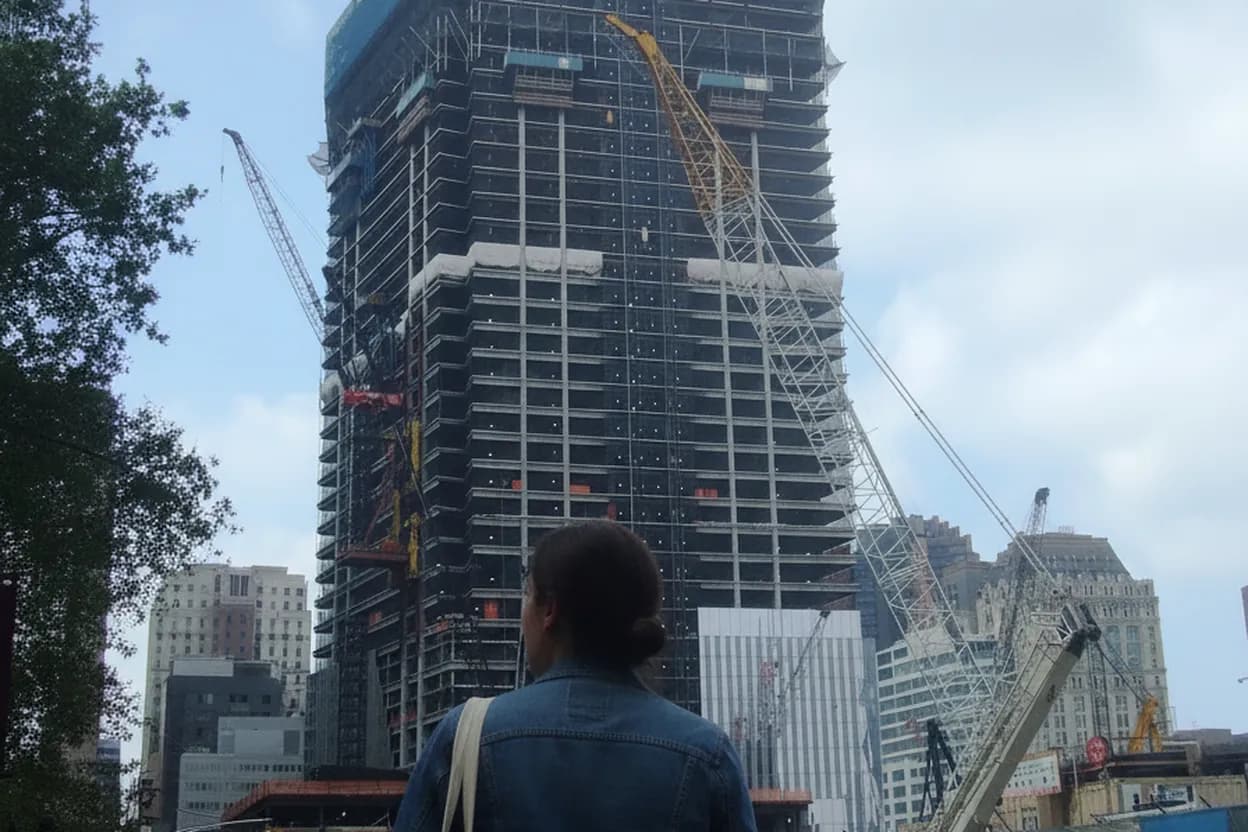
The journey of 2 World Trade Center has been a lengthy one, with initial site excavation beginning in 2008 and below-grade construction completed between 2010 and 2013. The project then sat dormant at street level for nearly 14 years, with the unfinished base covered by corrugated metal sheds. Construction activities officially resumed in spring 2026, following American Express's commitment as the anchor tenant, with a ceremonial groundbreaking held on July 9, 2026.
The project is now entering its vertical development phase, with completion anticipated in 2031. Current work involves filling deep voids with new steel rebar for inner core walls and reconfiguring existing ductwork. Visitors to the World Trade Center campus may observe these construction activities, though currently, there are no significant impacts on pedestrian access or public areas. Any future changes to public access will be communicated by the World Trade Center management.
Impact on the Urban Fabric and Public Spaces
The addition of 2 World Trade Center will further integrate with and enhance the surrounding public spaces of the World Trade Center campus. Its design emphasizes connectivity, with its base featuring a vast lobby enclosed in soaring glass walls, similar to those found in 3 and 4 World Trade Center. This design facilitates a seamless flow between the building and the surrounding urban environment, including the Oculus Transportation Hub.
The new tower will complete the site's master plan, strengthening the campus as a global destination for business, culture, and community. Its presence is expected to reinforce the World Trade Center's role as one of the country's most important centers of commerce and transportation, attracting visitors and businesses alike. The project stands as a testament to New York City's commitment to moving forward and rebuilding, symbolizing resilience and future growth.
Navigating the Changing Landscape: Practical Advice
For those planning to visit or work within the World Trade Center area, it's advisable to factor in the ongoing construction of 2 World Trade Center. While no significant disruptions to visitors are currently reported, large-scale urban development projects can sometimes lead to temporary changes in pedestrian pathways, traffic patterns, or public transportation access. Therefore, checking official sources before your visit is a prudent step.
Before heading out, verify any potential impacts on pedestrian access, transportation, or public areas directly with the Port Authority of New York and New Jersey or the World Trade Center's official website. This will ensure a low-friction experience, allowing you to fully appreciate the evolving urban landscape and the broader significance of 2 World Trade Center without unexpected delays. Observe any posted signage around the construction site for real-time local advisories.
Tags: #2WorldTradeCenter #NYCSkyline #FinancialDistrict #ManhattanDevelopment #UrbanPlanning #Architecture #Sustainability #AmericanExpress #SilversteinProperties #FosterAndPartners #NYCConstruction #AskKarpo #BeforeYouGo #WTC
Sources consulted: Source 1: yankodesign.com · Source 2: newyorkyimby.com · Source 3: newyorkyimby.com · Source 4: explorewtc.com · Source 5: newatlas.com
All trademarks are the property of their respective owners.
Ask Karpo first
Tell Karpo your date, group size, budget, and starting neighborhood. We’ll check current access, timing, transit, and the cleanest plan for 2 World Trade Center before you head out.