Wellness / Collection
You're Allowed to Leave: A Crowd-Anxiety Plan for SummerStage in Central Park
Edge positions, exit sightlines, and the quiet math of "I can walk out whenever I want" — a plan for going to open-air concerts in Manhattan without forcing yourself to stay.
 Kate Mercer
Fear is information, not instruction. Your body telling you "this is a lot of people" is data. It is not an order to go home — and it is not an order to stay.
This is a plan for SummerStage at Rumsey Playfield, Central Park's open-air stage, written for the person who has been quietly talking herself out of it all summer. The 2026 season is the festival's 40th, with more than 60 shows running across parks in all five boroughs — it opened in June with Ledisi at Rumsey Playfield, and the calendar keeps going deep into August, including the Charlie Parker Jazz Festival over the last weekend of the month. Most shows are free. That single fact, as you'll see, is the backbone of the whole psychological strategy.
Why an open-air show is the right place to practice
If crowds squeeze the air out of you, do not start your comeback in a basement club with one staircase. Start outside.
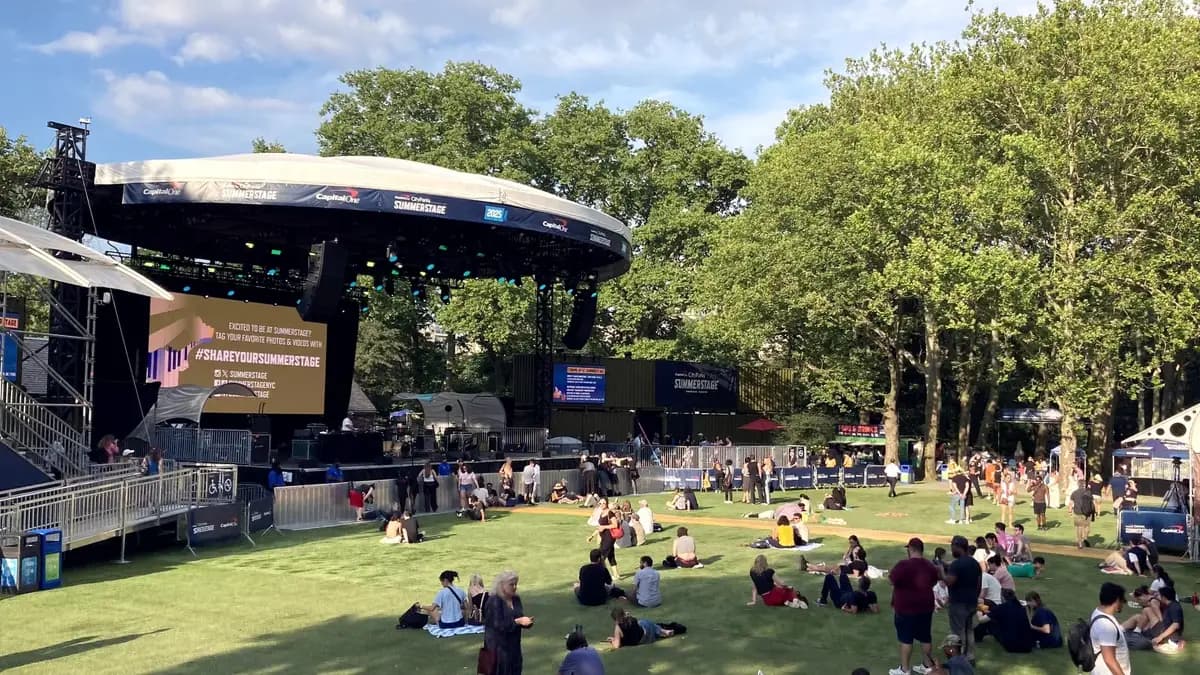
Rumsey Playfield holds about 5,000 people, and it holds them on a flat, open field in the middle of Central Park — sky above you, trees on the perimeter, no walls doing that slow-shrink thing that walls do. You can see the edges of the venue from almost anywhere inside it. For an anxious brain, that visibility matters more than any coping technique, because half of crowd panic isn't about the people at all. It's about not being able to see the way out.
An outdoor free show also removes the two pressures that keep people trapped in bad nights: money and darkness. You haven't paid $180 to be there, and you're not underground. The stakes are engineered low. That is exactly what you want for a first attempt — or a fifteenth.
Do the reconnaissance before you need it
Anxiety hates surprises. Most of what follows is just removing them one at a time.
Enter at 69th Street and Fifth Avenue, and clock the gate as you pass it
The classic way in is the park entrance at 69th Street and Fifth Avenue; from there it's a short walk to the venue, which sits mid-park just off East Drive near 71st Street. Here's the habit that changed my concert life: as you walk through the entry gate, TURN AROUND and look at it. Ten seconds. Note what's next to it — the tree, the fence line, the concession tent. You have just installed an exit sightline in your memory, and for the rest of the night, some quiet part of your brain will always know where the door is. That part of your brain is the one that panics. Give it the map first.
Arrive when doors open, not when the crowd does
Gates open one hour before showtime, and admission to free shows is first come, first served (there's a suggested $5 donation, which the programming genuinely deserves). That first hour is the anxious person's golden hour: you walk into a mostly empty field, choose your ground calmly, watch the space fill up around a position you already control. Arriving late means negotiating a formed crowd from the outside — the single most panic-inducing move available. Early is not eager. Early is tactical.
Read the rules at home so security isn't a surprise
A bag search when you didn't expect one can spike your heart rate before you're even inside. So know the list now: bags bigger than 16"x16"x8" won't get in, and neither will glass bottles, cans, coolers, folding chairs, or beach umbrellas. There is no bag or coat check, so whatever you bring, you carry. What DOES get in: outside food, factory-sealed or reusable non-glass water bottles, and a picnic blanket. Small bag, water, layers, done. When the search takes eight seconds, that's one less unknown chewing on you at the gate.
Where you stand decides how the night goes
Position is the difference between a night you managed and a night you enjoyed. Choose it like it matters, because it does.
The back edge of the lawn is a real seat, not a consolation prize
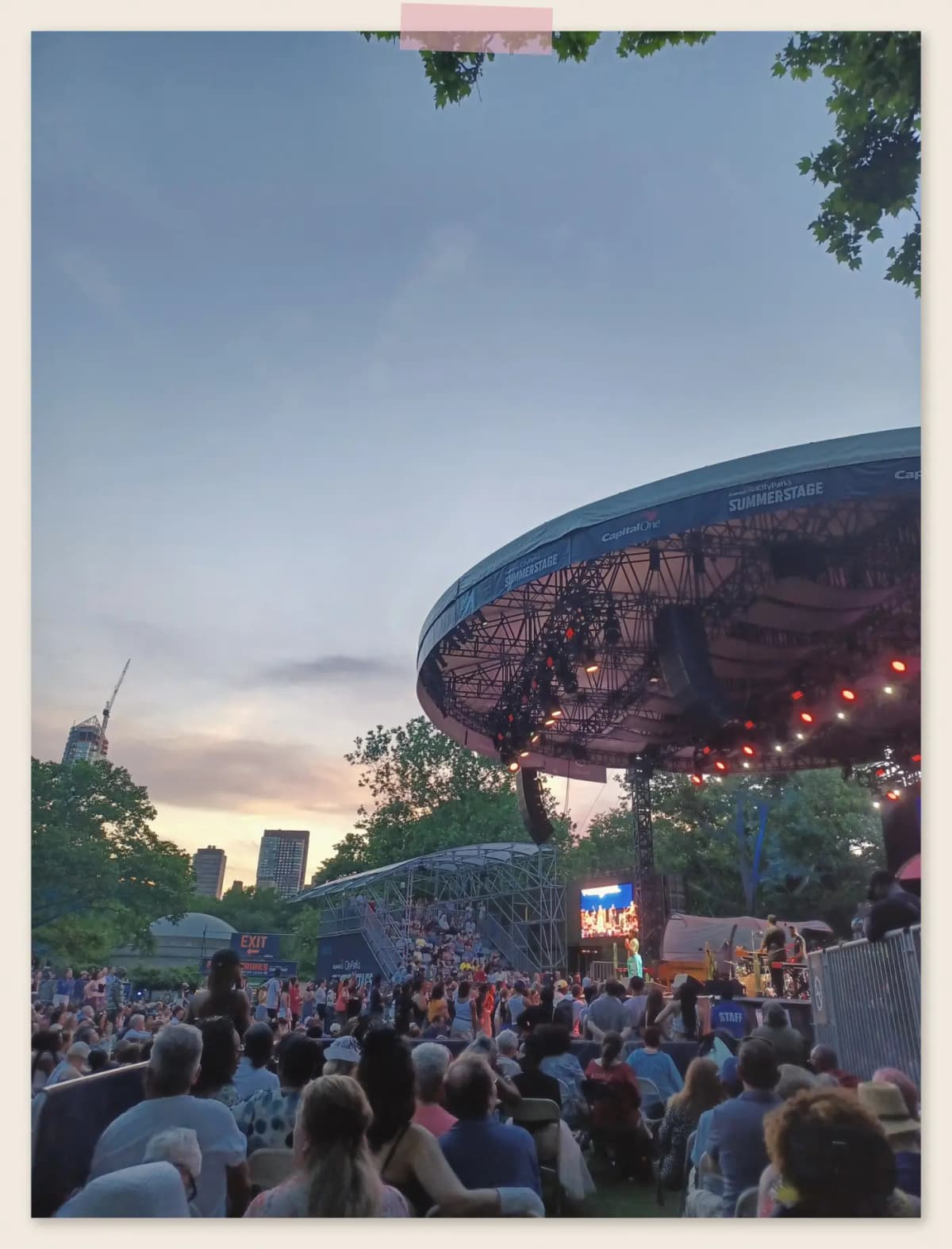
The densest crush at any general-admission show is the front third, dead center. The back edge — where the field meets the perimeter fence — is a different country. You get room to sway, sit, stretch, step sideways. The sound is still good; open-air systems at a 5,000-cap venue are built to reach you. And you keep a full view of the venue's edges, which keeps that "walls closing in" alarm from ever tripping. I have watched entire shows from the back rail and felt more present than I ever did compressed against a barricade. Nobody hands out medals for proximity.
On the bleachers, take the end of a row
Select shows have limited raised bleacher seating, first come, first served. If sitting sounds better than standing, get there when doors open and take an END seat, not the middle. An aisle seat means leaving requires zero negotiations with strangers' knees. It's the same trick anxious flyers use, and it works because it converts "I'm trapped" into "I could go right now if I wanted" — which, paradoxically, is the thought that lets you stay.
A blanket buys space early, not late
Picnic blankets and towels are allowed, and for the first hour a blanket is wonderful crowd-anxiety architecture: it draws a visible border around your personal space that strangers instinctively respect. But know the fine print — when the venue fills up, staff may ask you to fold blankets to fit more people. Treat the blanket as your early-evening moat, not a guaranteed territory. If it gets folded, that's your cue to either stand your ground on your feet or take your pre-planned step back to the rail.
If you need accessible seating, ask for it — in advance
There's a dedicated accessible seating area by the stage-left deck on the east side of the venue, with chairs provided, and accommodation requests can be made up to 24 hours before a show through the festival's accessibility form. If a panic disorder or any other condition makes open-crowd standing genuinely unworkable for you, that request form exists for you too. Asking for access is not dramatic. It's logistics.
Design the exit before you need it
Here's the part that actually rewires the night: the exit plan is not for leaving. It's for staying. Every study of anxiety — and every anxious person's lived experience — says the same thing: knowing you CAN leave is what makes it possible to remain. You're not building an escape. You're building permission.
Know what leaving costs — exactly
Do this math before you go, because vagueness is anxiety's favorite food. At a free show, walking out costs you nothing but the walk. You can stroll out mid-set, sit under a tree, and go home having seen forty minutes of live music on a summer night — that's a WIN, not a retreat. One honest caveat: the handful of ticketed benefit concerts at Rumsey Playfield run on stricter rules, and once you exit those, re-entry is not permitted. Even at free shows, stepping out means you may be rejoining the back of the line if the field has hit capacity. So the accurate promise is not "I can leave and come back." It's "I can leave, full stop, and leaving is always allowed." For the psychological safety we're building, that's the promise that matters.
Give a friend the signal before the first song
If you're going with someone, decide the leave signal in advance — one squeeze of the hand, one word, whatever. No explanations owed in the moment, no "are you sure?" negotiations at 90 decibels. If you're going alone (I usually am, and I recommend it more than you'd think), the deal is with yourself: stay for three songs, then decide again. Three songs is long enough for the adrenaline of arrival to settle and short enough to feel survivable. Most nights, you'll re-up without noticing.
Pick a meeting point that isn't inside the venue
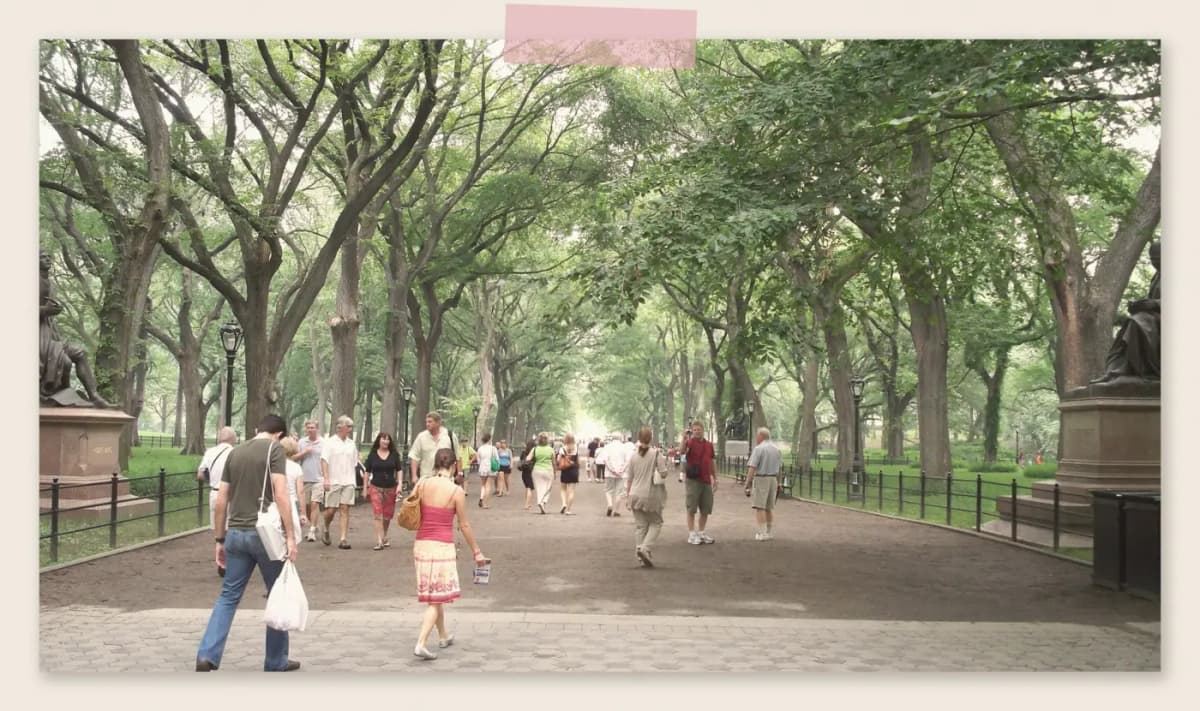
Set it outside the gates — the Mall, that long cathedral of elms just southwest of the venue, has benches and breathing room and is impossible to miss. A meeting point outside means that leaving the field never means losing your people. It also gives your exit a destination, which turns "fleeing" into "walking somewhere." Language matters to a nervous system. Give it the kind version.
What went wrong
I'd love to tell you I figured all this out through wisdom. I figured it out through a very bad Friday.
Years ago, at a festival I won't name, I let a friend talk me into the front section because "you can't really SEE from the back." Forty minutes before the headliner, the crowd compressed the way crowds do, and I froze. Not dramatic-movie panic — the quieter kind, where your chest goes tight and you start doing math about shoulder widths. And here's the part I'm actually embarrassed about: I stayed. For over an hour. Because I'd paid for the ticket, because my friend was having fun, because leaving felt like admitting something. I don't remember one song from that set. I remember the back of a tall man's jacket.
The bad days are part of the itinerary. But they're only useful if you audit them.
The audit found three failures, and none of them was "you were too anxious." One: I had no exit sightline — I'd shuffled in without ever clocking a way out. Two: I had no leave signal, so leaving required a negotiation I didn't have the air for. Three: I'd let sunk cost vote on a safety decision. Every rule in this piece is the direct repair of one of those failures. That night wasn't wasted. It was tuition.
The first-timer's checklist
• Pick a FREE show for your first attempt — check the SummerStage calendar for what's playing at Rumsey Playfield through late August.
• Arrive when gates open, one hour before showtime.
• Bag under 16"x16"x8", sealed or reusable non-glass water bottle, a layer for after sunset. No folding chairs; blanket optional and negotiable.
• Turn around at the gate. Ten seconds. Install the exit sightline.
• Claim the back edge of the lawn or an end seat on the bleachers.
• Fill in your leave-anytime card: spot, exit, meeting point, signal, three-song deal.
• If you leave early, you didn't fail the night. You ran the plan.
One more thing, because someone needs to say it plainly: needing an edge position and an exit plan is not a lesser way of loving music. It's a precise way. The crowd-front people get their version of the night. You get yours — the one with sky in it, and room to breathe, and a door you can always see.
So: what's the show you've been talking yourself out of all summer? Pick the free one. Take the card. And tell me how the third song went.
Places in this guide

2 places