Your First Chicago Symphony Concert, Without the Guesswork
A practical Symphony Center guide to choosing a program, finding the right seat and arriving ready to listen.
Start with the music, not the seat map. A first visit to Symphony Center works best when you choose a performance you actually want to hear, then solve three practical questions: where you will sit, how you will get inside and which ticket you will show. This is a planning guide to the Chicago venue, not a recommendation for a particular dated performance.
1. Choose the program before the building
The Chicago Symphony Orchestra and Symphony Center are not interchangeable labels. The official calendar includes orchestral concerts alongside visiting performers and other presentations. If hearing the CSO itself is the point of your trip, check the listed ensemble rather than relying on the venue name.
Compare the repertoire, performers, date and start time on the individual event page. For a first visit, choosing a work or artist that interests you is a more useful starting point than chasing the most impressive-looking seat. Price and availability are specific to the performance and seat; use the current official booking screen, not a generic starting-price claim.
2. Pick a seat for your actual needs
The official Orchestra Hall seat guide is useful because the sections differ in more than height. The Main Floor has a gentle slope, with no stairs for most rows. The rear sits beneath an overhang. Lower Balcony seats require stairs, so an upper-level ticket is not automatically a good fit for someone avoiding steps.
Boxes are another distinct choice: their individual seats are unnumbered, and patrons traditionally rotate between works or at intermission. If a fixed position, wider seat or step-free route matters, speak to Patron Services before purchasing. Choose the access arrangement first, then compare the remaining views and prices.
3. Check the ticket format before leaving
Read the delivery method in your confirmation email. For the venue’s digital tickets, the entry QR code is dynamic and appears shortly before the performance; a screenshot or printed copy of that digital ticket is not an accepted substitute. Open the live ticket link or use the supported mobile-wallet option before you reach the doors.
Email tickets are a separate delivery method, so do not assume every confirmation works in the same way. If you cannot find the actual ticket, contact Patron Services on 312-294-3000 rather than discovering the problem in the entry line.
4. Build the journey around the correct entrance
Symphony Center is at 220 S. Michigan Avenue in Chicago’s Loop, with another entrance at 67 E. Adams Street. Adams/Wabash is the nearby L station, one block west, but proximity is not the same as step-free access. The venue identifies Washington/Wabash and Jackson as nearby stations with elevators; check current CTA elevator and service notices when planning your route.
The accessibility guide describes automated doors at both entrances and elevators inside the building. Wheelchair and companion seating, swing-arm seats and different seat widths are available in selected locations. Contact the venue about your specific route and seating needs before booking; an elevator in the building does not establish that every seat can be reached without steps.
5. Leave a buffer, not a late-seating gamble
The venue recommends arriving at least 30 minutes before the scheduled start. For CSO classical concerts, its FAQ lists preconcert conversations beginning 75 minutes before the concert; confirm the details for your chosen program if you want to attend.
If you are late, entry to the auditorium is controlled by house management and may not be possible for every performance or seating area. Do not build dinner or travel plans around being let in during a pause. The typical CSO concert is around two hours including an intermission, but use the individual event’s published running time when making plans afterward.
6. Keep the first visit simple
You do not need to turn clothing into another booking decision: the venue welcomes both dressier and more casual choices and encourages comfort. It also asks visitors to avoid strong fragrance. During a multi-movement work, a quiet pause does not necessarily mean the piece has finished; waiting for the complete work to end is the usual cue for applause.
Bringing a child? Check the concert-specific age policy before buying, and remember that each child needs a ticket. Family programming and a standard orchestral evening are different decisions. The useful final check is practical: the right performance, an appropriate seat, an accessible route if needed and a working ticket.
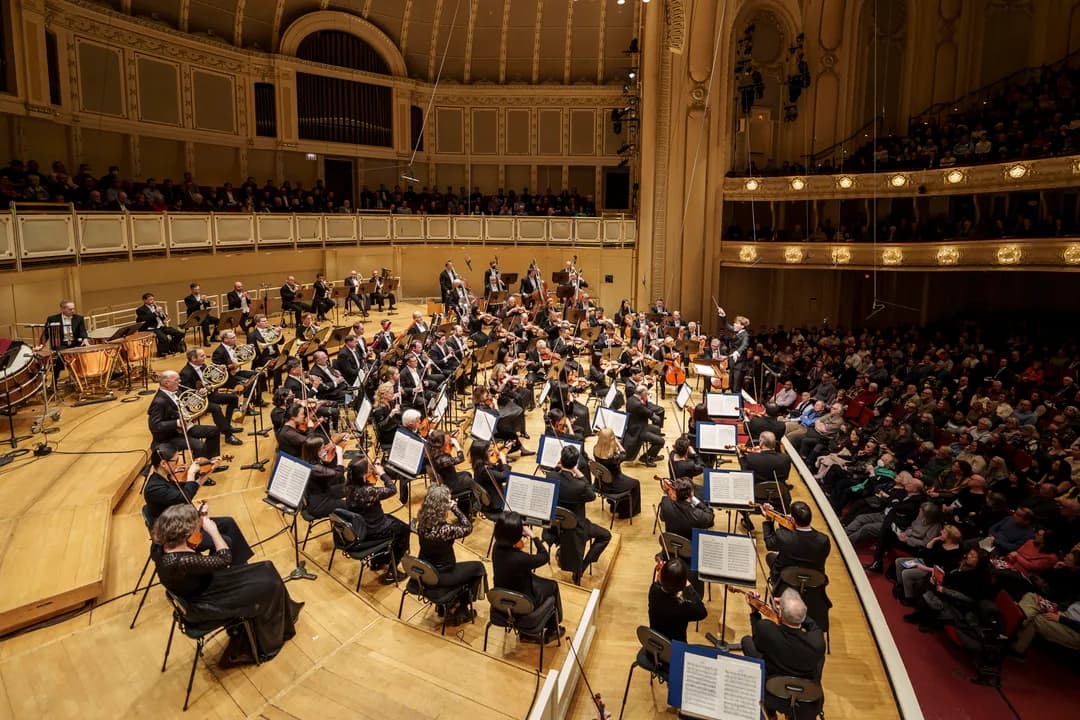
Visitor information checked November 6, 2026. Consult the current concert calendar, venue FAQ, Orchestra Hall seating guide, accessibility information and parking and transit guide before booking. The photograph illustrates the venue and is not evidence of the lineup for a current concert.