

Yellowstone's Bunsen Peak, Circled on a Fat-Tire Electric Bike
The motor is what fits a 17-mile round trip with real climbing into a half day, and the listing still asks for a high level of physical fitness.
Bunsen Peak sits 8,564 feet up, due south of Mammoth Hot Springs, and the old service road that wraps around its base is one of the few places in Yellowstone where a bicycle is the right tool. This tour rides around the peak rather than up it, following the ground between Swan Lake Flats and Golden Gate Canyon where Glen Creek drops from Kingman Pass toward the Gardner River.
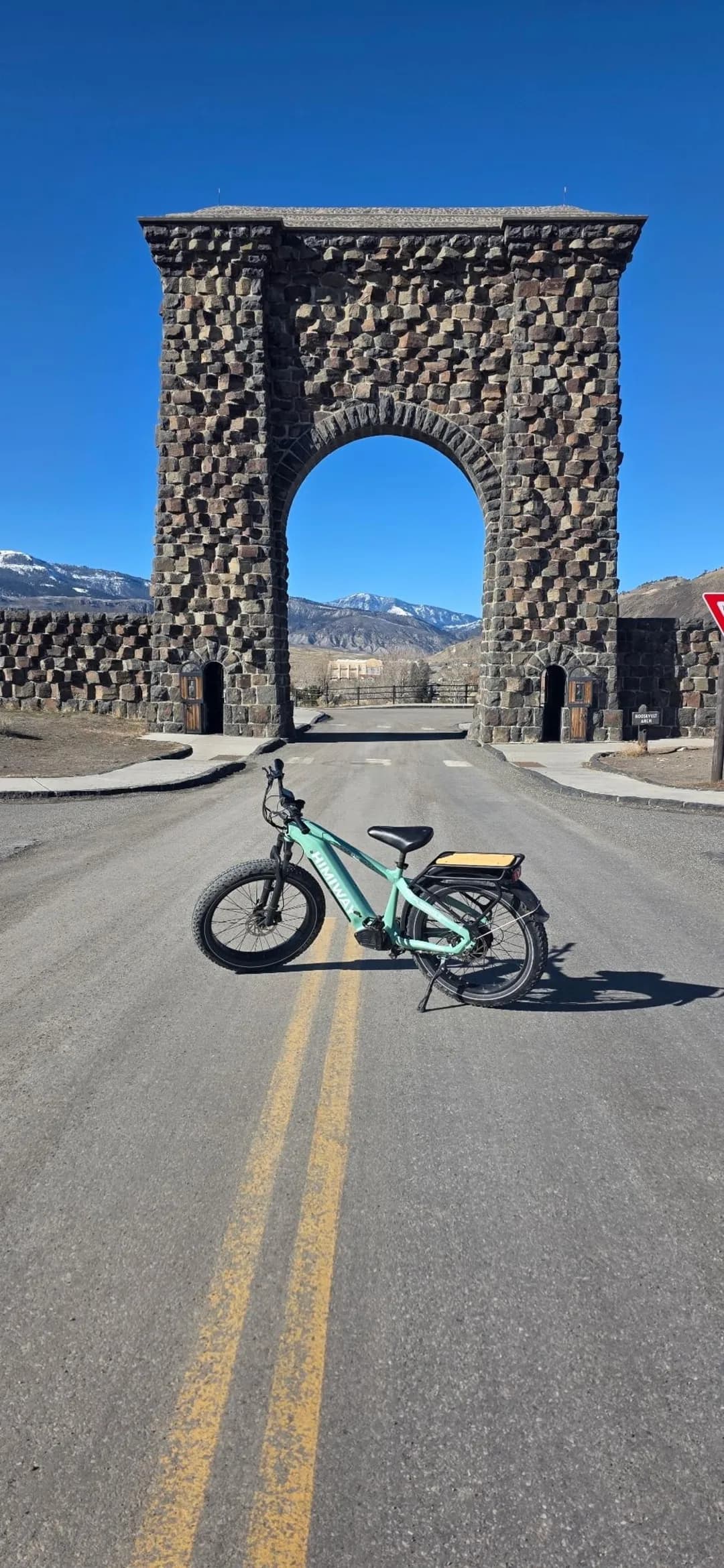
The operator is Big Sky E-Bike Tours, based in Gardiner at the park's North Entrance. It started in 2019, the year the National Park Service first allowed e-bikes inside Yellowstone, and it runs Himiway fat-tire bikes that are fitted to each rider before the group sets off. A guide rides with the group carrying repair tools, a first aid kit, bear spray and binoculars.

Departures gather inside the park, not in town. The meeting point is the Glen Creek Stock Trail parking area, directly across the road from the Bunsen Peak trailhead, and the operator asks riders to arrive fifteen minutes before the start. Allow about 35 minutes of driving from Gardiner, or an hour and a half from West Yellowstone. Every traveler needs their own ticket, and the age bands on the booking page open at thirteen.
 E-Bike Tours in Yellowstone National Park4 to 5 hours · Use of the bike, a helmet and a bike lock, and bottled water are included · One booking takes up to nine travelers · Guided in Englishwww.viator.com
Golden Gate, Swan Lake Flats, and the Ground in Between


Three places are named on the itinerary, and only one of them is a stop. Golden Gate Canyon is the narrow part of the route, where Glen Creek runs north toward the Gardner River, dropping from 7,400 feet at Kingman Pass to just under 6,000 feet in less than three miles. The itinerary gives it a fifteen-minute stop, the only scheduled one on the ride.
The other two are ridden past rather than parked at. Swan Lake Flats, the open meadow just south of Mammoth Hot Springs, is listed as a place to watch for animals and take photographs. Bunsen Peak itself — 8,564 feet, due south of Mammoth — is the thing the route goes around, not a summit anyone rides to.
What the Motor Changes, and What It Does Not


An e-bike is a bicycle with a motor that engages after the first pedal stroke. These top out at 20 miles per hour and carry 60 to 80 miles of range, which is the reason a 17-mile round trip with real elevation fits inside a half day instead of filling a whole one.
What the motor does not remove is the descent. The listing is explicit that the terrain is rough, that there are steep descents, and that travelers should have a high level of physical fitness. It is not recommended for travelers with spinal injuries, for pregnant travelers, or for anyone with poor cardiovascular health. The park service adds a practical note of its own: a battery and motor add twenty or more pounds to a bike, so mount and dismount deliberately. Closed-toe shoes are required, and the weather at this elevation turns over fast enough that layers are worth carrying.
The Park's Rules Ride With You
Yellowstone permits class 1 and class 3 e-bikes on established public roads, parking areas and designated routes during the summer season, on the same footing as any other bicycle. Bicycles of every kind are prohibited on backcountry trails, on boardwalks, and on oversnow routes — which is why a ride like this one follows an old road rather than a hiking trail.
Bikes are held to the same traffic rules as cars, riders travel single file on the right shoulder, and riding is permitted in daylight hours only. Wildlife has the right of way. The park's standing distances are 100 yards from bears and wolves and 25 yards from everything else, and the instruction when an animal is in the road is to wait or turn around. Ravens in this part of the park have learned to unzip bike bags, so food and anything scented stays sealed away from them.
The Fee You Pay at the Gate, Not at Checkout
Park entry is not part of the booking. The listing excludes all fees and taxes, and it excludes transport to the trailhead, so getting through an entrance station is on you — and the meeting point is inside the park.
A standard seven-day entrance pass is $35 for a private vehicle or $20 per person arriving on foot or by bicycle, and children under sixteen enter free. Visitors who are not US residents and are sixteen or older pay an additional $100 per person, unless they hold an Annual or America the Beautiful pass, in which case the surcharge does not apply. That single line is the difference between a $35 gate and a $235 gate for two adults arriving from outside the country.
On the booking side, the operator's own reservation system sets a three-guest minimum to run this tour, and the listing's terms allow a departure to be called off when too few travelers book.
Cancelling at least 24 hours before the scheduled departure returns a full refund under the booking terms. The operator can also cancel for bad weather or for insufficient numbers, and both cases are refunded.
Driving in from Gardiner, stay on US 89 south past Mammoth Hot Springs. A brown sign with white letters stands on the right, the Bunsen Peak parking area is on the left, and a dirt road runs off to the right directly opposite it; follow that dirt road until it opens into a parking lot. Coming from the West Entrance, run Madison Junction to Norris Junction and on toward Mammoth, and the same pair — Bunsen Peak parking on the right, dirt road on the left — arrives at Swan Lake Flats. Bring a photo ID; the operator asks for one at the trailhead.