Sport / Venue
Who Plays the Organ at a Mets Game? Citi Field, Read by Ear
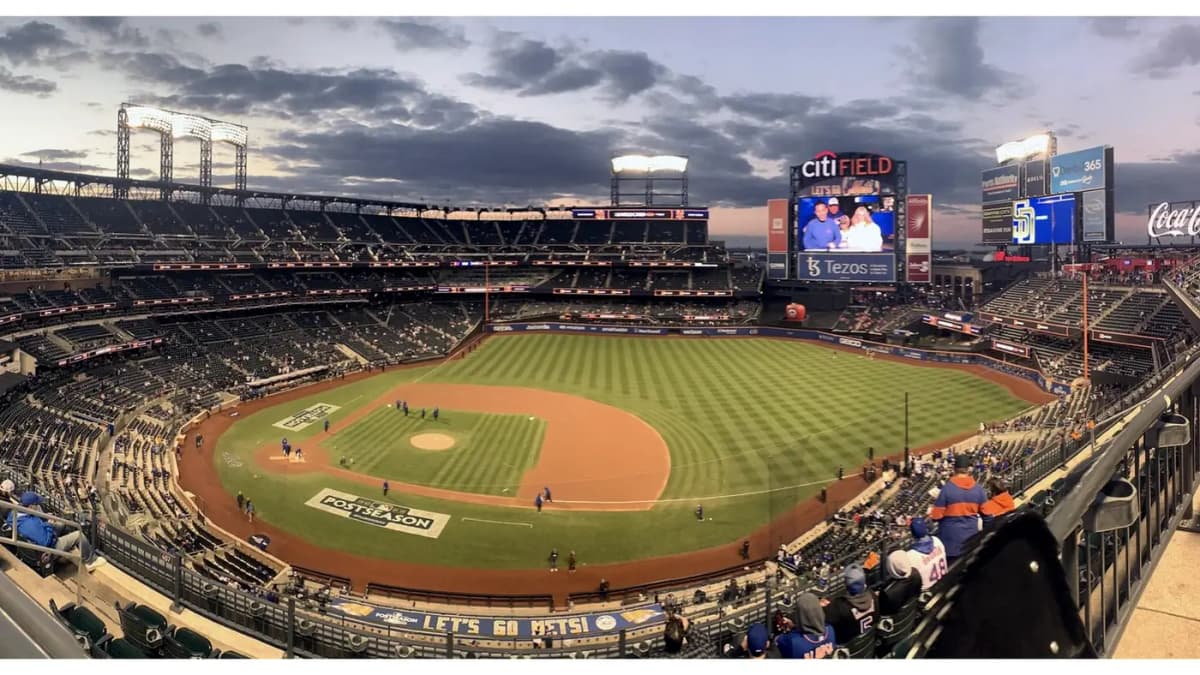
A ballpark is a sound room with 40,000 seats. Here is how the Mets score a night at Citi Field — the booth, the organ bench, the walk-up songs — and where to sit if you actually want to hear it.
 Jonah Brooks
I spent five years as a house manager in small theaters. It ruined stadiums for me in the best way. I can't watch a game anymore; I watch the cue sheet. Who called that horn blast. Why the music cut the instant the batter's foot touched the box. Whose finger is on the button when 40,000 people decide, together, to make noise.
Citi Field is the most interesting sound room in New York sports right now, and almost nobody in the building knows who is running it. This is a guide to the people at the controls — a music director who has been pressing play for the Mets since 1994, and an organist who moonlights from Madison Square Garden on summer weekends — and to the cues they run. Read it before you go. The game will sound different afterward.
Acoustics are a policy, not an accident. Every sound you hear at a ballpark was chosen by someone with a job title.
The First Thirty Seconds
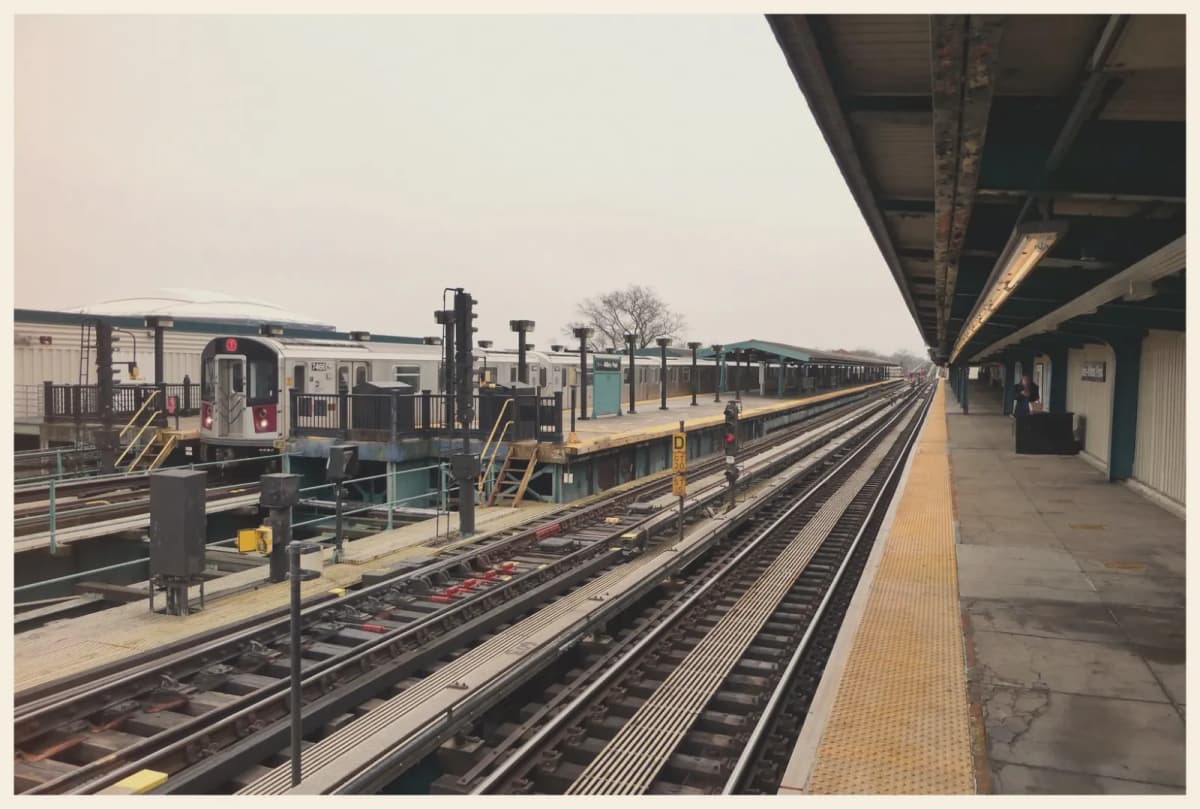
Start where the sound starts: on the elevated platform at Mets–Willets Point. The 7 train doors open and you get the first layered mix of the night — train brakes, gulls off Flushing Bay, and, if the gates are open, the PA already bleeding through the steel of the ballpark a hundred yards away. On a weekend afternoon you may catch organ chords drifting over the parking lots before you can see the field. That is not a recording. Hold that thought.
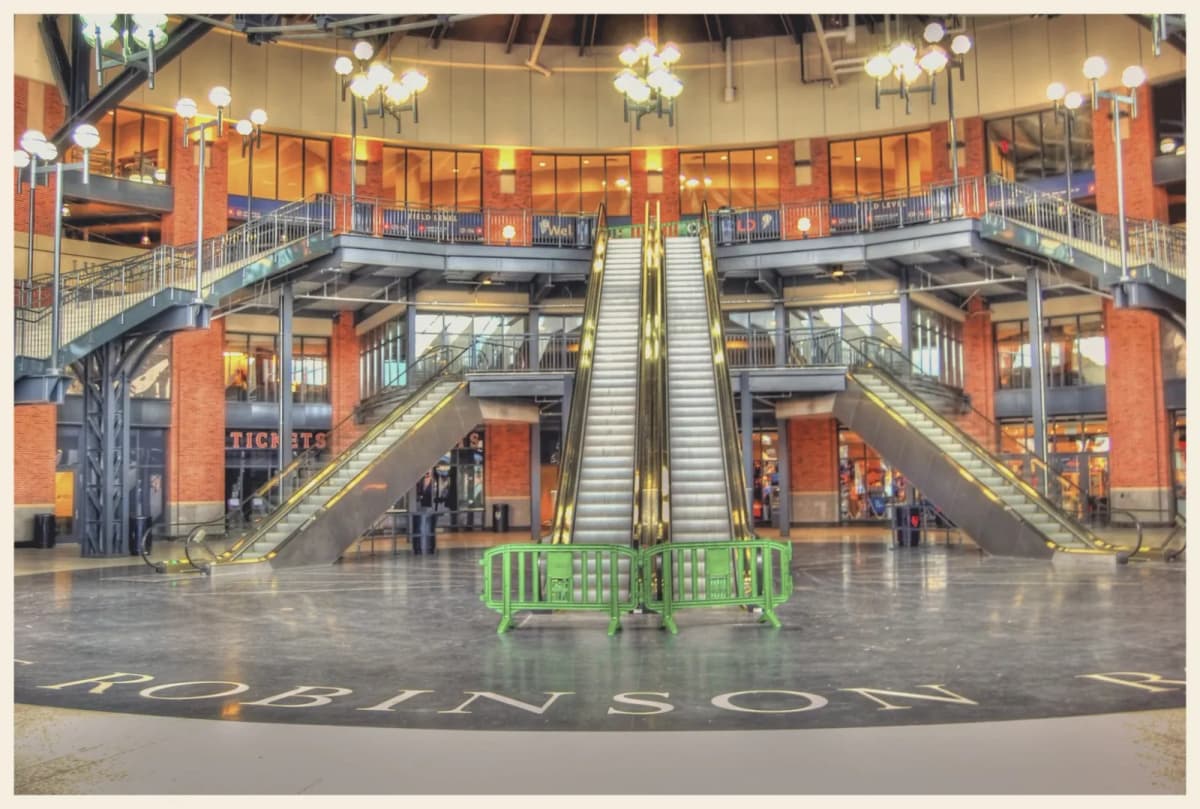
Down the ramp, through the Jackie Robinson Rotunda — a tall brick-and-glass cylinder that behaves like a reverb chamber, all footsteps and escalator hum — and then up into the bowl, where the mix changes completely. Open sky, distributed speakers, a crowd tuning itself. The building has been running this arrival sequence since it opened in 2009 at 41 Seaver Way in Queens, and it works on you whether you notice or not.
The Booth on Level 5
Every cue you hear during a Mets game runs through a loft on Level 5, next to the press booths. That perch belongs to Mike Castellani, who has handled game music for the Mets since 1994 — Shea Stadium first, then Citi Field, where he built a streak of not missing a home game for years after the place opened.
The kit up there is more mission control than DJ table. By the mid-2010s Castellani was working with roughly 500 audio samples mapped to about 50 hot keys, each button labeled with a player's initials, fed through broadcast-grade playback machines and a professional mixing console. One hard drive holds a chorus for every batter. Others hold the standards: the big-hit sting, the home run theme, the between-innings beds, the charge call. Some players hand in one song for the season. Some hand in four and let the production director decide which one fits the night.
How a Walk-Up Song Actually Gets Chosen
The romantic version is that a player hears a track in the clubhouse and it becomes destiny. The real version is email. Players send their picks to the production team, the clips get edited down to a clean chorus with a safe start point, and Castellani cues them up. The director calls it, he fires it, and the rule that matters most is the one you never notice: the music stops the moment the at-bat starts. The silence is a cue too.
That half-second of dead air before the pitch is my favorite sound in the building. A theater would kill for a blackout that clean.
The Weekend Organist
Now the part that answers the question in the headline. Yes, there is a real organ player at Citi Field — you just have to pick your date. Ray Castoldi has been the music director and organist at Madison Square Garden since 1989, the hands behind Rangers and Knicks crowds all winter. When the Garden goes quiet for the summer, he takes weekend shifts at the Mets' keyboard. He is the only person who has played for the Mets, the Rangers, and the Knicks in the same season, a run he first pulled off in the late 1990s.
Castoldi came up through classical piano and teenage Hammond-organ jobs, and he studied the craft under Eddie Layton, the longtime Yankees organist across town.
"Everything I learned, I stole from Eddie Layton," Castoldi told the Amsterdam News this spring.
Listen for what a live organist does that a hard drive cannot. He reads the count. He stretches a riff when the reliever is slow to the mound. He drops a pop melody — he likes running hip-hop hooks through the organ — and lets the crowd catch the joke a bar late. Seventeen of the thirty big-league parks had live organists as recently as 2024, one of the highest counts in decades, and the instrument survives for exactly this reason: it is the only part of the show that can improvise.
The Bench He Inherited
The organ is also the oldest piece of Mets sound design. From Shea Stadium's opening in April 1964 until 1979, Jane Jarvis — a working jazz pianist the fans called the Queen of Melody — played a Thomas organ from the press level, near home plate. She wrote "Let's Go Mets" herself. During the citywide blackout on July 13, 1977, with the field dark, her organ still had power, and she played to keep the crowd calm. That is the job description in one image: one musician, one keyboard, forty thousand people taking their emotional temperature from her hands.
The per-batter musical tag — the ancestor of every walk-up song — was an organist's invention too. Nancy Faust started matching songs to individual hitters for the Chicago White Sox in 1970, and the league never went back.
What a Walk-Up Song Says
A walk-up song is a ten-second autobiography. Citi Field has produced three of the best case studies in baseball.
The serenade. Francisco Lindor walks up to "My Girl," and the building sings it back to him — a Motown chorus turned into a nightly roll call between a shortstop and a borough. When a song outgrows the player and becomes a crowd ritual, the sound department's work is done.
The debut. On June 28, 2024, infielder José Iglesias — who records as Candelita — performed his single "OMG" on the field after a 7-2 win over the Astros, with 32,465 people staying put after the last out and half the roster dancing behind him. A walk-up song became a stage show; the ballpark briefly ran as a music venue with a batting cage.
The legend. Edwin Díaz's ninth-inning entrance to "Narco" was the loudest scheduled minute in New York. On August 31, 2022, the Mets flew in Timmy Trumpet, the Australian artist behind the horn line, to play it live from the third-base line as Díaz jogged in; 40,607 people saw a 2-1 win closed out to live trumpet. Díaz signed with the Dodgers in December 2025, so the trumpets have moved west — and the ninth inning at Citi Field is being re-scored around new arms this season. Entrance music is roster news. Listen accordingly.
The Fixed Cues
Around the personalized material sits a liturgy that does not change, and it is worth knowing so you can hear the building keeping time.
• The seventh-inning stretch runs "Take Me Out to the Ball Game" and then, without apology, "Lazy Mary" — Lou Monte's Italian-American tarantella, a Shea-era tradition that made the move to Citi Field intact. It is the strangest and best ninety seconds of programming in the sport. Nobody explains it to you. You just clap.
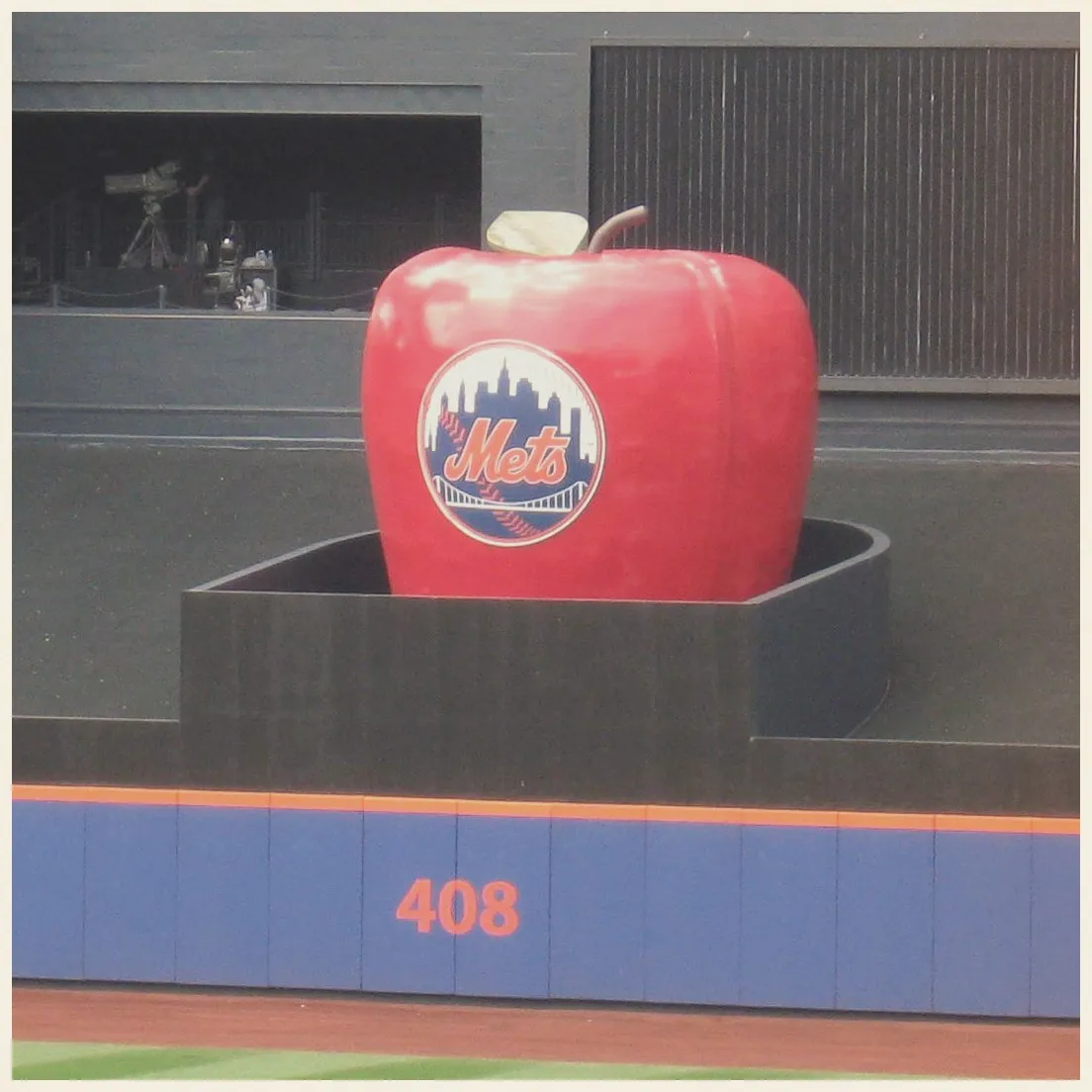
• The Home Run Apple rises out of center field after every Mets homer, with its own musical hit under it. The apple is the percussion section.
• The voice on top of everything belongs to PA announcer Colin Cosell, on the mic at Citi Field since 2018 — grandson of Howard Cosell, which means the cadence you're hearing has a pedigree.
• "Meet the Mets," the team's singalong fight song from the early 1960s, still threads through the pregame. Jane Jarvis used to play it from the bench; the melody outlived the stadium it was written for.
Where to Sit If You're Listening
Every seat is a different mix. Here is my read.
Best seats for the ears: the middle rows of the field level between the dugouts, or the front of the Promenade behind home plate. You are in the main throw of the sound system, the PA and the crowd arrive at your head in roughly correct proportion, and you can hear the walk-up snippets cut off cleanly. The Promenade rail adds the whole bowl's crowd noise rising past you, which is the point of coming.
Worst seats for the ears: deep under a deck overhang, especially the back of the lower levels. Ballpark speaker systems in both New York buildings run light on low end — the mains only reach down to around 65 Hz — and under concrete you get the thin, boxy version of everything. The trumpets will not hit. The crowd above you becomes ceiling thunder instead of sound.
The honesty test: a weekend day game. That is when the organ shifts are most likely, the building is fullest, and the room tells you the truth about itself.
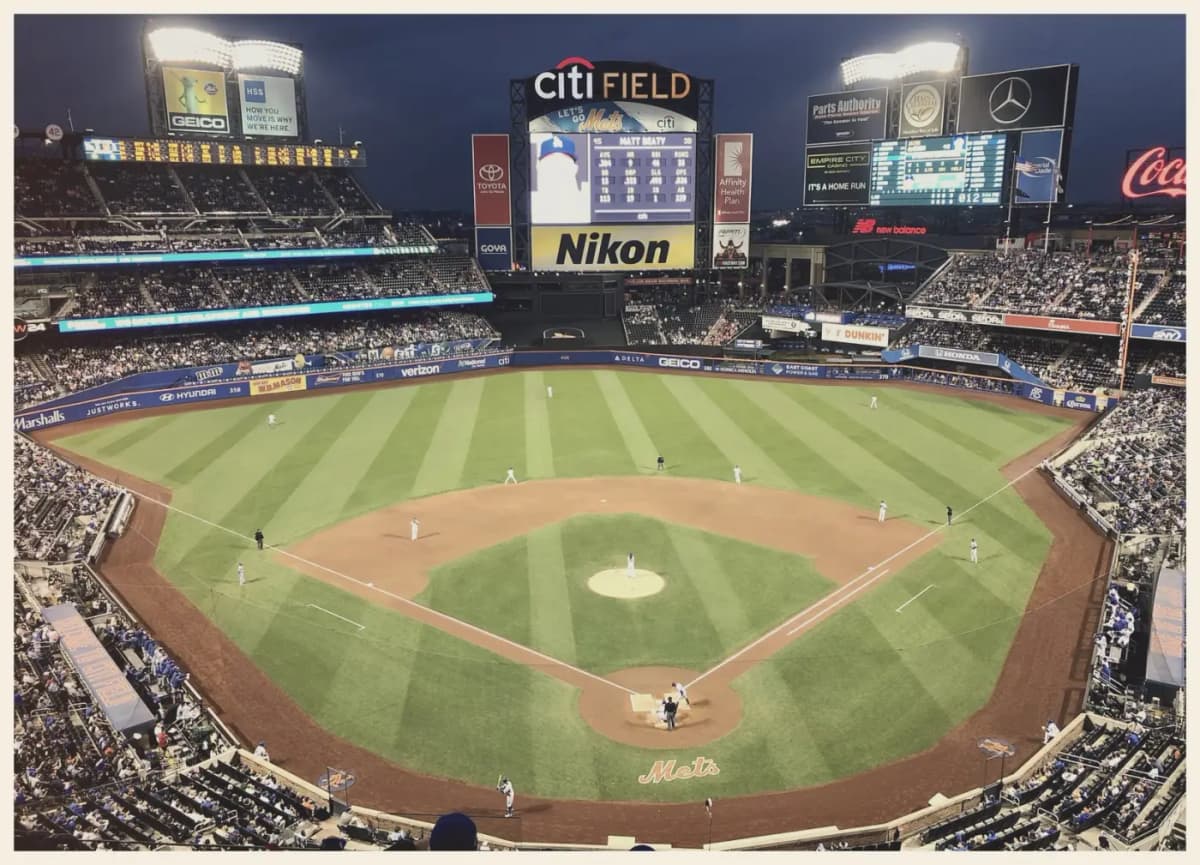
Go on a Sunday and the room tells you the truth. The organ is live, the bowl is loud, and every cue lands where a person aimed it.
Who This Is For — and Who Should Skip It
Come if you like production craft: theater people, musicians, radio nerds, anyone who watches credits to the end. Come if you're going to a game alone — listening gives a solo ticket a job, and the seventh-inning singalong includes you whether you asked or not. Bring a kid who is starting an instrument; the organ bench is a better argument for practicing than any recital.
Skip the listening angle if you need nine innings of pure scorekeeping silence, because this building does not offer it, or if you were coming only for the trumpet moment you saw online — that specific minute belongs to 2022, and chasing a clip is the wrong way to hear a room. The show now is different and still good.
Plan It
Citi Field is at 41 Seaver Way, Queens. Take the 7 train to Mets–Willets Point — the platform-to-rotunda walk is part of the show — or the Long Island Rail Road to the station of the same name. Aim for a weekend home date to raise your odds of a live organ shift, get in when gates open to hear the building warm up, and check the Mets' official schedule and their ballpark music page before you commit; walk-up songs change with the roster, and this season's list is posted fresh. Save this for your next home stand and go sit in a different mix than last time.
Citi Field, 41 Seaver Way, Queens, NY 11368