Community / Event
Who Gets to Call a School "Good"? A Bar-Room Lecture in Williamsburg — and the Question the Bronx Asks Every Fall
On Thursday night, July 23, education-access expert Akil Bello takes the mic at a Williamsburg bar to pull apart the machinery behind school reputations. If you live in the Bronx, this is not someone else's conversation — it is the one your borough has been having, out loud, for decades.
 Drew Palmer
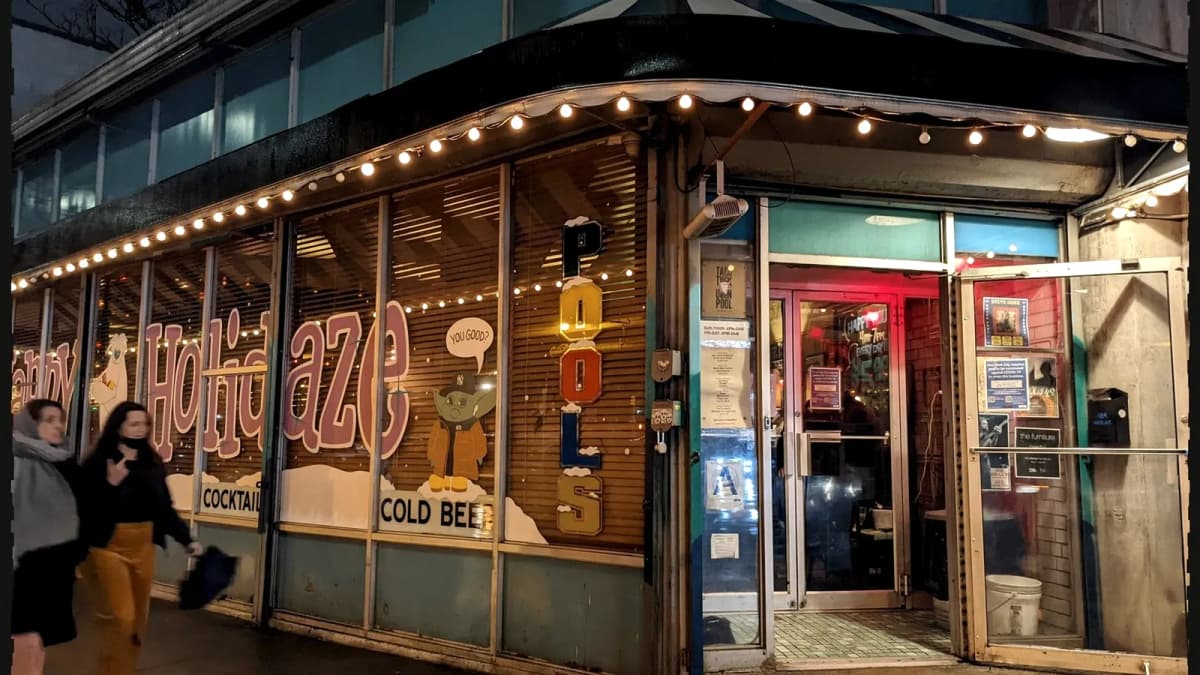
Union Pool, a longtime bar and music venue on Union Avenue in Williamsburg — the Brooklyn neighborhood where Thursday's lecture takes over a barroom for the night. The exact venue address arrives with your ticket confirmation.
Akil Bello has spent three decades inside the machinery most of us only ever get processed by. Tutor. Test-prep founder. Admissions analyst. Advocate. He co-founded Bell Curves, a company built to prepare low-income and underrepresented students for the standardized exams that gatekeep so much of American education. He directed equity and access work at The Princeton Review. He served as Senior Director of Advocacy at FairTest, the national group pushing back on over-reliance on test scores. These days he works on college advising and FAFSA completion for the State University of New York, in partnership with New York City's public schools.
He is also the person who put the phrase "highly rejective colleges" into circulation — a two-word demolition of the idea that turning away more kids makes an institution better. The term has been cited in TED Talks and entered into the Congressional Record. That is a rare kind of reach for a man whose whole argument is that the rankings everyone quotes are measuring the wrong thing.
On Thursday, July 23, Bello brings that argument to a bar in Williamsburg, Brooklyn, for Lectures on Tap. The talk is called "Rejective or Selective: What Makes a 'Good' School?" It runs 6:30 to 8:30 p.m., and as of this writing it is sold out — which tells you something about how many New Yorkers are carrying this question around.
One honest note before we go further, because I would rather lose a click than blur a map: this event happens in Williamsburg, Brooklyn — not the Bronx. But I have read enough headlines that draw hard borders around who a conversation "belongs" to, and I do not buy them. The question on that Williamsburg stage is the question Bronx families sit with every single fall. So this piece walks both banks of the Harlem River.
A lecture hall with a beer list
First, the room.
Lectures on Tap is the series that professors-in-bars people have been telling each other about for two years now. Ty and Felecia Freely, a husband-and-wife team, held the first event in New York City in June 2024. The idea was almost embarrassingly simple: real experts, real research, delivered in a bar instead of a lecture hall, in front of people who chose to be there on a weeknight.
It worked. The series now runs in five cities — New York, Los Angeles, San Francisco, Chicago, and Boston — and the format has settled into a reliable rhythm. Doors open with about twenty minutes for check-in and a drink. There is an interactive opener to loosen the room. The main lecture runs roughly forty-five minutes. Then comes the part that matters most for our purposes: a live Q&A, followed by the unofficial third act, where people stay, argue, and swap numbers over a last round.
Past topics have wandered from the psychology of infidelity to the history of Grand Central Terminal. Speakers have included philosophers, constitutional law professors, and cardiologists. Tickets for the series generally run around forty dollars, sell only online through Eventbrite — there are no door sales — and tend to disappear fast. Mocktails, coffee, and food are available at every event, so nobody has to drink beer to think clearly.
The premise is the handshake I keep writing about: put a stranger with knowledge in front of strangers with questions, add a bar tab, and watch the distance collapse.
Thursday night, in plain facts
This particular Thursday belongs to Bello. The event billing frames the talk squarely: an examination of the narratives, rankings, and incentives that drive school reputations, from preschool admissions all the way to college — and why Americans keep treating exclusivity as if it were the same thing as quality.
That is not an abstract seminar topic. That is the logic of every school-ranking listicle, every real-estate ad that says "great schools," every acceptance-rate brag. Bello's case, built over thirty years of watching the testing industry from the inside, is that rejection rates tell you who a school keeps out, not what it does for the students it lets in.
The venue is a bar in Williamsburg, Brooklyn — Lectures on Tap confirms the exact address by email after you register, which is standard practice for the series. Refunds are accepted up to twenty-four hours before start time. And since this date is sold out, two practical moves: join the organizer's email list at lecturesontap.com, which is how new dates are announced, and watch their Instagram, where last-minute releases have been known to surface on lecture days.
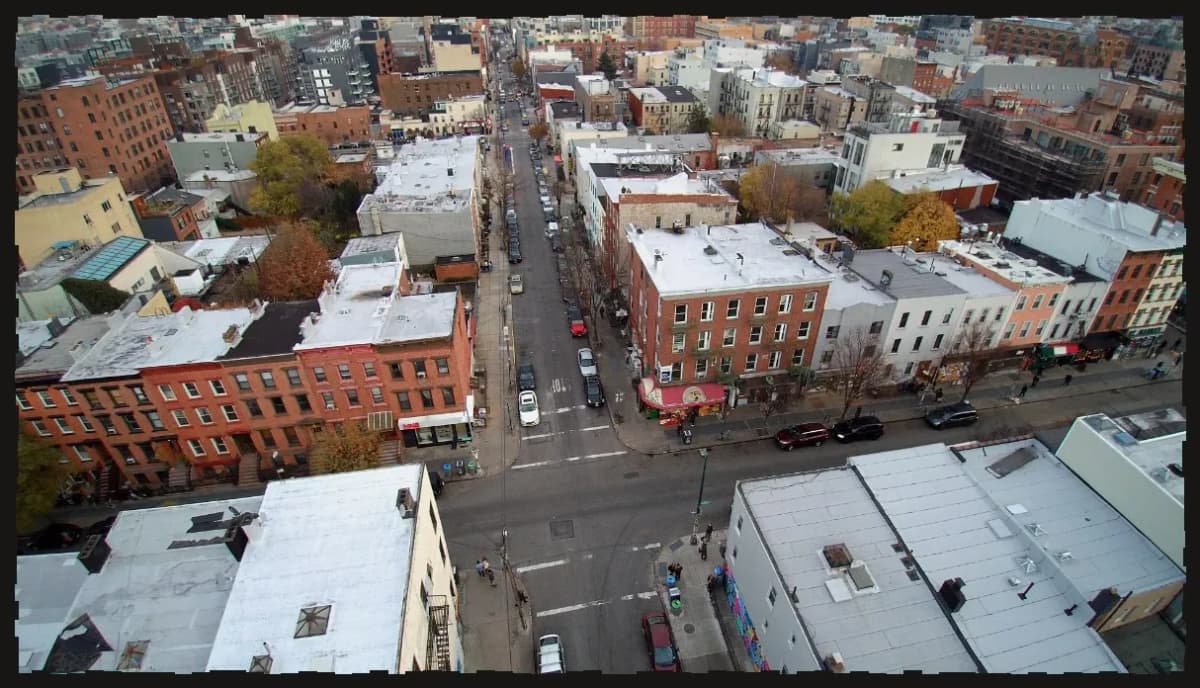
Bedford Avenue and North 8th Street from above — Williamsburg's low-rise grid, where Thursday's lecture crowd will be heading on the L train.
Why this question belongs to the Bronx
Now cross the river with me.
No borough in this city has lived inside the "good school" question longer or harder than the Bronx. Start with the most famous example: The Bronx High School of Science, founded in 1938 in Bedford Park, roughly three thousand students, Nobel laureates scattered through its alumni rolls. Admission comes down to one thing — a score on the Specialized High Schools Admissions Test, the SHSAT, which every NYC eighth grader (and interested ninth grader) can sit each fall.
That single-test gate is not just tradition; it is state law. The Hecht-Calandra Act of 1971 locked the SHSAT in as the sole admissions criterion for Bronx Science, Stuyvesant, and Brooklyn Tech. Cutoff scores shift year to year, and only a thin slice of test-takers clears the bar. Which means tens of thousands of families — a huge share of them Bronx families — get their answer about a "good school" delivered as a single number in the mail.
"Is it a good school?" Every parent in this city has asked it. Almost nobody stops to ask the question underneath it: good at what, and for whom?
Here is where Bello's résumé stops being a list and becomes a map. FairTest, where he led advocacy, has been part of the long campaign questioning New York's reliance on test scores for its selective high schools and gifted programs. Bell Curves, the company he built, existed precisely because the kids with the fewest resources faced the same exam as the kids with private tutors. When he asks a Williamsburg barroom what makes a school "good," he is asking a question the Bronx has field-tested for fifty years.
And the Bronx side of that story is too often written by outsiders as a deficit report. I have lost patience with that genre. The borough is full of parents who can dissect admissions policy with more precision than most columnists, because they have had to. The label "good school" draws a border; the people I want you to meet spend their lives erasing it.
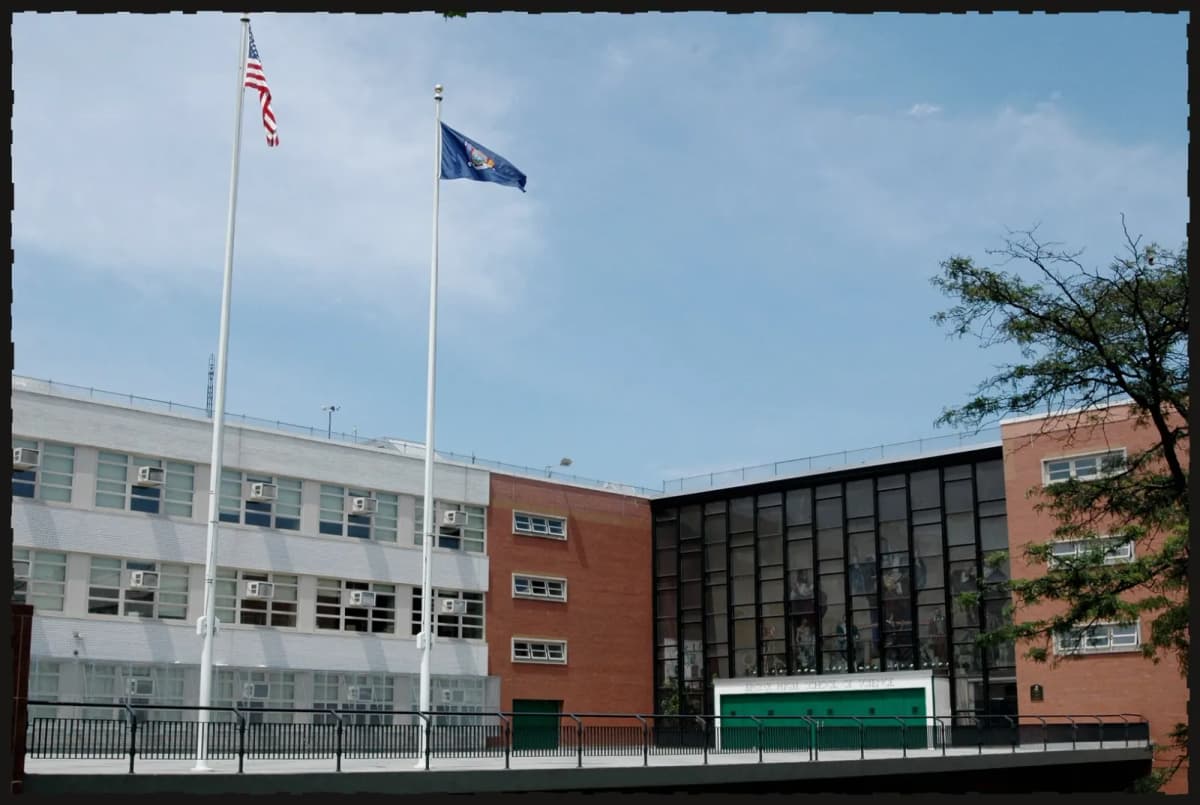
The Bronx High School of Science in Bedford Park. Admission to the school still comes down to a single test score each fall — state law since 1971.
Can you actually ask a question?
Yes — and that is the whole reason to go, or to catch the next date if this one stays sold out.
Every Lectures on Tap night builds in a Q&A after the talk, and the format is close-range by design: sixty to a couple hundred people in a bar, no lectern moat, no "questions in the chat." If your question is the one you have been carrying since your kid's last admissions cycle — about screens, about the test, about what a ranking actually measures — this is a room where you can say it to a person who has spent his career on the other side of the desk.
A word of respect for how these rooms work best. Ask about systems, not about your specific kid's file; the barroom Q&A is for the questions everyone shares. And stay after. The series' quiet superpower is the hour following the applause, when the crowd sorts itself into conversations. That is where the connections get made — the teacher two stools down, the parent organizer with a flyer, the policy student who knows which community board meeting to show up to.
People are the destination. The lecture is just the excuse that gets them all in one room.
Where the conversation keeps going after the tab closes
A one-night lecture is a spark. If you want the fire, the Bronx already has organizations tending it — and this is the part I most want on your saved list.
New Settlement's Parent Action Committee has been organizing parents in the Southwest Bronx for years, with a focus on District 9 schools. It is a multicultural committee of parents and neighbors who train each other on rights inside the NYC public school system, run campaigns, and put parent voices in rooms where decisions get made. They work out of 1512 Townsend Avenue; the main line is (718) 716-8000. If Thursday's talk leaves you wanting a durable, local, trackable next step, this is one.
The Family Welcome Center at 1 Fordham Plaza is the official front door for enrollment questions in much of the borough, serving families across Districts 7, 9, and 10. Rankings and rumors are one thing; sitting across from an enrollment counselor with your actual documents is another.
FairTest — Bello's former advocacy home — publishes ongoing research and campaign updates on testing policy nationwide, including the New York fights, at fairtest.org. It is the cleanest way to follow the policy thread of Thursday's argument after the night ends.
Lectures on Tap itself is trackable too: the email list announces each new slate of dates, and New York gets a steady stream of them. If the "Rejective or Selective" night stays sold out, the series is a repeating event, not a one-off miracle.
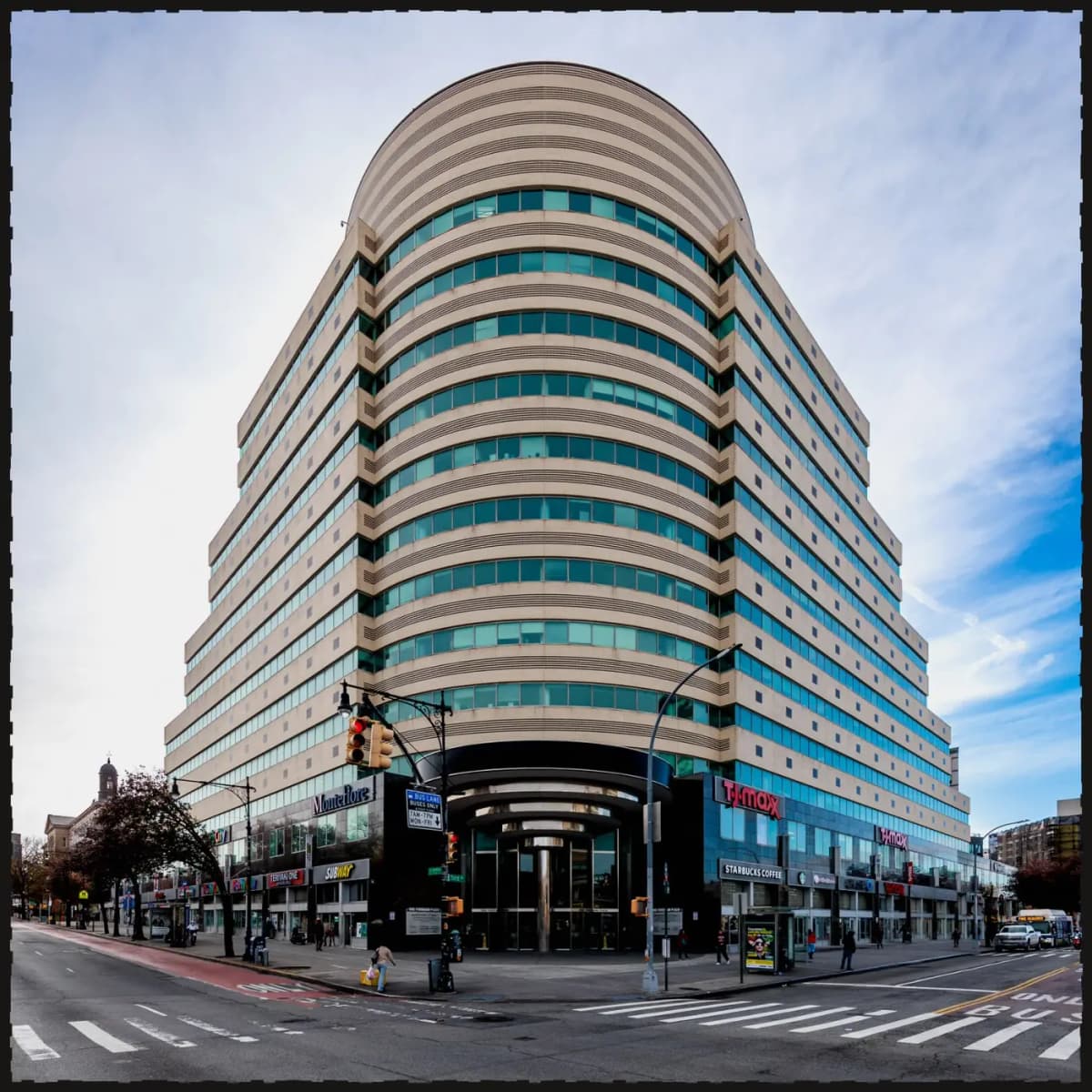
One Fordham Plaza, the Bronx — the building that houses the Family Welcome Center where enrollment questions for Districts 7, 9, and 10 get answered face to face.
Know before you go
• What: Lectures on Tap — "Rejective or Selective: What Makes a 'Good' School?" with Akil Bello
• When: Thursday, July 23, 2026, 6:30–8:30 p.m.
• Where: A bar in Williamsburg, Brooklyn (ZIP 11249); the exact address is emailed with your ticket confirmation
• Tickets: Online only via Eventbrite — no door sales; series tickets generally run about $40. This date is sold out at press time; join the email list at lecturesontap.com for new dates and watch the organizer's Instagram for last-minute releases
• Refunds: Accepted up to 24 hours before start time
• Format: \~20 minutes check-in and drinks, interactive opener, \~45-minute lecture, live Q&A, informal hang afterward
• Not drinking? Mocktails, coffee, tea, and food are available at every event
• Bronx follow-through: New Settlement Parent Action Committee, 1512 Townsend Avenue, (718) 716-8000; Family Welcome Center, 1 Fordham Plaza (Districts 7, 9, 10); fairtest.org for the policy thread
Save this page. Whether you make Thursday's room or catch the next one, the question is not going anywhere — and neither are the people in this borough who have been answering it, out loud, longer than anyone gave them credit for.
Union Pool, 484 Union Ave, Brooklyn, NY 11211(Williamsburg)