Where Hawaii's Sugar Industry Started, You Now Cross by Cable
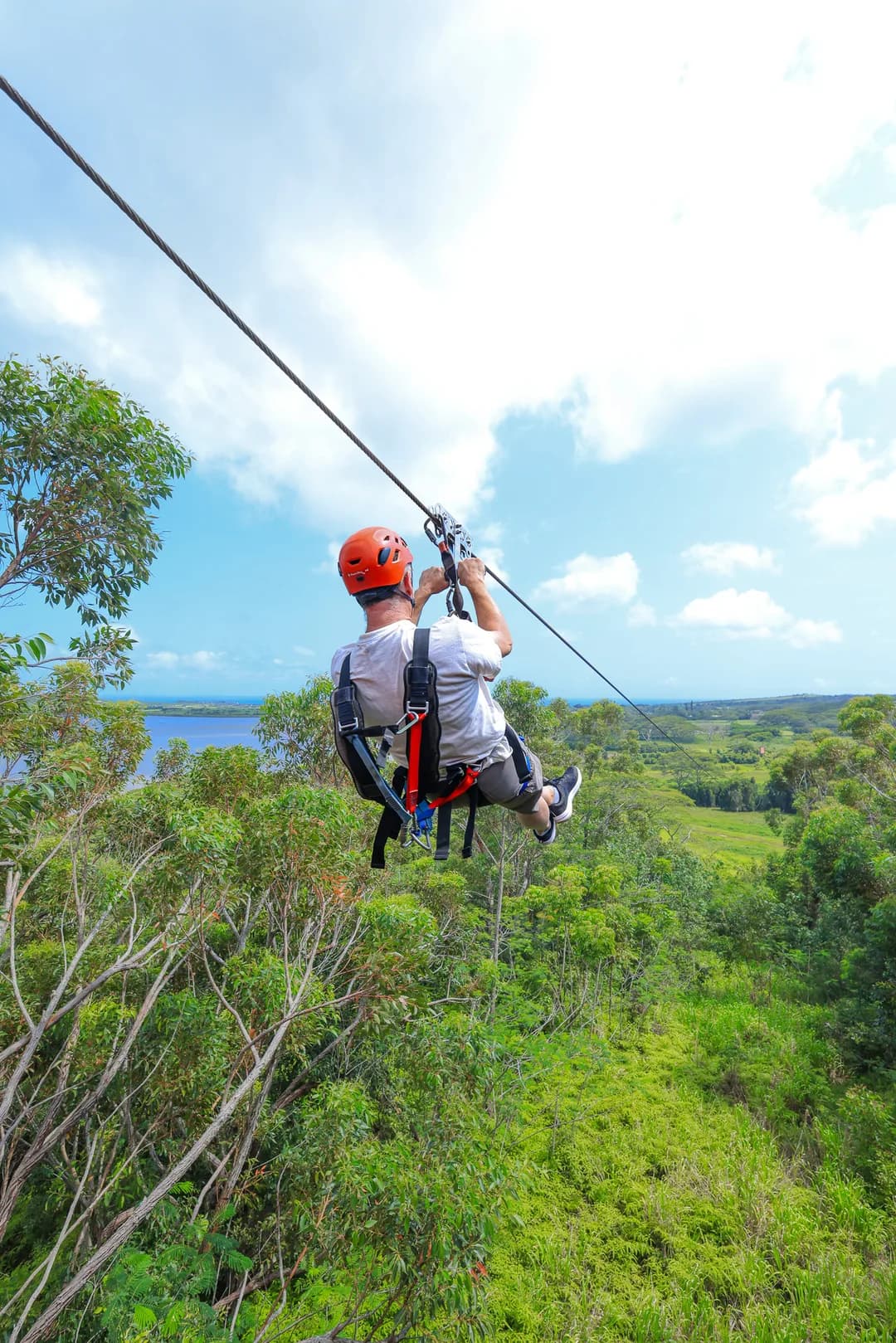
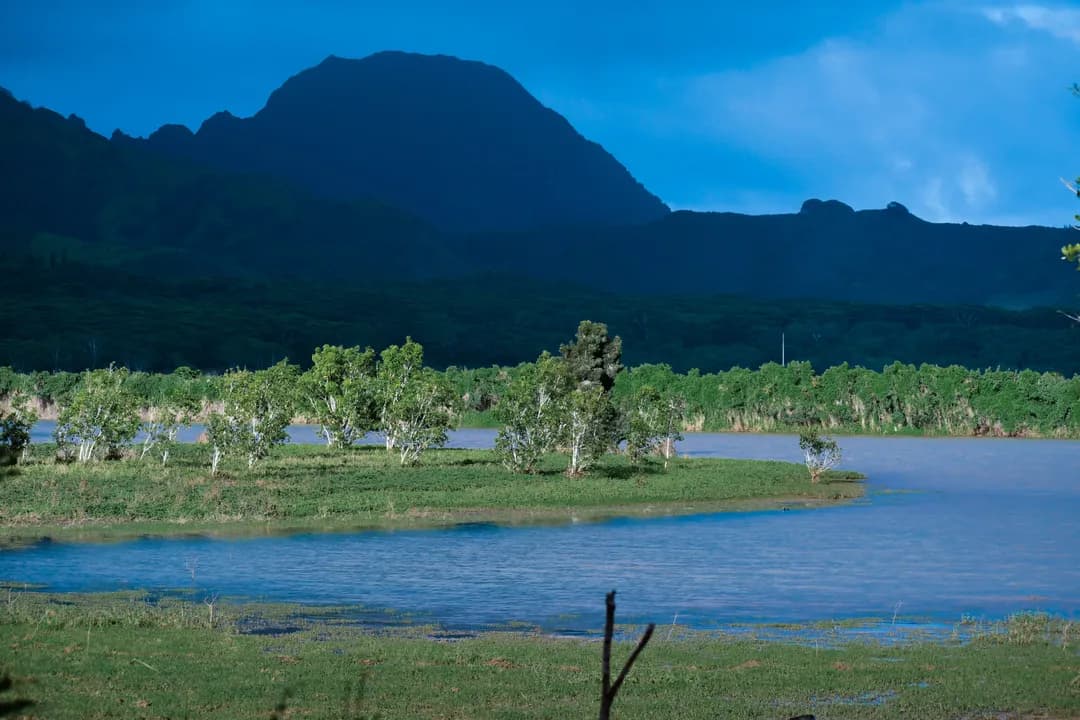
The course runs down old Koloa plantation land toward Waita Reservoir, with Mount Haupu filling the far side. Koloa Zipline says it flies eight lines when the course is whole, and that the half-mile reservoir crossing is one of the three longest lines on the island. Storm repairs have it down to four for now.
Sugar started here. Ladd and Company leased land at Koloa in 1835 and had a mill crushing cane the following year, and that is where commercial sugar in Hawaii begins. The cane is long gone. The land is not.
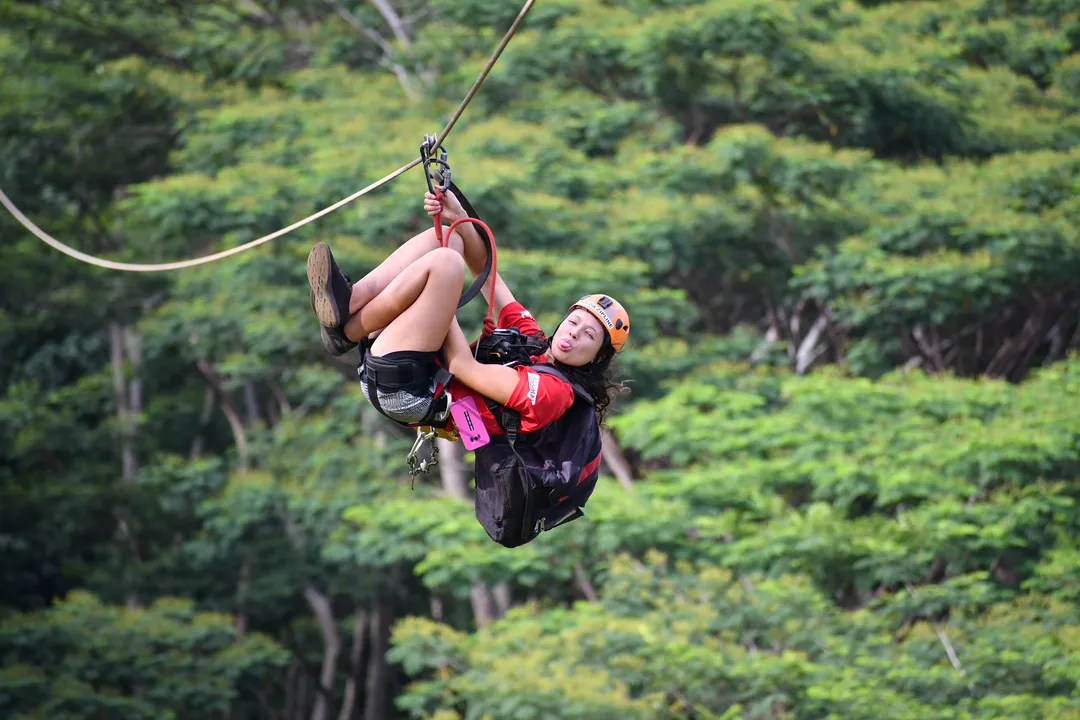
Koloa Zipline strings its course across a piece of it, over jungle that grew back on the old fields and over the reservoir the plantation dug to water them. You can ride sitting up, hands free, facing backward, or clipped alongside a guide. Children as young as seven fly tandem with an adult.
The company says storm repairs have the course down to four lines, with the full eight hoped for in November. That notice was on its home page in late September 2026, and the booking calendar matches it: almost nothing in October, then a full daily schedule from the first week of November.
Three hours on the listing, three and a half on the company's page for the full eight lines. Neither number is the one you will get right now. Storm repairs have the course down to four lines, and the company sells that shortened version as two and a quarter hours. With the drive down to Koloa on either end, it still fills a morning or an afternoon.
 Koloa Zipline in KauaiGuided zipline course above Koloa's old plantation land and Waita Reservoir. English-speaking guide, gear and safety instruction included. Ages 7 and up.www.viator.com
Ground School Comes Before the First Line
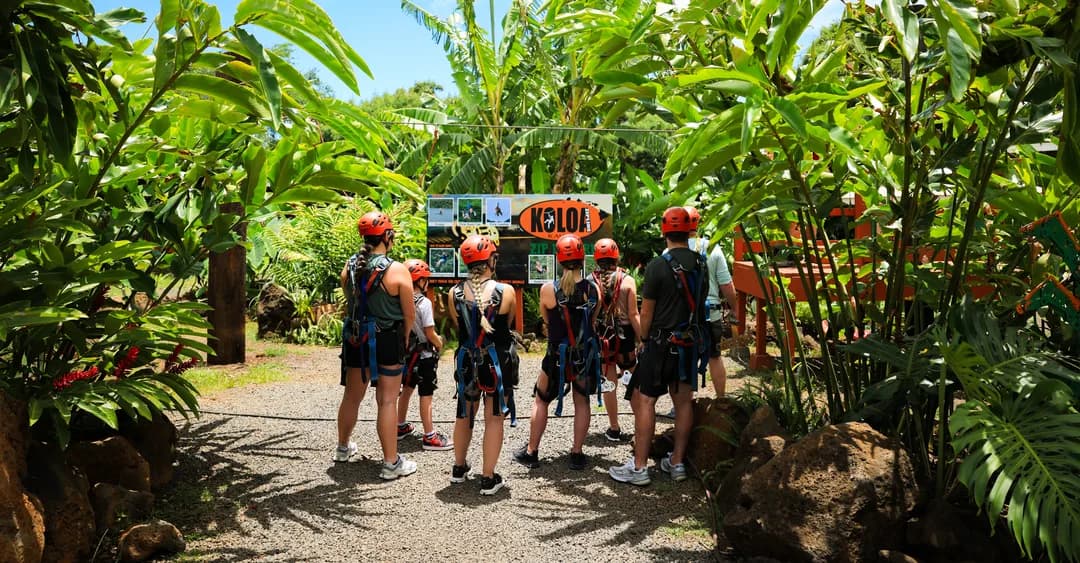
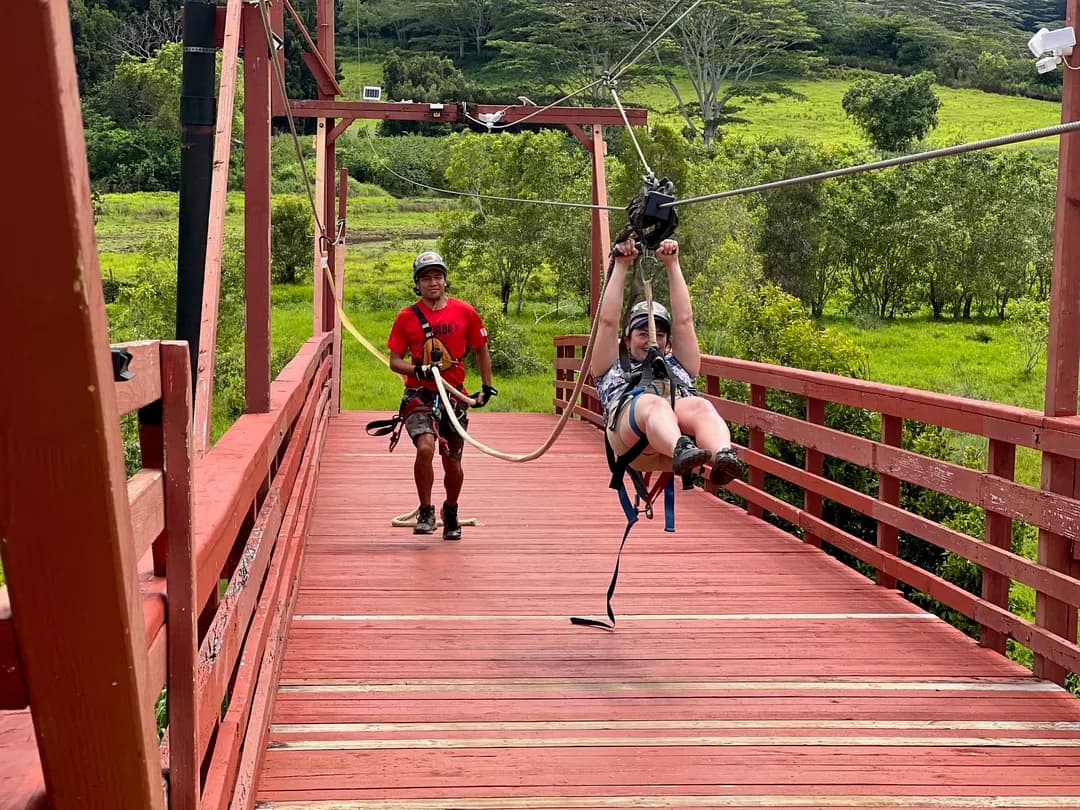
Nobody is put on a cable cold. The company runs what it calls Ground School, a practice run on a low line where you learn to brake and to stop yourself, and it fits everyone into a full body harness before that.
The positions are the reason regulars come back. You can sit upright and sightsee with a handlebar pulley, go hands free, or ride facing backward. One position is on the way out: the company's own pages carry a note that it is retiring the Flyin' Kauaiian, the face-down superman ride, starting August 3. The listing still advertises a hands-free superhero harness, so treat the face-down version as gone and the hands-free seat as the one you will actually get.
The listing names English as the guide language. It also prices photos and video as an extra, while the company's own pages sell no photo package at all. What the company does say is that you are welcome to bring your own camera, tied down, and that nothing lost on the tour is its responsibility.
Who Gets Clipped In, and Who Gets Paired Up
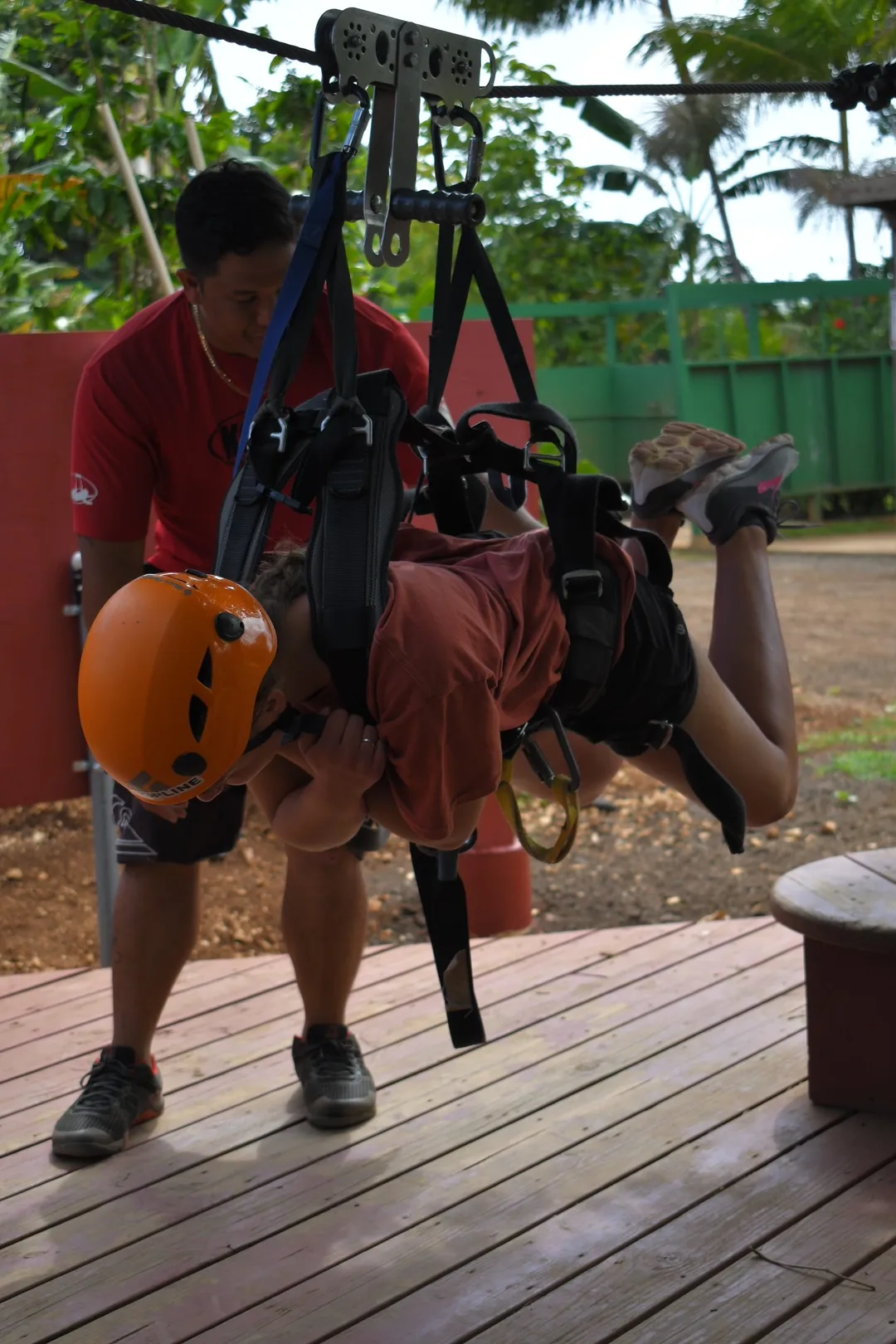
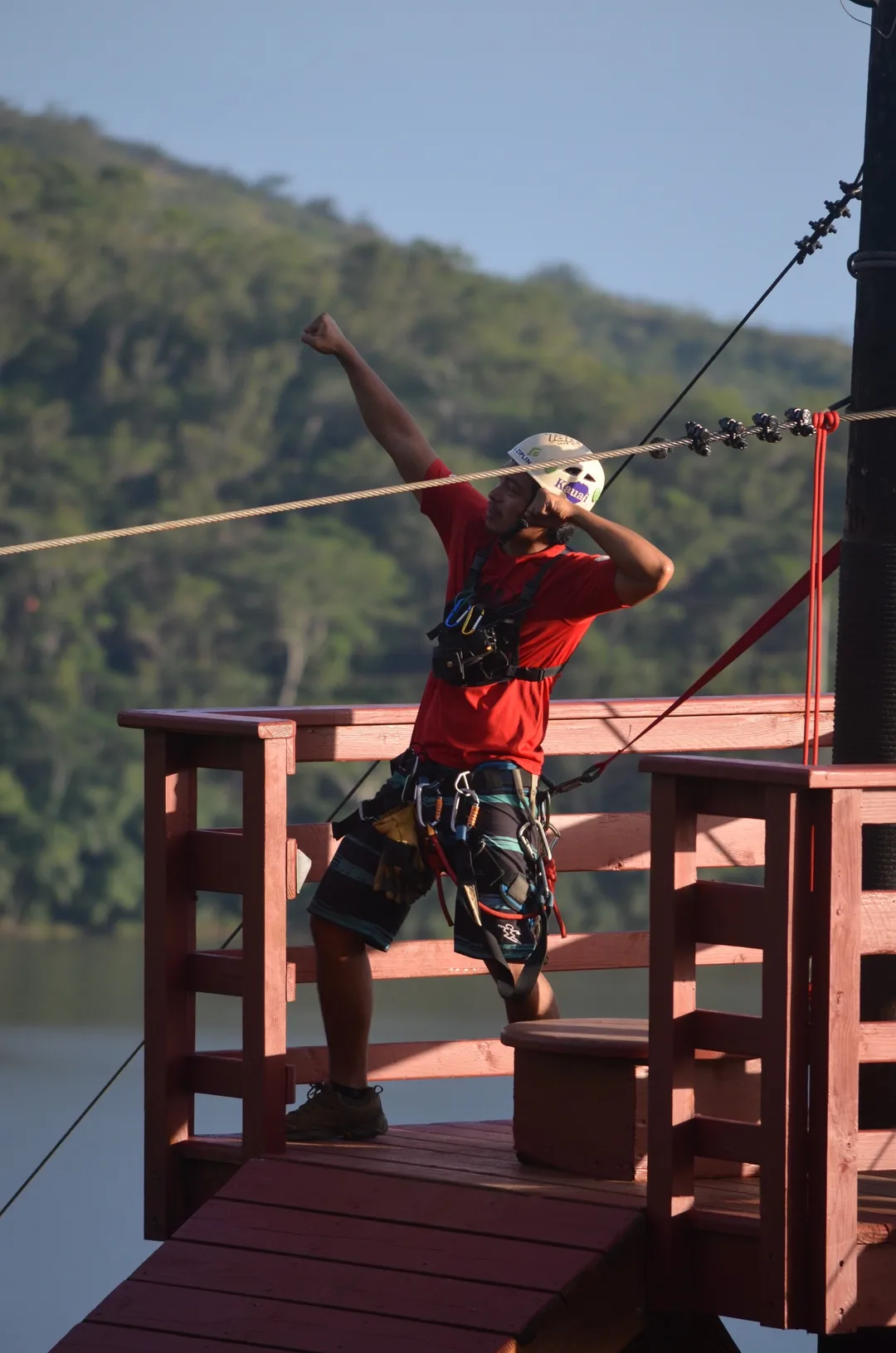
The floor is seven years old, and a minor never rides alone. The company words the adult two ways. Its FAQ asks for a parent or guardian, while the booking notes behind both courses ask only for someone at least eighteen along on tour. Bookings themselves have to be made by someone eighteen or over. Bring the parent or guardian where you have the choice, since that is the stricter of the two readings. The listing's separate line about an adult twenty-five or older appears nowhere in the company's own text.
Maximum weight is 280 pounds, and guests on the light end ride paired with another rider or a guide. That pairing is not a punishment. A light rider stalls partway along a long span, and the guides would rather add mass than come out to retrieve anyone.
The health list is short and firm. Koloa Zipline rules out back, neck and knee injuries, bone and joint problems, heart conditions, pregnancy, recent surgery, and allergies to bees or dust. Three months is the company's line, and it is the box you tick when you book; the listing stretches the same question to six. The tour is not wheelchair accessible, and the company states that plainly on its own site. Smoking and alcohol are not allowed on the course.
One booking takes up to twelve travelers. Neither the company nor the listing publishes a cap on how many people ride a single departure, so treat twelve as an order size and not a promise about group size.
The Water Below Was Dug for Cane
Waita Reservoir went in during 1906 as the primary water source for the Koloa Sugar Plantation. The company's page on its own terrain says a 1931 expansion took it to 525 acres holding 23 billion gallons, fed from the Waiahi-Kuia aqueduct system.
What lives there is half accident of history. Alongside largemouth, smallmouth and peacock bass, tilapia and a good deal of birdlife, there are koi, and the company traces them back to the Japanese camp gardens that stood in that area through the plantation years. Hawaiian coots, gallinules, stilts, pheasant and the island's famous feral chickens all use the water.
The reservoir now sits on private Grove Farm land and is not open to walk-in visitors, which is a large part of why the ride is worth taking. Off to one side, Mount Haupu runs along the skyline. Off the other, the Old Koloa Sugar Mill is still standing, shut since 1996 and closed to the public since.
Timing, Weather, and the Refund Window
Check-in is 30 minutes before your departure, and the desk closes 10 minutes before the tour starts. The listing says fifteen minutes. Use thirty. Arrive inside that last ten-minute window and you miss the tour and are charged as a no-show.
Booking here gives you a 24-hour cancellation window. The company's house policy is 48 hours, or 24 with trip protection, while the four-line course it is selling now lists 24 hours flat. A party of eight or more moves to 72 hours and a 50 percent deposit. Cancel inside whichever window applies and half the tour price is charged. Plan on the two days, three for a group, and no page at the desk can catch you out. Tours also do not run short, and the company's pages put that floor anywhere from four to six guests, so a thin departure gets shifted to the nearest time slot or refunded.
Rain is not a cancellation. The company's line, repeated across its pages, is that it ziplines rain or shine, and Kauai's south shore will test that. Bring bug spray, because mosquitoes come out on overcast days and after rain, and bring sunscreen, because the second half of the course leaves the jungle for open sun. Closed-toe shoes are required, and the company writes that one with no exceptions. Flip-flops and open toes are turned away at the desk. Crocs and reef shoes do count as closed-toe and the company will take them, though it would rather you wore something that supports the ankle and has no platform sole.
Check in at the office on Weliweli Road in Koloa, then drive yourself over to the course, which the company puts at less than five minutes away on Mahaulepu Road. The listing names that second address as the meeting point, so carry both. Departures run Monday through Saturday, and the four-line course is an afternoon affair right now: the company lists slots from noon to 4:30, where the full eight-line schedule opened at 7:15 in the morning. Sunset ziplining sits on the company's own list of what the course offers, and the 4:30 departure is the one that runs into the end of the day. Poipu's beaches are ten minutes south for afterward.