

Watch Tennessee End at Newfound Gap Without Touching the Wheel
The Smokies are easy to look at and hard to drive. This is the first-timer's orientation run out of Gatlinburg: three hours with someone else doing the driving, a string of overlooks, and a river stop on the way back down.
The hardest part of a first day in the Great Smokies is usually the logistics. Smoky Mountain Guides says as much on its own site: this is the most visited national park in the country, and parking congestion, wildlife traffic and too many trail choices can turn a vacation into stress. The three-hour Classic is what it sells against that. You hand over the driving, the routing and the parking, and spend the time looking out the window.
The van leaves from the upper lot behind the Gatlinburg Welcome Center and climbs Newfound Gap Road into the mountains. Two departures a day, 9:00 AM and 2:00 PM, and booking closes twenty-four hours before the one you want. The listing carries a single option, so the only decisions are the date and which of the two times suits you. The company runs several other routes, most of them from the same lot; this page is about the Classic.

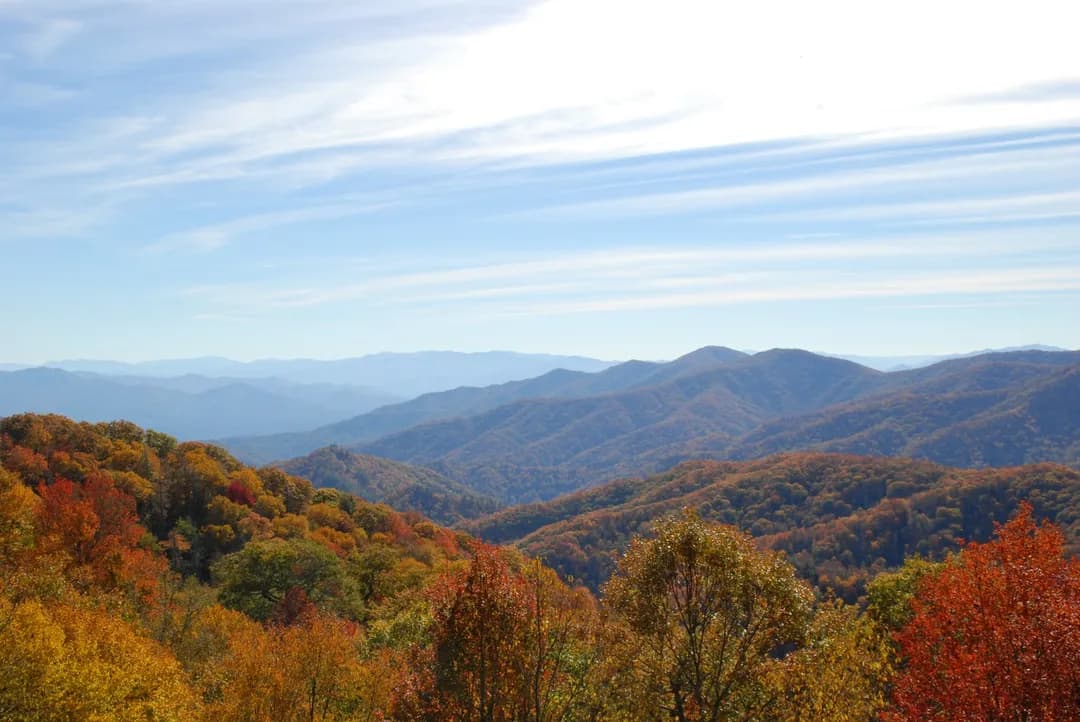
Most of the three hours goes to the road itself. The itinerary gives the drive up Newfound Gap Road a hundred and fifteen minutes, which sounds generous for thirteen miles until you count the stops. The van pulls into overlooks for photographs and questions, and the guide covers the people, plants, animals and history of the range while you climb.
Two shorter stops bracket that drive. One sits low on a river, where a resort community stood more than a hundred years ago. The other is Newfound Gap itself, twenty minutes at the top.
 The "Classic" National Park TourGuided three-hour van tour of Great Smoky Mountains National Park from Gatlinburg, departing 9:00 AM and 2:00 PM. One booking takes up to ten travelers. Rated 4.9 from 341 reviews.www.viator.com
Twenty Minutes Where Tennessee Hands Over to Carolina
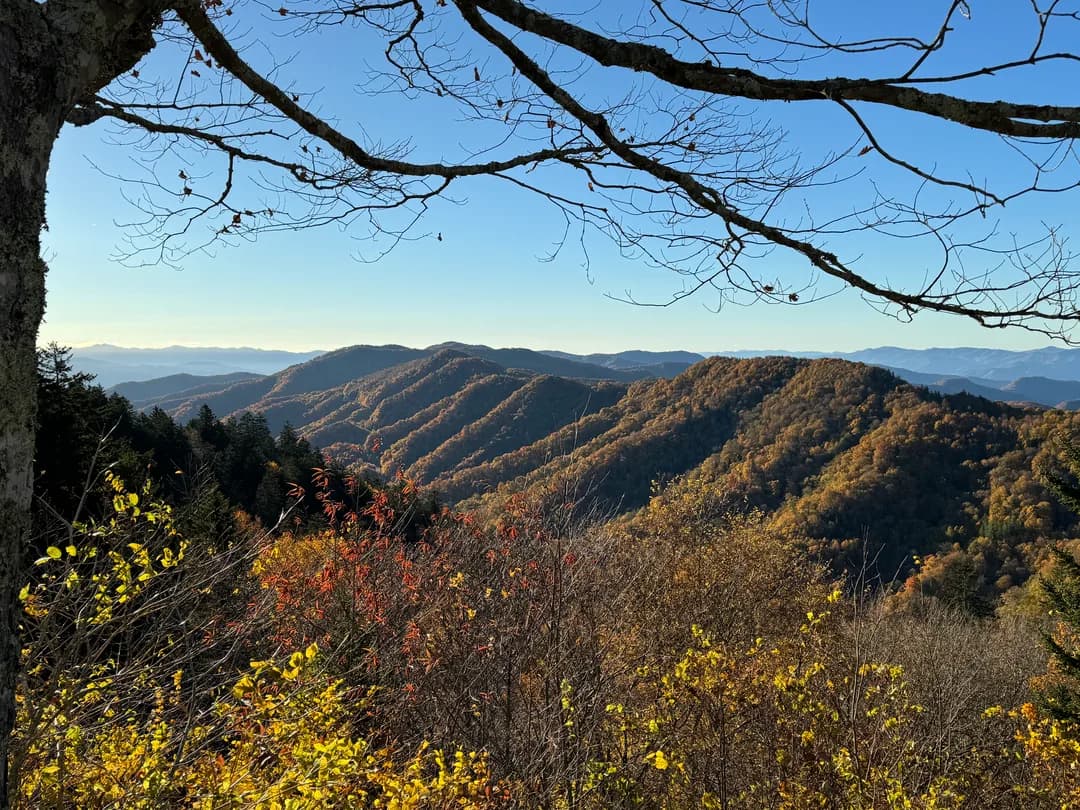

Newfound Gap is where the road tops out and where Tennessee stops being Tennessee. The park puts it at 5,046 feet and calls it the lowest drivable gap through the Great Smokies. The state line runs through it, the Appalachian Trail crosses here on its way north, and the view drops into two valleys at once: the Sugarlands to the north, the Oconaluftee to the south.
The itinerary gives this stop twenty minutes, and the operator and the listing put the same anchor on it. Franklin Roosevelt dedicated the national park on September 2, 1940, speaking from the Rockefeller Memorial at Newfound Gap, astride the state line. The memorial is the stone terrace at the edge of the lot. The Civilian Conservation Corps worked on it until 1940.
Twenty minutes covers getting out, taking the view in and reading what is carved there. It does not cover walking any real distance on the Appalachian Trail, so do not plan on that. There are restrooms at the overlook, which the park lists as seasonal.
The park says it plainly: clear skies in the lower areas do not guarantee the same weather at elevation. Riders have found that out at the top. One December group climbed into fog thick enough to erase the view and came back down to clear skies without a second chance at it; an October rider found the overlook shrouded in mist and no view at all. Bring a layer even in summer, and treat the view as weather rather than as something the booking owes you. Phone coverage is the other thing to leave behind up here: the park's own answer is that service is extremely limited and for the most part non-existent.
The Listing Names Elkmont; the Operator Calls It a Choice

This is the one place where two descriptions of the same trip do not line up, and it is worth knowing before you book.
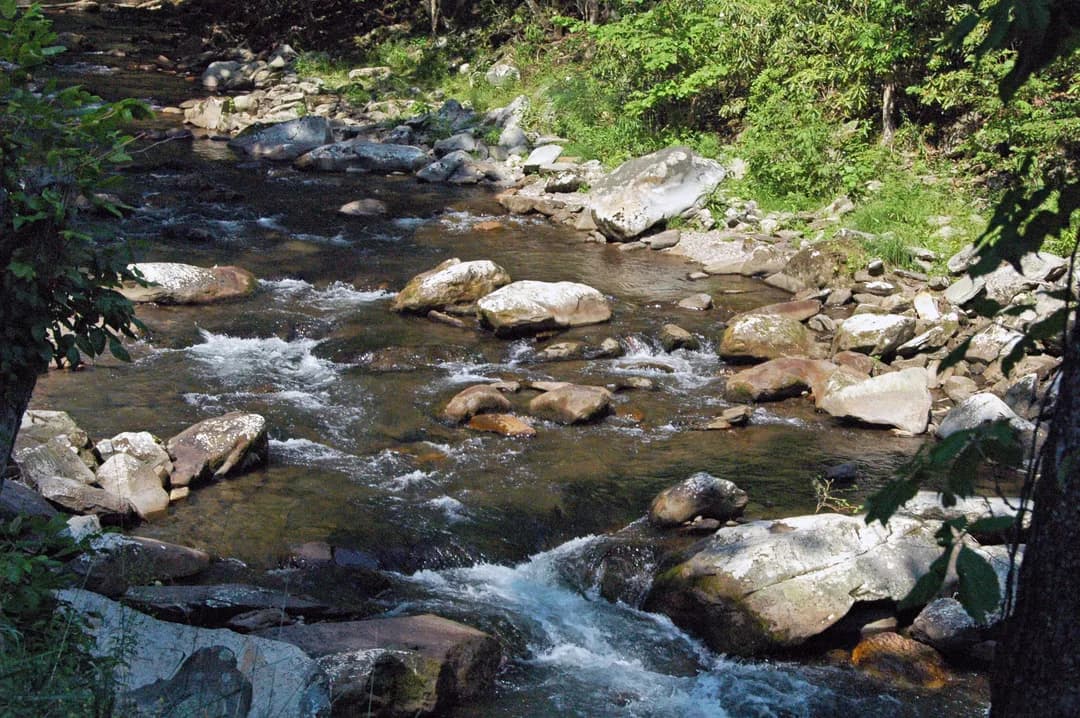
The booking listing names Elkmont and gives it thirty minutes: the remains of a resort community that predates the park, on one of the mightiest rivers in the Smokies, by its own description. The park's version has two layers. Elkmont started as a logging company town, built in 1908 and large enough to hold more than fifteen hundred people by 1918, and it closed when the lumber company finished and pulled up the rails in 1925. The cabins that survive belong to the resort that grew alongside it, and eighteen of the Appalachian Club ones are preserved today. The operator's own page for this tour describes the back half differently. It says that coming down the mountain the guides choose between a few options that best suit the group, and that the trip finishes with short walks near the rivers.
Both descriptions put a stop near the water on the return leg, but they do not promise the same place or a fixed river. Treat the water stop as part of the trip's general shape, not Elkmont as a guaranteed stop. On ordinary days riders do describe pulling into Elkmont and walking through the cabins, so it is a real stop to ask for rather than a maybe. If Elkmont is the reason you are booking, say so when you book; the morning of the trip is too late.
Who Gets on the Van
One booking takes up to ten travelers. The listing prices everyone in a single band running from age zero to ninety-nine, so there is no separate child rate on this page. The operator's own site adds a restriction the listing does not carry: children under four are taken on private trips only.
Two fields in the booking data disagree about the minimum. The age band and the price tiers both start at two travelers; a separate booking field says one. The tiers are the part that sets what you pay, and the lowest one begins at two.
Group size has two answers depending on which page of the operator's site you read. The current small-group page puts a typical van at four to ten guests. An older FAQ on the same site still says eight. The booking system is the one that binds, and it stops at ten per reservation. Whether you ride with strangers is a separate question, and the operator's FAQ answers it plainly: small parties are sometimes booked together, and a private trip is only guaranteed once four people are paying for it.
Physical demand is low by design. The listing rates the trip suitable for all fitness levels, the walking is short, and the van does the climbing. Bottled water and snacks are listed as included. Lunch is on you: the operator suggests bringing your own. The operator's own site lists a boxed wrap for USD 10, arranged directly with Smoky Mountain Guides rather than through this booking; ask about availability when you book.
Cancellation is free up to twenty-four hours before departure. Inside twenty-four hours nothing comes back, and the booking terms do allow the trip to be called off for bad weather. That clause earns its keep on this route. The park's line on Newfound Gap Road is that it stays open year-round, weather permitting, and both halves of that sentence are real: a winter storm closed the road on January 23, 2026, and a landslide closed it until further notice from August 1, 2025.
What a closure looks like from a seat in the van is also on the record. Through the August 2025 landslide, riders describe being taken on an alternate route with the top of the mountain off the table, and the company having a replacement plan ready instead of cancelling. One April 2024 group was on the North Carolina side when the park shut the roads back to Tennessee, and the guide drove them the long way around through North Carolina, adding two hours to a three-hour tour. A closure up here usually turns into a different route rather than a cancelled trip; in winter the thing to watch is the road itself, because the forecast in Gatlinburg will not tell you whether the gap is open. The park's current conditions page carries the live closures.
Your Car Sits in Gatlinburg While You Ride
The trip meets in a parking lot, which means your own car stays behind for three hours. That raises a question neither the listing nor the operator's site answers.
Great Smoky Mountains National Park charges no admission, but it does require a parking tag. A tag is required for any vehicle parked longer than fifteen minutes inside the park boundary, and an America the Beautiful pass does not substitute for one. Tags run USD 5 for a day, USD 15 for a week and USD 40 for a year. They have to be physical and displayed on the dash, digital copies are refused, and each tag is tied to one license plate. Vehicles carrying a state-issued disability placard or plate are exempt, and the park waives the requirement on its free-entrance days.
The park's own FAQ sums up the odds: entrance is free, and most visitors will need a tag.
So is the welcome center lot inside the boundary? No official source says either way. What the park service has published is the boundary itself, and in its authoritative land data the address at 1011 Banner Road falls outside the park by about forty feet. Forty feet is narrower than a parking lot, so that pins the address without pinning the asphalt around it. The park lists the welcome center as one of its in-person tag counters, which settles nothing either way; the same list includes outdoor retailers in Knoxville and Chattanooga. The operator mentions the tag requirement in general terms on its site and never addresses its own meeting point.
Riders fill in part of the gap. A 2025 account describes the meeting point as easy to find and the parking as free, and across several years of reviews nobody mentions buying or displaying a tag to leave a car in this particular lot. That is what has happened to people, not a published rule, so it is worth having without being worth relying on.
Before you walk out to the van, ask at the tag counter whether this lot needs a tag. If it does, buy the daily one right there; the counter is inside the welcome center. And if you would rather not park at all, the same rider notes that the Gatlinburg trolley reaches this lot, which takes the question away entirely.
The 9:00 AM run has you back at the lot before the afternoon starts, with the rest of the day open for the Gatlinburg side of the park. Riders keep recommending that one for exactly this reason: afternoon traffic into the park is heavy enough that guides route around it. The 2:00 PM run returns three hours later, which is when those ridges do their best work. Either way the van drops you where your car has been waiting, and downtown Gatlinburg is a short drive from the lot with the evening still ahead of you.