
Walk the Bonneville Salt Flats Where Cars Hit 600 MPH
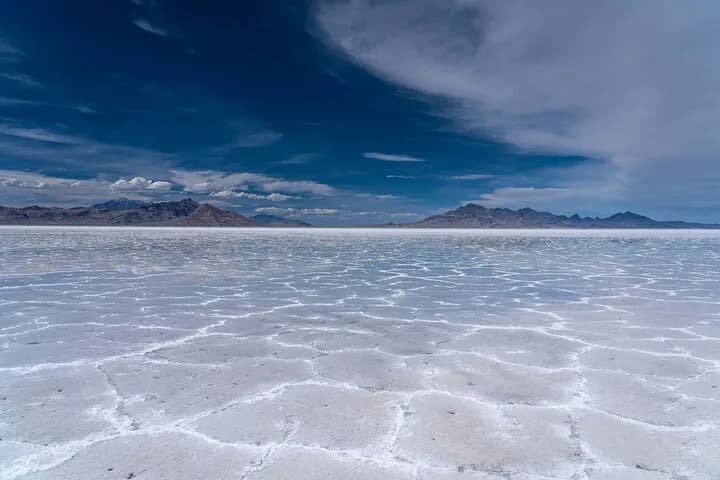
Near its center the salt crust runs almost five feet thick in places, and thins to under an inch at the edges. This half day puts you out on it with a guide and a van, with a state park and a roadside sculpture on the way.
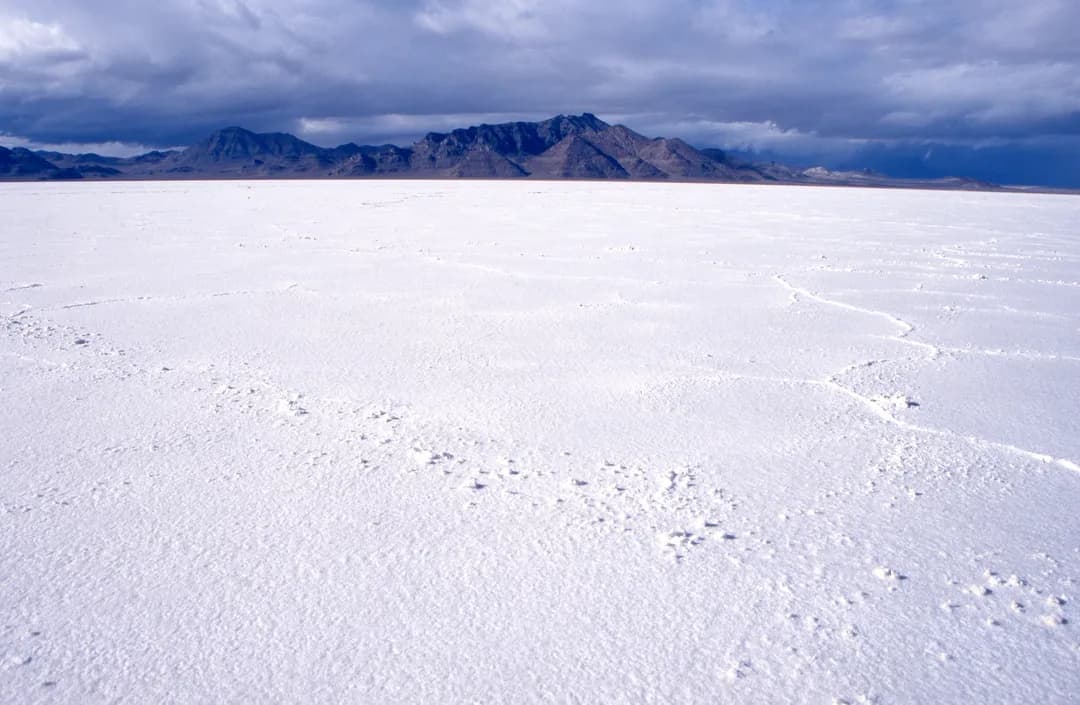
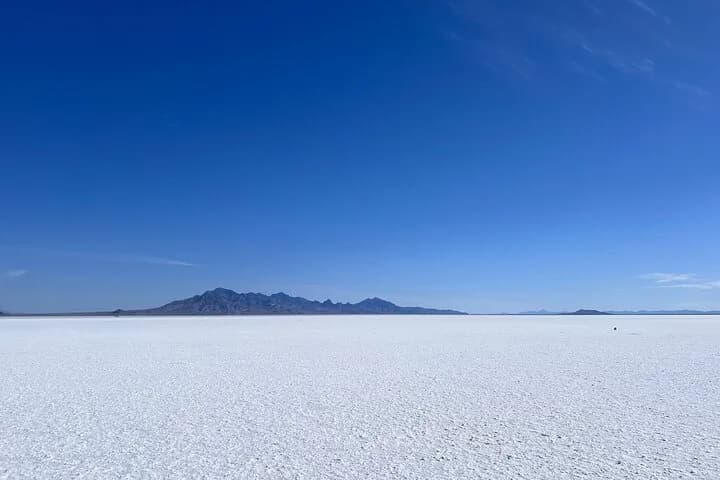
Interstate 80 runs west out of Salt Lake City and stays flat the whole way. The Bureau of Land Management puts the salt flats 120 miles out: a 30,000-acre sheet of hard white crust, roughly 12 miles long and 5 miles wide, left behind when Lake Bonneville dried back.
The van covers that ground twice in a day. What you get in the middle is time on foot on the salt itself. A guide drives and narrates, bottled water comes with the seat, and the two stops on the way are a state park on the lake and a sculpture at the edge of the freeway.
Departures run morning and afternoon, and the operator moves the afternoon start with the season: 1:30 PM from November through March, 3:00 PM from April through October. The morning run is the same year round.
The booking form will take a single name. Both the listing text and the operator's own page say the tour needs two guests to run, and the cancellation terms let the operator cancel a departure for insufficient travelers. Book as a pair, or accept that the date depends on who else books it. The operator's own terms say a single guest may book, and that if no second booking lands on that departure it will offer another date or a full refund.
 Bonneville Salt Flats AdventureSix hours from Salt Lake City with a guide, bottled water, taxes and fees, and admission to Great Salt Lake State Park. Hotel pickup and drop-off come from a published hotel list. Guide gratuities are not included.www.viator.com
Spring Is When the Salt Goes Soft
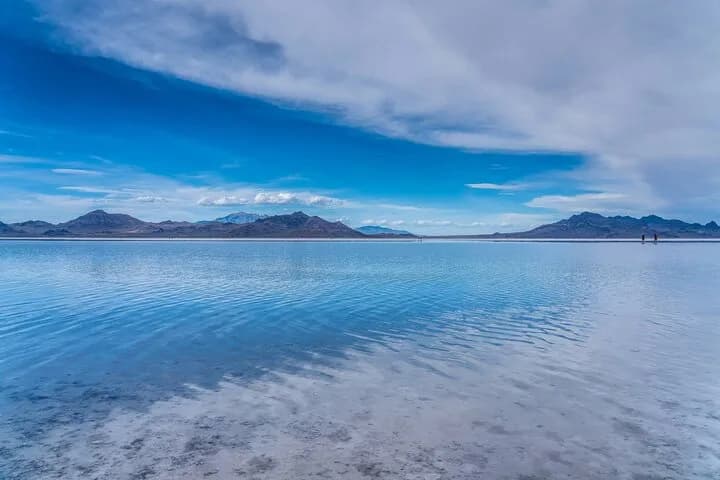
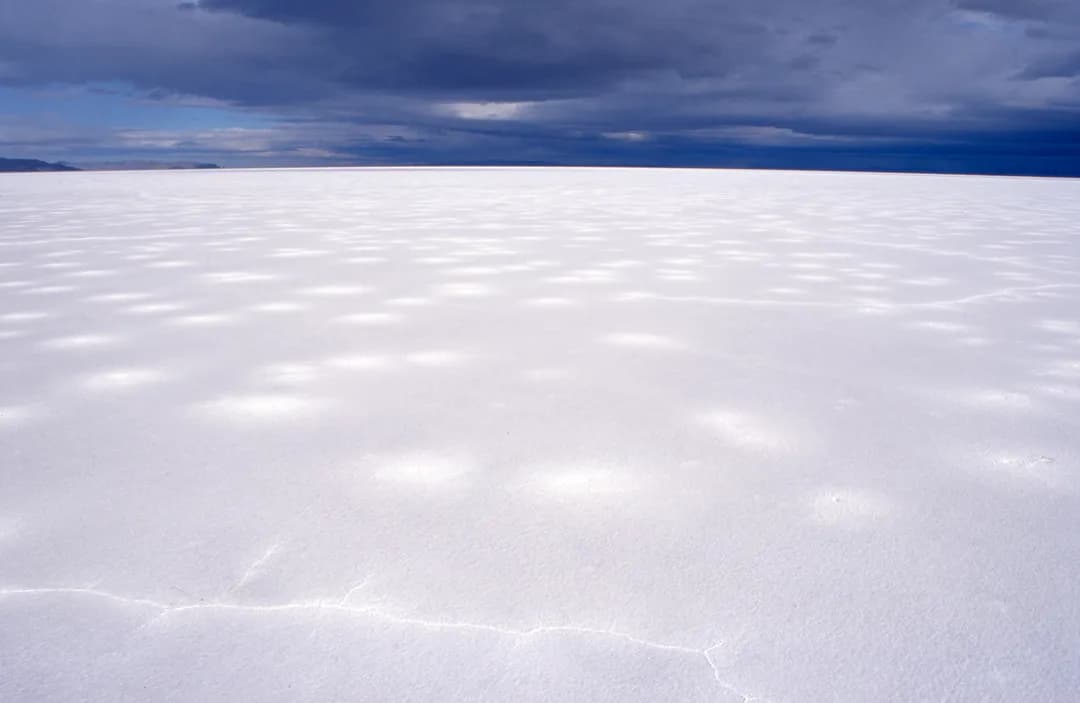
The crust is not the same surface every month. The Bureau of Land Management writes that motor vehicle use is limited by seasonal closure during the spring, when the salt is moist or has standing water on the surface, and that closure dates vary and are posted by sign. That limit is written about vehicles. It is not a statement about walking, and the agency says the flats are generally open to the public for recreation.
The agency's own brochure for the flats puts months on the water. In the cooler months, November to May, groundwater floods the salt several inches deep; when the heat returns in late spring and summer that water evaporates off and leaves fresh crust behind. The closure is not a thing you can look up before you drive out — the agency says the dates go up on a sign at the flats. The state park at the other stop does keep a conditions page, with its road and its launch ramp on it, carrying the date staff last touched it.
Something else lands on the salt in early spring. Potash mining at Bonneville leaves salt behind as a by-product, and the agency describes brine being produced in holding ponds over the winter, pumped north of Interstate 80 once it reaches the right concentration, and discharged onto the southern section of the flats near the access road. As temperatures rise and the salt dries out, that brine joins the natural crust.
One of the photographs the operator supplies to the booking page shows the flat under a thin sheet of standing water. The crust is somewhere under it, and it is the same place.
Two Stops, and One Moves With Your Departure
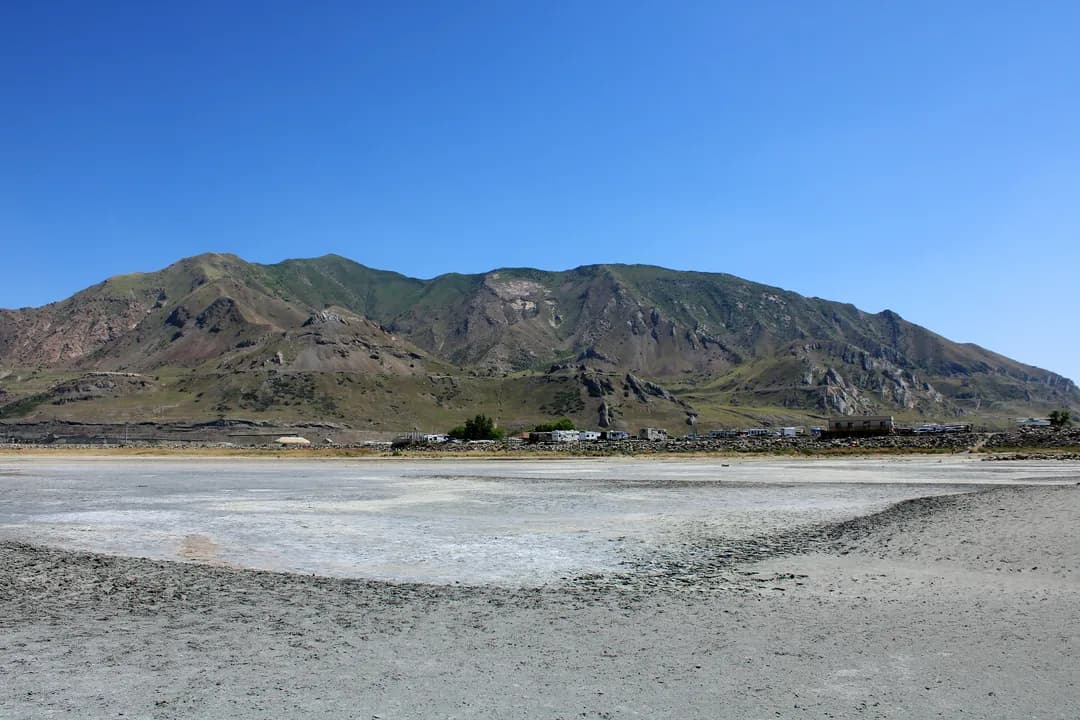
One of the two stops is Great Salt Lake State Park, out by the marina. The listing marks admission there as included, and the operator says it donates five dollars a head from this tour to preservation of the Great Salt Lake.
The park publishes its own gate rates: ten dollars for a private car with up to eight people, thirty for a commercial group or any vehicle over eight seats, two dollars a head on foot or by bike. Drive the same two places yourself and the day costs ten dollars at the park gate and nothing out on the salt, where the land manager charges no day-use fee. What the fare buys is the van, the driver and the narration.
The park also answers something the listing leaves alone. Its own visitor guide takes on the smell that is sometimes at the lake, putting it down to organic reactions in the hyper-saline water and to decaying algae and brine fly casings washed up on the shore, and calling it the ordinary smell of wetlands and beaches.
Which side of the salt that stop falls on depends on the departure you book. The booking page and the operator's main site both put it first, on the way out to the flats. The operator's day-tour site says the morning run takes it on the way back instead, and only the afternoon runs take it on the way out. The length is disputed too: the booking page allows ninety minutes there, both of the operator's own timetables about thirty. Plan around the shorter figure.
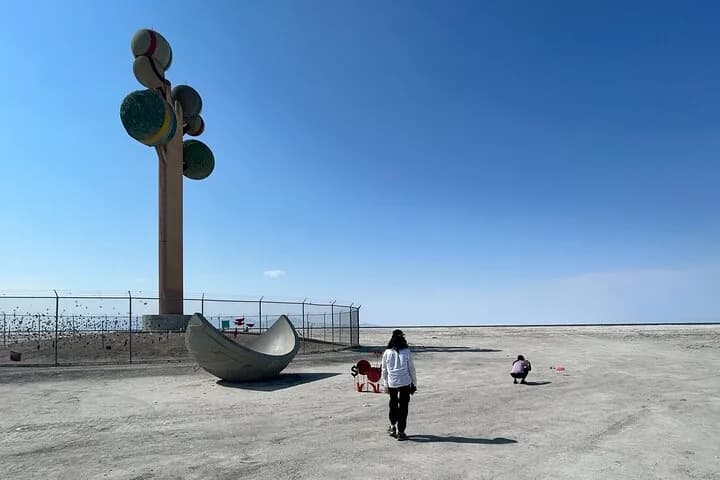
The second stop is the sculpture standing at the edge of Interstate 80. The booking page and the operator both call it the Tree of Life. The location record behind that same booking page files it as Metaphor - Tree of Utah, which is the name that will find it again on a map.
Who This Does Not Work For
The booking page ticks a row of boxes that do not survive a look at the operator's own page for the same tour. It says infants and small children can ride in a pram or stroller, that the trip suits all physical fitness levels, and that public transportation options are nearby. The operator's own page for this tour says in its own words that it is not wheelchair accessible. Those boxes are a supplier form. The page carrying the operator's own name is the one the driver works from. Its accessibility statement goes further than the checkbox: the vans carry no wheelchair lift, service animals are welcome on every tour, and it asks for the type and folded dimensions of a mobility aid so it can say what the vehicle will take.
Children have their own fare. The booking splits adults from sixteen and children under sixteen into separate bands, and an adult has to be on the reservation. The operator caps this tour at fourteen people.
Guide languages on the booking are English and French. The operator's own page lists five more, so the language a page advertises may not be the one attached to this reservation.
Racing Shuts the Salt for Weeks at a Time
The flats are a working speedway as well as a public place, and the agency that manages them publishes the dates. During permitted racing and private events the Bureau of Land Management closes the salt flats to general access and limits access beyond designated areas. Its 2026 list ran:
- 25 June to 1 July, test and tune
- 7 to 13 July, the Bonneville Mile
- 27 July to 8 August, Speed Week
- 9 to 15 August, a private event
- 20 to 28 August, motorcycle speed trials
- 30 August to 8 September, World of Speed
- 23 to 29 September, World Finals
That season closed on 29 September. The agency keeps the current list on its own page for the flats and asks visitors to check event schedules before travelling, which is the list to put your date against rather than the year above. Inside those windows it writes that visitors may still travel up to a hundred feet onto the salt from the portal sign without paying the entrance fee. Outside them day use is free, and the agency asks for no permit to photograph, look at, or drive on the salt except during events of its own.
Racing is why the ground has a reputation at all. Cars have been timed here since 1914, and the agency writes that the 300, 400, 500 and 600 mile-per-hour barriers were all broken on this straightaway.
Confirmation is instant and bookings close at 23:30 the day before. Cancel at least twenty-four hours ahead and the refund is full; inside that window there is none.
The morning run picks up at 7:30 and starts dropping off at 1:30. That leaves the whole afternoon back in Salt Lake City, with salt still drying on your shoes.