

Walk Past Scale-Model Planets, Then Lie Back Under Pioneertown's Sky
Two hours on private high-desert land with telescopes, a laser-pointer sky tour and a lounger for every guest.
Stargazing Joshua Tree runs this program on private land in the Pioneertown area, which the operator puts about 15 minutes from Yucca Valley and 40 minutes from Palm Springs. The site sits outside Joshua Tree National Park, and the exact directions arrive only after you book.
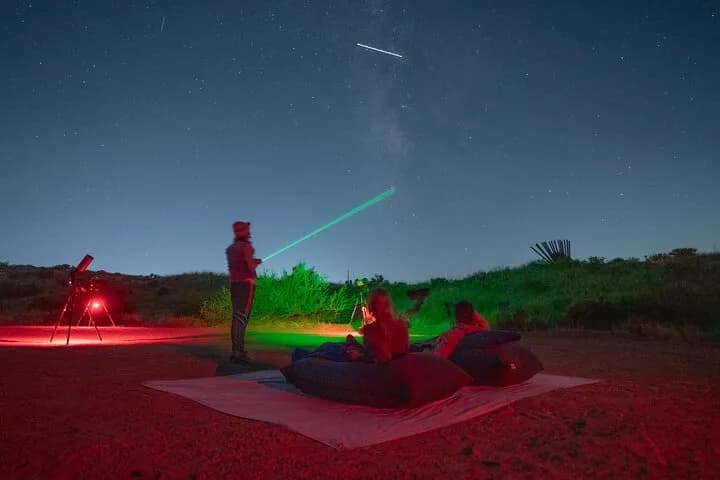
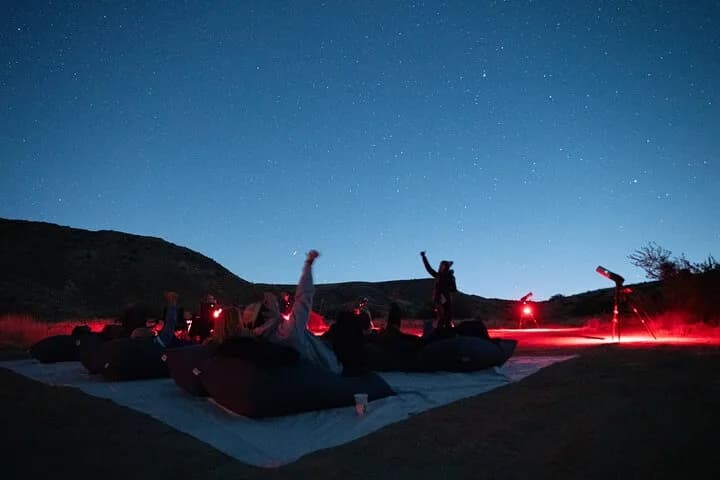
Each guest gets a Yogibo lounger, a blanket and binoculars. The astronomers trace the sky with laser pointers and run several telescopes, and a photographer works the field alongside them.
As of October 13, 2026, the listing priced most dates at USD 200 per adult and USD 115 for ages 4 to 12, with a few 2027 dates set higher. It takes guests from age 4, and every booking needs an adult on it.
Cancel at least 24 hours before the start for a full refund. Cancellations inside that window receive no refund.
 Professional Stargazing Tour in Joshua TreeTwo-hour guided stargazing on private land near Pioneertown. Astronomer, telescopes, binoculars, lounger, blanket and hot drinks included. Transport not included.www.viator.com
From Model Planets to the Eyepiece

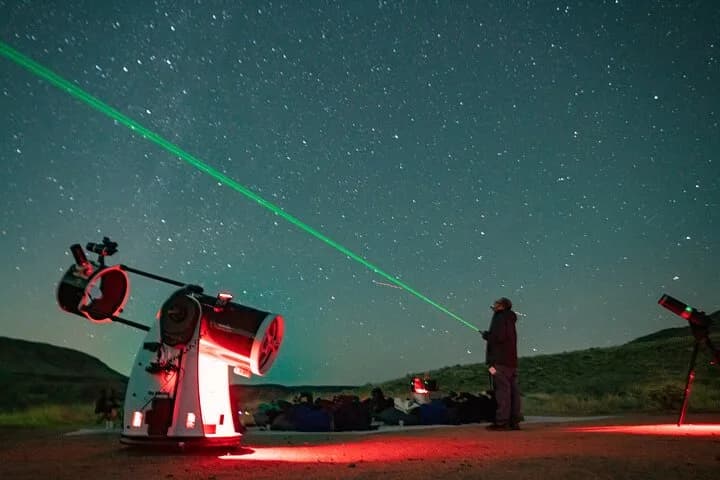
The night opens with a short walk through a scale model of the solar system while astronomical twilight sets in. Then everyone settles onto the loungers for the naked-eye part: finding north, the seasonal triangles, the constellations and planets, traced with laser pointers and told through Greek myth and the sky stories of ancient civilizations.
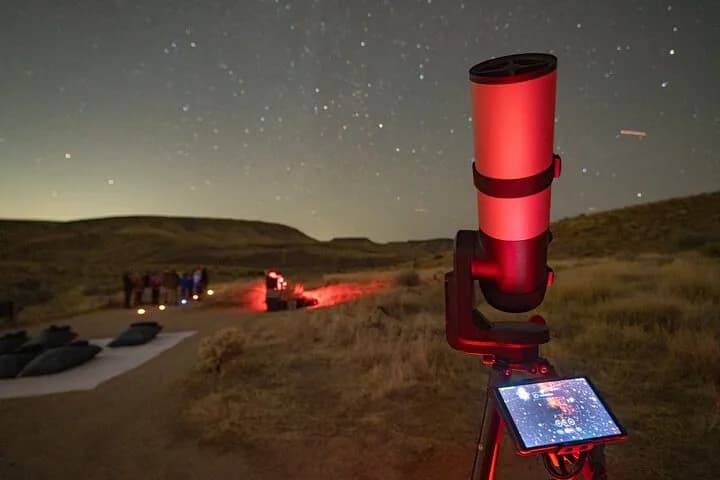
Two guests who reviewed the night in 2026 describe it in rounds: constellations, then telescopes, then a second pass at each. The telescopes carry a pre-programmed list for the evening, and one button on the keypad moves each scope to its next target. The operator names Celestron scopes and the Unistellar eVscope 2 in its kit.
Galaxies, nebulae, star clusters, double stars, planets and the Moon are the regulars, and the International Space Station or a Starlink train may pass over, depending on timing. The operator adds a plain caveat: not every object is visible every night.
Its own list of inclusions adds deep-sky images and long-exposure photos sent after the tour, a line the booking listing leaves out. Two 2026 guests mention a portrait taken against the night sky, and others describe telescope photos sent to them afterward.
The Moon Sets How Dark It Gets

The program runs on full-moon nights too. The operator says the telescopes still find planets, stars and deep-sky objects then, and the Moon itself gets a close look. Guests who went near a full moon say the glare cut down what they could see; one in July 2026 wrote, "Don’t go when there is a full moon, it limits what you can see." Check the Moon's phase before you pick a date.
Weather is the other variable. The operator makes the call on the day of the tour. A night called off for weather can move to another date when seats allow, and the listing promises a full refund otherwise. While the operator requires 48 hours for direct bookings, this listing gives you full flexibility up to 24 hours before start time.
Desert Nights Run Cold
Pack for the temperature after dark. The operator gives October to May nights a range from the high 30s to the high 50s Fahrenheit, with midwinter lows that can reach the low 30s, and June to September nights from the low 70s to the high 90s. Guests keep reporting the chill anyway; one June 2026 reviewer wrote, "IT IS CHILLY EVEN ON 110 DEGREE DAYS."
From October to May the operator advises long pants and a jacket, and sometimes a hat and gloves. Blankets, hand warmers and hot cocoa, coffee and tea are on site, along with cold water to refill your own bottle. The operator asks for closed-toe shoes on the uneven desert ground. Bringing your own food and drinks is fine; smoking is not allowed on the dry site.
Getting There Before the Signal Drops
Transport is not included, and the drive is part of the plan. The directions come in the confirmation email and again in the reminder. The operator calls them crucial: cell service ends roughly 10 minutes before the site, and the last 2 miles run on remote dirt roads that a standard sedan can handle. Download the directions before you leave town.
The operator calls ride-hailing apps unreliable out there and suggests reserving a car service ahead. There are no restrooms or portable toilets on site, so plan a final restroom stop in Yucca Valley or Pioneertown before heading in.
Start times follow the sunset. The operator aims for about 45 minutes after it, and the listing's calendar runs from 5:30 PM in midwinter to 8:45 PM in midsummer. The exact time comes with your confirmation and can shift on the day for weather or sky events.
The operator needs at least four guests booked on an evening to run it, and caps a night at 18. A solo traveler can still book; the listing lets the operator cancel a night that falls short.
Expect a short walk on unpaved ground and plenty of standing at eyepieces. The listing advises against the tour for anyone who cannot stand for 30 minutes. The operator says its tours are "not considered handicap accessible," adds that many of its telescopes have a detachable tablet showing the eyepiece view, and asks guests with access needs to get in touch.
Pets stay home, though the listing allows service animals. Tips are optional and go to the astronomer and the photographer, in cash on site or by Venmo. Then it is you, a lounger, a blanket and two hours of sky.