Walk Down Into the Grand Canyon, Eat Lunch, Walk Back Out
A private South Rim day: morning below the rim, afternoon above it. The hike is short on paper and steep underfoot. Where you sleep the night before decides whether the day runs five hours or nine.
The booking page puts the walking at three quarters of a mile. The park's own trail bulletin measures the same leg at nine tenths of a mile one way, 1.8 miles there and back. Either number stays modest right up until you notice which direction it runs first.
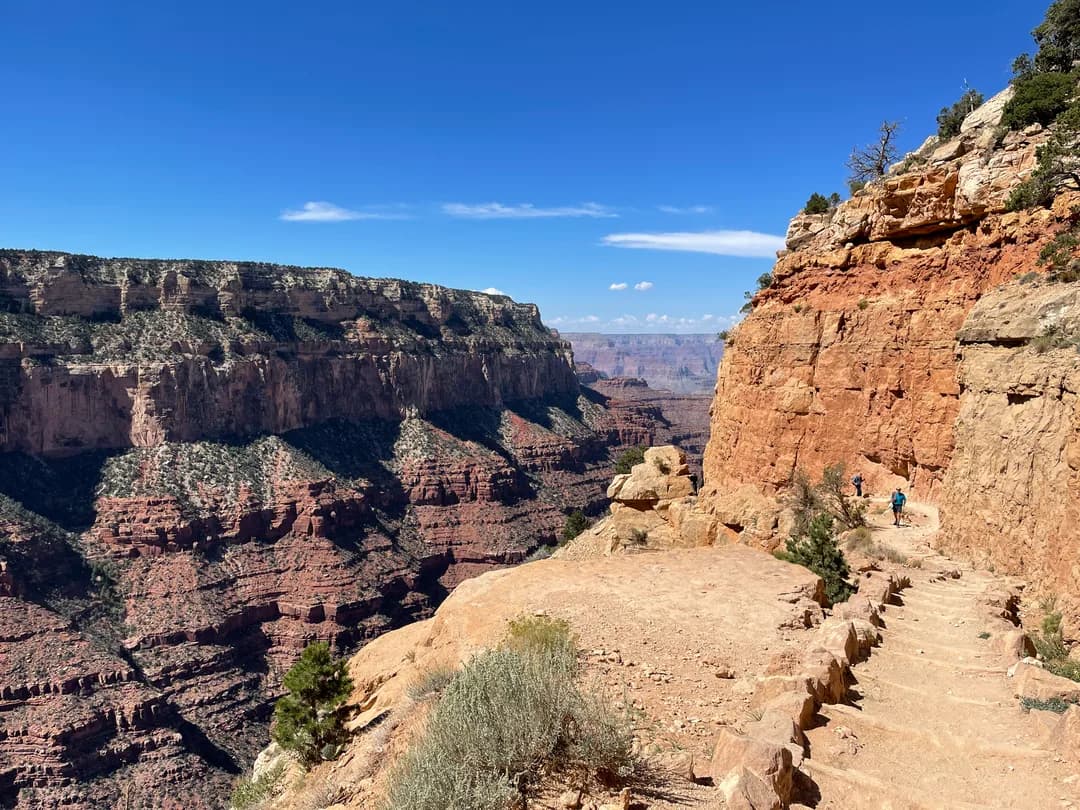
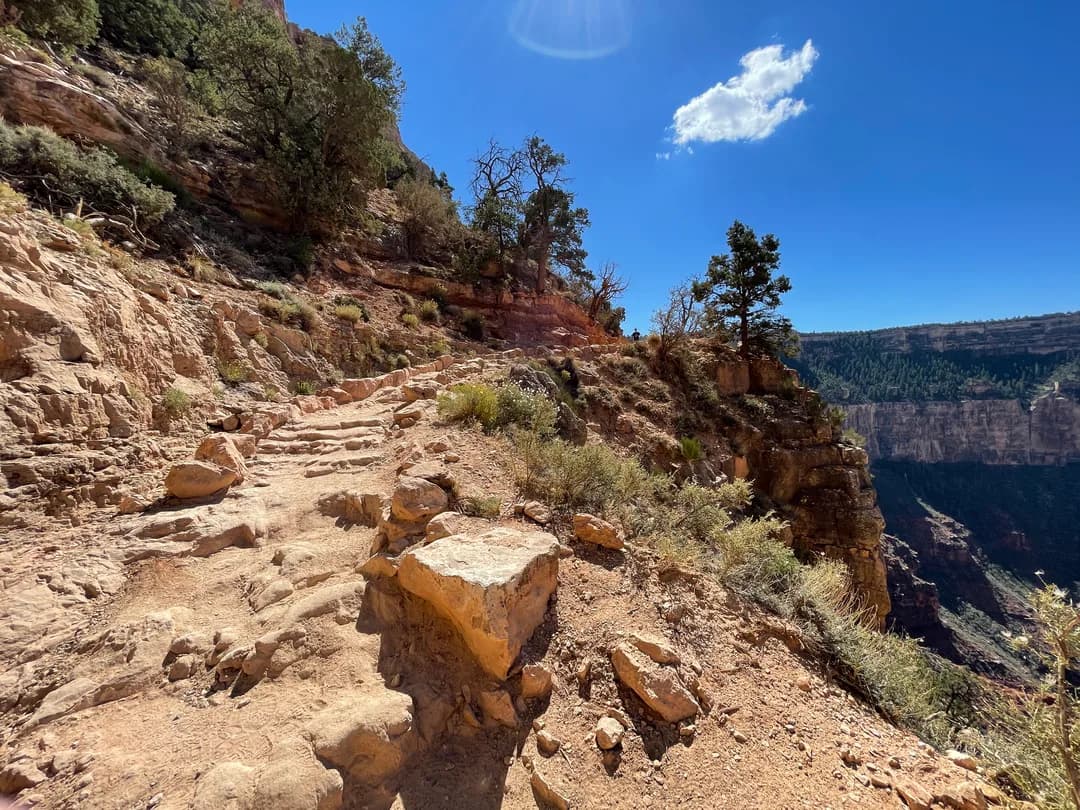
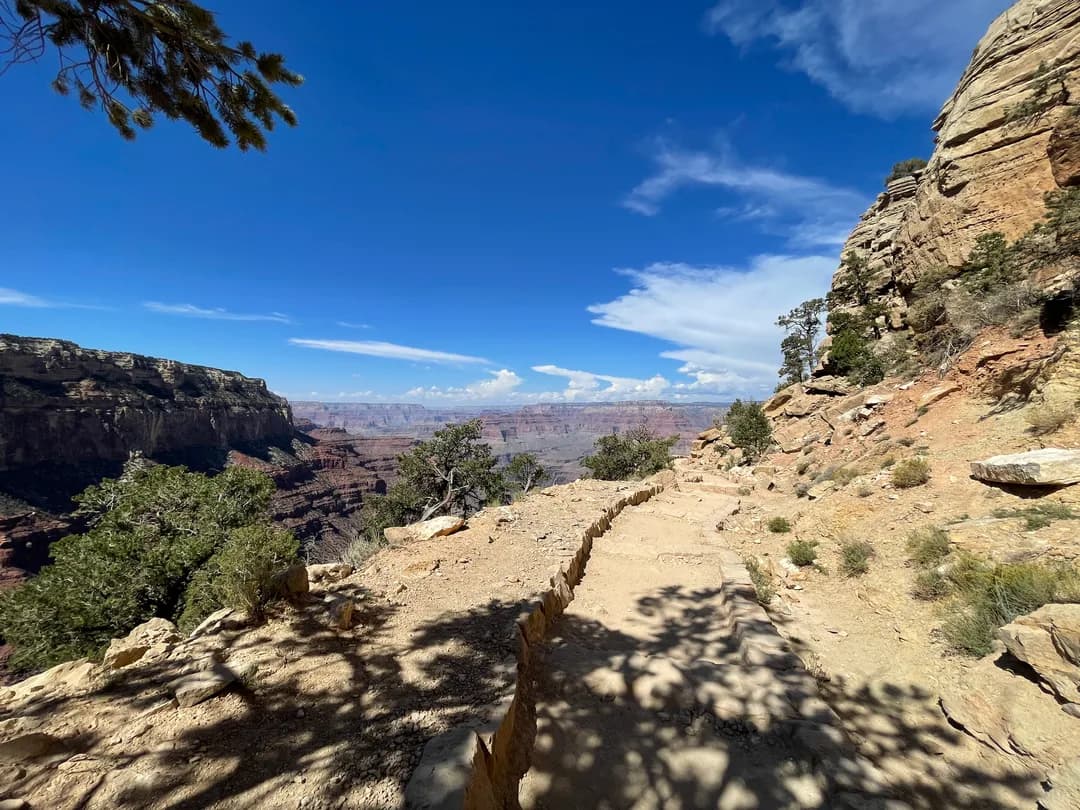
You start by going down. The South Kaibab Trail leaves the South Rim and drops below it, and the whole hiking block is scheduled at two hours: down to a ledge called Ooh Aah Point, lunch there when weather and crowds allow, then back up the way you came. The operator plans the day around that ledge without promising it. Travellers who have booked this trip describe a guide shaping the day to the group, and one 2023 pair was walked down the Grandview Trail instead. Read the trail as the plan rather than the fixture.
All-Star Grand Canyon Tours caps this trip at seven guests, and the guide carries the load. Backpacks, trekking poles, the picnic lunch and the water all come out of the vehicle. Micro-spikes come along too, for icy conditions.
Nobody in your group drives. A van or SUV collects you where you are staying, anywhere from a hotel to a campground, and brings you back to the same door at the end of the day.
One stretch of the day is nobody's to drive. The park closes the South Kaibab trailhead road to private vehicles all year and runs its own Kaibab Rim shuttle out to the trailhead, a nine-minute ride from the visitor centre. The operator's own trail notes say the same thing: access to the trailhead is by shuttle bus.
The booking takes one to seven travellers and the vehicle is yours alone. The price is quoted per head, and it falls fast as the group fills. USD 1300 for a solo traveller, USD 775 each for two, USD 350 each once there are five of you. One age band is on sale through this listing, and it runs from seven to seventy.
The company is small and local. Ben and Cari Murphy founded All-Star Grand Canyon Tours in Flagstaff in 2005, and the company calls Ben its owner and lead guide. The park's public directory lists it among the holders of a current commercial use authorisation, which is the permit a company needs to guide a day hike inside Grand Canyon.
 Private Grand Canyon Hike and Sightseeing TourPrivate South Rim day from Flagstaff, Williams, Tusayan or the Village. Door-to-door van, under a mile below the rim with Ooh Aah Point as the planned turnaround, picnic lunch, afternoon rim viewpoints. Up to seven guests.www.viator.com
Under a Mile Down, and All of It Back Up
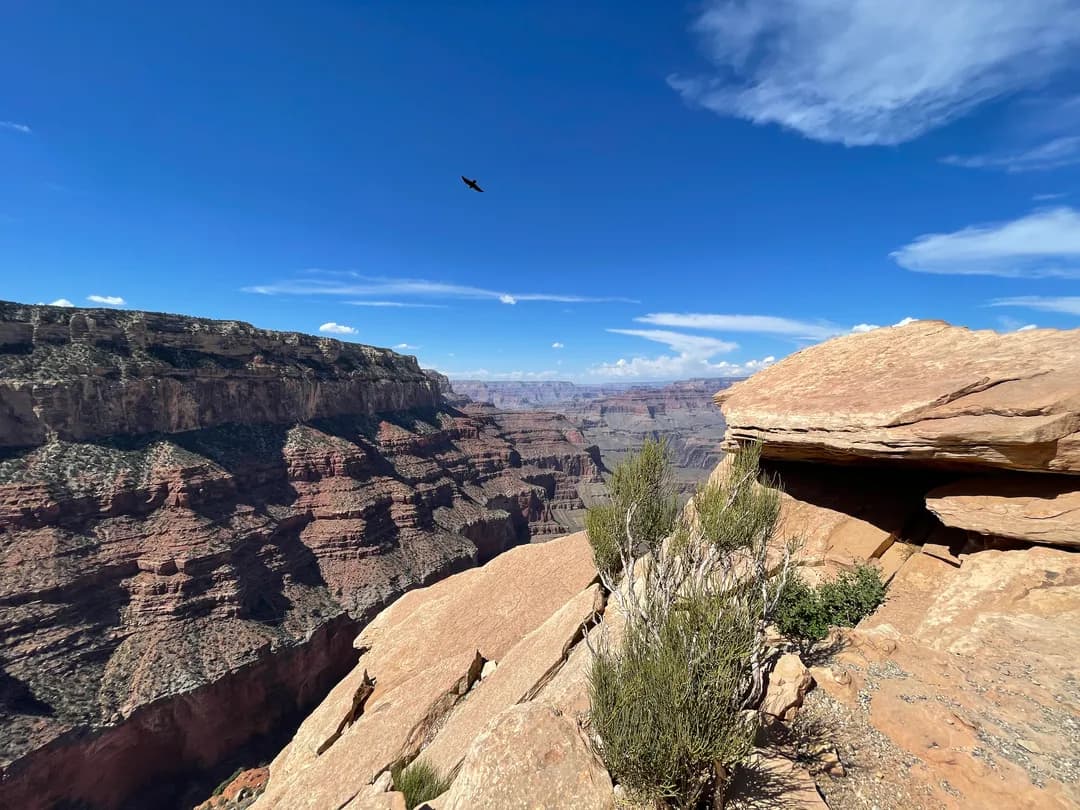
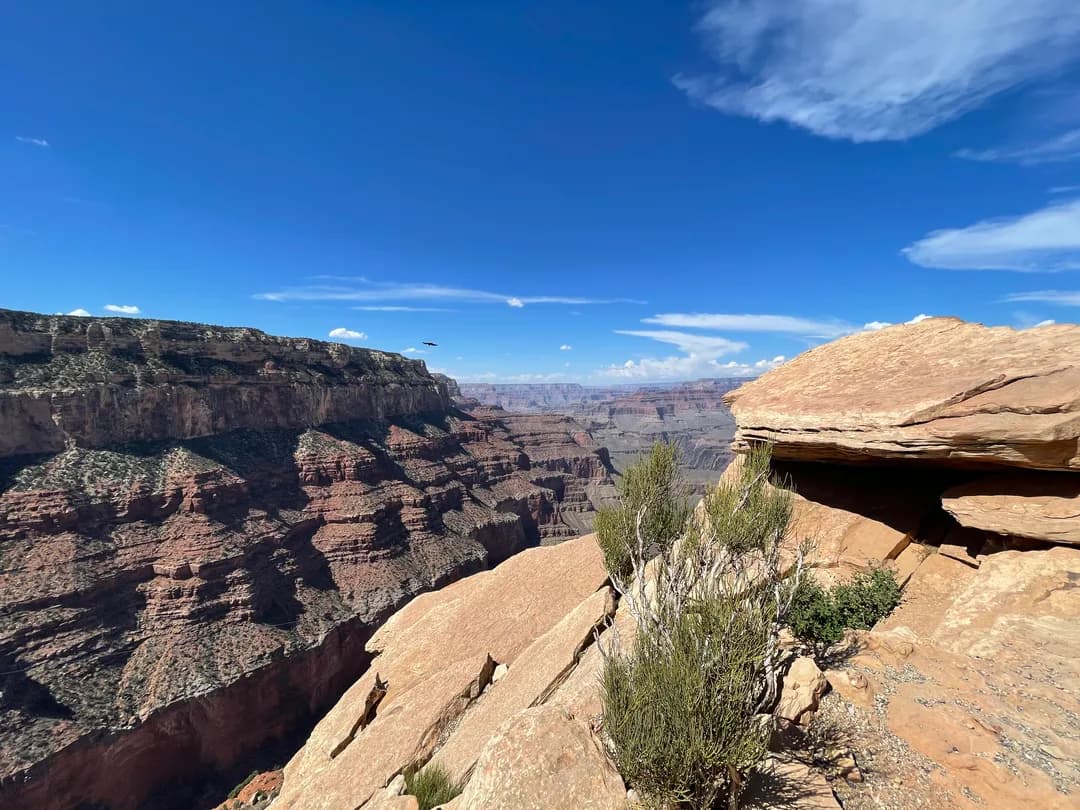
Down is easy and that is the trap. The trail gives up elevation quickly, so the return leg is where the day is actually decided.
The operator asks for a moderate level of fitness and lists four conditions it would rather you did not bring along: spinal injuries, poor cardiovascular health, knee problems, and a fear of heights. That last one is not boilerplate here.
Its own preparation notes put the climb back at elevations of up to 7,400 feet at the rim. That is thinner air than most visitors live in. From May through September the inner canyon regularly passes 100 degrees Fahrenheit, and the operator says it is not uncommon to climb above 120. Those are inner-canyon numbers. You walk down into them.
The Park Service puts a warning on this trail by name. Climbing up the South Kaibab in the summer months, it says, is extremely strenuous and potentially dangerous, with intense heat, minimal shade and no water, and it discourages hiking between 10am and 4pm. It is worth knowing where it draws the line, though. The summer turnaround it marks on this trail is Cedar Ridge, a mile and a half down, and this hike stops well above that.
Winter has its own detail. The park says the first quarter mile, a north-facing stretch it calls the Chimney, holds ice all season, which is what the micro-spikes in the vehicle are for.
The Afternoon Is Spent Getting Out of the Van
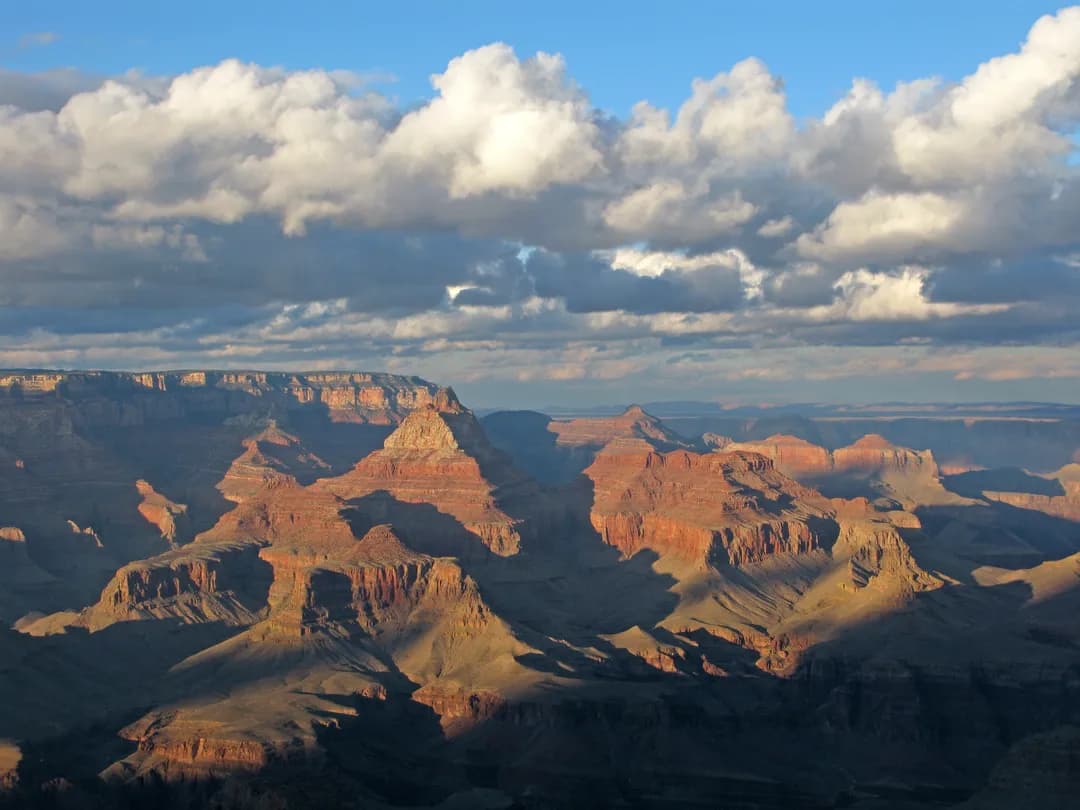
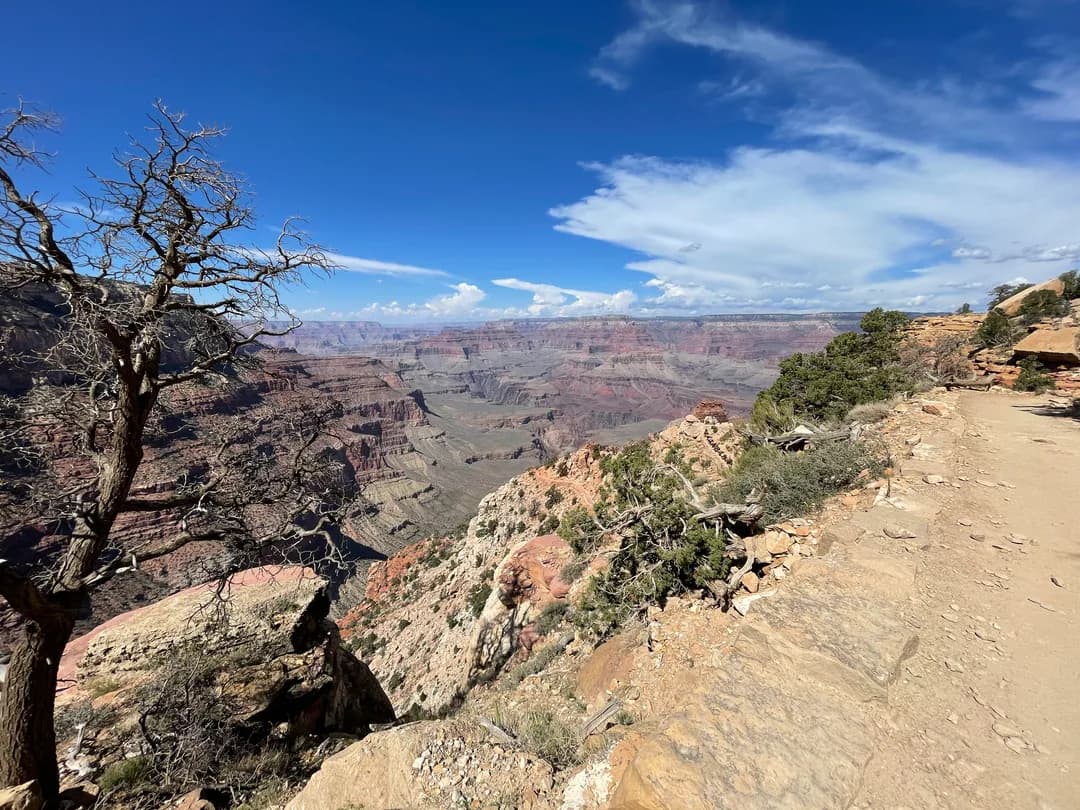
After the climb the day changes shape. Roughly four hours go to viewpoints along the South Rim, reached by road, with the guide stopping at each one and setting up a high-powered spotting scope. Through it you can pick out mules, rapids, ruins, mining areas, wildlife and other hikers down inside the canyon.
Which viewpoints you get is a judgement call made on the day. The operator publishes the list it draws from, and the route is not fixed: Yavapai Point, Mather Point beside the visitor centre, Grandview Point out on its peninsula, Moran Point, Lipan Point, the Tusayan Ruins, Grand Canyon Village, and Desert View with its 1932 watchtower at the park's eastern edge.
Two of those are not currently on offer. Lipan Point and its access road closed on 22 June 2026 for rehabilitation work, and the park expects the closure to hold through 23 December. The Tusayan Pueblo site keeps a season of its own, 2 April to 31 October, Thursday through Monday, 8am to 4pm, so it is shut two days a week and all winter.
Whatever the order, the tour guarantees at least five hours inside the park.
Where You Sleep Decides How Long Your Day Is
This is the one decision worth making before you book, because the tour length is not a single number. The booking page lists the experience as seven to nine hours. The operator publishes its own pickup and return windows, and they move with your town:
- Flagstaff: collected 7:45 to 8:00 in the morning, back between 4:00 and 5:15
- Williams: collected 8:30 to 8:45, back between 4:15 and 5:15
- Tusayan: collected 9:30 to 9:45, back between 3:30 and 3:45
- Grand Canyon Village: collected 9:45 to 10:00, back between 3:15 and 3:30
Same tour either way. A Flagstaff booking runs close to nine and a half hours door to door and a Village booking closer to five and a half, so the listing range describes the middle of that span rather than its edges. Pick the town that matches the day you want, then take your exact time from the confirmation email. Neither figure here is a pickup time.
The Gate Charges Non-US Visitors Separately
Park entrance is inside the price. The surcharge that sits on top of it is not, and the operator says so plainly: fees for non-USA residents are not included and get collected at the gate by park staff.
The Park Service charges every non-US resident aged sixteen and over USD 100 on top of the standard entrance fee, and says this includes nonresidents entering as part of a commercial tour group. Grand Canyon is one of eleven parks where that applies. For four non-resident adults that is USD 400 handed over at the entrance station, on a tour whose listed price already covers entry.
One pass covers it, and only one. The America the Beautiful Non-Resident Annual Pass costs USD 250, is sold to non-US residents, and covers the per-person commercial entrance fee for the holder plus three more adults aged sixteen and over. The cheaper options do not reach a tour like this: the park's own USD 70 annual pass admits its holder in a single private, non-commercial vehicle, and the USD 80 resident version of the America the Beautiful pass is sold only to US citizens and residents. Bring a card either way, as Grand Canyon does not accept cash.
Two things want doing straight after you book. The lunch is made to order by a local caterer, so the operator needs your sandwich choice by phone or email, and that is also where you flag gluten-free, dairy-free, vegetarian or any allergy. Confirm your pickup time in the same message, since the window depends on where you are staying.
Bring shoes you have already broken in, with real tread. The operator asks for no high heels, no dress shoes and no flat-soled shoes of the Vans sort. A wide-brimmed hat, sunglasses and high-factor sunscreen are on you as well. Everything else is already in the vehicle.
Cancellation is free up to twenty-four hours before departure. After that the day takes care of itself: the van comes to your door, and a couple of hours later you are below the rim with lunch in the pack.