
Waikiki's Night Marchers, Told by Lopaka Kapanui in Kapiolani Park
A Native Hawaiian storyteller links Waikiki's old burial grounds and heiau to Night Marcher sightings on an evening park walk.
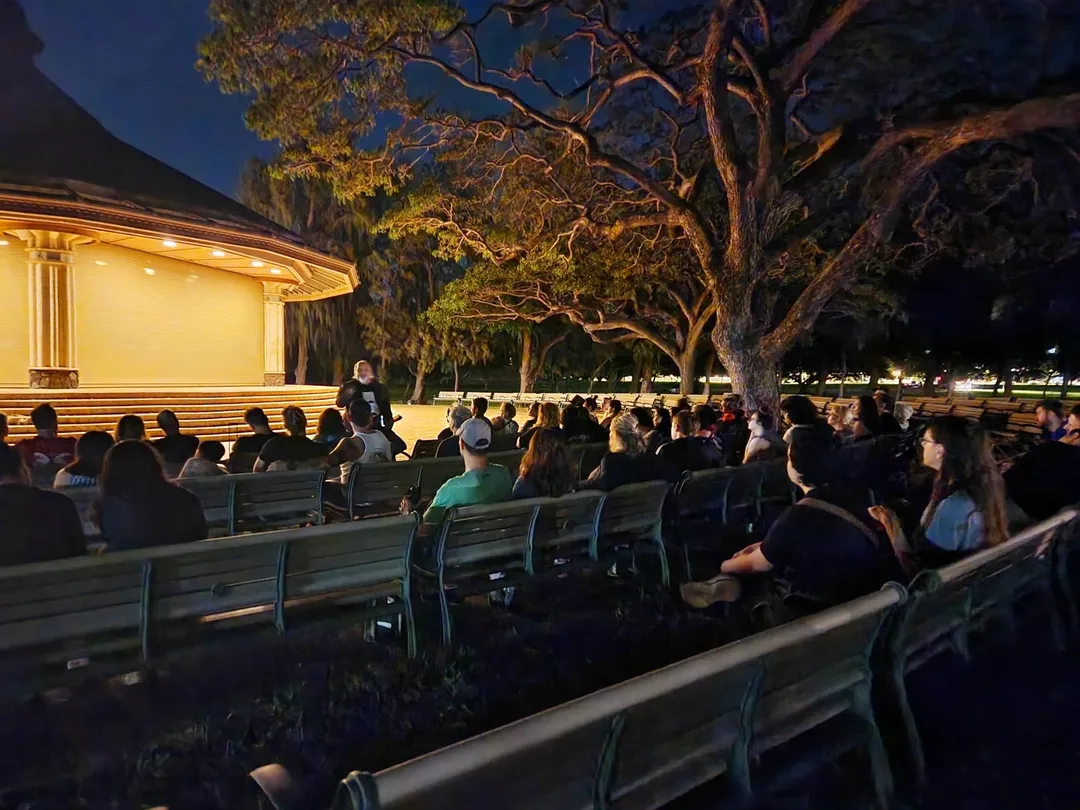
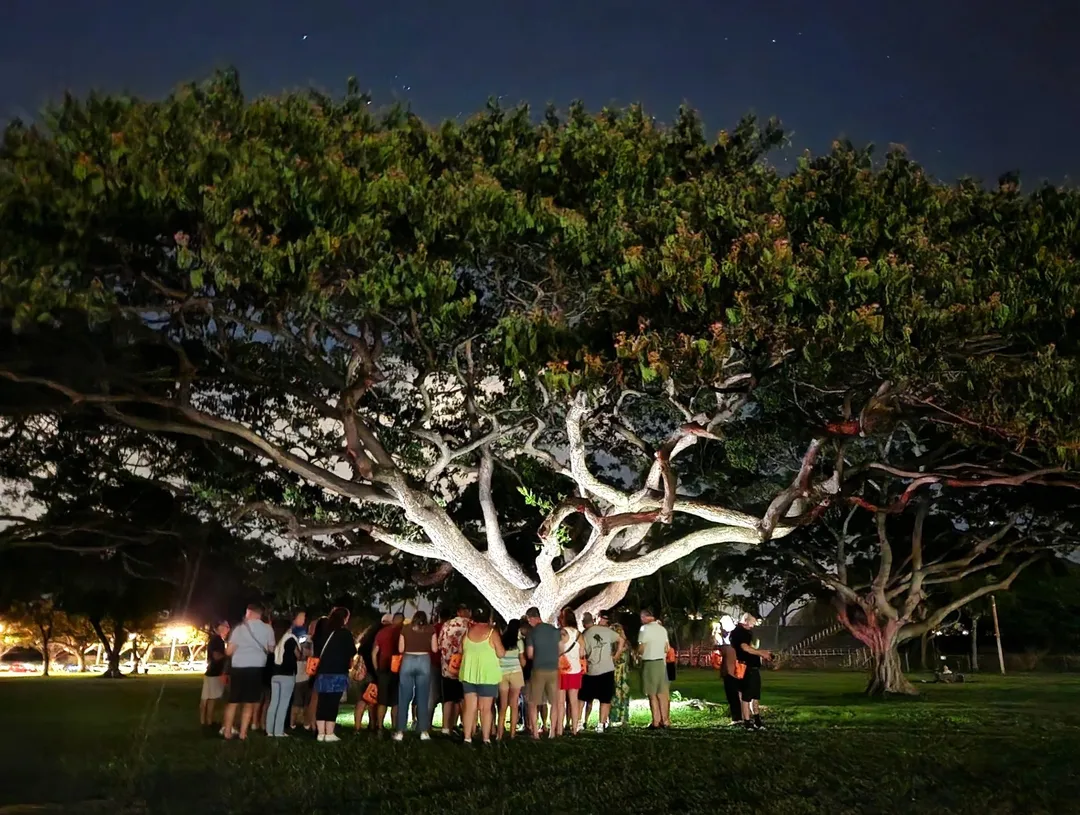
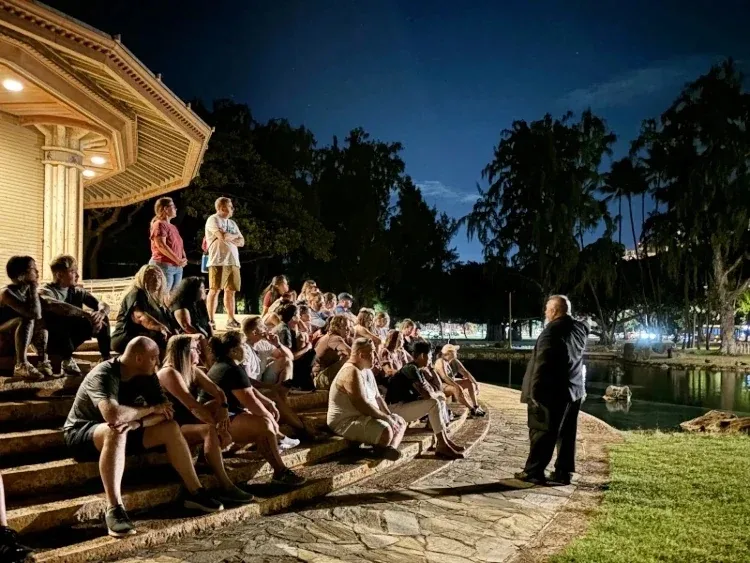
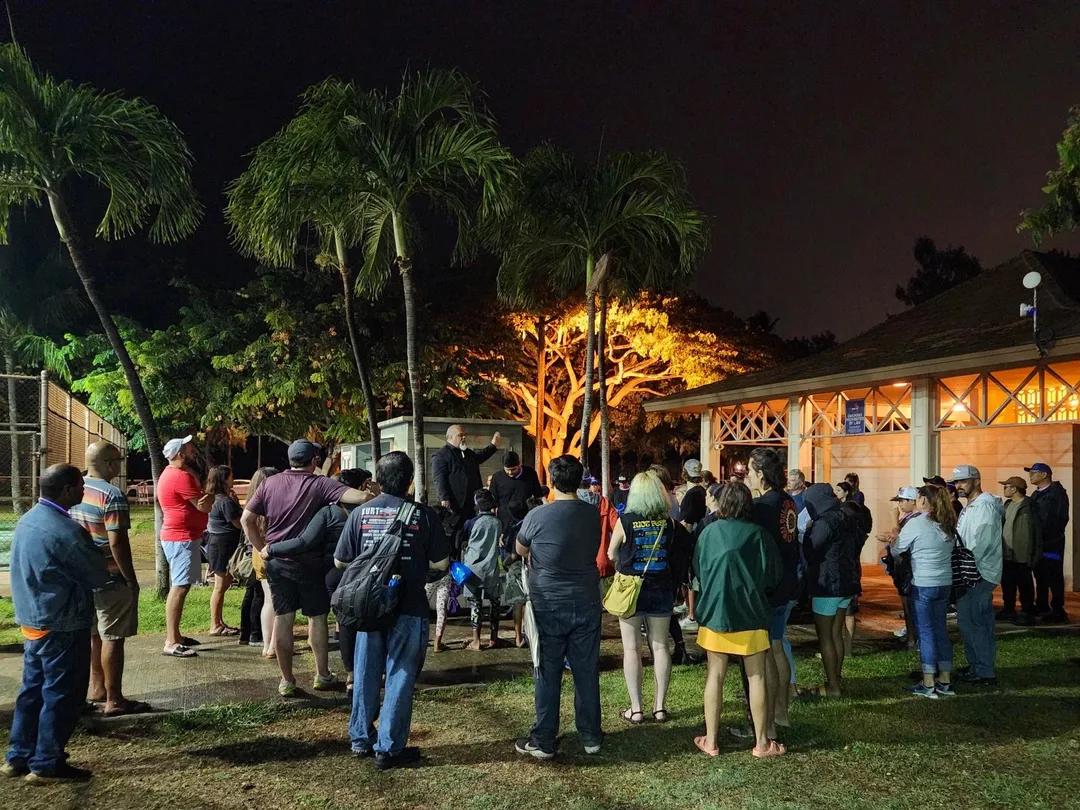
Lopaka Kapanui, a Native Hawaiian storyteller, leads this 90-minute evening walk in Kapiʻolani Park around the Night Marchers, the processions of ghostly warriors and aliʻi said to walk old routes at night. The booking page calls Waikiki the seat of power for Hawaii's aliʻi, its chiefs, for more than 300 years, and a place famous for ancient burials and sacrificial heiau, the Hawaiian temples. He builds the walk around those stories and around the people who say they have witnessed the march. The walk itself stays inside Kapiʻolani Park, so the evening is mostly listening, with short moves between stops.
Kapanui is a Native Hawaiian storyteller and author. His company's site says he grew up hearing the old legends and ghost stories from his elders, and in March 1994 went on a ghost tour led by the historian Glen Grant, who became his mentor. Mysteries of Hawaii, the company he founded, is Native Hawaiian owned and operated.
Tickets are USD 35 per person plus Hawaii state taxes, the same price for adults and for ages 6 to 17, and every booking needs at least one adult. Cancelling at least 24 hours before the 7:00 PM start gets a full refund. Food, drinks and transportation are not included.
 Waikiki Night Marchers Ghost Tour90 minutes · Wednesday and Sunday, 7:00 PM · USD 35 per personwww.viator.com
Meet at the Little Girl Statue by the Duck Pond

Drivers are told to use the Waikiki Shell parking lot, at the end nearest the beach, then walk toward the Waikiki Bandstand and its duck pond. The meeting point is a statue of a little girl in front of the pond. For a rideshare, the operator gives the plus code 759H+FJ Honolulu as the destination. The walk starts promptly at 7:00 PM and finishes back at the same spot.
The park also hosts other evening events. In March 2025 a concert at the Waikiki Shell carried across the stories, and in December 2022 a parade made the meeting spot hard to find; the guide answered the phone right away and waited for them.
A Heiau at Diamond Head and Torch Lights in the Park

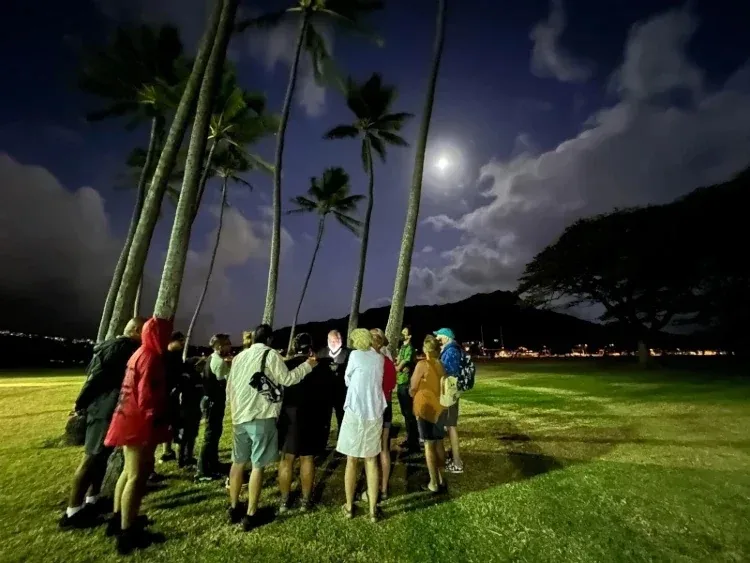
The operator's tour page gives a sense of the material. It traces Papaʻenaʻena, a heiau the Maui chief Kahekili built at the foot of Diamond Head after his victory over Oahu in 1783, where Kamehameha I offered his own cousin Kalanikupule, Kahekili's son, as a sacrifice in 1795. The page says La Pietra, a school for girls, now sits on what remains of the heiau, and that police officers have reported torch lights moving from the Kapiʻolani Park Bandstand toward the school on nights with no moon.
It also retells a 1930s account, given to the author Antoinette Withington, of glowing lights at the water's edge that took on shadowy forms, as if people were holding up torches and walking the beach toward Diamond Head. Sightings are not part of the deal. The operator's FAQ says it cannot promise a paranormal experience.
Flashlight, Charged Phone and Bug Spray
The stories run into the dark, partly on grass. A guest in November 2024 left the tour when the group switched on phone flashlights to cross uneven ground, without a phone light of their own, so carry one. Another, in February 2025, missed one activity with a dead phone. A guest in May 2026 recommended bug repellent, and the operator suggests comfortable walking shoes, bottled water and light rain protection.
The booking page and the operator describe the ground differently. The listing marks every area and surface wheelchair and stroller accessible and the tour suitable for all fitness levels, while the operator's FAQ says the Waikiki tour includes some walking in grass, and a November 2024 guest described uneven ground in the dark. Guests also mention group exercises and rituals, and one in May 2025 wrote that anyone who dislikes doing things in a group may not enjoy it.
What Guests Remember About Lopaka
Most reviews come back to Kapanui himself: his knowledge, his voice and how personally he tells each account. A guest in August 2025 was the only visitor that night; everyone else was local, curious about their own island's darker history. He also shows photos on a tablet. One guest in July 2026 would have liked more walking and fewer pictures, and one in October 2022 had hoped to visit more places than a single park.
Families split on age. A parent in June 2025 felt they probably should not have brought a 10-year-old and a 16-year-old, warning of heavy themes, while a family of nine aged 8 to 79 called it exceptional in December 2024. The operator leaves younger children to their parents' judgment.
📍 The walk starts and ends at the statue by the duck pond and wraps up around 8:30 PM. The park is dark by then. A solo guest in September 2026 turned down the guide's suggestion that someone walk her out and later found the walk out of the park uneasy, so a booked rideshare or a walking companion makes the exit easier. With a ride or company sorted, Kalākaua Avenue leads back into Waikiki for a late dinner and a Night Marcher story to retell.