
Two Hours of Georgetown Gossip, From Coal Chutes to Campus
Georgetown is older than the city that grew up around it, and this walk starts at the water that made it. From the canal the route climbs, and the neighborhood changes character with the grade. Two hours on foot, with a guide whose job is the stories attached to the brick.
The port came first. Georgetown was a working tobacco town before Washington existed as an address, and the Chesapeake & Ohio Canal is why the low end of the neighborhood still looks industrial while the high end looks like money.
This walk takes that difference seriously. It begins on the towpath by Lock 3, where the operator stops the group at a working lock gate, and works uphill through blocks of eighteenth and nineteenth century houses toward Georgetown University. The listing runs two hours, and the six timed stops account for about forty-five minutes of it. The rest is walking, and the walking is where the talking happens.
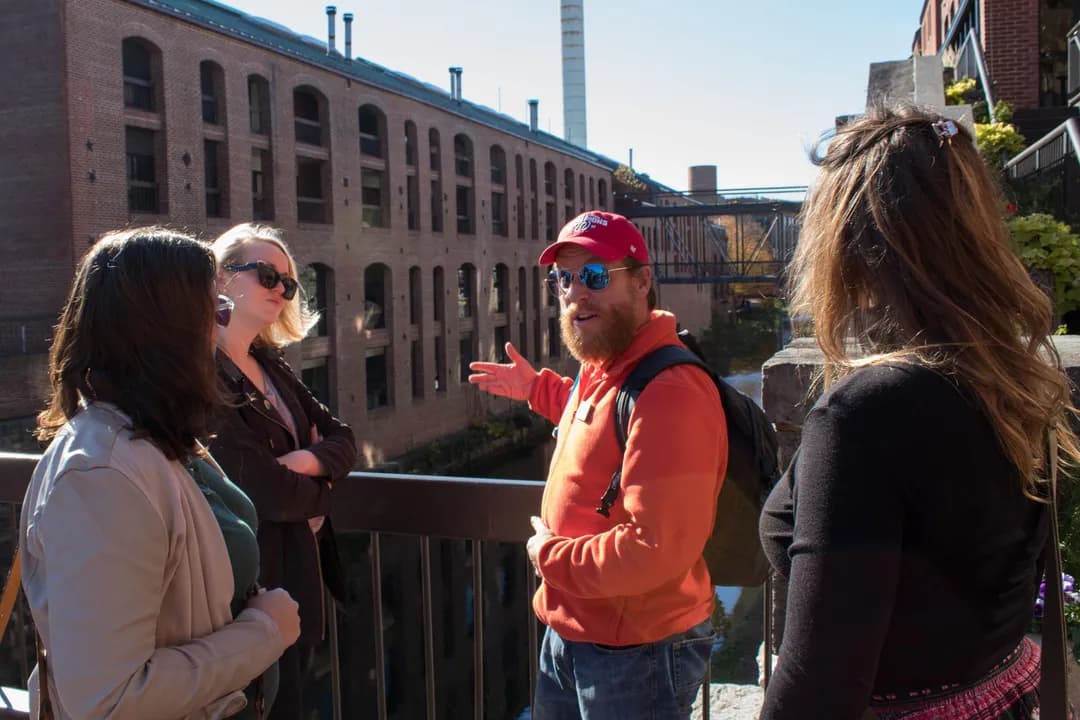
One practical note before anything else: your guide will be wearing orange. That is the operator's own instruction for finding the group at the canal.
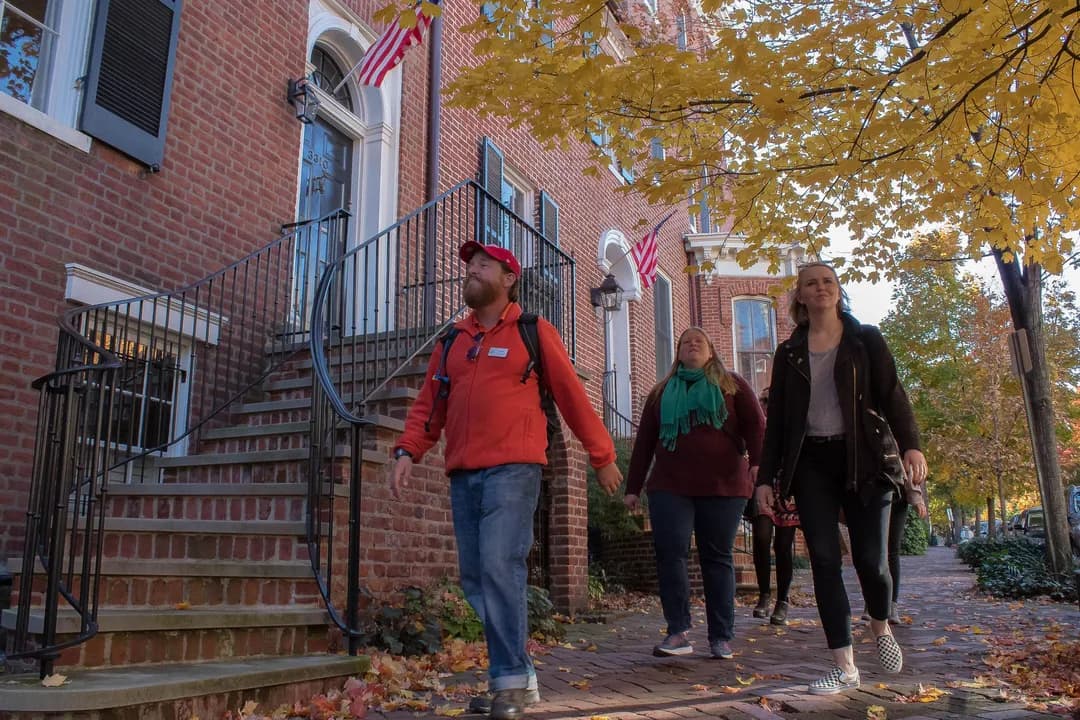
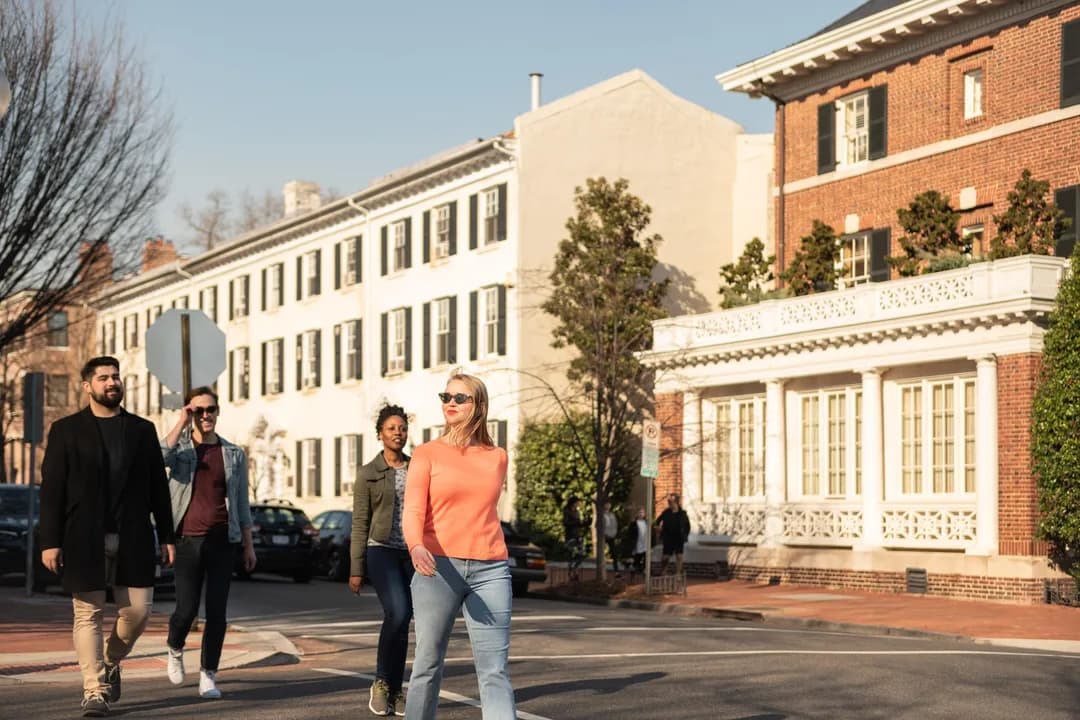
The walk is operated by DC by Foot, guided in English. The operator's listing credits one of its guides, Canden Schwantes, with writing the book on Georgetown, which is a fair summary of the register you are buying: a neighborhood explained by someone who went looking in the archives first.
 Historic Georgetown: History, Gossip, & Architecture Walking TourDC by Foot · 120 minutes · Licensed guide · Meets by Lock 3 on the C&O Canalwww.viator.com
The Canal Is the Reason for the Rest of It
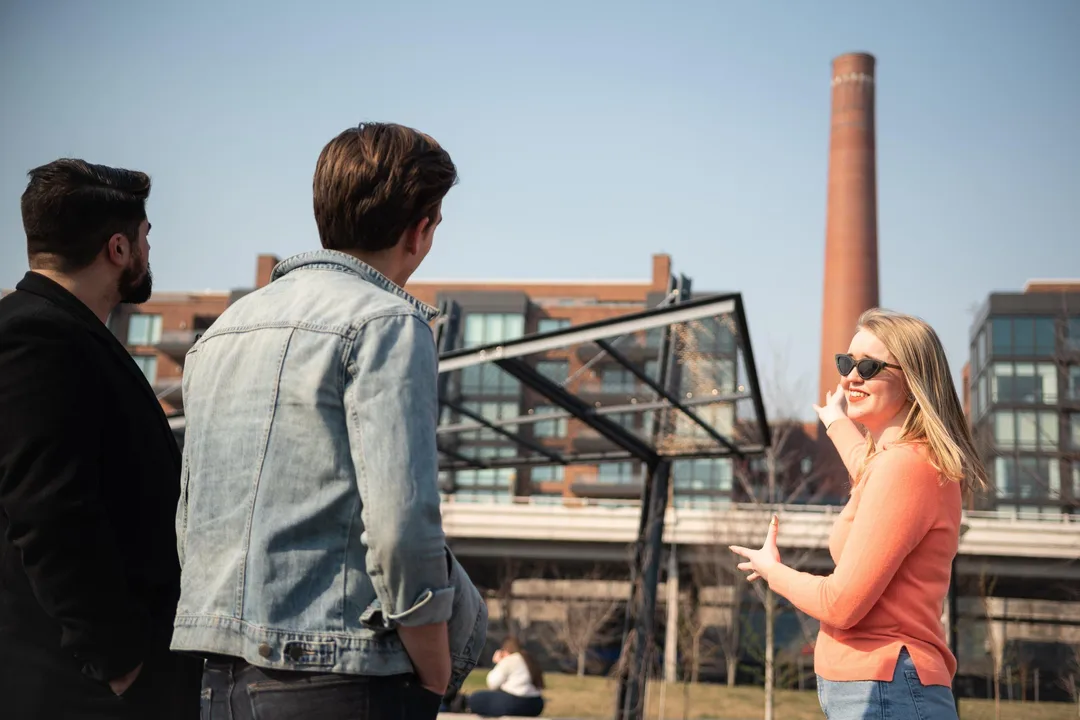
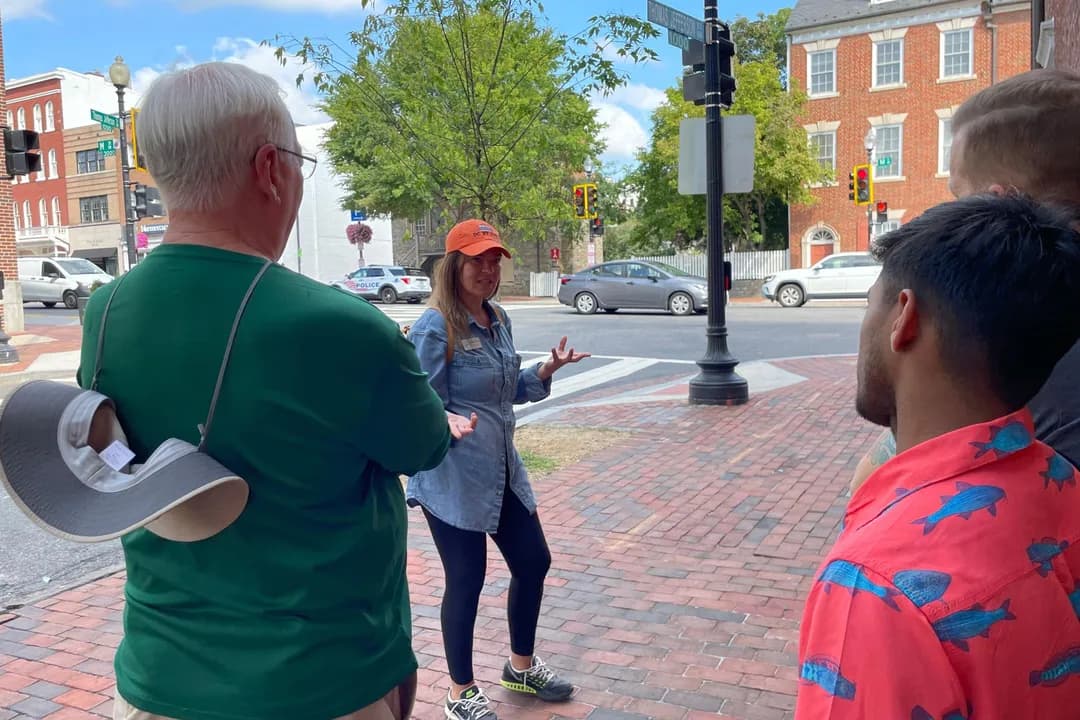
The C&O Canal runs through the industrial half of Georgetown, and this stop is about how the boats actually worked. A lock is a gate that raises and lowers a boat between two water levels. The route pauses at a working one long enough to explain why a waterway needs them at all.
What you get out of it is a key to the rest of the walk. The warehouses on the canal bank, the way the streets drop toward the river, the whole scale of the low blocks: it was built around moving cargo. Once someone points that out, the bottom of the neighborhood stops reading as a shopping district and starts reading as what it was.
Learning to Read the Houses
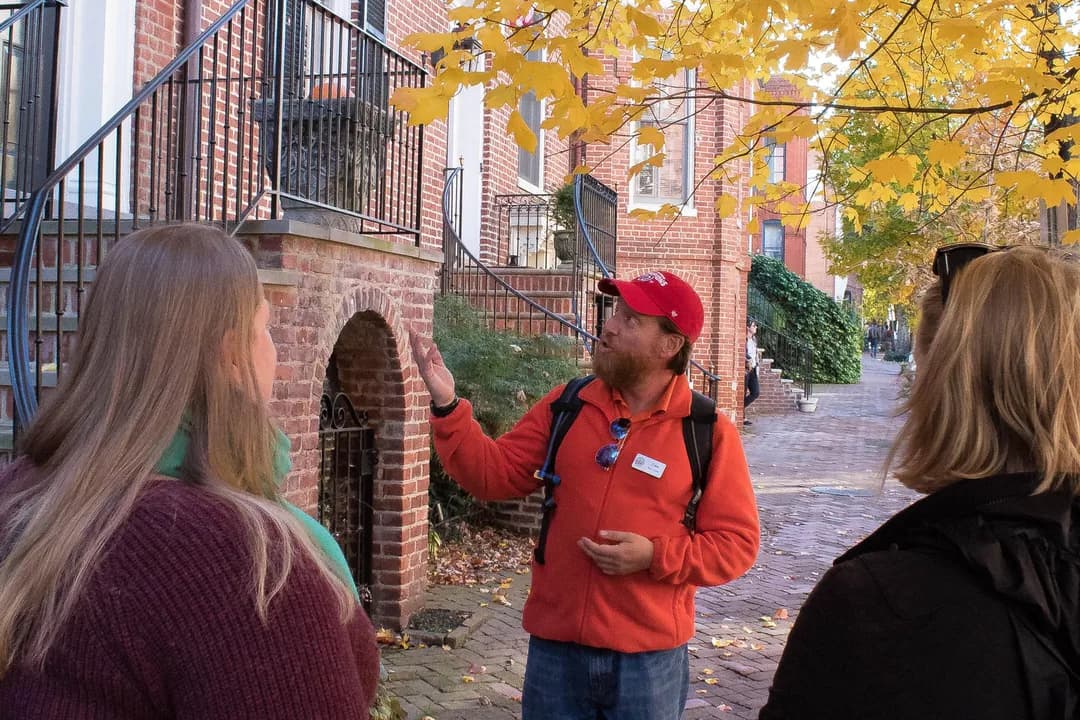
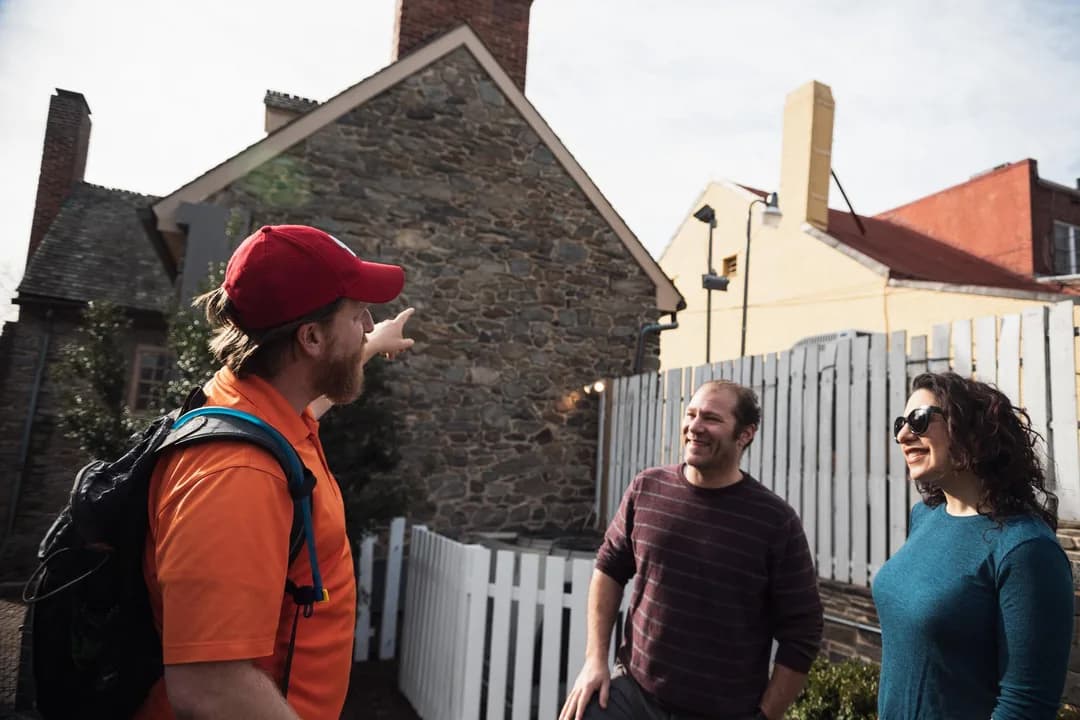
The middle stretch is architecture, but the practical version. The operator's own list of what to look for is specific: original firemarks, coal chutes, ironworks, and gas lanterns. These are small pieces of hardware still bolted to houses people live in, and each one answers a question about how the building was insured, heated, or lit. Learn the coal chute set into a garden wall and you will see them for the rest of the day.
The guiding also covers who was here. The operator lists stories of the Black Georgetown community, of immigrants who shaped the neighborhood, and of women who broke the social rules of their era. That is a deliberate choice about whose houses get explained, and it is the clearest signal of what kind of history you are buying.
Who Lived Here, and What They Left
Several stops are about specific residents.
- The Old Stone House, 3051 M St NW. The operator dates the building to 1766, calls it the oldest residential building in the district, and notes it is run today by the National Park Service. Your booking includes access to the side yard, the walled garden behind the house.
- A Kennedy address. Jackie and John F. Kennedy lived in Georgetown before and after the presidency, and the operator's copy says the family occupied nearly a dozen different homes here. The walk stops at one of them for about five minutes.
- Georgetown University, founded 1789. The stop is at the front of campus: the spires of the Patrick Healy building and the statue of founder John Carroll. Campus entry is part of the walk.
- Martin's Tavern, which the operator describes as locally owned since 1933, with dark wood panels and regulars at the bar.
The route also passes the stairway made famous by the 1970s film. It goes by near the end, without stopping.
Before You Book
- Arrive at least five minutes early. Check-in is at the canal, and the operator is explicit that the tour starts on time.
- Running late? The operator says you can likely catch the group outside the Old Stone House at 3051 M St NW, the third stop.
- Restrooms. There are none on the route. The operator points to one near the start at Baked & Wired, and more at the end.
- Footwear. Brick sidewalks, cobblestones, and a steady climb. The listing rates the walk suitable for all physical fitness levels, and says it is not wheelchair accessible.
- Children. The youngest priced age band starts at five, and every booking needs an adult on it. Infants and small children can ride in a pram or stroller. Service animals are allowed.
- Language. Guiding is in English.
- Group size. One booking takes up to fifteen travelers. A private version of this walk is also sold, and the operator will customize its stops.
- Cancellation. A full refund requires cancelling at least 24 hours before the scheduled departure time.
- Price. Rates are per person and move with the date and the option you pick. The figure at checkout is the figure you pay.
📍 The meeting point is the Chesapeake & Ohio Canal National Historical Park in Georgetown, by Lock 3, on the stretch of canal between Thomas Jefferson Street NW and 30th Street NW. The operator's wording is worth keeping: there is a large park on the north side of the canal, and your guide will be in orange.
Two hours later the group is let out near Georgetown University, at 37th and O Street NW. That is the top of the hill and the other end of the neighborhood's social ladder from where you started. The walk back toward M Street is downhill, which is the direction most people want to go for lunch anyway.