Music / Event
The Room Teaches Before the First Solo
 Jonah Brooks
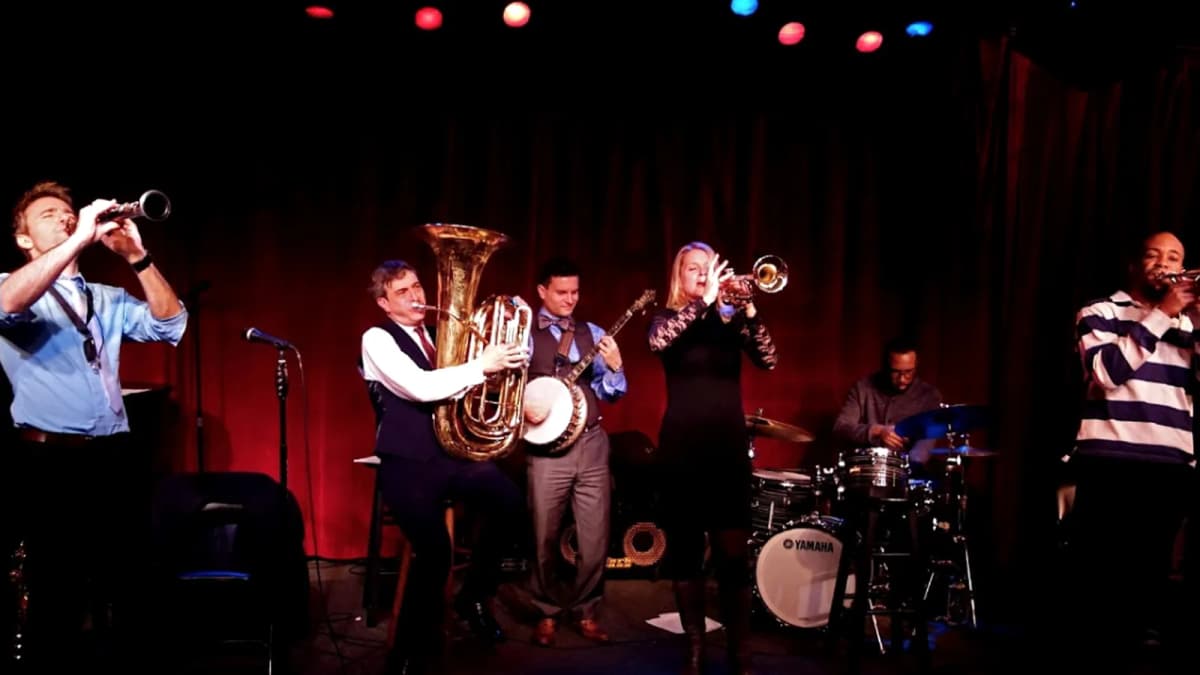
David Ostwald's Louis Armstrong Eternity Band at Birdland Theater. Image: Birdland/TicketWeb.
Go if you want traditional jazz made legible in real time, not polished into a museum object.
The useful thing about David Ostwald's Louis Armstrong Eternity Band is not that it keeps a name alive. Plenty of rooms can hang a famous name on a poster. This one gives you the working machinery: tuba, banjo or guitar, reeds, brass, drums, a small stage, and a leader who treats Armstrong as a living language rather than a costume.
That matters if early jazz has ever felt like homework. You do not have to arrive with the Hot Five personnel memorized. You do need a room where the parts are close enough to watch. At Birdland Theater, the lesson starts before the first chorus: who sets the floor, who answers, who makes the room lean forward, and who knows when not to play.
The Verdict
This is a strong first door into old jazz because the band does not ask you to admire tradition from a distance. It lets you hear how tradition behaves under pressure.
The tuba is the floor. The banjo or guitar is the grid. The drums decide whether the room sits back or lifts its chin. The trumpet may carry the headline, but the real review is in the way the band passes weight from one chair to another without turning the set into a lecture.
If you want a flashy night out, this is not the loudest choice on West 44th Street. If you want to understand why Armstrong still has working consequences, this is the better ticket.
Why Ostwald Is The Right Kind Of Guide
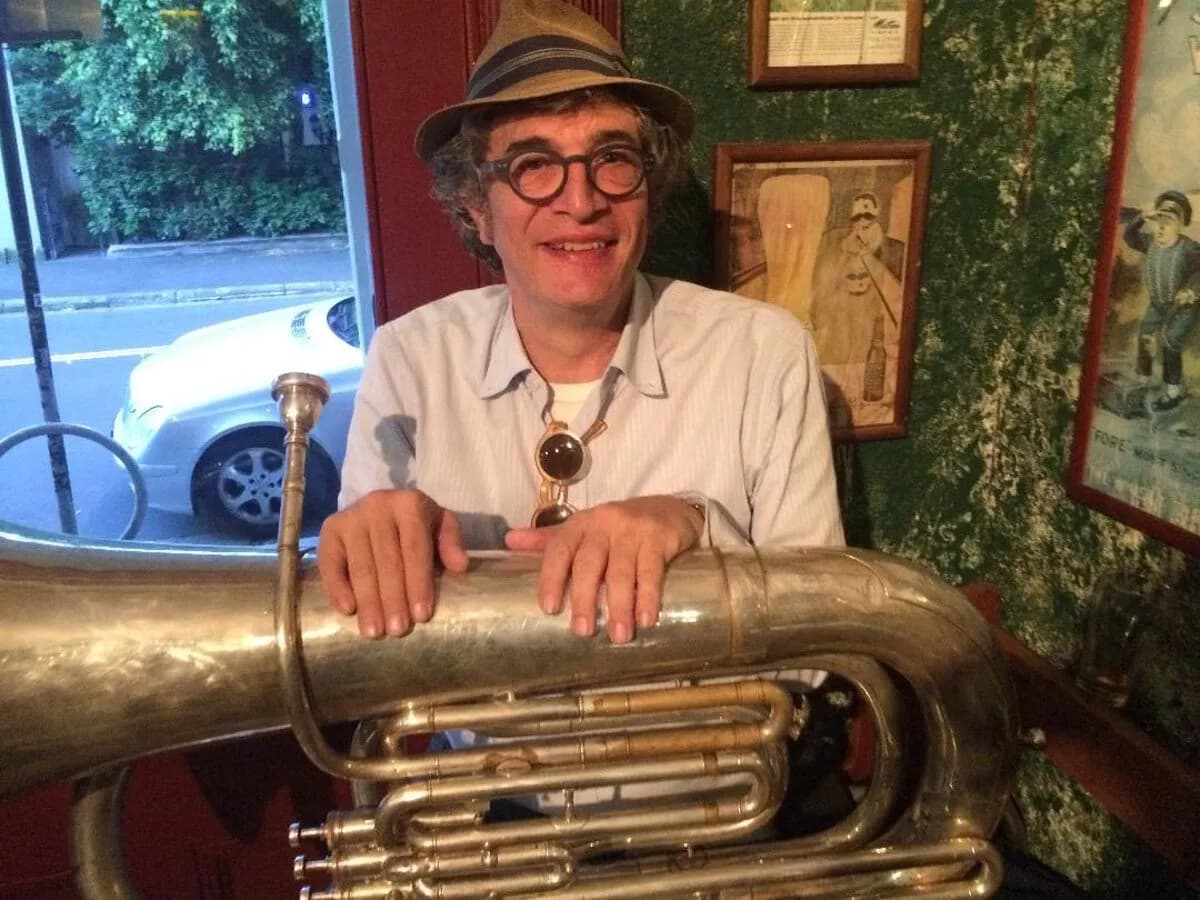
David Ostwald with his tuba. Image: The Syncopated Times / Daniel Palmisano.
Ostwald's Armstrong story has the shape of a real conversion: a teenage classical-music kid, a cheap record-bin discovery, and a before-and-after line that never quite went away. The later career is stranger and more useful than a straight nostalgia act. He built a small hot-jazz band around Armstrong's universe, kept it in regular rotation at Birdland, and made room for younger musicians to sit inside an older grammar.
That is the reason this band works as a public classroom. It is not an impersonation project. The music makes the distinction clear: the job is not to sound exactly like Armstrong. The job is to catch the breadth of the vocabulary: joy, timing, grief, mischief, swing, discipline.
That distinction saves the evening. A tribute show can become a wax figure fast. This band is more interesting because it keeps Armstrong's methods in use without pretending the calendar has stopped.
Read The Room First
Birdland Theater is the lower-level room, which helps this music. Cabaret-style seating keeps the band close enough for small decisions to read as events. A clarinet lift, a drummer's half-smile, the tuba line that prevents the tune from floating away: those details matter more here than a giant light show ever could.
Best seat: a table close enough to see the rhythm section and the front line at the same time. Do not choose only for the trumpet bell. Choose for the conversation between the players.
Worst seat: late, far, and angled so the rhythm section disappears. For this band, losing the rhythm section is like watching a play from behind the set.
Doors for the July 15, 2026 listing are at 4:30pm, with the show at 5:30pm. Seating is first come, first served, and Birdland can release unclaimed seats ten minutes after showtime if the venue has not heard from you. If you care where your eyes land, arrive when doors open, not when the first tune is already forming.
The July 15 Band, From The Floor Up
For the July 15 date, Ostwald leads on tuba. The listed band is Mike Davis on trumpet, Will Anderson on clarinet and alto sax, Jim Fryer on trombone, Alonso De La Fuente Jr. on banjo and guitar, and Alex Raderman on drums.
Listen from the bottom first.
Start with the tuba. It does not just replace a bass; it changes the room's center of gravity. The notes arrive with brass weight, but the job is practical: keep the ground reliable enough that the horns can take risks.
Then watch the banjo or guitar. In this music, a steady strum is not wallpaper. It is a timekeeping argument. If the room starts smiling before anyone plays a solo, that is often where the smile came from.
Then listen to the drums. Not for volume. For temperature. A good drummer can make a small room feel half a step faster without rushing anyone.
Only then follow the front line. Trumpet, clarinet, and trombone are not simply taking turns. They are building lanes for each other: lead, shadow, comment, interruption, answer. That is where Armstrong's influence becomes easier to hear, because the music is not only about a single heroic voice. It is about how a room learns to swing around one.
A Short Listening Door Before You Go
Give yourself twenty minutes before the show. Not a syllabus. A door.
Play one early Armstrong small-group recording, one vocal, and one later live performance. The point is not trivia. The point is to hear three Armstrong habits before a living band turns them back into room behavior: the way a melody can be stated plainly and still feel new, the way humor can sit inside time, and the way a band can make discipline sound like ease.
If you want the band's own lane, add three Ostwald recordings as a second door: "Diga Diga Doo," "Big Butter and Egg Man," and "When Day Is Done." They are useful because they do not require reverence before they start moving.
Queens Belongs In The Story Too
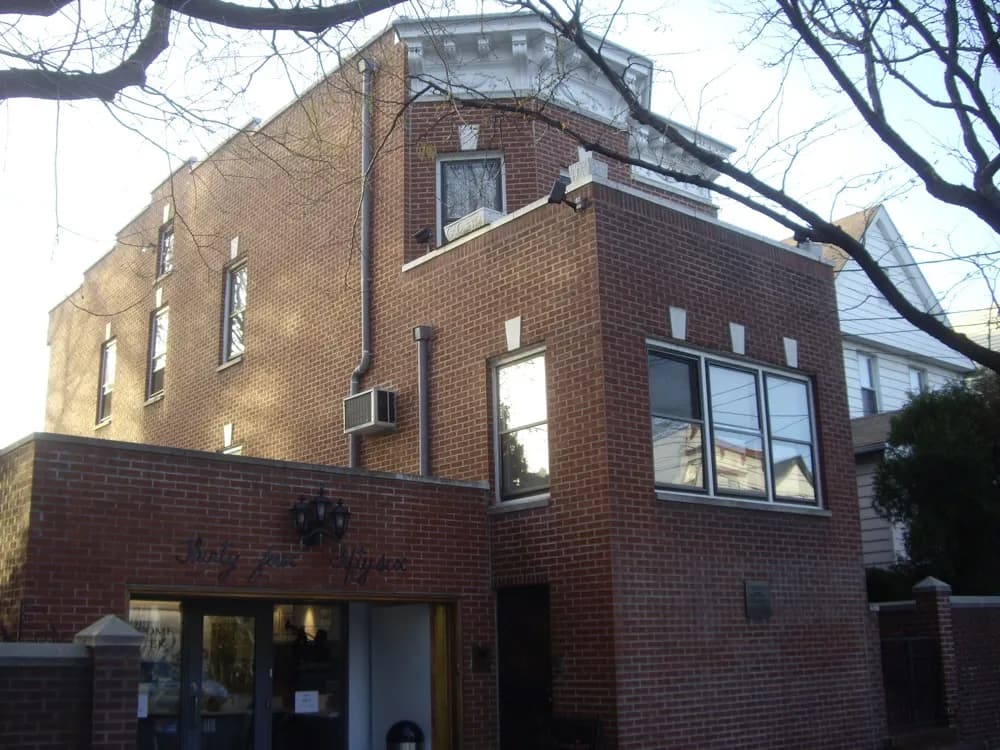
Louis Armstrong House Museum in Corona, Queens. Image: Wikimedia Commons.
Armstrong's New York story does not end at a Manhattan bandstand. It has an address in Corona, Queens, where the Louis Armstrong House Museum preserves the home and grounds, the archive, and the public memory around his life and work.
Do not try to force the house and the Birdland set into one rushed pre-show errand unless your day is already built around it. The better plan is slower: use Birdland for the sound, then put the house on a separate afternoon when you can understand the distance between fame and daily life. Armstrong was global, but he also stayed attached to a working-class neighborhood. That tension gives the music more weight than a nightclub calendar can hold by itself.
The route is not only geographic. It is a way to keep the night from becoming style. House, city, bandstand, audience. That is the line.
Reality Check
Address: Birdland Theater, 315 West 44th Street, New York, NY 10036.
Date and time: Wednesday, July 15, 2026. Doors 4:30pm. Show 5:30pm.
Tickets: USD 35.46 to USD 45.76 for the July 15 date.
Age rule: 10+.
Expected length: about 75 minutes.
Food and drink: purchasing tickets confirms the show and dinner reservation. There is a $20 per-person food or drink minimum.
Photo rule: no-flash photos are permitted. Unauthorized audio or video recording is not.
Dress code: nobody gets turned away for clothing, but business casual is the room's own suggestion.
Arrival strategy: get there near doors if you want a better table. If you are late, call the room before the show starts.
Who This Is For
Go alone if you are curious and do not want to fake expertise. This is a room where looking at the band closely gives you enough to do.
Bring someone who says they "do not know jazz" but likes watching skilled people solve problems together.
Skip it if you need dancing, late-night chaos, or a room where conversation matters more than the set. This is early, seated, and detail-driven.
The room decides before the menu does. For this band, the decision is simple: sit where you can see the floor being built.
2 places