
The View That Named Richmond, and Five More Stories by Trolley
A two-hour narrated loop from Main Street Station through Church Hill, Jackson Ward and Capitol Square, in an enclosed twenty-seat trolley.
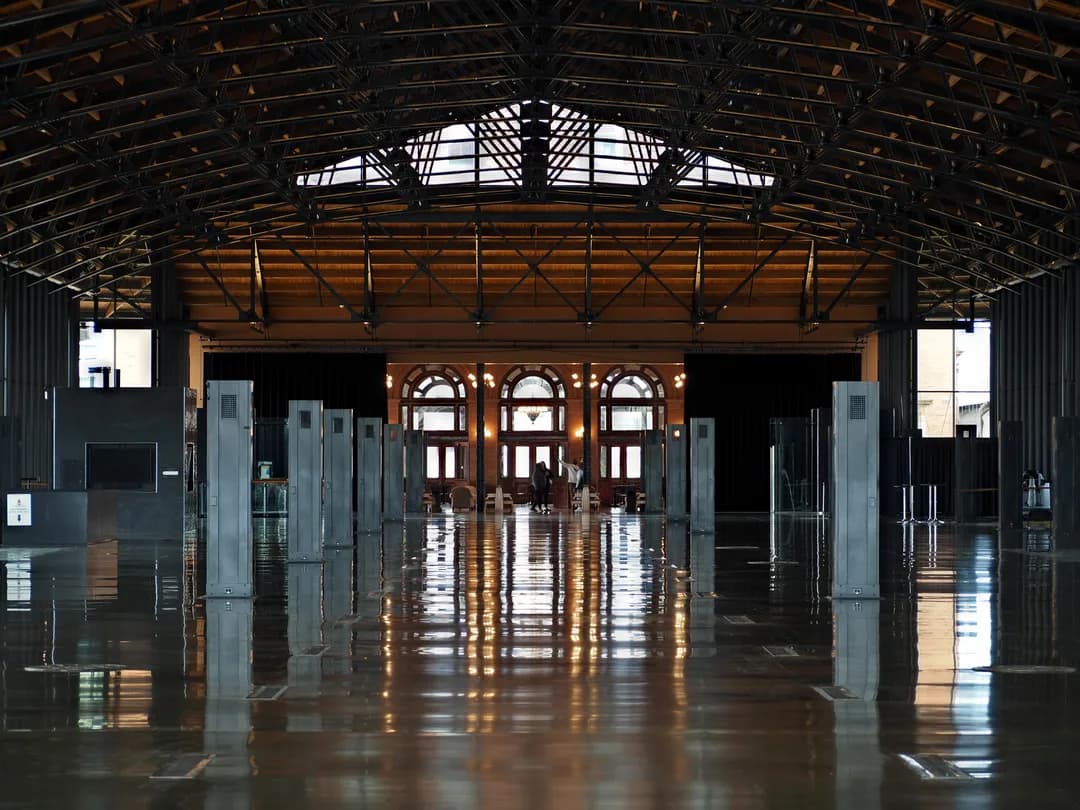
The address on the booking is 1500 East Main Street, and the instruction that comes with it is short: enter the station, check in at the Virginia Welcome Center. That puts the start of this ride inside a building the tour comes back to later. Main Street Station was finished in 1901 to a design by the Philadelphia firm Wilson, Harris and Richards, and it has been a National Historic Landmark since 1976. The clock tower is the part everyone photographs. The part worth standing under is the train shed behind it, 530 feet of Pencoyd ironwork and glass, one of the last gable-roof sheds left in the country.
The trolley is enclosed, air conditioned, and seats twenty. There is no restroom on board, which is worth knowing before a two-hour loop starts.


The ride is scheduled at 120 minutes and goes out as a shared departure capped at twenty travelers. Guiding is in English. A booking takes one to twenty people and needs at least one adult on it, and the fare is sold per person against bands drawn at 4 to 14, 15 to 60, and 61 and over. Mobile and paper tickets are both accepted, one per booking. Cancel at least twenty-four hours ahead for a full refund; inside that window nothing comes back. The listing also flags that the operator can call a departure off for bad weather or for too few travelers.
 Historic Trolley TourRVA Trolley's narrated loop out of Main Street Station. Two hours, twenty seats, English guide.www.viator.com
Five Pass-Bys and One Five-Minute Stop

Read the itinerary closely and a pattern shows up. Of the six places on it, five are narrated through the window as the trolley goes past. Libby Hill Park is the only one with a scheduled stop, and it runs five minutes.
Those five minutes are spent at the overlook on the southeastern spur of Church Hill, above the bend in the James. The operator's line for it is that this is where our river city was named. The account behind that is William Byrd II, standing here in 1737 and deciding the curve of the river below looked like the view at Richmond upon Thames, outside London. It is the traditional story rather than a documented minute, but it is the one the city has kept, and in 2012 the American Society of Landscape Architects put this overlook on its list of iconic American landscapes.
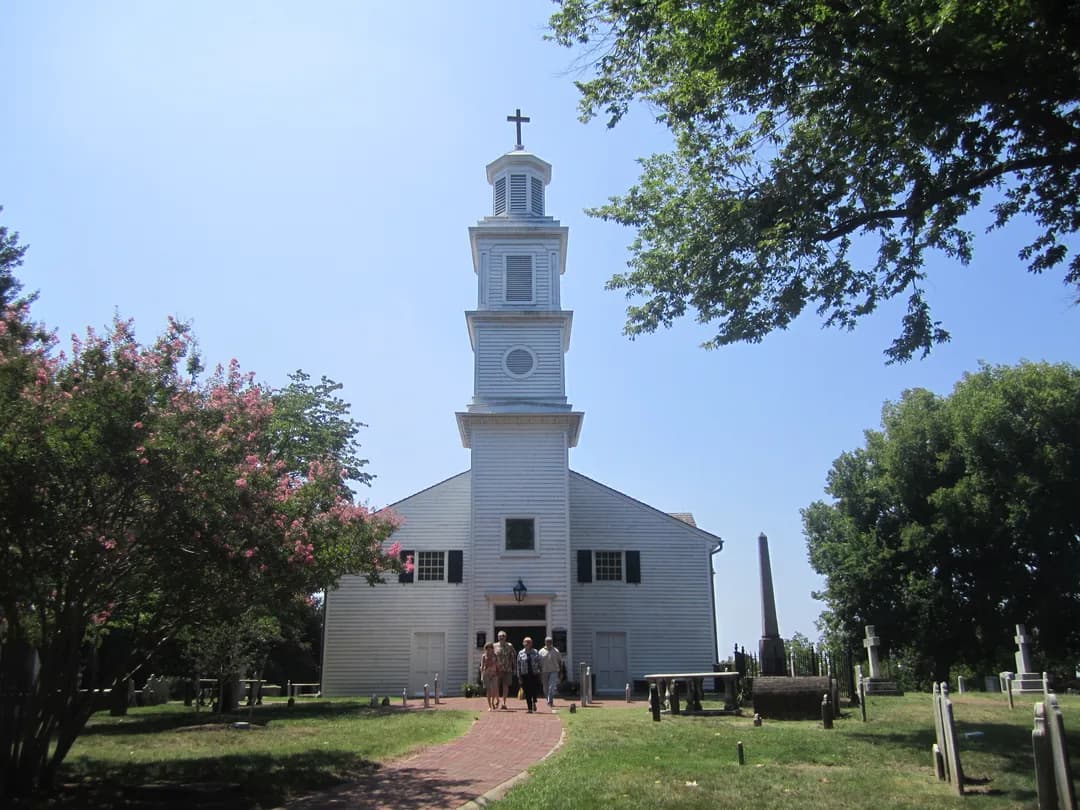
Church Hill is around you while you stand there, and the guide takes it from the trolley: St. John's Church, where Patrick Henry made the give-me-liberty speech; the Poe Museum, which occupies the oldest building in the city; the 17th Street farmers' market; and Main Street Station, which you have already walked through.
Jackson Ward, and the Woman Who Chartered a Bank

Jackson Ward gets described on this tour as the Harlem of the South and as a birthplace of Black entrepreneurship. The name attached to that is Maggie Lena Walker. In 1903 she founded the St. Luke Penny Savings Bank and took its presidency, making her the first African American woman to charter a bank in the United States and to serve as its president. The bank came through the Depression and its successor is still trading. The other name the guide reaches for is Bill Robinson, the dancer known as Bojangles, born in Richmond in 1878.
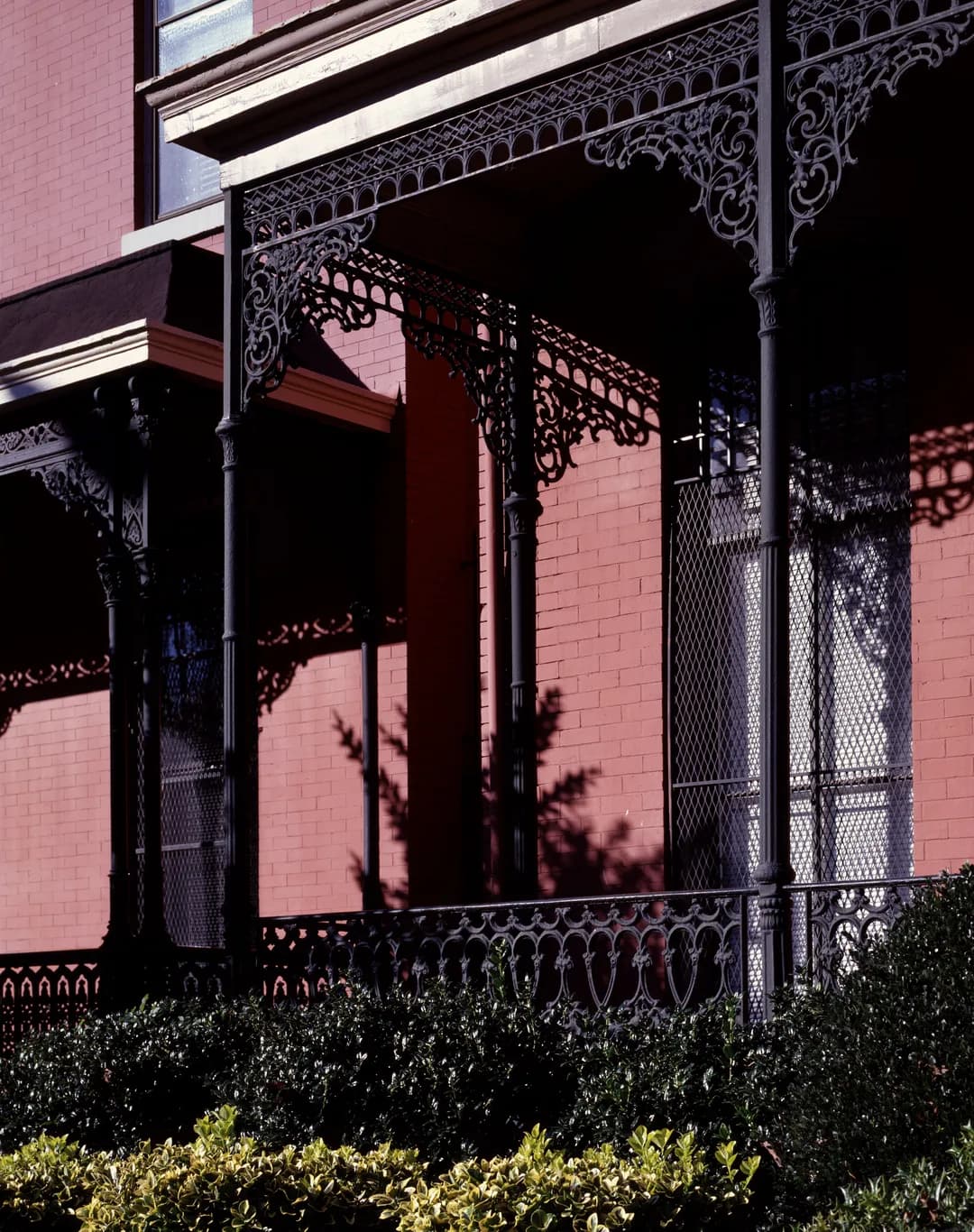
What you see from the window is mostly the housing: two-storey brick rows with cast-iron porches across their fronts, tier on tier of it, painted black. Jackson Ward is known for that ironwork. It is also the reason the neighborhood reads as one piece rather than a row of separate buildings, and it is the detail most worth having the window seat for.
Jefferson's Capitol, and the Mile of Museums
The Virginia State Capitol goes by on Bank Street. Thomas Jefferson drew it, working from the Maison Carree at Nimes, which is why a Roman temple stands on a hill in a southern American city. The guide takes it from the window; this tour does not go inside.
West of downtown the route runs through the Museum District, named for what sits in it: the Virginia Museum of Fine Arts and the Virginia Museum of History and Culture, a few blocks apart. Neither is entered on this booking either. What a pass-by is good for is working out which one you want to come back to with a free afternoon.
The James River frames the whole loop. The operator calls it the river around which Richmond was built, and from the trolley you get it at distance rather than at the water.
Who It Suits, and What the Fare Does Not Cover
The listing rates this as suitable for all physical fitness levels, which for a seated two-hour ride is a fair description. Prams and strollers are allowed. Infants ride on an adult's lap. Service animals are permitted, and the listing notes public transport nearby. No admissions are included: every building on the route is narrated from outside, and the only scheduled time out of the vehicle is the five minutes at Libby Hill.
Two more things the booking page states plainly. Air conditioning is listed as an inclusion, which in a Richmond July is not a small detail. A restroom on board is listed as an exclusion, so plan the two hours around that.
Guiding is English only, and the departure is shared, so the twenty seats go to whoever books them.
📍 Check in at the Virginia Welcome Center inside Main Street Station, 1500 East Main Street; the trolley leaves from there and comes back to the same door. Two hours later you are standing in a National Historic Landmark with the 17th Street market a block off and Church Hill up the slope behind you. Richmond is also where the electric streetcar stopped being an experiment: Frank Sprague's system here began carrying passengers in February 1888 and became the pattern almost every other city then copied. Seeing the city from a trolley is a reasonable way to spend the afternoon.