

The Truck Stops a Hundred Meters From Horseshoe Bend's Rim
Tribal rule makes every Antelope canyon guided-only, so the hour inside this one begins with six miles of sand and ends at a rim the public lot does not reach.
Page sits at the edge of the Navajo Nation, and the slot canyons around it are not places you can walk into on your own. Navajo Parks and Recreation makes a guide mandatory at every Antelope Canyon location. That single rule shapes this trip. You do not drive yourself, you do not pick your own hour inside, and the gate is opened by a company tribal parks names on its own operator list.
The canyon here is not Upper or Lower Antelope. The operator calls it Secret Antelope Canyon and puts it about four to five miles from the two famous ones. Same sandstone, same carved light, a different parking situation.

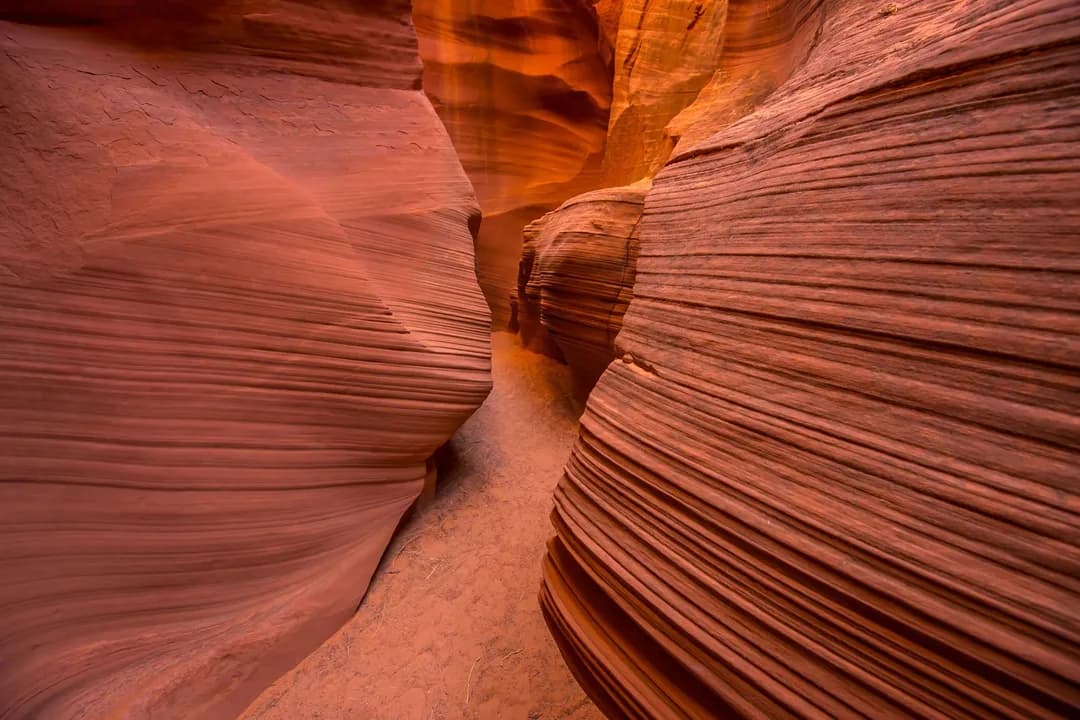
Check-in is at the tour facility on Indian Route 6098, off Highway 89 just south of Page. There is no street number: the booking page gives GPS 36.87072, -111.50085, and the sign on site reads Lii' Bikee' Slot Canyon Tours, not the name on your ticket. The booking asks for 30 minutes early and the operator asks for 20. Use the longer figure, because the truck does not wait. The operator says departures will not be delayed for late guests, and that missing the 15-minute mark can mean your seat goes to someone else.
📍 Arizona does not observe daylight saving time. If you drove in from Utah or Nevada in summer, your phone may have changed and the tour time did not.
 Secret Antelope Canyon & Horseshoe Bend TourTwo and a half hours out of Page: a six-mile off-road drive, an hour inside Secret Antelope Canyon, and an hour at a private Horseshoe Bend overlook. Guide and shaded open-air 4x4 transport included.www.viator.com
Who Opens the Gate, and Why It Has to Be Them
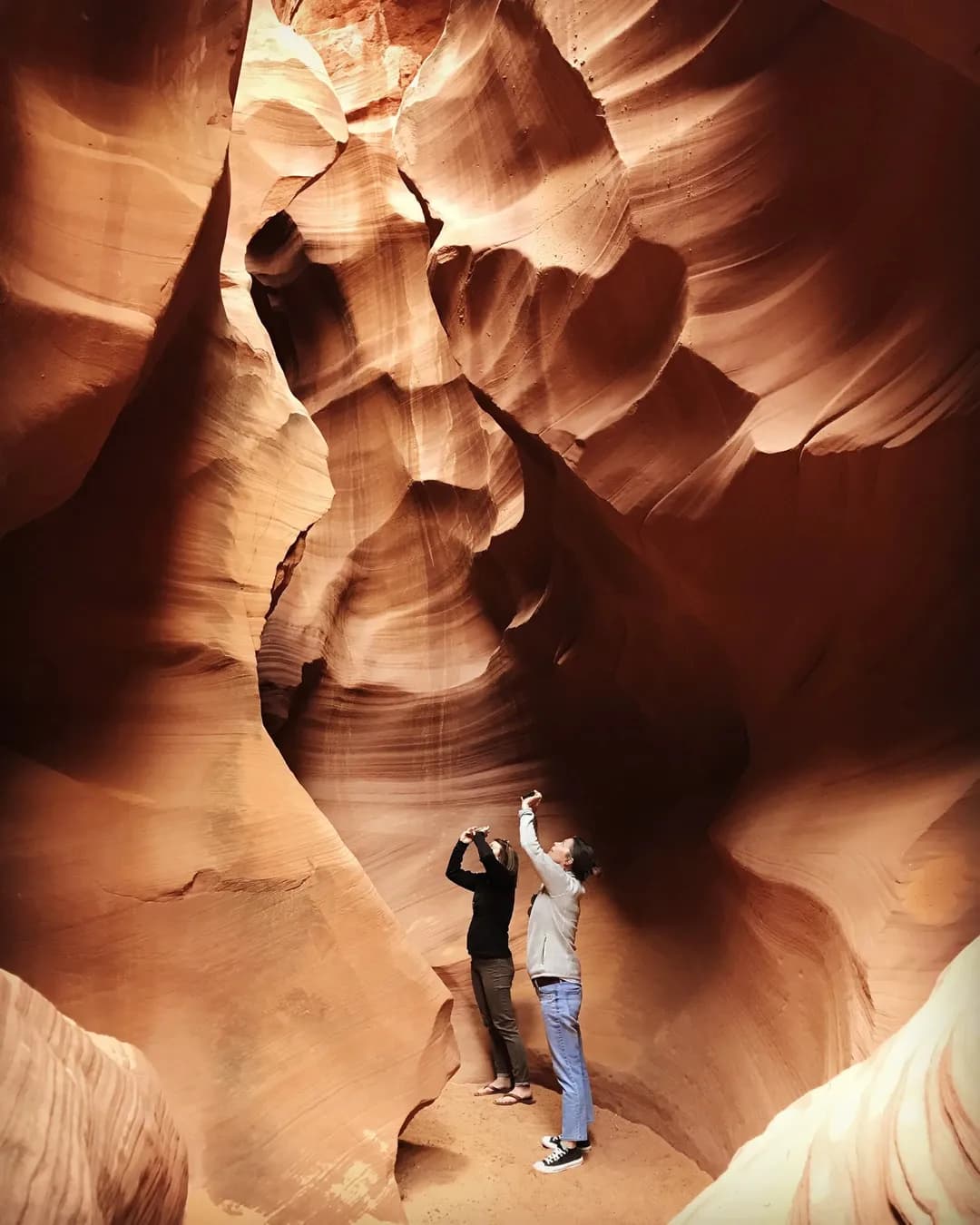
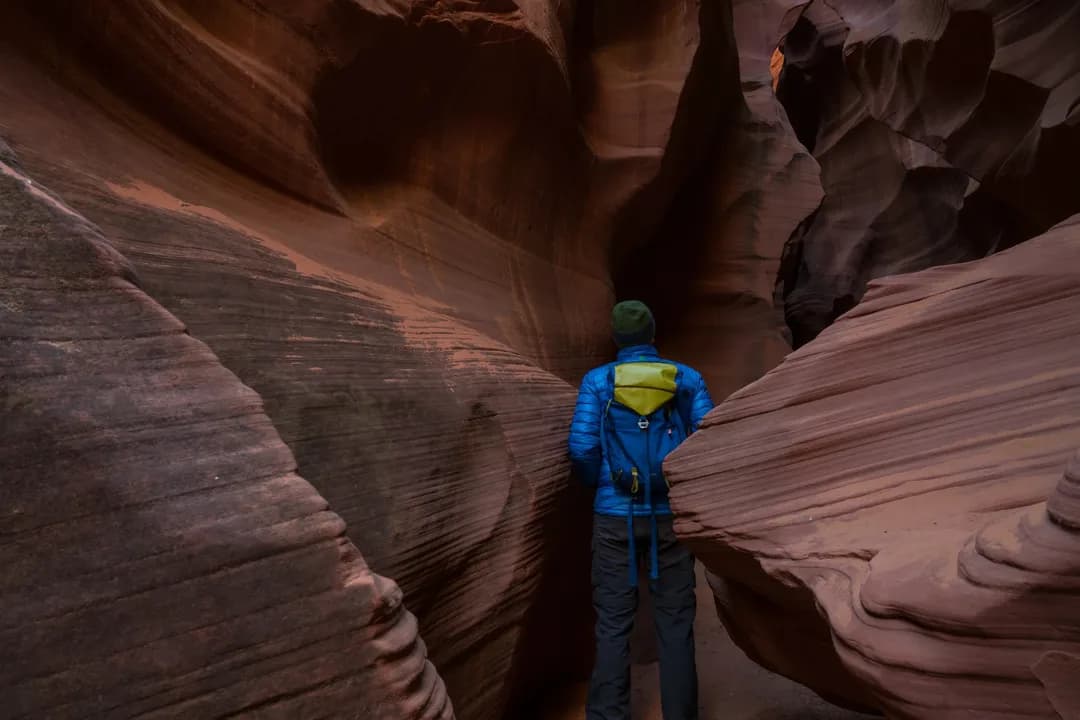
Navajo Nation Parks and Recreation publishes the list of operators cleared to run Antelope Canyon trips, and this one is on it. The entry on that list links straight to the page for this exact tour. That is the strongest version of the claim.
The other line you will read about this company is softer than it looks. Navajo-owned, running since 2017: that sits in the booking listing, and it appears nowhere on the operator's own pages or in its reservation system. Its reservation account was opened in May 2017, which at least puts a system date on the 2017 half.
On the ground the team trades under a second name. The booking calls the supplier Horseshoe Bend Slot Canyon Tours. The sign at check-in says Lii' Bikee' Slot Canyon Tours. Both are correct, and knowing that in advance saves a phone call from the shoulder of Highway 89.
Navajo Parks also sets the rules you will be asked to follow. Guides are mandatory. Drones are prohibited across the Navajo Nation. Tripods are fine on this tour, with the operator asking only that you keep the narrow sections moving.
An Hour Inside, and What the Light Will Not Do

The drive is six miles of wash-bed and rolling desert, about half an hour in an open-sided truck, and the operator says coyotes, foxes, bobcats, owls and hawks all turn up along it. At the far end a 300-meter nature walk with some gradual rise and fall brings you to the canyon mouth. The floor inside is flat and sandy, and there are no ladders.
Across the whole outing the operator asks for shoes that can handle up to a mile of sand. Its FAQ is gentler about the canyon leg, calling it a level quarter mile in and the same quarter mile back out, like a walk on a sandy beach. Pack for the longer number.
You get an hour in there. That is the part worth protecting, because an hour is long enough to stop walking and watch a single wall change.
The operator is blunt about light beams: they form only for short stretches in spring and fall, last around 30 minutes late in the morning, and most of the photographs you have seen of them were made with long exposures and thrown sand. Book this for the color in the sandstone. Treat a beam as weather.
The Rim, Reached From the Other Side
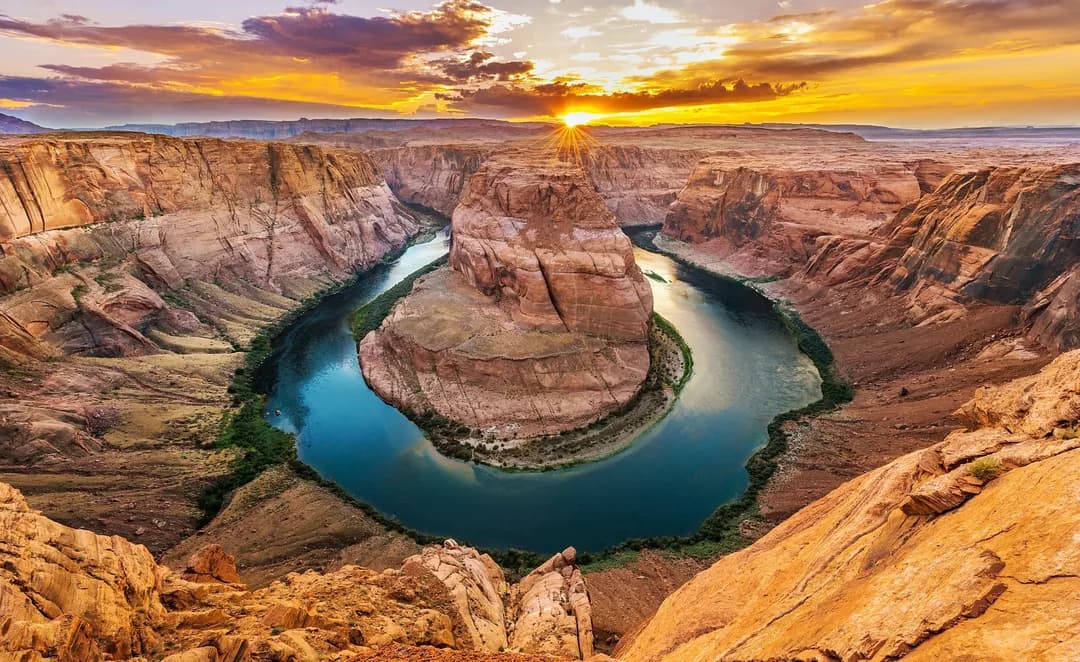
Horseshoe Bend is the second hour. The truck skips the public lot and its walk, turning onto a private dirt road that stops within about 100 meters of the edge. The operator puts that last stretch at a quarter-mile round trip over undulating sandstone, ending at a rim roughly 1,000 feet above the Colorado River.
Neither the operator's description of this overlook nor the photographs it publishes of it show a barrier at the edge. Sandstone near a drop is exactly as forgiving as it looks.
The Numbers That Disagree, and Which One to Use
Three figures on this trip do not agree with themselves, and all three cost you something.
The Navajo Nation permit is paid per person, separately from the fare, and it is never included. Navajo Parks and Recreation publishes USD 15 per person, per location, per day. It is one flat rate: the fee pages carry no child, senior or group variation, and the department states that it does not accept the National Park Pass. The operator's checkout says 15 as well, and adds that guests without a valid permit cannot enter the canyon. Its tour page prints 8.
Group size has three answers. The booking caps a departure at 12 travelers and says groups are usually limited to 12. The operator's tour page says small groups of 25 or less, and its FAQ says 24 guests or less. Plan for a truck closer to two dozen than to a dozen.
Trip length has two. The booking sells 150 minutes, while the operator's home page, its tour page and its reservation system all say approximately three hours. Leave the afternoon loose.
One seat is enough to book. The operator's tour page also says four paid seats are required for a trip to operate, and the booking terms allow a departure to be cancelled when too few travelers sign up or the weather turns.
The rest is firm, and some of it rules people out:
- Children under 6 are not permitted, and a booking needs an adult on it.
- The operator calls the off-road leg not appropriate for anyone with recent or chronic back or neck trouble, and says it highly discourages pregnant women from coming. The booking screen ticks those same cautions, then also ticks suitable for all physical fitness levels, which tells you nobody maintains that set of boxes.
- No dogs, service dogs included. The operator says an open-air truck with no doors, panels or side rails is unsafe for an animal it cannot belt in, and Navajo Parks lists dogs alongside drones and firearms as prohibited on the Navajo Nation.
- No wheelchair policy is published on either side, so that question goes to the operator by phone. The surfaces are deep sand and undulating sandstone.
- No restrooms once the truck leaves. Use the ones at the office first.
- Guiding is in English. Bottled water, snacks, gratuities and government fees sit outside the fare. The office keeps a filtered water station, so fill a bottle on the way out.
- Alcohol, glass and drones stay behind. A purse or a small backpack is fine.
Departures run roughly hourly from 8am to 4pm, shifting with the daylight. The operator calls January and February thin; the booking calendar is blunter, with selling seasons that start on 3 February, so a January date has nothing on this page at all. Booking closes four hours before departure, and the operator recommends about a week of lead time in season. Cancelling 24 hours or more ahead returns the full fare. Inside that window it returns nothing.
One date check is worth doing before you build a trip around this. Navajo Parks and Recreation publishes holiday closures at its Lake Powell park for Thanksgiving, the day after it, Christmas Day and New Year's Day, while this booking calendar still offers Thanksgiving, the day after and Christmas. Neither side publishes which rule governs a permitted operator working on tribal land, so those three dates are the ones to put to the operator before you pay for anything built around them.
The truck gets back to Indian Route 6098 two and a half to three hours after it leaves, which still leaves the long Arizona afternoon in front of you.